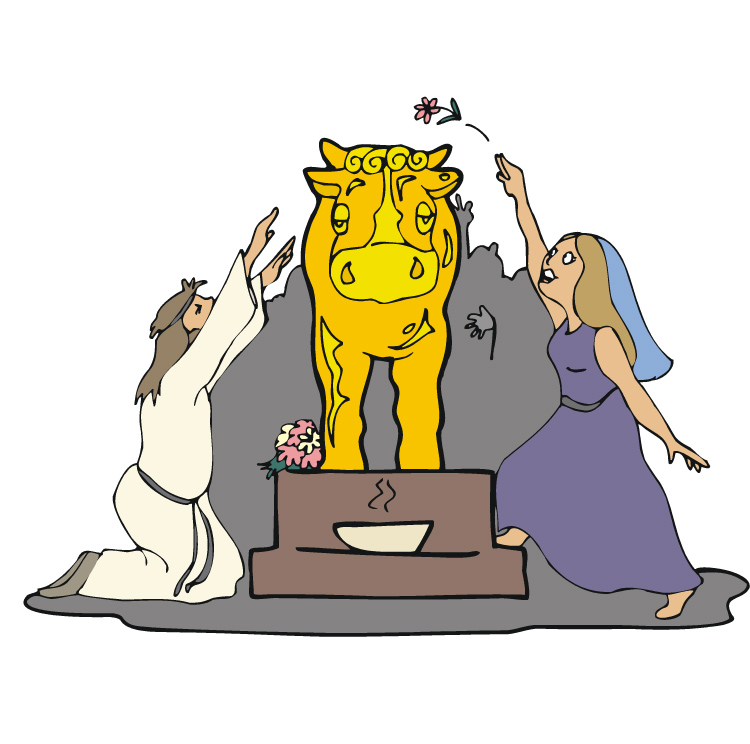
On Shavuot (that is, the Feast of Weeks or Pentecost), at Mount Sinai, YHVH entered into a marriage covenant with the children of Israel, but they were not ready to live up to the terms of that covenant. Those terms, simply stated, involved the Israelites being faithful and obedient only to YHVH, Israel’s Elohim (or God) and spiritual husband, and to follow his instruction in righteousness, the Torah. This Israel quickly demonstrated they were not willing to do, and the subsequent golden calf incident is proof of this.
The proverbial ink was barely dry on the marriage certificate between YHVH and the children of Israel, or otherwise state, the children of Israel had hardly said “I do” to their marriage vows (Exod 24:3, 7) when they turned their hearts away from YHVH and began worshipping the golden calf—a pagan deity from Egypt. After the golden calf incident and up until Yom Teruah (or the Day of Trumpets or Shofar Blasts) when Moses received the second tablets of stone from YHVH containing the Ten Commandments, the children of Israel, the bride of YHVH, prepared herself not only to receive YHVH’s instructions again, but this time to be faithful to her marriage vows. This Israel did. She remained faithful to YHVH for approximately 38 years while trekking through the wilderness of Sinai, after which she entered the Promised Land and “stayed the course” until after the death of Joshua. What can we as Bible believers learn from ancient Israel that applies to us today?
Sadly, the cycles of history often repeat themselves. This time, it involved the descendants of the spiritual children of Israel who were at Mount Sinai. In the early first century a.d., the redeemed Israelite followers of Yeshua received the Torah written on the fleshly tablets of their hearts by the finger of the Spirit of Elohim on the Day of Pentecost (Shavuot) as recorded in Acts chapter two. But starting in about a.d. 70 with the destruction of the temple in Jerusalem and continuing up through the Second Jewish Revolt of a.d. 135 until the time of Emperor Constantine (in the fourth century), the first-century spiritual bride of Messiah had, to a large extent, abandoned YHVH’s Torah-commandments and turned, to one degree or another, to a mixed form of worship (of which ancient Israel’s worship at the golden calif was a prophetic foreshadow) where some pagan practices were assimilated into the early churches’ belief system (most notably, Sunday replaced the Sabbath, and Christmas, Easter and other paganesque holidays replaced the biblical feasts).
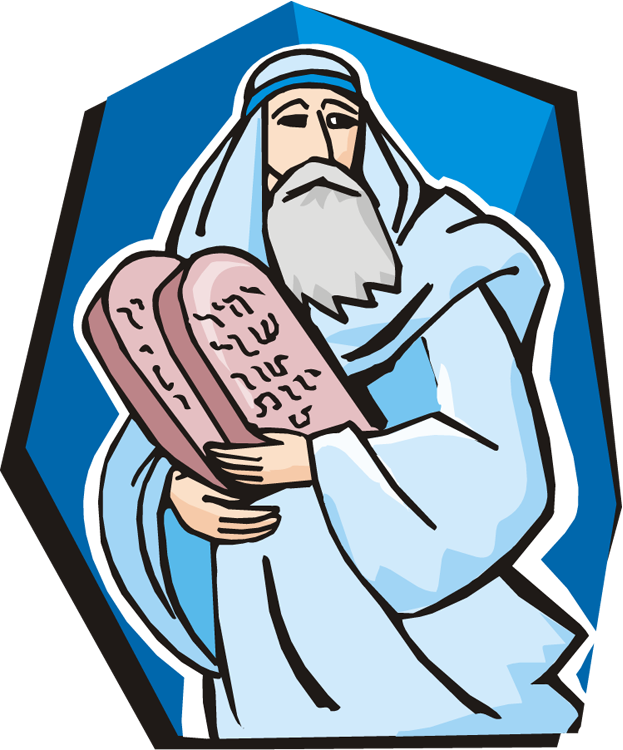
Moses’ descent of Mount Sinai on Yom Teruah with the second set of tablets containing the Torah prophetically foreshadows Yeshua’s second coming. As Moses renewed YHVH’s covenant with the repentant Israelites after the golden calf incident and the Israelites remained faithful for a long time afterwards, even so, Yeshua, at his second coming, will establish a renewed covenant with his faithful end time saints who have come out of golden calf-type religious systems.
In our day, YHVH is calling out a remnant of people from the church who are leaving behind the pagan traditions of golden calf worship and who are returning to the ancient blessed paths of YHVH’s Torah-instructions in righteousness. The Book of Revelation speaks of a group of end-time saints who will say “I do” to YHVH (Rev 14:4), and whose identifying mark is their faith in Yeshua the Messiah (i.e., the gospel message) and yet who faithfully keep YHVH’s Torah-commandments (Rev 12:17 and 14:12).
When Yeshua returns on or near Yom Teruah at the end of this age, he will be ready to marry a bride that is without spot and wrinkle and who has come out of the end-times Babylonian religious whore system (Rev 18:4). This bride who will be wearing the robes of righteousness of Torah-obedience (Rev 12:17; 14:12; 19:7–9) will be ready to enter into a new covenantal agreement—a wedding contract or ketubah—with Yeshua (Heb 8:7–13), the Bridegroom, ever to remain faithful to him and never again to return to Baal or golden calf worship. He will lead his wife into the Messianic Age or Millennium, even as Joshua, a prophetic foreshadow of Yeshua, led the younger generation of wilderness Israelites into the Promised Land.
Golden Calf Worship Among YHVH’s People Today
The Bible warns YHVH’s people against failing to learn the lessons of the children of Israel and their falling into golden calf worship.
Moreover, brethren, I do not want you to be unaware that all our fathers were under the cloud, all passed through the sea, all were baptized into Moses in the cloud and in the sea, all ate the same spiritual food, and all drank the same spiritual drink. For they drank of that spiritual Rock that followed them, and that Rock was Messiah. But with most of them Elohim was not well pleased, for their bodies were scattered in the wilderness. Now these things became our examples, to the intent that we should not lust after evil things as they also lusted. And do not become idolaters as were some of them. As it is written, “THE PEOPLE SAT DOWN TO EAT AND DRINK, AND ROSE UP TO PLAY.” Nor let us commit sexual immorality, as some of them did, and in one day twenty-three thousand fell; nor let us tempt Messiah, as some of them also tempted, and were destroyed by serpents; nor complain, as some of them also complained, and were destroyed by the destroyer. Now all these things happened to them as examples, and they were written for our admonition, upon whom the ends of the ages have come. Therefore let him who thinks he stands take heed lest he fall. (1 Cor 11:1–12, emphasis added)
Let’s look at the series of events that occurred as the children of Israel were leaving Egypt, which have major relevance to what is occurring in mainstream Christianity in our day. If we fail to learn the lessons of history, we will likely repeat the mistakes of history.
The following is a brief historical review of how Israel fell into golden calf worship.
Continue reading