Willful Sin Vs. Presumptuous Sin

Numbers 15:27–31, Two types of sin are delineated in this passage. They are the sin of ignorance and the sin of presumption (i.e., willful sinning, or literally, “sinning with a high hand”). For the first sin there is an offering or atonement. For the second sin, the penalty is death as illustrated by the example of the Sabbath-breaker in verses 32–36. It is interesting to note that breaking the Sabbath is the example the Torah uses to illustrate willful or presumptuous sin. Why is this? Likely, YHVH in his prescience realized that Sabbath observance would be a great bone of contention and point of struggle for his people. Indeed, even to this day, the idea of resting on the seventh day Sabbath still raises the antagonism of many in the church.

Numbers 15:30–36, The person who does anything presumptuously. Here we see an example of presumptuous sin with regard to the Sabbath. Presumptuous sinners despise the Torah-commands in YHVH’s Word thinking themselves to be above the laws of Elohim thus refusing to be ruled by it. The act of gathering the sticks on the Sabbath was an affront both to the law and the Lawgiver says Matthew Henry.

Here are some word definitions:

Presume means “to assume, to undertake without leave or clear justification, dare.”

Presumptuous means “audacity; overstepping due bounds, taking liberties.”

The Hebrew word for presume is ruwm/ OuR /resh-vav-mem sofit (Strong’s H7311) meaning “to rise up, be high, be lofty, be exalted, to exalt oneself, magnify oneself, to be rotten, and to be wormy.”

Reflect on your own life. Are there areas of disobedience in your life of which you need to repent? Many times we sin out of human weakness, not willful disobedience. Can such sin, if not eliminated, lead to presumptuous sin? Can we become so callous to sin that we become brazen and willful in our disobedience to YHVH’s laws? Paul talks about those whose consciences have become seared (1 Tim 4:2). What does this mean? In the Testimony of Yeshua, willful or presumptuous sin is often known in common parlance as the unpardonable sin. Note what the writer of Hebrews has to say about this (see Heb 6:6–7 and 10:26–31).


 

New Video: What Is the Higher and the Highest Torah?

Perfect Torah-obedience is NOT man’s ultimate goal or destiny! The Torah, as wonderful as it may be, is merely a vehicle to bring us to something that is even better and which is at a higher level as this video explains.


When YHVH says to go, to we stay put and vice versa?

Numbers 14:40–45, We … will go up. Now the Israelites prepare to go and to possess Canaan in their own strength and against the will of YHVH.

Matthew Henry discusses this showing how the carnal mind is enmity against YHVH, for when he bade them to go, they would not, and when he forbade them, that is when they decided to go. They distrusted his strength, and trusted in their own. What was the result of their expedition? Failure!

Let us take warning from the fate of Israel, lest we perish after the same example of unbelief. Let us go forth, depending on YHVH’s mercy, power, promise and truth. Do you think that the Israelites were rationally aware of what they were doing? We can easily look back in 20/20 hindsight and see the folly of their ways, but let us pray that YHVH gives us the discernment to see when each of us is guilty of the same in our own lives.


Do we really think that we’re better than the children of Israel?

Numbers 14:22, Have tempted me now these ten times. Israel, while in the wilderness, tested YHVH ten times and refused to heed his voice.

According to the Jewish sages, these ten times were: Exodus 14:11; 15:24; 16:3; 16:20; 16:27; 17:2; 32:4; Numbers 11:1; 11:4; and here (i.e., believing the spies’ evil report).

Look at each of these incidents where Israel “tested” YHVH and preferred to walk in doubt and unbelief rather than to trust YHVH’s Word. These are examples for us to learn from (1 Cor 10:11). Be blatantly honest with yourself: how many times have you tested your Heavenly Father in the same areas Israel did?


Donald Trump Revisited

2016 Donald Trump Hillary Clinton

Yesterday, Rick Wiles of Trunews (http://www.trunews.com) interviewed Dr. Robert Jeffress, pastor of the 12,000 member First Baptist Church of Dallas, TX. Jeffress is a member of the Executive Advisory Board to represent the concerns of evangelical Christians to Donald Trump. He also a personal friend of Donald Trump. He had some amazing things to say about Trump.

For example, last week, Donald Trump called a meeting of more than 900 American evangelical leaders in NYC to hear their thoughts and concerns and to explain to them what he would do to help Christians if he became president. When was the last time a presidential candidate did that?  Both Rick Wiles and Robert Jeffress were at that by-invitation only meeting. Moreover, at that meeting,Trump convened a faith advisory counsel comprised of major evangelical leaders to advise him on issues of concern to conservative Christians of which Jeffress is a member. This is unprecedented!

Here are some major differences between Donald Trump and Hillary Clinton according to Pastor Jeffress, and why, according to him, Bible believers should support Donald Trump’s presidency bid:

  • Donald Trump is pro-life. Hillary Clinton is pro-abortion up until the day a baby is born.
  • Trump promises to appoint conservative justices to the supreme court, and has even provided a list of names from which he will choose. There is no reason to doubt that Clinton will appoint the most activist “socialistic progressive,” liberal judges imaginable.
  • Trump is for religious freedom for Christian Americans as well as all Americans. Clinton has said that for women to have unfettered access to abortion “the deeply seated religious beliefs of some will have to be changed.”
  • Trump understands the threat to America from radical Islamists and terrorists, and has promised to protect this country from that threat. Clinton can’t even say the words “terrorist” or “Islamic terrorist” without choking on them.
  • Trump believes that Christians are being marginalized in the U.S. You will never hear this coming out of the lips of Clinton.
  • Trump has  promised to rescind the IRS’s 501C3 restrictions on churches and ministries from being able to speak out about public affairs and being active politically. He wants to remove the restrictions on Christian pastors and leaders from endorsing candidates and taking political stands. He wants to insure the religious freedom of pastors from being able to speak openly from the pulpit about political issues.
  • Trump likes Christians and wants to help them. With regard to Clinton, there is nothing to indicate that she has the same attitude. In fact, Clinton is a protege of Saul Aliniski, the radical “progressive” Leninist who dedicated his book, Rules for Radicals to Lucifer.

I encourage the reader to listen to Rick Wiles’ interview of Dr. Jeffress. The interview starts at 1:01.30 in the podcast (it lasts just a few minutes), and is available at: file:///Users/nathan/Music/iTunes/iTunes%20Media/Podcasts/TRUNEWS%20with%20Rick%20Wiles/TRUNEWS%2006_27_16%20Robert%20Jeffress%20_%20Globalist%20Revolution.mp3  (You will need to  copy this url and paste it into your web browser.)


Do you have faith or fear?

"Promised Land" Road Sign with dramatic clouds and sky.

Numbers 13:2, Send forth men, if you please (The ArtScroll Stone Edition Chumash). The implication here is that Elohim gave Moses permission to send out the spies, but left the final decision up to him. This idea is confirmed in Deuteronomy 1:22 where Moses states that the idea to spy out the land came from the Israelites, not from YHVH. By allowing them to do this, it appears that YHVH was deliberately putting them to the test to see if they would trust him when he had already told them that Canaan was a good land and theirs for the taking with his help. Would they walk by faith in his word and promises or would they have to see the actual land before believing YHVH’s word?

When YHVH gives you a promise, do you have to see it come to pass before believing it, or are you able to simply begin taking steps of faith toward the fulfillment of the promises without actually seeing any tangible evidence of the end goal? What has YHVH promised you and what steps of faith have you taken toward possessing your spiritual “promised inheritance?” (Read the scriptural definition of faith in Heb 11:1.)

YHVH did not choose the twelve spies, the people did; hence, the name of this parashah, “Send for Yourselves.” When people choose their own leaders the failure rate is high­—in this case ten of twelve leaders were faithless duds. Man-inspired and initiated efforts seldom produce lasting spiritual benefits. This effort ended in the Continue reading →


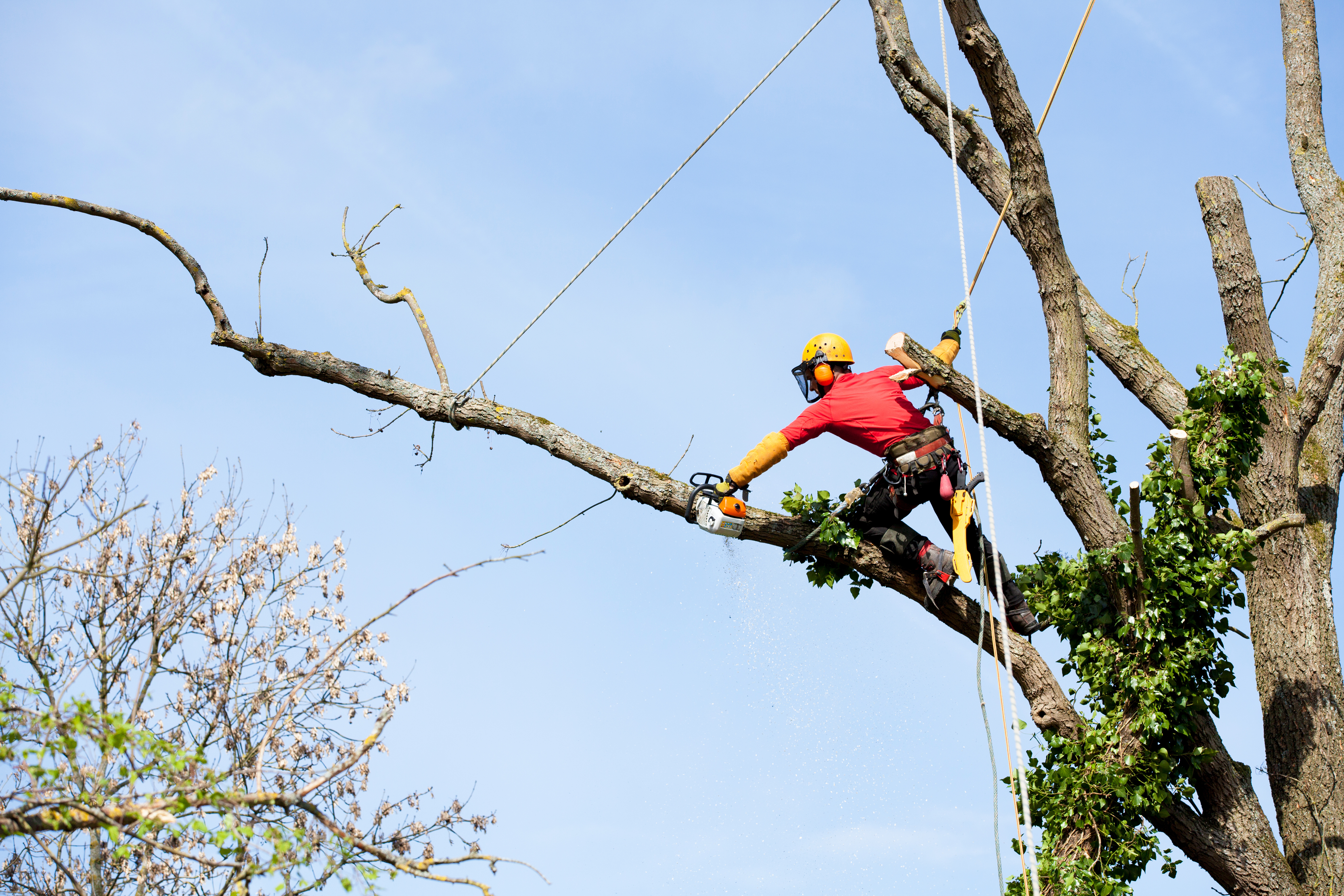
Help Wanted: Arborist/Amanuensis

An arborist cutting a tree with a chainsaw

Help wanted: A motivated young man in excellent physical condition who possesses basic arboricultural skills (i.e. pruning of trees and ornamental shrubs and basic tree climbing skills) and who loves the Torah and Yeshua to help me in my tree service business and ministry as my amanuensis. An amanuensis is a personal assistant or protege to a writer or teacher as Timothy, Titus or Mark were to Paul. He must also possess solid, general  computer skills.

As an arborist, you would work for me in my tree care business and be well-compensated financially commensurate with your skill level and desire to improve your skills as an arborist. I would use my 30 years of professional experience in this profession to help you.

young man reading small bible

As my amanuensis, I would use my 50 years in the Torah, 25 years in ministry and 18 years as pastoring a pro-Torah, Hebrew roots, gospel oriented congregation to mentor you in growing spiritually and in ministering the Word of Elohim to others. In return, you would help me from time-to-time an as-need basis as my personal assistant in the ministry.

If interested, please contact me at arborist@goodnewstree.com or at goodnewstree.com.