
By J. Nathan Lawrence at HoshanaRabbah.org
The following three articles are based on my research into the religion of Islam as well as its “holy” book called the Koran (or Qur’an). The first article is a review of a book where the author explores the dark and uncertain origins of the world’s second largest religion (after Christianity) and, based on unimpeachable evidence, comes to some surprising conclusions that will shock the reader. The second article is a study on the biblical figure called “the Antichrist” and “the spirit of antichrist”. Based on the Bible’s criteria for this person and the spirit behind the personage, the Islamic religion fits the definition of “the antichrist spirit” better than any other religious system. My third study is a critique on the Koran itself based on my reading the book from cover to cover. There I expose the most troubling things that the Koran teaches about the religion of Islam, what Muslims practice and their view toward and treatment of non-Muslims or “the infidels.”
Did Muhammad Exist—An Inquiry Into Islam’s the Obscure Origins
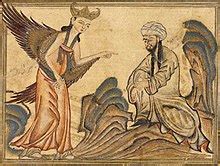
By Robert Spencer ISI Books; 2021 Wilimington, Delaware
A Book Review and Commentary on Muhammad and Islam’s Questionable Origins
By J. Nathan Lawrence at HoshanaRabbah.org
This impeccably and meticulously well researched book makes a compelling case for the following:
The religion of Islam fits the biblical definition of the spirit of antichrist and most likely the end times Antichrist figure will arise out of this religious system (see notes below).
The historical evidence presented in this book indicates that Islam was the spawn of an earlier aberrant and apostate form of first or second century Hebraic Christianity that denied the virgin birth of Yeshua, that he was the Son of Elohim, that he was incarnated, and resurrected from the dead. Clearly, the several of these points are defining characteristics of the spirit of antichrist as defined by John the apostle in his first and second epistles. The precursor Arabic religious system that over the period of a couple of hundred years eventually developed into what we now know as Islam may have been influenced by aberrant and heretical Christian influencers such as Marcion of Sinope, or possibly by religious movements known as Manichaeism, Nestorianism, Arienism and the Ebionites. To wit, like Islam, Manichaeism, for example, was an amalgam of several Rabbinic Jewish, Christian, Greek and other religious systems although Islam took on a more Arabic flavor, and then purported to be the final word (or divine revelation) of these religions which influenced it. However, unlike Manichaeism, Islam was decidedly mono-theistic and dogmatically anti-poly theistic.
In regards to the Christian origins of Islam, read the eyewitness testimony of John of Damascus in Syria (a.d. 675/6-749), a Christian monk who lived in the time and place of the birth of the religious system that later became known as Islam. He gives a detailed first hand account of how this religious system was spawned from aberrant and heretical form of Christianity. (See http://orthodoxinfo.com/general/stjohn_islam.aspx; https://hugoye.bethmardutho.org/article/hv11n2griffith.html; https://almuslih.org/wp-content/uploads/2024/11/Sahas-D-–-John-of-Damascus-.pdf; https://malankaralibrary.com/ImageUpload/e2ff05250ebc2278dd24208a9dbb8ae4.pdf; https://www.catholic365.com/article/30037/saint-john-of-damascus-his-encounter-with-islam.html; https://theologiaorthodoxa.wordpress.com/2025/06/25/john-of-damascus-against-islam/; https://medium.com/@albani/critically-examining-john-of-damascus-claims-about-islam-with-scholarship-7943fa965638).
Several Koranic scholars have discovered that the text of the Koran contains hidden behind it a ground layer containing a pre-Islamic Christian subtext or substratum (pp. 166ff; 181). The Koran’s defiantly anti-trinitarian viewpoint and dogmatic insistence that Christ is not divine coupled with the hard line assertion that Allah is one and there is none beside him seems to be a response to the Christian Orthodox position that Christ is the only begotten Son of God and that the biblical Godhead is a tripartite though singular Being (p. 181f). Moreover, the first few decades of the Arab conquest show the conquerors holding not to Islam as we know it, but to a vague creed with ties to some form of aberrant Christianity and Judaism (p. 182).
Spencer suggests that the Islamic belief that Jesus Christ was merely a created and not a divine being originated from either the heretical Christian teachings of Arius, a fourth century Christian priest, or the Jewish Christian Ebionites whose influence spread throughout to Syria and the surrounding areas in the centuries prior to the advent of Islam (p. 179).
This book confirms my previous discernments that Muhammad, if he even existed, was a sex-crazed, demon-possessed pedophile, who was driven by his craven lust for sex, conquest and power. Whether he existed or not or is merely a folkloric personality is immaterial. Millions of people believe that he existed, that he was “the messenger of God”(what god that may be is open to debate), and is therefore the epitome of what it is to be a Muslim, and, therefore, his life is to emulated including his lust for women and multiple wives and his penchant for the conquest and murder of his enemies. Thusly Islam is a religion that is driven by the desire to kill, steal and destroy (attributes of Satan himself according to Yeshua; see John 10:10), and is further empowered by the craven and rabid testosterone-driven lust for sex with one’s wife, wives, with children, as well as one’s slaves or with conquered infidels coupled with a lust for power, with no prohibition against one’s craven anger-fulled hatred against all non-Muslims or even other Muslims who do not believe as you do.
Spencer shows that Islam, based on numerous Koranic passages, is a totally contrived, confused and mongrelized amalgam of various beliefs and ideologies formed from the religions that were indigenous to the Arabian region of its era including Judaism, Christianity, Greek dualism, and various Arabian pre-Islamic pagan religious beliefs and practices and possibly even Persian Zoroastrian elements tossed into the mix.
Moreover, the Koran (or Qur’an) is a disjointed book full of out of context and unrelated and often contradictory and non-cohesive ideas manifesting a lack of unity and harmony with itself. The thumbprint or imprimatur of a transcendent Divine Intelligence that is present in the Bible is totally absent in the Koran. Spencer shows that Islam is more a political movement rather than a religious one. It is about empire building, the lust for conquest, power, material possessions and territory under the thin and unifying veneer of religion.
After reading this book and studying the history of Islam, the historical record confirms that Islam’s rapid spread across the Middle East, Near East, northern Africa and into southern Europe of the seventh and later centuries was driven by the lust for blood, power, sex, and booty and this remains the driving force behind Islam’s spread to this day.
Islam’s chief enemies are firstly Jews and Christians and then all people who are not Muslim. Why the intense hatred for the first two? My assessment is that this is because Christianity has Hebraic or Jewish roots, and from Christianity came the recognition of man’s Jewish Redeemer (Jesus or Yeshua). Moreover, it is the biblical religions of Christianity to a larger degree and Judaism to a lesser degree which have continuously opposed Satan and his counterfeit religious systems at every turn from the beginning and will continue to do so until Yeshua the Messiah’s return, at which time Satan will be forever deposed and bound in the bottomless pit for a season and then cast into the lake of fire for eternity. This whole idea is anathema to the satanic religion of Islam for obvious reasons.
Based on the evidence Spencer produces in his book (p. 207ff), he shows how Islam sprung from an amalgamation of several religious strains. This includes several Christian groups (e.g., the Nestorians and Jacobites) that were forced out of the Christian Byzantine Empire because of their denial of the tripartite Godhead after the Christian ecumenical councils which deemed them as heretics. These groups adhered to a strict monotheistic and non-trinitarian view of God. Moreover, Spencer points out that the earliest pre-Islamic Arab rulers appear to have been adherents to Hagarism, a monotheistic religion centered around Abraham and Ishmael where the worship of the (one) God of Abraham was the main focus as opposed to Christianity’s tripartite view of God. Additionally, Islam’s monotheistic focus seems to have encompassed some of the main elements of the monotheistic movements of its era including Hagarism, Judaism, Christianity and even Persian Zoroastrianism (to a lesser degree). Initially, and this is reflected in numerous passages in the Koran, Islam was more favorable to both Judaism and Christianity than it later came to be (which is also reflected in several Koranic verses pertaining to the murder and dismemberment of “the people of the book” or Jews and Christians). Islam’s former orientation vis-à-vis its religious rival is evidenced by Christian crosses that are to be found on early Muslim coinage and even in some early mosques, which Spencer documents elsewhere in his book. Spencer then goes on to postulate that from the seventh century onward over the next several hundred years, Islam slowly developed into what it is known as today in response to the need to unify politically and culturally the vast empire that the Arabs had conquered in a relatively short time from the second part of the seventh century onward, even as Constantine had effectively done when he embraced Christianity as the Roman Empire’s state religion in the early decades of the fourth century. Spencer postulates that the unification of the Arabic empire was the impetus for the codification of the Koran long after the supposed death of Muhammad and establishment of a distinct and defined Islamic theology and culture.
Revealing the Identity of the Antichrist
By J. Nathan Lawrence at HoshanaRabbah.org
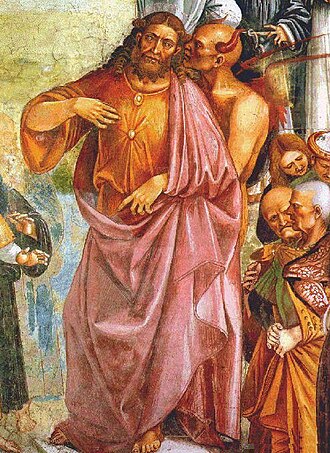
In his first epistle epistles, John the apostle mentions a term that has become synonymous with the archenemy of Christ or the Messiah and Christians everywhere. It is Antichrist. This word’s meaning is self-evident, but, by John’s own definition, let’s now discover who really fits the strictest definition of Antichrist.
The first place John mentions this term is in the second chapter of his first epistle.
Little children, it is the last hour; and as you have heard that the Antichrist is coming, even now many antichrists have come, by which we know that it is the last hour. (1 John 2:18)
John then goes on to make two further references to this arch-villain of the Messiah and his disciples.
…and every spirit that does not confess that Jesus Christ has come in the flesh is not of God. And this is the spirit of the Antichrist, which you have heard was coming, and is now already in the world. (1 John 4:3)
For many deceivers have gone out into the world who do not confess Jesus Christ as coming in the flesh. This is a deceiver and an antichrist. (2 John 1:7)
How does John define the spirit of antichrist? From 1 John 2:18–19, 22; 4:3; 2 John 7, we learn the following:
- The antichrist spirit was prophesied to come on the scene. Presumably, this specific spirit could not emerge until the Messiah had come and after his church was established.
- The Antichrist or the spirit thereof feigns to be the Messiah or the Anointed One from heaven and deceives people into believing this lie.
- Antichrist and all spirits of antichrist, in the most literal sense, emerged out of the first century apostolic faith of the Jewish Christian community or, by possible extension, its direct successors.
- The spirit of antichrist denies that Yeshua is the Messiah (Savior and Redeemer of man).
- This satanic spirit denies that Yeshua is part of the “Godhead”.
- Next, it denies that Yeshua is deity and is the Son of Elohim.
- Finally, it denies the incarnation of Yeshua.
This then is how the Bible defines the spirit of antichrist.
Other biblical references that many Christians scholars believe allude to this end times Antichrist figure include:
- The Beast (Rev 13:4)
- The abomination that causes desolation (Matt 24:15)
- The desolator (Dan 9:27)
- The man of sin (or lawlessness), the son of perdition (2 Thess 2:3)
- The little horn (Dan 7:8)
- The Assyrian (Mic 5:5; Isa 10:5; 14:25)
From all of these references, we learn that Antichrist will likely be an individual, but there is also the spirit of antichrist. That is to say, there are individuals and religious philosophies that are antichrist in nature.
What should be our reaction when we encounter this demonic spirit of antichrist? The wise counsel of John in his second epistle sums up our firm conviction on this matter.
Whoever transgresses and does not abide in the doctrine of Messiah does not have Elohim. He who abides in the doctrine of Messiah has both the Father and the Son. If anyone comes to you and does not bring this doctrine, do not receive him into your house nor greet him; for he who greets him shares in his evil deeds. (2 John 9–11)
What additionally can we learn about the person of the Antichrist and the spirit of antichrist from the four passages where antichrist is mentioned in John’s epistles?
From 1 John 2:18–19, 22; 4:3; 2 John 7 we learn that the Antichrist and all spirits of antichrist have come out of the first century apostolic faith of the Jewish Christian community. In the strictest sense, this eliminates some of the world’s largest religions (e.g., Hinduism, Buddhism, Witchcraft, Satanism, Animism, various indigenous religions, the Canaanite religions or Baalism, and other pre-Christian religious systems) as being contenders for the end times religion of the Antichrist. That leaves paganized mainstream Christianity and Islam. From John’s writings, we also learn that the spirit of antichrist denies that Yeshua is the Messiah (Savior and Redeemer of man), denies that Yeshua is part of the “Godhead,” is deity and is the Son of Elohim, and denies the incarnation of Yeshua. This rules out mainstream Christianity, even in its paganized or somewhat apostate form. Of the existing major world religions extant on earth today, only Islam fits the strictest biblical definition of Antichrist and religion thereof. At the same time, this is not to say that other religious systems or philosophies that are opposed to the Bible or Yeshua the Messiah do not contain some elements of the spirit of antichrist or are fellow travellers with Islam in its opposition to the Messiah and his true followers. But for the moment, we will focus on Islam.
Yes, it is true that Islam did not yet exist in John’s day. John died in the A.D. 90s, and Muhammad, the founder of Islam, was not born until A.D. 570. However, Islam did not spontaneously combust out of a religious vacuum. If one reads the Koran, one will discover that the tenets of Islam are pulled from several already existing religious systems of the day including Judaism, Christianity, the moon worshipping religion of Muhammad’s own tribal religious system, as well as from the Greek philosophers including that of dualism and gnosticism. When one reads the entire Koran, it becomes evident that Islam is a mongrelized, jumbled mixture of a various religious threads and traditions.
This then begs a relevant question. To what religious system was John specifically referring when he penned his first and second epistles probably late in his life in the A.D. 90s? What religious ideology was in existence in his day that had broken off of early Christianity and was proclaiming a false Messiah among other things? This most likely would have been the religion of gnosticism that Paul was already combatting in his epistle to the Colossians, and which rose to prominence under Marcion (the heretic) of Sinope (A.D. 85–160). Marcion came to prominence in the early to mid-second century A.D. Eventually, the early church fathers branded gnosticism as a heresy and Marcion a heretic for denying the bodily manifestation of Yeshua the Messiah. However, later on, Muhammad would pick up and proclaim some elements of this Gnostic heresy and it would be enshrined in the Koran. Thus, modern Islam is the descendant of this antichrist doctrine.
Now having established which major religious system fits the strictest definition of antichrist as John defines it, we cannot overlook the fact that John also states, “it is the last hour; and as you have heard that the Antichrist is coming, even now many antichrists have come….” While in the end times there may be one Antichrist figure that personifies a larger philosophy of rebellion against the YHVH Elohim and his divine Truth as revealed in his word, the Bible, John leaves the door open for there to be many other iterations of the antichrist spirit as well.
In the loosest sense, anyone, any philosophy, any religious system or anything else that opposes Yeshua the Messiah or Jesus Christ and the Word and Truth of the Bible is of the spirit of Antichrist. This would also include anyone or anything that aligns itself with Islam and takes a stand against the followers of Yeshua or those who teach the Word of Elohim. Let’s be frank here. This eventually includes almost the entire world! What are some current iterations of the spirit of antichrist? Besides Islam or the Moslem religion in general, the spirit of antichrist has many fellow travelers accede to this spirit to one degree or another:
- Anti-Semitism
- Replacement theology in Christianity
- Opposition to Christian Zionism
- Opposition to Christian nationalism
- Opposition to YHVH’s Torah-law or instructions
- Marxism
- Atheism
- Socialism including so-called Democratic Socialism (i.e., soft Marxism)
- Democracy as a governmental form when is it separated from it biblically based, constitutional foundations and roots and becomes subject the whims and will of the people and the powers that formulate and perpetuate public opinion.
- The philosophy of evolution.
- Satanism, Luciferianism, witchcraft et al.
- All the non-biblical religions of the world.
- The United Nations
- “Christian” religious systems that deny the deity or incarnation of Yeshua the Messiah (e.g., Jehovah’s Witness, Mormonism, Christian Science, New Thought, Unity School of Christianity, New Age Christianity which refers to the “Christ consciousness”).
- Rabbinic Judaism which denies that Yeshua is the Messiah as well as his deity and incarnation of Yeshua.
Currently, the spirit of antichrist concurrently is rising up as it is emboldened by the decline of Christianity’s influence in the West in its rabid opposition to everything that even remotely pertains to or even suggests a connection to Yeshua the Messiah. This includes a hatred for the Jews, the nation (or State) of Israel, Christians, the Bible and all biblical values including the Judeo-Christian moral and spiritual foundations of the Western nations.
Moreover, there are strains of the spirit of antichrist in modern religious Judaism, and even mainstream Christianity. That is why YHVH pleads if not commands his people to come out of Babylon (Rev 18:4).
To be sure, the spirit of antichrist exists in all of the false religions of the world as well such socioeconomic systems as Marxism and all of its ungodly substrates.
Eventually, the nascence of the spirit of antichrist goes back to Satan the serpent in the Garden of Eden, when he deceived the first humans into joining him in his preexisting rebellion against the commands or the word of Elohim.
Ultimately, the evil spirit of antichrist, which is rebellion against YHVH’s Torah-word, has spread its destructive cancerous tentacles globally and now infests everyone and everything. In a word, the spirit of antichrist is nothing more than sin, which is rebellion against and the violation of YHVH’s Torah-law or commandments (1 John 3:4). Only through a relationship with Yeshua the Messiah, who came as Elohim in the flesh as the Son of YHVH Elohim, can sinful and rebellious man be redeemed and set free from the grip of the spirit of antichrist. Those who remain under the control of this satanic spirit will die in their sins, while those who repent and turn to Yeshua and receive him not merely as their Savior, but as their Lord and Master and love him by conforming their lives to his Torah-word will experience eternal life and inclusion in the kingdom of heaven as adopted sons and daughters into the family of Elohim.
Startling and Revelatory Insights from the Koran—The True Face of Islam Unmasked
By J. Nathan Lawrence at HoshanaRabbah.org
Introduction
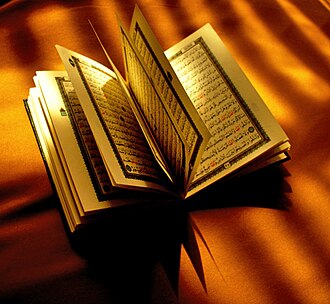
The Koran (or Qur’an) is the sacred book of the religion of Islam. It contains the sayings of Muhammad, the founder of Islam. In the Koran, Muhammad (ca. 570 to 632) claims that the sayings of the Koran came to him from God (or Allah) via the angel Gabriel. Based on a passage in the Koran (Sura 7:157), many believe that Muhammad was illiterate and was incapable of writing these sayings down himself. At the very least, he was unlettered and unlearned. Shortly after his death, some of his followers who had memorized his sayings met together and recorded in written form what they remembered Muhammad to have said. This is how the Koran came to be.
The Koran forms the bedrock of the Islamic faith, although there are other sacred books belonging to the religion of Islam that have sprung up since the Koran was compiled.
Since some of the practitioners of Islam are presently on a crusade to forcefully convert many countries to Islam, and since many Muslims terrorists have demonstrated a specific hatred for Jews and Christians, and since there is much misinformation being broadcast in the western media, by western politicians and western educators as to what Moslems believe and what the Koran actually teaches, I took it upon myself to read the Koran from cover to cover to see for myself what it says. Below are some of the amazing facts about Islam that I learned from reading the Koran.
The following references are taken directly from the Koran. Chapter (Sura) and verse references may vary from Koran to Koran. Those listed below are from The Koran by Ivy Books (published by Ballantine books in 1993, a division of Random House, New York, ISBN 0-8041-1125-1). I will occasionally provide some alternate versions of the Koran from several other translations for the purpose of confirming some of the more controversial passages.
Alternate versions of the Koran that I use for comparative purposes are:
AKa (The Qur’an, by Abdullah Yusuf Ali; Elmhurst, N.Y. : Tahrike Tarsile Qur’an, Publishers and Distributors of Holy Qur’an, 2005, ISBN 1-879402-29-7)
AKb Koran: Quran—The Final Testament; Authorized English Version; translated from the Original by Dr. Rashad Khalifa, Ph.D. by Islamic Productions, 2003, http://www.quran-islam.org/93.html).
According to the Koran
The Purpose of the Koran
The main purpose of the Koran is to warn all creatures (p. 294, Sura 38:79).
The Koran is a warning to the God/Allah-fearing (p. 375, Sura 69:48).
Muslim Theology
Moslems are to believe the Koran and the Bible (p. 58, Sura 4:136).
The koranic law of abrogation states that if something was written later in the Koran that contradicts something that was written earlier, the later cancels out the former (p. 10, Sura 2:100; p. 153, Sura 13:39).
One earns (immortality and) a spot in paradise or heaven by doing things that are right, and on the basis of one’s good works (p. 57, Sura 4:23; page 92, Sura 7:42; p. 198, Sura 20:111; pp. 251 and 255, Sura 29:6 and 57; p. 318, Sura 43:72). A sinner can be forgiven of his sins by paying alms, by being prayed over, through repentance and by his good works (p. 121; Sura 9:5–7).
Those who oppose Allah and Muhammad will receive eternal hell fire (p. 117, Sura 9:64; p. 113, Sura 9:17; p. 164, Sura 16:31). The Koran portrays the torments of hell in the stereotypical manner reminiscent of Dante’s inferno (p. 208, Sura 22:20).
Allah misleads some people and guides others (p. 152, Sura 13:27; AKb 13:27; p. 154, Sura 14:4).
At the creation of man, Allah commanded angels to bow down to worship man (p. 159, Sura 15:30–33).
Allah gave the Torah to guide the children of Israel (p. 171, Sura 17:2; AKb 17:2; p. 264, Sura 32:23).
There are seven heavens (p. 214, Sura 23:17). This is a concept that the Koran borrows from the pagan Greek philosophers.
Ishmael was a prophet and an apostle (p. 190, Sura 19:55).
Camels are used for sacrifices (p. 209, Sura 22:37) and for eating (p. 210, Sura 22:36).
The Koran teaches that Allah and the God of the Bible (YHVH Elohim) are one in the same, and the same God sent down the Book of the Law (the Torah) and the Koran (p. 254, Sura 29:45–46; AKb 29:46–47).
The soul of man is immortal (p. 255, Sura 29:58). This also is a concept that the Koran borrows from the pagan Greek philosophers who taught the concept of dualism.
There is no variableness in the way of Allah; that is, the word of Allah does not vary. In other words, the Bible and Koran do not contradict (p. 279, Sura 32:45), since the Koran teaches that both books came from the same God (p. 254, Sura 29:45–46). At the same time, the Koran claims to clear up (or correct the errors of?) the Bible and replaces them with truth (p. 64, Sura 5:18; p. 127; Sura 10:38).
Allah created the earth in two days (p. 307, Sura 41:8; AKb 41:9). If this is true, how can the Bible and Koran both be truth and the word of God, since the Bible states the earth and everything else in six days? Elsewhere, the Koran claims that the earth was created in six days (p. 338; Sura 50:37).
Paradise or heaven is guaranteed for those who fight and slay for the cause of Islam (pp. 121–122, Sura 9:11).
The Koran on Muhammad
Muhammad was an “unlettered prophet,” which is interpreted to mean that either he was illiterate or was unlearned (p. 101, Sura 7:157; AKb 7:157 says Muhammad was a “gentile prophet” in place of “unlettered prophet”).
Muhammad had many slaves and wives and lots of sex (p. 269; Sura 33:49–51; AKb 33:50–51).
The Koran on the Fate of Infidels (Non-Muslims)

The Koran teaches Muslims to seize the infidels (non-Muslims), to slay them wherever you find them and befriend none of them (p. 53; Sura 4:91; AKa 4:91).
The infidels shall be slain, crucified, have their alternate hands and feet cut off and banished from the land (p. 65, Sura 5:37; AKa 5:33; AKb 5:33).
Infidels are Muslim’s enemies (p. 55, Sura 4:105; AKb 4:101).
Strike off heads and fingertips of infidels (p. 106, Sura 8:12; AKa 8:12; AKb 8:12).
Non-Muslims must convert to Islam or die (p. 112, Sura 9:5; AKb 9:5).
Cut off the heads of infidels, make a great slaughter and enslave the rest (p. 328, Sura 47:4; AKb 47:4 leaves out the part about the great slaughter and tones down the part enslaving the rest).
Do not obey the infidels, yet abstain from injuring them (p. 268, Sura 33:47).
The Koran on the Bible
The Koran teaches Muslims to believe the Bible (p. 58, Sura 4:136).
The Torah, Prophets, Gospels and the Koran are from God (i.e., Allah, p. 66, Sura 5:48; p. 67, Sura 5:50, 52; p. 140, Sura 11:12; p. 190, Sura 19:52; p. 309, Sura 41:45).
The Koran replaces the Bible (p. 64, Sura 5:18).
The Koran corrects the confusion of the Bible (p. 127, Sura 10:38).
The Koran declares that the word of God does not change (p. 129; Sura 10:65), and the Koran on numerous occasions calls the Bible the word of God, yet implies that the Bible is confusing and states that it needs “clearing up.”
The Bible is the word of God (Allah) and is truth (p. 131, Sura 10:94 ; p. 311, Sura 42:16).
Allah tells Muhammad that if he is in doubt about what he (Allah) has told him, Muhammad is to go to the Bible to confirm the truth of it (p. 131, Sura 10:94). From this, it would appear that the Koran asserts that the Bible is the ultimate standard of truth and that only the truths of the Bible that the Koran enumerates are to believed.
The children of Israel were given the Torah or Hebrew Scriptures (p. 323, Sura 45:15).
The Torah confirms the Koran (remember that Muhammad was either illiterate or unread, so he probably never read the Torah, p. 325, Sura 46:11; p. 101, Sura 7:157).
The Koran confirms the Bible (p. 327, Sura 46:29).
Man was created from clots of blood (p. 404, Sura 96:2).
The Koran on Jews and Christians
The Koran teaches that there are righteous Bible believers—both Jews and Christians (p. 37, Sura 3:109–110; p. 49, Sura 4:48–49).
A curse is upon the Jews and Christians for not believing the Koran (p. 8, Sura 2:82; AKa 2:89).
God (Allah) has turned some Jews and Christians into apes and swine (p. 68, Sura 5:64–65; AKa 5:60).
The Koran describes ‘hell fire” as being like a Dante’s inferno for Jews and Christians (p. 208, Sura 22:17, 20).
Christians and Jews are to burn in the fires of Gehenna (p. 405, Sura 98:5).
The Koran’s View of Biblical Theology
The Koran teaches that Elohim, the God of the Bible is Allah, the god of Islam (p. 60, Sura 4:161). Please note that those who believe this believe the truth of the Koran over the truth of the Bible.
The Koran on Yeshua (Jesus)
The Koran teaches that Yeshua wasn’t crucified, didn’t literally die or resurrect, though God took him to heaven (pp. 59–60, Sura 4:156).
Yeshua died and was taken up to heaven (p. 32, Sura 3:48).
Yeshua is not the son of God and not God (p. 10, Sura 2:110; pp. 59–60, Sura 4:59–60; pp. 60–61, Sura 4:9; p. 69, Sura 5:76; p. 114, Sura 9:30; p. 225, Sura 25:2). It is a lie to believe that Yeshua is the Son of God (p. 179, Sura 18:2–3). Yeshua was only a man (p. 318, Sura 43:59). These quotes from the Koran should serve as ample proof that Allah and YHVH Elohim of the Bible are not the same God.
The Koran on the Biblical Narrative
The biblical patriarchs were Muslims (p. 12, Sura 2:126; AKa 2:132–133). Remember, the Koran makes this claim more than 2000 years after Moses penned the Torah, which records the stories of the patriarchs!
The disciples of Jesus (Yeshua) were Muslims (p. 32, Sura 3:45; AKb 3:52, reads “submitters” instead of “Muslims”).
Abraham and Ishmael founded Islam and established Islam’s holiest shrine, the Kaaba, in Mecca (p. 11; Sura 2:119–122; AKa 2:127).
God made the Abrahamic Covenant with Abraham and his descendants through Ishmael (not Isaac, implied, p. 11, Sura 2:118–119; AKa 2:124; AKb 2:124–125)
Abraham “sacrificed” Ishmael at the binding or akeidah (not Isaac) in Genesis 22, and Isaac was born after this incident (p. 287, Sura 37:100–110; AKb 37:102–103).
The Koran equates Ishmael with Elisha (both were righteous, p. 292, Sura 38:48).
Moses was the apostle of Allah (p. 317, Sura 43:45).
The Koran confuses Saul with Gideon (p. 24, Sura 2:250).
The Koran teaches that Allah sent the flood and the plagues upon Egypt (p. 98, Sura 7:130; AKa 7:133 says “plagues” instead of “the flood” ).
The Koran confuses Mary (the Mother of Jesus/Yeshua) and Miriam (the sister of Moses and Aaron) by calling Mary the sister of Aaron (p. 189; Sura 19:29).
The Koran states that Adam and Eve ate from the tree of life (p. 199, Sura 20:118) rather than the tree of knowledge as the Bible teaches.
The Koran states that Pharaoh and Haman were contemporaries (p. 244, Sura 28:5–7; p. 302, Sura 40:25). In reality, Haman lived nearly 1000 years after Pharaoh.
According to the Koran, Pharaoh had Haman build a tower (the Tower of Babel?) (p. 303; Sura 40:38).
The Koran states that the ancient Israelites who violated the Sabbath were changed into apes (p. 6, Sura 2:61; AKa 2:65).
The Koran on the Status of Women

Men are a step above women (p. 21, Sura 2:228; AKa 2:228 or “have the better right”) or are superior to women in the qualities God has given them (p. 48, Sura 4:38; AKa 4:34, or “men are protectors and maintainers of woman”).
Wives are men’s possession, lit. “their field” (p. 21, Sura 2:223; AKa 2:223 or “tilth”; AKb 2:223 “bearers of your seed”).
Scourge disobedient women (p. 48, Sura 4:38; AKa 4:34, or “beat them [lightly]”; AKb 4:34, “beat them”).
It is permissible to have up to four wives (p. 45, Sura 4:3).
Unrestrained sex with wives and slaves is permitted (p. 213, Sura 23:6; AKb 23:6, instead of “their slaves” reads “those who are rightfully theirs”).
The Koran Forbids the Selling of the Koran
Woe be to those who sell the Koran and make a profit from it (p. 7, Sura 2:73). This author had to pay $6.99 to purchase his copy of the Koran!
The Koran on Sex in Heaven
The Koran promises much sex in heaven with multiple wives for Muslim men (p. 3, Sura 2:23; p. 29, Sura 3:13; p. 321, Sura 44:50). There are rows of beds in heaven on which to have sex ( p. 341 Sura 52:20; p. 349, Sura 55:50–59; p. 386, Sura 76:13–22; p. 394, Sura 83:32). The sex slaves in heaven are perpetual virgins (p. 351; Sura 56:35). In light of the salacious sexual afterlife the Koran promises to Muslim men, is it any wonder that Islam has no problems finding so many homicidal terrorists who are willing to kill and die for Islam?
The Koran declares that a heavenly reward or paradise awaits those who slay infidels for the cause of Islam (pp. 121–122; Sura 9:11).
The Koran Permits Slavery
It is permitted to marry married women who have become your slaves (p. 47, Sura 4:28; AKa 2:25 ).
The Koran Advocates Freedom of Religion in Muslim Countries
The Koran advocates freedom of religion when it says, “Let there be no compulsion in religion.” (p. 25; Sura 2:257; AKb 256).
The Koran Declares That God Gave the Israelites Their Own Land
Allah gave the children of Israel the land of Israel for their heritage (p. 99, Sura 7:133; AKa 7:137).
Islam on Lying to One’s Enemies to Gain the Upper Hand
Islam instructs Muslims that when you’re weaker than your enemies or if one fears death due to religious persecution, it is permissible to deceive or lie to the infidel (presumable until such time as one has gained the advantage over one’s enemy and is then able to conquer them for Islam). This is referred to as “taqiya” (https://en.wikipedia.org/wiki/Taqiya). On the subject of deception and lying, the following website asks and answers this question: Does Islam permit Muslims to lie?
Muslim scholars teach that Muslims should generally be truthful to each other, unless the purpose of lying is to “smooth over differences” or “gain the upper-hand over an enemy”
There are several forms of lying to non-believers that are permitted under certain circumstances, the best known being taqiyya (the Shia name). These circumstances are typically those that advance the cause of Islam—in some cases by gaining the trust of non-believers in order to draw out their vulnerability and defeat them. [emphasis added, from https://www.thereligionofpeace.com/pages/quran/taqiyya.aspx]
The above-cited website then goes on to quote various Koranic passages as well those from other Islamic sources to substantiate lying to one’s enemies to gain the upper hand (e.g., the Hadith and Sira) that confirm the above statement (see also https://sites.google.com/site/muslimdeception/taqiyya; https://www.gatestoneinstitute.org/6587/carson-taqiyya-dissimulation).
Conclusion
Why is it important that you educate yourself about Islam? The Bible tells us that we are not to be ignorant of Satan’s devices (2 Cor 2:11). The spirit of Antichrist is behind the religion of Islam and that same spirit is knocking loudly on America’s door. As hard as it may be for Americans to believe, even our president, Barak Husein Obama, has Islamic connections, if not sympathies.
The prophets of the Bible speak distinctly about an end-time enemy of Israel (of both Jews and Christians) who will attempt through force to dispossess Israel of its land and heritage. This same aggressor will shed Israelite blood, and will gather other Israelite-hating nations into a confederacy that will attack the Israelite nations. The Bible refers to this enemy as Edom, who has a perpetual hatred for the people of Elohim (the God of the Bible).
The biblical prophets describe this time as being a low point in the national life of the people of Israel. This attack by Edom against Israel will be brought on by Israel’s (Jews’ and Christians’) spiritual apostasy from the Word of Elohim—the Torah. But the same prophets declare that out of the depths of spiritual and economic despair, the Israelite people (both Jews and Christians) will repent of their sins, cry out to their God, Yehovah Elohim, spiritual revival will ensue, and Elohim will then magnify his name among his people and deliver them from the hands of their enemies. This event incidentally coincides with the second coming of the Messiah of Israel, Yeshua the Messiah (Jesus Christ).
For more details on who end-time Edom is, what his game plan is and how that will affect you whether you live in America, other Christian nations, or in the state of Israel, read my article Is America in End-Time Bible Prophecy, which is available for free download at http://www.hoshanarabbah.org/pdfs/america.pdf.
