Don’t let resentment, bitterness and pride take you down!

If you get lifted up in pride and resentment, you’re headed for a fall!

Numbers 16:1–3, Took men…rose up…gathered together against. Notice a progression (or downward spiral) of actions on the part of Korah and his rebels. They separated themselves from fellowship, rose up against Moses, gathered together others of like mind and falsely accused leadership of wrong doings. This is the world’s formula for achieving political (humanistic) power and domination. It is the opposite method of advancing in YHVH’s kingdom where the way down is the way up; that is, when one lays one’s life down in service, spiritual reward, advancement and blessing will occur for that person (Matt 20:27; 23:10).

Rebels, like Korah, tend to separate themselves from fellowship, seek out other like-minded rebels, and then rise up in defiance and accusation against godly leadership. Again, this leads to political power.

On the other hand, the path to godly spiritual power is laid out in Acts 2:42–47 where the followers of Yeshua continued steadfastly in the apostles’ doctrine, in fellowship, breaking bread together, in prayer and sharing their goods with one another. The result was real spiritual power authority and anointing from heaven, and not power based on usurpation, human pride, degradation of others and self-promotion. This can only happen as people forsake not the assembling of themselves together (Heb 10:25), function according to the place and spiritual calling within the spiritual body of Yeshua submitted one to another as they walk in the spiritual light YHVH’s instructions in righteousness—the Torah.

Additionally, Yeshua taught that true power in the kingdom of Elohim is a result of one laying one’s life down for his brother and serving him in love and humility. Such a person will be elevated to a position of influence and authority because he has learned to serve others in love and selflessness rather than seeking to be served, which stems from a heart of selfishness and pride (Matt 20:25–28; 23:11–12).

The Jewish sages note that Korah and his band of malcontent had come under the power of resentment, which grew and festered until open rebellion broke out. Korah was a fellow Levite and cousin of Aaron who was among those “overlooked” for the priesthood and who were relegated to being “mere” assistants to the priests. He was also a firstborn of his household (Exod 6:21), and when the tabernacle sacrificial service was inaugurated Aaron’s sons replaced the firstborn Israelites in offering sacrifices. Furthermore, Dathan, Abiram and On were of the tribe of Reuben, the first-born child of Jacob. These men had their own grudge, since Reuben had lost his birthright as the firstborn son to the sons of Joseph because of sin (note 1 Chron 5:1).

What do we see here? Resentment (a function of pride and selfishness) leads to bitterness, which then leads to separation, then to uprising, then to accusation, then to rebellion against YHVH-ordained authority, then to attempted usurpation of authority, and eventually it leads to judgment and death. Is this not the path Lucifer took in his rebellion against YHVH Elohim? (Read Isa 14:12–23.)

The judgments of Elohim came upon both Lucifer and Korah, and both were cast down.

Pride goeth before destruction, and an haughty spirit before a fall. (Prov 16:18)
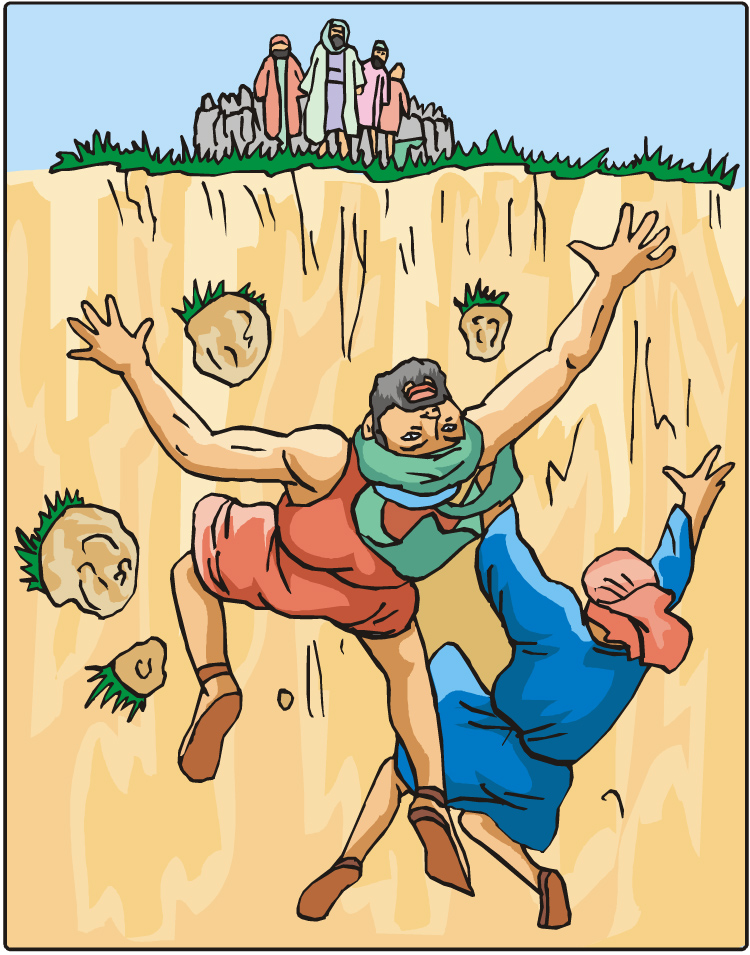
Korah falling into pit 20281294


The West’s Idols and High Places Are Being Attacked

Lightning 14747593

Ezekiel 6:3–5, High places…idols…corpses. As a judgment against the backslid and idolatrous “mountains of Israel” (Ezek 6:1), YHVH promises to bring a sword against his people as they are worshipping their idols instead of him.

The “mountains of Israel” in this instance is a poetic and prophetic Hebraism for the nations of Israel that YHVH has scattered around the world because of his judgments against their sin.

In this modern age, few people bow down to literal idols, but idolatry is as rampant now as it was in ancient times. Any person, thing or idea that gets in the way of or hinders a person from worshipping and obeying Elohim is an idol to that person. It may be money, sex, drugs, education, power, sports, philosophies, entertainment or pleasure.

The “mountains of Israel” today are largely the Christian nations of the world, which are backslid spiritually.

Typically, YHVH raises up Israel’s enemies to punish his backslid people in hopes they will repent of their sinful ways and return to him. The biblical Edom (or the jihadist Moslems) are YHVH’s end times paddle by which he is spanking his wayward people.

So what are the high places of the Christian nations where their idols are located that Edom is attacking resulting in slain corpses being strewn about? Think of the places where Edom has been detonating bombs and spraying bullets in their attempts to massacre the “people of the book” (as the Koran calls them), who are the Jews and the Christians. The West’s high places of idol worship include sports arenas and sporting events, Christmas parties, schools, night clubs, “gay” night clubs, financial centers, churches and other places of religious activity, places of governmental authority and military installations to name a few. All these high places where idolatry occurs represent the gods and idolatrous concepts of post-Christian Israelites who have rejected Elohim for their idols.

These are YHVH’s judgments upon his people to bring them to repentance.


Are your prayers being hindered or rejected by heaven?

22589945

Numbers 16:5–6, Who is his…take censers. Incense is a biblical metaphor for the prayers of men coming up before YHVH’s throne (Rev 5:8; 8:3). YHVH accepts some men’s prayers as holy and rejects the prayers of other men whom he deems not to be holy.

The story of Korah teaches us that YHVH doesn’t hear the prayers of self-centered, self-seeking, prideful and jealous rebels such as Korah et al (Prov 15:29). YHVH’s ears are open to the prayers of the righteous (Ps 34:15; 1 Pet 3:12; Jas 5:16; Heb 11:6).

The prayers of a righteous man can be hindered, as well, due to unrighteous behavior such as not treating his wife in a godly manner (1 Pet 3:7) or because we have ought with our brother (Matt 5:23–24).


Blog Scripture Readings for 7-2 Through 7-9-16

Aside

THIS WEEK’S SCRIPTURE READINGS FOR STUDY AND DISCUSSION:

Parashat Korach — Numbers 16:1 – 18:32
Haftarah — 1 Samuel 11:14 – 12:22
Prophets — Ezekiel 6:1 – 12:28
Writings — Esther 4:1 – 10:3
Testimony — 1 Corinthians 7:25 – 11:33

Most of this week’s blog discussion points will be on these passages. If you have general comments or questions on the weekly Scripture readings not addressed in a blog post, here’s a place for you to post those. Just use the “leave a reply” link below.

The full “Read Through The Scriptures In A Year” schedule, broken down by each day, can be found on the right sidebar under “Helpful Links.” There are 4 sections of scripture to read each day. One each from the Torah, the Prophets, the Writings, and from the Testimony of Yeshua. Each week, the Torah and haftarah readings will follow the traditional one-year reading cycle.

Weekly Blog Scripture Readings for 7/3 through 7/9/16.


Shabbat Shalom to all my friends in Yeshua around the world

As you know, I just posted a piece on Trump vs. Clinton. Reading this stuff is like walking through stinky barnyard muck that is knee-deep!

When I read Robert Daniel Phillip’s comment to that blog post, it punctuated the dilemma most Elohim-fearing, Bible-loving Americans are facing regarding who to vote for in our upcoming presidential elections.

The distasteful and bleak outlook of our elections in turn prompted me to take a stroll through my garden to de-pollute my mind. Here are some photographs of the flowers that are currently in bloom in my garden. Allow me to share this unparalleled beauty of YHVH’s creation with you on this beautiful Shabbat morning.

When the things of man look bleak and hopeless, let’s turn our eyes to YHVH the Creator and to the beauty of his creation all around us that silently shouts at us to cast our attention skyward to the source of all love, joy, peace, goodness and beauty. Yehovah Elohim is the ultimate Righteous Judge of the universe who, in due time, with the purifying fires of justice, will destroy all the wood, hay and stubble of men’s humanistic machinations and attempts to dethrone him.

I am casting my vote for YHVH Elohim—Yeshua!

Sorry Hitlerey, Tromp et al, but the flowers in my garden are a much prettier sight  to my eyes and sensibilities than you’ll ever be!

Shabbat shalom everyone…please enjoy the Creators gift to us of flowers!

IMG_4141IMG_4144IMG_4146  IMG_4131IMG_4135IMG_4139IMG_4136IMG_4140IMG_4137IMG_4147


How to Tie Tzitzit

I hope you will appreciate this vintage video I made a few years back. It was one of the first videos I did using my old i-Phone as a video camera, and is eighth most popular video (over 10k views) out of the 250 plus we have done to date. Please enjoy as you learn!

In this video, Natan Lawrence shows you how to make your own fringes or tzitzit (plural: tzitziyot). It’s fun and easy to fulfill the biblical command to wear fringes on your garments (Numbers 15:37-41). Free study guide available at http://hoshanarabbah.org/blog/2013/03/24/the-law-of-the-fringes/.


Resting on the Sabbath is an act of faith

Resting on the Sabbath day is not only about obedience to the laws of the Creator, but is also about worshipping the Elohim, about imitating him by doing what he did and thus becoming like him, and it demonstrates our faith in the Creator while we are obeying, worshipping and imitating him as we will discuss below.

Numbers 15:32–36, On the Sabbath day. Let’s take a closer look at the Sabbath desecration in the wilderness. The Torah juxtaposes the sins of idolatry and Sabbath desecration because they represent the same concept. Just as the idolater denies the sovereignty of Elohim, so too, one who flouts the Sabbath, which testifies to Elohim’s creation of the universe, declares his lack of faith in the Creator. Because of the vital place of Sabbath in the constellation of Jewish belief, the Torah places this incident here, although it did not necessarily happen immediately after the rebellion of the spies (The ArtScroll Stone Edition Chumash, p. 815).

Working on the Sabbath is evidence of lack of faith in the Creator to provide for our needs on the other six days so that we will not have to work on the seventh day. Working on the Sabbath is also a result of unbelief (faithlessness), which is fear (the antithesis of faith; see 2 Tim 1:7). It is doubt, unbelief and fear (faithlessness) that prevented Israel from entering into the Promised Land for 40 years (Heb 4:1–11). As we see from Hebrews 4, the Sabbath is a picture of entering YHVH’s spiritual rest and is a spiritual picture of the Promised Land and the Millennium. When we rest from our physical labors on the seventh day we demonstrate that we have the requisite faith to enter the spiritual or millennial rest that YHVH has prepared for us, unlike the ten evil Israelite spies who lacked the faith in YHVH’s word necessary to go in to possess the Promised Land. Joshua and Caleb had this faith and they were able to go in. Remember that the Sabbath is the sign of the Sinaitic Covenant (Exod 31:7, 13). If one walks in the righteousness of that covenant, one will be a recipient of the promised blessings of the New Covenant, which also includes the blessings of Torah-obedience as found in the Sinaitic or Mosaic Covenant. Perhaps this is why the Sabbath incident is juxtaposed with the spy incident in this section of the Torah. It shows the connection between keeping the Sabbath and entering the Promised Land.