What is the “cup of salvation?”

Psalms 116:13, Cup of Salvation [Yeshua]. This is the only place this phrase occurs in the Scriptures, and it’s prophetic significance should not to be overlooked.

The Hebrew word cup [kos] often relates to Elohim’s judgment as he pours out his wrath upon rebellious people (e.g. Jer 25:15). Yeshua encountered this cup at Gethsemane (Matt 26:39).

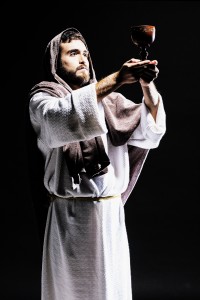
There is also a cup of blessing, which men can drink from if they choose to do so. This is the cup of YHVH’s blessing and forgiveness through Yeshua that he offers to men. This is the subject of this passage. Interestingly, the third cup of the Passover seder is called the cup of redemption (or salvation). This is the communion cup that Yeshua offered his disciples at the last supper. It was this cup that represented the blood of the Savior and that was taken along with the unleavened bread representing Yeshua’s body. This same cup of salvation pictures the saint’s blessed relationship with Yeshua, and is a picture of the new covenant, which, in reality, is the saint’s entering into a state of marriage betrothal to Yeshua their heavenly Bridegroom.


Three Feasts, Three Rooms and Three Spiritual Levels

Exodus 23:14–19, Three times you shall keep a feast.

Conventional Jewish wisdom teaches us that during the three biblical pilgrimage festivals of Passover/Unleavened Bread, Pentecost and Tabernacles all the individuals of the nation are to leave their place of individual isolation and are to rendezvous in the presence of the one Elohim of Israel. This was to occur in the festival circle (or chag) around the common sanctuary (where YHVH has chosen to place his name, Deut 16:2, 11, 15), thereby becoming conscious that each one is connected to all the other members of the nation, with YHVH Elohim, and with the Torah (The Pentateuch—Deuteronomy, p. 310, by S. R. Hirsch). In biblical times, the Israelites would gather wherever the tabernacle had been placed. When the temple was built in Jerusalem, this city became the destination of the Israelite pilgrims on these three biblical feasts.
20623991

But there is much more to this spiritual picture if we add Yeshua the Messiah of Israel into the picture, for each of the three feasts point directly to him. Passover and the Feast of Unleavened Bread, the Feast of Weeks or Pentecost, and the Feast of Tabernacles all point to Yeshua, since the first two festal periods point to Yeshua’s first coming, while the last fall feast points to his second coming. Each of these feasts represent milestones in the spiritual journey of the redeemed believer from initial redemption to glorification and eternal life in the presence of YHVH Elohim.

There were three sections in the Tabernacle of Moses (Heb. mishkan): the outer courtyard, the holy place and the holy of holies. These three correspond with the three parts of man, which are his body, soul and spirit (1 Thess 5:23). The feasts of Passover (Heb. Pesach) and Unleavened Bread (Heb. Chag haMatzot) are the first two feasts the righteous believers are to celebrate in the spring and represent the first steps in a new believer’s spiritual walk. This corresponds with the outer courtyard and relates more to the spiritual cleansing of the outer parts or body of man. It is here that one begins their spiritual walk and relationship with Yeshua, who is the Word of Elohim. The Feast of Weeks or Pentecost (Heb. Shavuot) is the next step one takes in their spiritual walk as one goes inside the Tabernacle of Moses. The tabernacle’s holy place speaks of bringing the soul (the mind, will and emotions) into submission to the will of YHVH as one advances in their spiritual walk and learns about the fruits and gifts of the Spirit of Elohim, who they are as redeemed Israelites, and about worship and praise.

Finally, the holy of holies corresponds to the Feast of Tabernacles (Heb. Chag haSukkot) and the spirit part of man. This part of the tabernacle speaks more to man’s ultimate spiritual relationship with Elohim. It is here that man relates to Elohim, who is a Spirit, on a deeper spirit to Spirit level (John 4:24; 1 Cor 2:10–13). This prophetically points to man’s ultimate destiny as glorified beings in the New Jerusalem as adopted members into the family of Elohim (John 1:12; Rom 8:14–15, 23; 9:4; 2 Cor 6:18; Gal 4:5–6; Eph 1:5; 1 John 3:1; Rev 21:7).


The Secular Judge and the Persistent Widow—An Encouraging Story

Luke 18:2, A judge. In this parable of the Persistent Widow and the Unjust Judge, Yeshua is using a Hebraic form of reasoning or argument called kol v’khomer where a point is made from a lesser weight to heavier weight. In other words, if premise A is correct, then how much more so is premise B correct?

Giudice - graffiti

In the Jewish religious thinking of the first century, this is one of the seven laws of biblical interpretation of Hillel the Great (ca. 32 b.c. to A.D. 7) who was one of the greatest Jewish religious leaders of Yeshua’s day. In this parable, Yeshua is making the point that if an ungodly, secular judge who cares little about the needs of a widow will grant her wishes because of her persistent pleas for justice against her enemies, how much more will Elohim hear and answer the prayers of his elect saints who have faith in him and cry out to him continually to avenge them of their enemies.

A day of judgment is coming when the scales of justice will be balanced in favor of the saints of the Most High Elohim, the Just Judge of the universe. Certainly Elohim presently attends to the needs of his servants and gives them victory over their enemies in many small ways. But many believers are still suffering greatly at the hands of the wicked who don’t fear Elohim. However, the day is coming when YHVH will move with a mighty hand and universally avenge his servants of all their enemies small and great. Until then, the righteous martyrs continue to cry out asking Elohim, “How long, O YHVH, holy and true until you judge and avenge our blood on those who dwell on the earth?” (Rev 6:10). His answer to them is to wait just a little longer (verse 11), for the great day of YHVH’s wrath, the wrath of the Lamb, which is coming upon the wicked (verse 17) is coming soon. Until then, YHVH promises to never leave nor forsake his servants (Heb 13:5), so be strong in him!


Abortion Is Anti-Torah!

Exodus 21:22, Hurt a woman with child. This passage is one of the strongest pro-life, anti-abortion verses in the Scriptures. Clearly, this passage teaches that life begins in the womb. What was the penalty for a man who was responsible for the death of an unborn child? (See verse 23.) Could any clearer statement be made about how the Creator feels about the sanctity of life? Here are some statistics about abortion:

  • 42 million abortions occur worldwide each year (that’s 115,000 per day).
  • In 2008, 1.21 million abortions occurred in the U.S.
  • From 1973 to 2008, 50 million legal abortions occurred in the U.S.
  • 22 percent of all U.S. pregnancies end in abortion.
  • In 2007, 84% of all abortions were performed on unmarried women.
  • At current rates, nearly one-third of American women will have an abortion.

(Sources of information: abortionno.org/Resources/fastfacts.html; guttmacher.org/pubs/fb_induced_abortion.html; abort73.com/abortion_facts/us_abortion_statistics/ — this is now a dead link)

The murder of the innocent children is perhaps the greatest sin that a nation can commit. Abortion is a form of child sacrifice, which is something many ancient cultures practiced (the Aztecs, Incas, Phoenicians, pre-Islamic Arabs, and the biblical Canaanites). In the Bible, YHVH condemns the practice of heathens and apostate Israelites who made their children pass through the fire in worship of the demon-god Moloch (See Lev 18:21; 20:2–5; Deut 12:30–31; 18:10.) What judgment did YHVH place on the Jewish nation for sacrificing its children to Moloch? (See Jer 7:30–34; 32:35–36.)

This verse clearly delineates the biblical position that human life begins at conception (see also Ps 139:13–16; Jer 1:5; Luke 1:15, 41, 44), not at birth.


Blog Scripture Reading for 1-31 Through 2-6-16

Aside

THIS WEEK’S SCRIPTURE READINGS FOR STUDY AND DISCUSSION:

Parashat Mishpatim — Exodus 21:1 – 24:18
Haftarah — Jeremiah 34:8-22; 33:25-26
Prophets — 1 Kings 18:1 – 22:53; 2 Kings 1:1 – 2:25
Writings — Psalms 113:1 – 119:16
Testimony — Luke 16:1 – 19:48

Most of this week’s blog discussion points will be on these passages. If you have general comments or questions on the weekly Scripture readings not addressed in a blog post, here’s a place for you to post those. Just use the “leave a reply” link below.

The full “Read Through The Scriptures In A Year” schedule, broken down by each day, can be found on the right sidebar under “Helpful Links.” There are 4 sections of scripture to read each day. One each from the Torah, the Prophets, the Writings, and from the Testimony of Yeshua. Each week, the Torah and haftarah readings will follow the traditional one-year reading cycle.

Weekly Blog Scripture Readings for 1/31 through 2/6/16.


The Ten Commandments—The Torah’s Great Cornerstone

Exodus 20:1–17, An Overview of the Ten Words (Commandments)

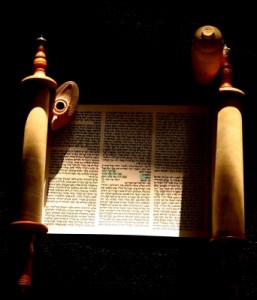
The Ten Words or Ten Commandments by which they are more commonly known are but the mighty cornerstone of the 613 commandments of the Torah.

Torah scroll open 2

The Jewish sages teach that all 613 are implied in the Ten; or that the Ten can be expanded into 613. The Tanakh (Old Testament) and Jewish writings contain a number of phrases that express the quintessential essence of the Torah. One of these best-known passages naming several of these phrases is in the Jewish Talmud: “[R.] Simlai said, ‘613 commandments were given to Moses—365 negative mitzvot (commandments), the same as the number of days in the year, and 248 positive mitzvot, the same as the number of parts in a man’s body. David came and reduced them to eleven (Ps 15), Isaiah to six (Isa 33:15), Micah to three (Mic 6:8), Isaiah again to two—“Observe and do righteousness” (Isa 56:1). Then Amos came and reduced them to one, “Seek me and you shall live” (Amos 5:4)—as did Habakkuk, “The righteous one will attain life by his trusting [or by faith] faithfulness (Hab 2:4)”’ (Makkot 23b–24a, abridged, from the Jewish New Testament Commentary, by David Stern, p. 565).

We see some of these same Torah summation-type statements in the Testimony of Yeshua. For example, the phrase, “the just shall live by faith” is found in three passages of the Testimony of Yeshua (Rom 1:17; Gal 3:11; Heb 10:38); In Leviticus 19:18, we find the phrase, “you shall love your neighbor as yourself,” which is the summation of the last five of the famous Ten Commandments. This in itself is a summation of all of the 613 Torah commandments that relate to human relationships, which we see in Yeshua’s Continue reading


Understanding Divine Healing From a Whole Bible Perspective

A couple of weeks ago, someone reading this blog asked me if I had any teachings on divine healing. I went back over the hundreds of teachings I have given in written and video form and to my surprise I found none. This was in spite of the fact that over the years I have prayed for many hundreds of sick people, and seen many miraculous healings including in my own body.

This study doesn’t cover all there is to say on the subject of divine healing, but it’s a start. I’ll do another teaching soon to pick up where this one leaves off. So stay tuned…!

My thanks to the brother who asked the question! May this be a blessing someone for YHVH’s glory.

Natan

21511470

The foundation for understand the concept of biblical healing is found in the Torah (the books of the law) and the Tanakh (the Old Testament). Without this foundational and a Hebraic perspective on healing, it is impossible to understand the holistic nature of healing as presented in the Scriptures. This is why we will start our study of healing from the Torah and progress to the end of the Bible.

In the following study, we will quote a Bible passage relating to the subject of healing, and then comment on it afterwards.

Exod 15:26, And said, If thou wilt diligently hearken to the voice of Yehovah thy Elohim, and wilt do that which is right in his sight, and wilt give ear to his commandments, and keep all his statutes, I will put none of these diseases upon thee, which I have brought upon the Egyptians: for I am Yehovah that healeth (Heb. rapha) thee.

Yehovah Rapha is one of YHVH Elohim’s covenant names. Rapha is a Hebrew word that means “to heal, make healthful” and can refer to Elohim, a healer or physician and involves being healed from individual distress, national hurts or defects.

YHVH’s covenantal promise of healing still stands today and is for his people—the saints (Eph 2:12). All of YHVH’s promises through Yeshua are yes and amein (2 Cor 1:20). YHVH promises to heal his people, but eventually everyone will die and then face YHVH’s judgment seat (Heb 9:27). Some people will be healed in this lifetime, while others will be healed when they receive their glorified bodies at the resurrection of the dead. Healing in the ultimate sense occurs when our old bodies die and we receive our new, resurrected and glorified bodies (1 Cor 15:50–56).

When we obey YHVH’s commands, we place ourselves in his river of life. Blessings and not curses come our way. When we go against his commandments, then the curses of sin automatically come upon us (Gen 2:17; Deut 28:1–68; Ezek 18:4; Rom 6:23). For generations our forefathers have violated YHVH’s commands, which is sin, and have Continue reading