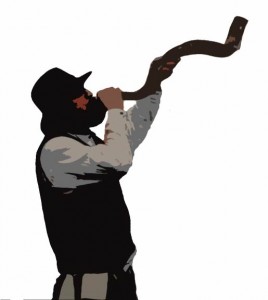
What’s So Mystical About the Sound of the Shofar?

Shofar-NL blowing

The Shofar

The ram’s horn shofar is a uniquely biblical instrument. Although the enemies of Elohim’s truth have misappropriated, counterfeited or perverted much of what is found in the Bible, so far as this author knows, the shofar is one thing that Satan, the adversary of all that is good, and his followers have left alone. It’s like the proverbial “hot potato” that’s too hot to touch. Why is this? What is it about the shofar that causes Elohim’s enemies to leave well it alone? Let’s explore the mystical qualities of this biblical instrument of divine origination that has the ability to stir the human heart at its deepest level, to pierce the heavens, to bring man back to Elohim and vice versa, and to send spiritual shock waves through the devil’s camp.

The Word Shofar Defined

The Hebrew word shofar (pl. shafarot) occurs 72 times in the Tanakh (Old Testament) and is usually translated into English as trumpet and simply means “ram’s horn.” What could possibly be so special about a ram’s horn? The answer possibly lies in root word from which shofar derives — shapar meaning “to be pleasing.” Derivatives of this word include sheper, which is translated as beauty in Genesis 49:21, and shipra meaning “fairness or clearness (of sky)” (Job 26:13). The root shapar is found only once in the Scriptures in Psalm 16:6 where David, filled with praise to Elohim, describes the blessings from above that have fallen on him as most beautiful or pleasant.

As we explore the spiritual significance of the shofar as revealed in the Scriptures in this brief study, hopefully, the beauty and significance of the shofar will become apparent.

The  Origination of the Shofar

Even though a shofar can be made from the horn of any kosher animal (except that of a cow, since, according to Jewish tradition, it reminds us of the golden calf incident), the Continue reading

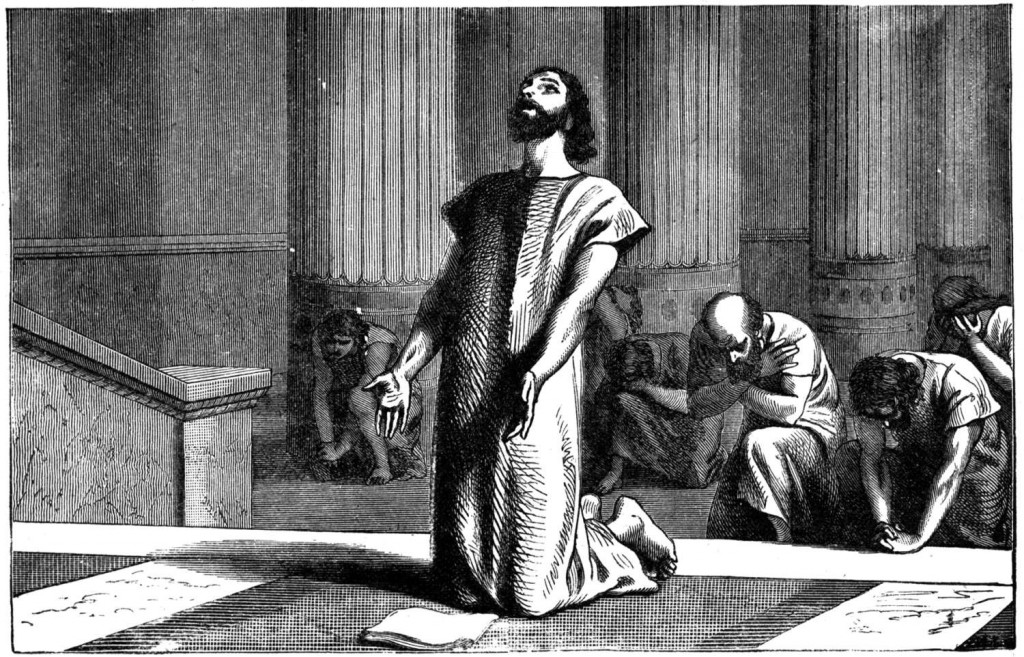
 

What’s involved in coming into YHVH’s Presence? Much food for thought!

Worship 580391

Exodus 19:10, Consecrate them today. How did Israel, as a bride-to-be, prepare herself to meet with YHVH? How are YHVH’s people now to be preparing themselves for their spiritual marriage with Yeshua? (Compare Exodus 19:10 with Revelation 19:7–9.) What is the righteousness of the saints (mentioned in Rev 19:8)? Righteousness is defined in Psalms 119:172 as, “… all thy [Torah] commandments are righteousness.” If what the Scriptures define as righteousness (i.e., the Torah) was “nailed to the cross,” as is popularly taught, then who is in error? The Scriptures or those who teach against YHVH’s Torah laws?

Discussion A. Why is it essential to study the example of the children of Israel preparing themselves to come into the presence of YHVH in Exodus 19? After all, if Yeshua did it all for us, we can just come boldly before the Father’s throne anytime, anyway we want, right (Heb 4:16)?

Let’s explore this concept a little to see what the Bible has to say about it.

Paul says in I Corinthians 10:11,

Now all these things happened to them [i.e., the children of Israel] as examples, and they were written for our admonition, upon whom the ends of the ages have come. (See also Rom 15:4.)

The writer of Hebrews has something similar to say in his prefatory remarks to his statement in Hebrews 4:16 about coming boldly before the throne of YHVH through the merits of the sinless righteousness of Yeshua our High Priest. In the preceding several verses, the author draws upon the example of the children of Israel (Heb 4:1–10) as an example for us not to follow. They were a faithless and disobedient lot in that they rebelled against the Torah-word of Elohim.

Then in Hebrew 4:11, the author starts with the connecting word “therefore,” indicating Continue reading


Natan’s Commentary Notes on Luke 13

Some Spiritual Treasures from Yeshua

Luke 13:1–9, Repent or perish. Sometimes bad things happen to “good people” who are bearing no spiritual fruit. These “bad things” can be YHVH’s way of rehabilitating one’s spiritual tree for the greater good of bringing forth spiritual fruit even as an orchardist scarifies the soil in a fruit tree’s root zone and mixes in fertilizer (like manure) to stimulate and to help make it productive.

Treasure, examining

Luke 13:12, Woman…spirit of infirmity. Sometimes Yeshua healed people who neither asked for it, nor evidenced faith to be healed just for the glory of YHVH. From time to time, we hear of miraculous healings and divine interventions that saved people’s lives occurring for no apparent reason. Perhaps YHVH likes to stir the pot of human affairs occasionally just to draw men’s attention to him, bring glory to his name and to raise men’s hopes a bit that there is an Elohim who is sovereignly orchestrating things behind the scenes.

Luke 13:14, Ruler of the synagogue. (See also Matt 9:18; Mark 5:35, 36, 38; Luke 8:41, 49; Act 18:8, 17.) Heb. rosh hachenesheth. This was the ruler of the synagogue (Sketches, by Edersheim, p. 257).

Luke 13:15, Hypocrite. Yeshua was able to defend his actions and contradict the leader of the synagogue because he knew the Torah better than they did. This teaches us two things. First, just because one is a church leader doesn’t mean they know the Torah or the rest of the word of Elohim very well. Paul taught the “whole counsel of Elohim,” including Continue reading


An Overview of YHVH’s Marriage to Israel as Fulfilled in the Lives of Redeemed Believers

Exodus 19–31 and the Marriage of YHVH to Israel—Types and Shadows

YHVH married ancient Israel at Mount Sinai.

Read Ezekiel 16:1–14

Redeemed believers are preparing to be the spiritual bride of Yeshua.

For I am jealous over you with godly jealousy: for I have espoused you to one husband, that I may present you as a chaste virgin to Messiah. (2 Cor 11:2)

Let us be glad and rejoice, and give honour to him: for the marriage of the Lamb is come, and his wife hath made herself ready. And to her was granted that she should be arrayed in fine linen, clean and white: for the fine linen is the righteousness of saints. And he saith unto me, “Write, Blessed are they which are called unto the marriage supper of the Lamb.” And he saith unto me, “These are the true sayings of Elohim.” (Rev 19:7–9)

What are the prophetic implications of and spiritual parallels between YHVH’s first marriage to ancient Israel and YHVH-Yeshua’s upcoming marriage to his bride—the saints who keep his (Torah) commandments and have faith in him (Rev 12:17; 14:12)?

Marriage 33370184

In his Parable of the Ten Virgins, Yeshua likens his bride to the five wise virgins who had oil in their lamps. Oil is a Hebraism for the Spirit of Elohim and the Torah. In other words, the prospective bride of Yeshua will walk in the Spirit of Elohim and the truth of Torah, which Yeshua tells us is a mandatory requirement if one is to have a relationship with YHVH (John 4:23–24; 1 John 2:3–6). We learn from the fact that since five foolish virgins who weren’t allowed into the wedding supper that not all redeemed believers will be the bride of Yeshua. Some believers will be the least in YHVH’s kingdom and some will be the greatest (Matt 5:19). According to Yeshua, how obedient one is to the Torah will determine one’s level of rewards in his eternal kingdom (Matt 5:19).

Between Exodus 19 and 24, we find recorded the steps Israel took to enter into a marital Continue reading


Blog Scripture Reading for 1-24 thru 1-30-16

Aside

THIS WEEK’S SCRIPTURE READINGS FOR STUDY AND DISCUSSION:

Parashat Yitro — Exodus 18:1 – 20:23 (26)*
Haftarah — Isaiah 6:1 – 7:6; 9:5-6 (6-7)*
Prophets — 1 Kings 11:1 – 17:24
Writings — Psalms 107:1 – 112:10
Testimony — Luke 12:22 – 15:32

Most of this week’s blog discussion points will be on these passages. If you have general comments or questions on the weekly Scripture readings not addressed in a blog post, here’s a place for you to post those. Just use the “leave a reply” link below.

The full “Read Through The Scriptures In A Year” schedule, broken down by each day, can be found on the right sidebar under “Helpful Links.” There are 4 sections of scripture to read each day. One each from the Torah, the Prophets, the Writings, and from the Testimony of Yeshua. Each week, the Torah and haftarah readings will follow the traditional one-year reading cycle.

* Verse numbers in parenthesis refer to the verse number in Christian Bibles when it differs from the Hebrew Bible or Tanakh.

Weekly Blog Scripture Readings for 1/24 through 1/30/16.


The “Lunar Sabbath” or Saturday Sabbath? Will the Real Sabbath Please Stand Up?

Has the Weekly Cycle Been Altered Since the Time of Yeshua?

Many have come to realize that if there is one thing in life that is certain it is that nothing is certain. The few things in life that seem to be unchangeable and rock-solid we tend to cling to tenaciously, for they give us a sense of permanency and stability—and we need that as we find ourselves being heaved and pitched to and fro on the oceans of change with ever increasing rapidity and frequency.

109236273

For many people, the weekly Shabbat (Sabbath) has been one of those Rock of Gibraltor foundational aspects of their lives to which they could anchor their spiritual ships—a harbor in which many have found safe refuge each week, week in and week out, month after month and year after year—with total faith and confidence that indeed the Shabbat was one thing that had never changed and would never change. Indeed, the enduring legacy of the Jewish people, nationless and often homeless for nearly two millennia, yet remaining a distinct people-group, can be attributed to the prominent place the weekly Sabbath holds within their community.

But the validity and immutability of the Shabbat is only as viable as the unchangeableness of the weekly cycle upon which the Shabbat is dependant. If the weekly cycle has ever changed then the correct day for observing the seventh-day Shabbat must immediately be called into question.

And while most Sabbatarians never even think to question the seeming inviolate nature of the weekly cycle, but unquestioningly assume that it has never changed, there is, nonetheless, a very small, fringe group of Sabbatarians who believe that the weekly cycle has indeed changed. These individuals are vocal beyond their size and some can be extremely aggressive, divisive and downright mean-spirited in their zeal to convert the Continue reading


The Blood of All the Martyred Saints on the Jewish Leaders?

Luke 11:49–51, I will send them…the blood of all the prophets. How can Yeshua logically lay at the feet of the spiritual teachers of his day the blood of all the prophets and apostles from the time of Abel to Zechariah?

Blood stains

Simply this. In all that the prophets of old did and preached, they pointed the way to Yeshua the Messiah.

For example, Abel preached Yeshua when he brought a lamb offering to Elohim. By the fact that Yeshua’s generation of religious leaders would reject him and condemn him to be crucified, they represented a false, demonic and murderous antichrist religious system that had been responsible for the deaths of all of YHVH’s servants to that time. Instead of repenting of their sins and accepting Yeshua as the promised Messiah to which all the prophets of old had pointed, they joined their voices and forces with the chorus of antichrist rebels and dissenters including with Satan himself—the arch instigator of that rebellion—in rejecting the Messiah.

By rejecting Yeshua, they tacitly approved of the deaths of all those who had gone before him pointing the way to him, and were therefore just as responsible for the deaths of the ancient prophets as if they themselves had been the ones who had actually killed them.