Leviticus 6
Leviticus 6:9, Shall be on the hearth. It took many hours (also see v. 12)—all night into the morning—to burn up an animal completely. Similarly, Yeshua hung on the cross for many hours—from sometime after the third hour (9 AM) until the ninth hour (3 PM). Not only this, but from the sixth hour (12 PM) to the ninth hour (3 PM) when Yeshua died, darkness come over the earth (Matt 27:45; Luke 23:44). Both the burnt offering and Yeshua’s time on the cross encompassed hours of daylight and darkness.
Leviticus 6:17, No leaven. Why does YHVH stipulate that the bread cooked on the altar of sacrifice for the minchah offering be without leaven? The main Jewish commentaries are unable to answer this question. It is not until we understand the spiritual implications of leavening as revealed in the Testimony of Yeshua that this prohibition makes sense. Leavening is a Hebraism for false doctrines, hypocrisy and sin (Matt 16:1–5, 12; Luke 12:1; 1 Cor 5:1–5). Unleavened bread, on the other hand, is a metaphor for sincerity and truth (1 Cor 5:5, the last words of the verse). This is why unleavened bread is consumed at communion on Passover, for it is a symbol of Yeshua’s sinless life that he offered up on the cross for sinners (Matt 26:26), and it symbolizes what should be the heart of the saint.
Now is time for the righteous saints of the Holy One of Israel to rise up in a spirit of meekness and tough love and shine the light of truth on the obvious. The fact that the communion bread in many Christian churches is often leavened speaks to an sad paradox. While claiming to set-free from sin, too many Christians are in fact the slaves to sin because of the church’s many false doctrines and unbibical teachings. This is because many Christian leaders and laity are either ignorant, ambivalent or outright antagonistic about YHVH’s Torah law which defines sin (1 John 3:4). Next, since leaven is a biblical metaphor for sin, false doctrine and hypocrisy, it is not a small coincidence that Christians often include leavened bread in their communion ritual. Why? This is a subtle indictment against them that their “Jesus,” to one degree or another, is a quasi-Torahless Jesus, who, in their minds, that he not only violated the Sabbath, the biblical dietary laws and many other Torah commandments, but “fulfilled” or “did away with” many of these laws, so that his disciples would not have to “come under,” that is, to obey YHVH’s Torah law. In other words, their Jesus either (a) violated the Torah, or (b) promoted the violation of it by his disciples. Either way, their Jesus is one who approves of Torahlessness or sin; therefore, it is fitting that their communion bread often contains leavening—a biblical metaphor for sin. Make no mistake! This is an indictment against their false and somewhat blasphemous sin-approving theology. The, leavened bread as part of the Christian communion ritual can never represent the sinless, “leaven”-free life of Yeshua. The Christian “Jesus,” yes; the biblical Yeshua? Never!
Backslid Israel (Samaria) Offered Leavened Bread
Amos the prophet rebuked the apostate Northern Kingdom for offering leavened bread to YHVH as part of their sacrificial offering—a practice that the Torah forbids. As a result this and other ungodly acts, YHVH’s judgment came upon Israel. Prophetically, the Northern Kingdom or house of Israel (as opposed to the Southern Kingdom or house of Judah) is a picture of the mainstream Christian church, which often offers leavened bread as part of their communion ritual—a sinful and even blasphemous practice, since (a) it disregards Torah’s prohibition of this and (b) it implies that Yeshua was a sinner.
Hear this word, ye kine of Bashan, that are in the mountain of Samaria, which oppress the poor, which crush the needy, which say to their masters, bring, and let us drink. Adonai YHVH hath sworn by his holiness, that, lo, the days shall come upon you, that he will take you away with hooks, and your posterity with fishhooks. And ye shall go out at the breaches, every cow at that which is before her; and ye shall cast them into the palace, saith YHVH. Come to Bethel, and transgress; at Gilgal multiply transgression; and bring your sacrifices every morning, and your tithes after three years: And offer a sacrifice of thanksgiving with leaven, and proclaim and publish the free offerings: for this liketh you, O ye children of Israel, saith Adonai YHVH. (Amos 4:1–5)
Ultimately YHVH will reject his people who refuse to obey his Torah-instructions (Matt 7:21–23). Sadly, Christians leaders have largely failed to instruct their people in the importance of Torah-obedience; thus, most Christians are ignorant with regard to the Torah’s proscriptions and prescriptions.
My people are destroyed for lack of knowledge. Because you have rejected knowledge, I also will reject you from being priest for Me; Because you have forgotten the Torah-law of your Elohim, I also will forget your children. (Hos 4:6)
Those who reject his Torah commandments will not have a right to the tree of life (Rev 22:14). In the mean time, because YHVH is merciful and gracious, he winks at our Torahlessness. But judgment is coming for those who refuse to come under the yoke of YHVH’s Torah-based covenants (Ezek 20:33–38; Matt 7:21–23).
Leviticus 6:28, Earthen vessel…shall be broken. To this day, there are piles of pottery shards of these earthen vessels in Shiloh in Israel near where the tabernacle once stood. I have several of these shards in my biblical antiquities collection.
Leviticus 7
Leviticus 7:18, 20, 21, 24 (also Lev 6:16, 18, 26, 29; ) Every male…may eat it or every person who eats of it.
The Torah Origins of the Communion Ritual and the Priesthood of All Believers
Why were the priests and the people allowed to eat some of the offerings? What is this all about? Let’s answer this question with a question. Why do believers in Yeshua eat the communion elements, and what do they represent? Is there a connection between the Levitical priests eating of the sacrifice and the saints eating the communion elements? Now let’s explore this idea.
In Leviticus 6:16, 18, 26, 29, only the male priests were allowed to eat of the sin offering; while in Leviticus 7:18, 20, 21, 24 any person may eat of the peace offering. Likewise, YHVH commanded the male priests to eat the baked unleavened bread of the minchah offering (Lev 6:16, 18). Interestingly, some 1,500 years later Yeshua himself not only continued this Levitical practice, but expanded and elevated it to a higher level when he partook of the bread and wine or communion at his last supper Passover seder.
When Yeshua initiated the communion ritual among his disciples, what in essence was he saying? Simply this. His disciples were all now his holy or set-apart priests. This is the origination of the concept of the priesthood of all believers, or the royal priesthood as Peter terms it (1 Pet 2:9), or a kingdom of priests John calls it who will rule with King Yeshua in his millennial kingdom (Rev 1:6; 5:10; 20:6).
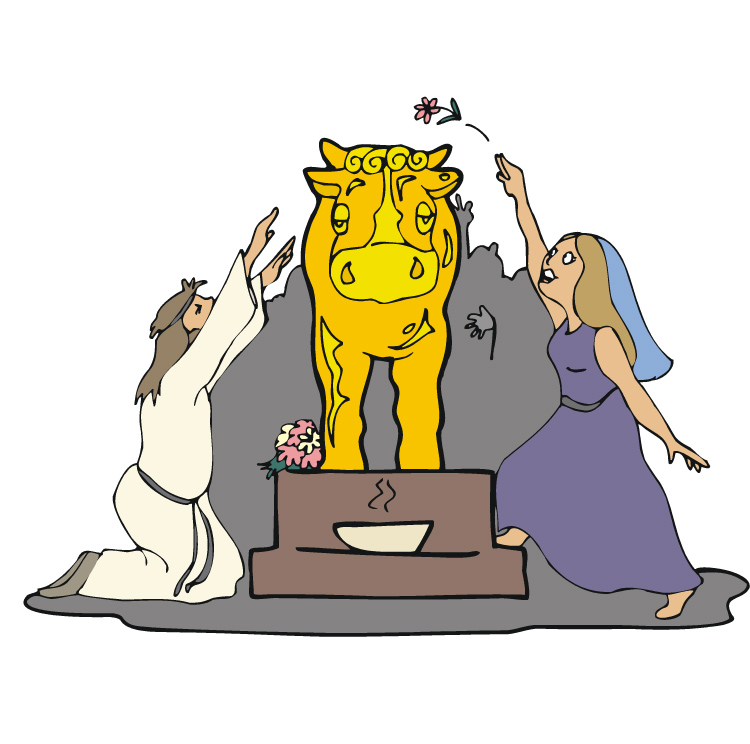
It was YHVH’s desire that the children of Israel would become such a priesthood even before he called the Levites to be his set-apart priests (Exod 19:6). However, they failed in this mission when they chose to worship the golden calf instead of YHVH (Exod 32). At that time, YHVH chose the faithful Levites to be his priests instead of the firstborn male leaders from all the tribes of Israel (Exod 32:26, 29; Num 3:11–13, 44).
Moreover, Isaiah prophesied about the priesthood of all believers—a priesthood that would extend beyond the confines of the Aaronic priesthood (Isa 66:21 cp. Dan 7:18). This higher level priesthood would extend beyond the patriarchal male leaders, who were the original priests in Israel (Exod 19:22, 24), to include all the Israelites, both male and female (Exod 19:6), as well as Gentiles who have been grafted into Israel through Yeshua the Messiah (Gal 3:28–29; Eph 2:11–19; Rom 11:11–32), which Paul refers to as the Israel of Elohim (Gal 6:16).
Being a kingdom of priests who will teach the inhabitants of planet earth the ways of Elohim is the role and destiny of all the modern day saints of Elohim who have been washed of their sins (i.e., Torahlessness, 1 John 3:4) in the blood of Yeshua (Rev 1:6), for they will reign with Yeshua on this earth (Rev 5:10) for a thousand years as Elohim’s resurrected and glorified adopted sons and daughters (Rev 20:6; John 1:12 cp. Rom 8:14–15, 23; 9:4; 2 Cor 6:18; Gal 4:5–6; Eph 1:5; 1 John 3:1–2; Rev 21:7).
So saints of the YHVH Elohim, encourage yourself with these immutable promises from the Word of Elohim! Are you presently preparing yourselves now for auspicious and lofty role?
Leviticus 7:13, Leavened bread. The Torah prohibited the offering of leavened bread on the altar (Lev 2:11). There are only two instances where leavening in bread was permitted in the tabernacle service. In this verse, leavened bread was offered in conjunction with the peace offering (Lev 2:13), where it was eaten as part of the sacrificial meal. This was not a sin offering, but the peace offering. Therefore the bread of this offering didn’t represent the body of Yeshua. It was merely part of the fellowship meal representing a peaceful and loving relationship between the offerer and the Creator, and was similar to a family picnic, dinner or barbecue. But it wasn’t placed on the altar, nor was it a part of the sacrifice, therefore, it wasn’t a prophetic picture of the sinless Yeshua dying on the cross.
The second instance of leavened bread being offered in a tabernacle service occurred when the Torah instructs the priests to wave two loaves of leavened bread on Shavuot or Pentecost before YHVH (Lev 23:17). These two loaves are prophetic and symbolic metaphors for the two houses of Israel (the northern kingdom and southern kingdom)—a spiritual picture of Jews and Christians. In this ceremony, the gracious and merciful Creator was demonstrating his acceptance of his people despite their sin.
Leviticus 7:23, Not eat any fat. All the organ fat of the ox, sheep and goats was used as part of the sacrificial service (Lev 7:30–31).The organ fat was given to YHVH as part of the burnt offering (Lev 1:3), the peace offering (Lev 3:3–4), the sin offering (Lev 4:8–10, 19). Fat is the Hebrew word cheleb/CKJ meaning “fat of humans or animals” or metaphorically, “the choicest, best part, or abundance of the land.” Therefore, the fat as one of the choicest parts of the animal, was reserved for sacrifice to YHVH on the altar. By not eating fat, the Israelites in their minds preserved a reverence for YHVH’s altar upon which the fat or the best part was offered to YHVH. To eat the fat was to show irreverence for that best part that belonged to Elohim, which is why the one who violated this commandments was to be cut off from the nation of Israel. As living sacrifices who have been redeemed or bought with the blood of Yeshua, are we giving YHVH the best part of our lives? After all, he so loved us that he gave us Yeshua, which was the best he had to offer.
Leviticus 7:26, Not eat any blood.
The Supreme Significance of Blood
YHVH revealed in his Torah-instructions that the life of flesh is in the blood (Lev 17:11). Therefore, the blood symbolizes the whole life of the living being. This is why the blood being poured upon the altar made atonement for the souls of men (Lev 17:11–12), since it represented and pointed to the shedding of Yeshua’s blood, when he sacrificed his life on the cross in atoning for men’s sins. Respecting the blood is necessary not only because it symbolizes the sanctity of the life of man who was made in the Creator’s image (Gen 1:26 cp. 9:6), but, more importantly, because of the blood of Elohim’s Son that was shed for man’s redemption (Lev 17:11). For one to eat the blood showed disdain for what the blood typifies. In times past, this was so important to YHVH that a violation of this prohibition resulted in one’s banishment from the nation of Israel.
The blood was to be reserved for the sacrificial service, where it was used symbolically to represent Yeshua’s shedding his blood on the cross. Prior to this, the blood of a lamb was put on the door posts to protect men from YHVH’s judgment against sin (Exod 12:7, 13). A little later, Moses sprinkled the blood of oxen on the people symbolizing their coming into covenantal relationship with YHVH (Exod 24:5–8). Additionally, the blood of sacrificed animals was sprinkled throughout the tabernacle, on Aaron and his sons, and all around the altar to sanctify it. All these acts and uses of the blood were illustrative of the unrestricted cleansing power of the blood of Yeshua (Rev 1:5; 7:14; 12:11; 1 Pet 1:2, 19; Heb 9:12; 10:19–22; 12:24; 1 John 1:7; Matt 26:28), which is why YHVH expected his people to treat the blood with a reverence. Those who didn’t evidenced a heart of indifference for the set-apart or kadosh things of Elohim—an intolerable offence in the Creator’s eyes.
On the dark and satanic side, the blood of humans and animals is profaned through demonic rituals involving drinking it and even cannibalism. This is an abominable perversion of holy communion and was an aspect of ancient heathen religions (Ps 16:4; Ezek 39:17, 19 cp. Num 13:32), and is a practice in which the end time Antichrist heathens of the Babylonian whore system will engage (Rev 17:6; 18:13, 24).
Leviticus 8
Leviticus 8:2, Anointing oil … a bull…two rams…unleavened bread. Every aspect of the consecration ceremony of the priests involved the use of one of these elements each of which, in some way, pointed symbolically and prophetically to Yeshua the Messiah and his atoning death and resurrected life. This teaches that we need the work that he accomplished on our behalf both in this death and his resurrected life at every step in our lives “to make atonement for [us]” (v. 34).
Leviticus 8:1–36, The consecration of the priests. See notes at Exod 28:1–29:46.
What Is Holy and What Is Not…Who Determines It?
The Hebrew word kadash signifies “the state of something that belongs to the realm of the sacred, and which is set-apart for divine use and has been separated from the sphere of the secular, common or profane.” The Bible often uses the term holy (meaning “set-apart”) to signify this state of being. The word of Elohim designate many things as being holy orset-apart:
- The ground upon which YHVH is standing (Exod 3:5; Josh 5:15)
- The people of Israel (Exod 19:6; Deut 14:21; 26:19)
- The Sabbath (Exod 16:23; 20:8)
- The Tabernacle of Moses (Exod 26:33)
- The garments worn by the high priest (Exod 28:2)
- The altar of sacrifice (Exod 40:10)
- The offerings made on the altar (Lev 6:18)
- YHVH’s feast days (Lev 23:2)
- The camp of Israel (Deut 23:14)
- Heaven as the abode of Elohim (Deut 26:15)
- YHVH Elohim (Job 6:10; Pss 22:3; 78:4; 99:5)
- Zion and Jerusalem (Ps 2:6; Matt 27:53; Rev 22:19)
- The Spirit of Elohim (Matt 1:20)
- The angels (Matt 25:31)
- The servants of Elohim (Mark 6:20)
- The name of YHVH (Luke 1:49)
- Yeshua (Acts 2:27; 3:14)
- YHVH’s prophets (Acts 3:21)
- The saints (1 Pet 2:9; Rev 22:11)
- The Torah (2 Pet 3:21)
The people, times and items listed on this listed are holy because Elohim has designated them as such. Only Elohim has the power and authority to determine what is holy and what is not. Just because men and a religious institution designates or sanctify something as being holy or set apart to Elohim doesn’t mean that it is. The proclamations of men stating that something is holy may or may not agree with Elohim and his Word as to what is holy. If it doesn’t, then it is not holy regardless of the labels that men put on it. Examples of this would be manmade holidays and times of worship, people, places and items. Men’s attempt to elevate something that is otherwise of the world, the flesh or the devil to a state of supposed holiness is nothing more than a ruse to fool people into thinking that something is what it is not. Usually behind these efforts on the part of men to attempt to delude the unwary and unsuspecting masses is the quest for money, power and fame. As Paul notes in 2 Corinthians 11:13–15, there are many religious deceivers who appropriate to themselves religious titles, but who, in reality, are tools of Satan, the arch-deceiver who transforms himself into an angel of light. The devil and his humans agents are masters at counterfeiting Elohim’s truth and taking that which is holy and profaning or polluting it, again usually for money, power and fame.
Here is a short list of things that the Bible does not designate as holy, but some people do.
- The holy cross
- Holy water
- Mary, the holy mother of Yeshua
- Sunday
- Christian holidays
- The holy trinity
- The holy sepulchre of Christ
- The holy father (i.e., the Roman Catholic pope)
- Holy relics
- The Vatican (i.e., the Holy See)
- Holy Week
- Holy mass
- Holy cities (e.g., Rome, Mecca, Medina)
- The holy grail
- Holy moly
- Holy guacamole
- Holy cow
And the list goes on of the things that humans have designated as holy but are not holy according to Elohim.
YHVH’s people must learn to make a difference between that which he designates as being kadash (holy) andthat which is profane (Lev 10:10; Ezek 44:23). In order to do this, one must know what YHVH defines as set-apart in his Written Word and then align their thinking and lifestyle with that. Again, what the Bible calls holy and what religious call holy may or may not be in agreement.
The act of consecrating someone (or something, e.g. Exod 30:26), as occurs in Leviticus 8:12, often involves the ritual of pouring olive oil on them to signify their being set-apart for a special work or service. This is called anointing (see Exod 28:41; 29:7; 1 Sam 16:12; 1 Kgs 1:34; Isa 61:1; 2 Cor 1:21).
Yeshua’s title is Messiah (Heb. Mashiach) literally meaning, “one who is anointed, smeared or consecrated with (olive) oil.” The English word Christ derives from the Greek word Christos, which is the Greek equivalent of the Hebrew word mashiach. In biblical thought, the Messiah would be One coming from heaven who would possess a super-anointing of the Spirit of Elohim (Isa 11:1–10; 42:1–21; 61:1–3; John 3:34) to accomplish the purposes of Elohim on earth.
Have you placed your trusting faith in Yeshua the Messiah, the Anointed One from heaven? He is the only one who can take away the shame, guilt and penalty of your sin, and the only one who defeated death and the grave and can lead you past the veil of death and into immortality.
Leviticus 8:13, Hats. Hat is the Hebrew word migba’ah meaning “turban or headgear” and from gibah meaning “hill.” From these meanings, we can surmise that these hats were rounded affairs that extended upward above the head like a turban. The TWOT explains that this turban was of a convex shape that was worn by the ordinary priest and was different from that worn by the high priest.
Leviticus 8:23, Right ear. (also Exod 29:29) According to the Jewish sages, the putting of the blood on the right ear, thumb and toe of the priest signified the priest’s covenantal agreement to conform himself to the high spiritual calling to which YHVH had appointed him. He agreed to hear and understand, achieve or act and to walk in the ways of Elohim as a spiritual leader of YHVH’s people. The Jewish sages also stress that blood of the sacrificed animal placed on the priest’s ear, thumb and toe symbolizes the death and giving up of that which is profane in the priest’s life and his spiritual rebirth or revival to the set-apart (holy) work and service of YHVH. This ceremony pictures self-surrender and giving oneself up at the altar of YHVH’s service. This is the greater issue behind the concept of sanctification. Sanctification is more than a label; rather, it is a lifestyle characterized by self-sacrifice, service and obedience to one’s spiritual master. This points forward to the purpose of the spiritually regenerated redeemed believer, who becomes a new creation in Messiah (2 Cor 5:17; Gal 2:20), and who is no longer his own, since he has been bought and paid for by Yeshua’s blood (1 Cor 6:20; 1 Pet 1:18–19). Furthermore, the blood on the ear, thumb and toe speaks to the fact that if and when we sin through hearing or doing something, or going somewhere we shouldn’t, the blood of Yeshua can cleanse us of sin, if we repent (1 John 1:9 cp. Isa 6:5–7).
Leviticus 8:30, Blood…upon his garments. Moses sprinkled blood upon the garments of Aaron. This prophetically points to Yeshua, our Great High Priest, whose garments at his second coming will be dipped in blood (Rev 19:13).
Leviticus 8:33; 9:1, Seven days…eighth day. Aaron and his sons were to camp at the door of the tabernacle for seven days and night next to the altar of sacrifice as they were going through the consecration process before going any further into it. Only after that would YHVH appear to them (v. 4). This teaches us an important lesson. One cannot simply rush into the presence of the Creator of the Universe (see Eccl 5:1–5). A consecration process must first occur. After seven days, when one has “become perfect,” then one can come closer to Elohim on the eighth day (eight is the biblical number signifying new beginning). During the seven days that Aaron and his sons were waiting to approach Elohim, they were no doubt thinking about the seriousness of their divine calling and reflecting on the fear of Elohim. This is an important for each of us to consider as we are learning to enter into a holy relationship with the Holy One of Israel.