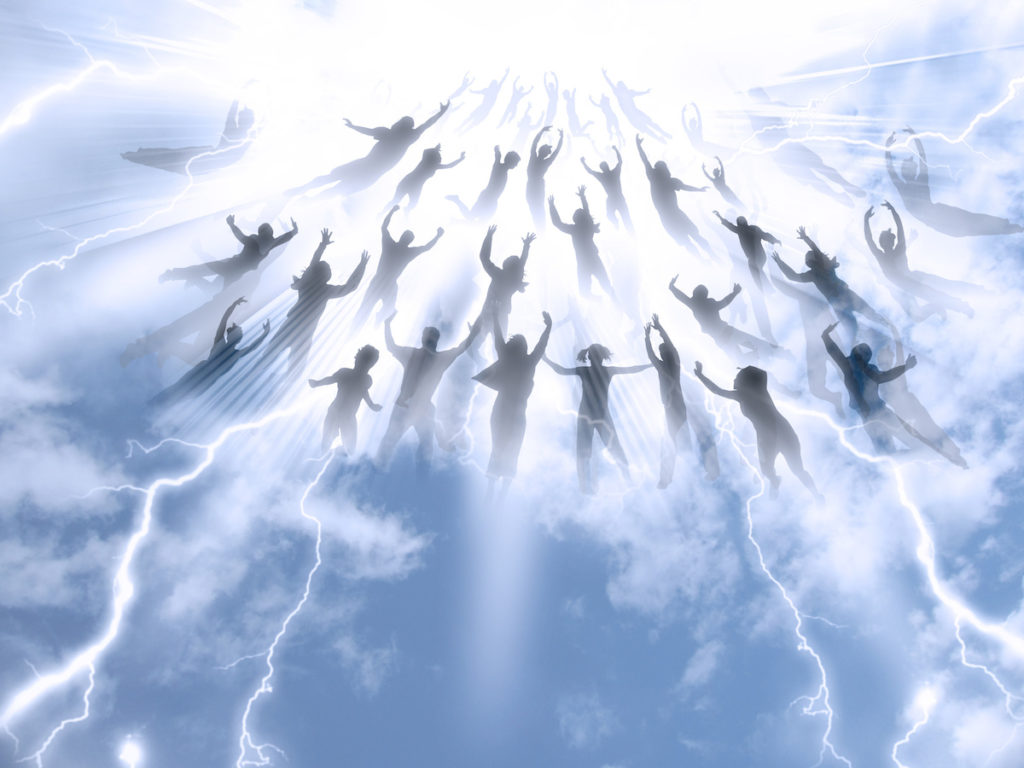
YHVH’s saints are people who walk in the past, present and the future all at the same time. How is this? The saints of YHVH, who are wise and filled with wisdom, knowledge and understanding, look to history to show them their roots to learn who they are, where they have come from, which in turn guides them forward into the future. YHVH’s wise children, the disciples of Yeshua also learn from the mistakes of those who have gone before them, so that they do not repeat these mistakes of the past and suffer the consequences of past failures. This understanding guides us in the present and helps to lead us forward into our future destiny, which is the anchor of our hope for tomorrow. This is why we are people of the past, present and future. The warrior bride of Yeshua as a child of the light knows her spiritual ancestry and heritage, who she is along with her divine mission and her future destiny.
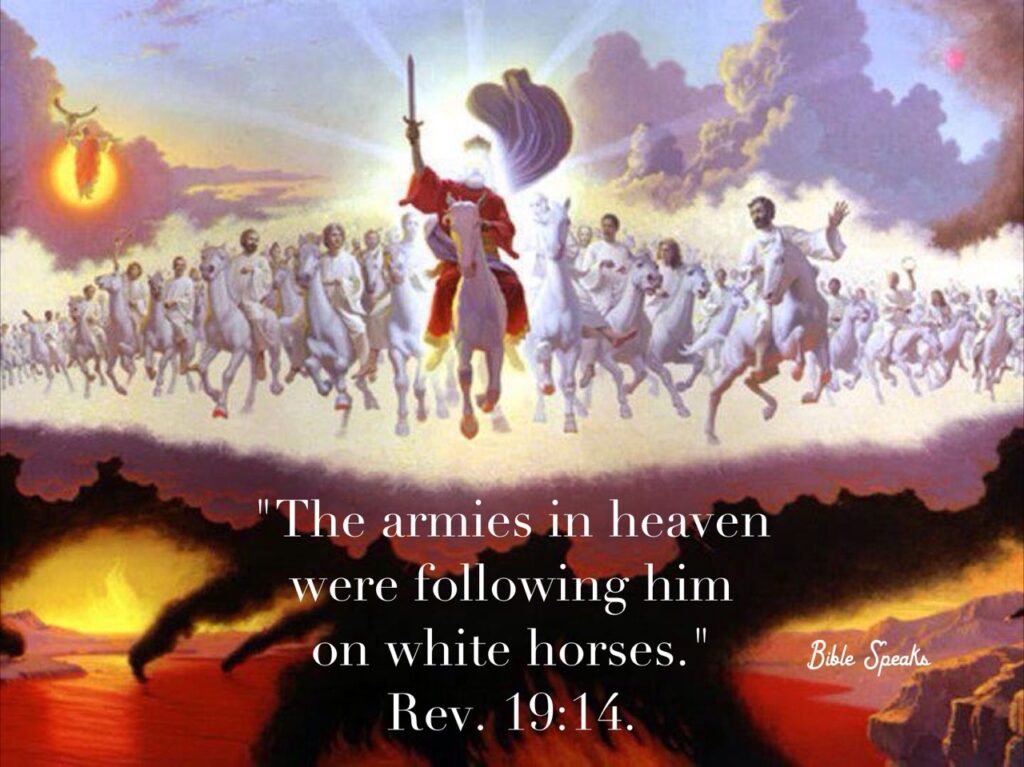
One key to unlocking the mysteries of the Bible is understanding the cycles of history. Like a giant wheel that keeps turning relentlessly and irrevocably, the Bible chronicles the endless cycles of YHVH’s people as they encounter the forces of evil and darkness and either overcome it, or succumb to it. To know the past is also to understand the future. In these end times, heaven’s enemies are pulling out the stops to destroy YHVH’s plans and purposes on this earth along with his people who are executing those plans to defeat his enemies and to spread and enlarge his kingdom here below through the spreading of the gospel. Yeshua’s bride will play a pivotal role in the end times in helping to prepare the way for Messiah’s return and will be part of his heavenly army that will defeat the forces of Antichrist.
As end time warriors for Yeshua our soon coming Warrior King—the Messiah Son of David—YHVH’s saints do not have to be children of darkness who are unprepared and who do not know what lies ahead. If we read the road map of the Bible, it will guide our steps like radar through the darkness and foggy mist of the future. Yeshua’s warrior bride will know who she is and what her role and destiny will be in the end times. She will be like the wise virgins in Yeshua’s Matthew 25 parable prepared and ready for her Bridegroom’s wedding (Matt 25:1–13).
The shofar trumpet is sounding in the distance for those who have the ears to hear announcing the soon coming King of kings, the saints’ Heavenly Bridegroom (Matt 24:31 cp. 25:6). Now is the time to awaken from our spiritual sleep (Rev 3:14–22), then to exit Babylonian religious systems which are mixture of good and evil (Rev 18:4), and to make ourselves ready by repenting of the sins, and donning the white ropes of the works of righteousness to be the bride for which Yeshua is coming from his Father’s house to marry (Rev 19:6–9). Yeshua through his apostolic servants is calling his bride to awaken and be ready for his soon return.
But concerning the times and the seasons, brethren, you have no need that I should write to you. For you yourselves know perfectly that the day of the Lord so comes as a thief in the night. For when they say, “Peace and safety!” then sudden destruction comes upon them, as labor pains upon a pregnant woman. And they shall not escape. But you, brethren, are not in darkness, so that this Day should overt take you as a thief. You are all sons of light and sons of the day. We are not of the night nor of darkness. Therefore let us not sleep, as others do, but let us watch and be sober. For those who sleep, sleep at night, and those who get drunk are drunk at night. But let us who are of the day be sober, putting on the breastplate of faith and love, and as a helmet the hope of salvation. For Elohim did not appoint us to wrath, but to obtain salvation through our Lord Yeshua the Messiah, who died for us, that whether we wake or sleep, we should live together with Him. Therefore comfort each other and edify one another, just as you also are doing. (1 Thess 5:1–11)
And do this, knowing the time, that now it is high time to awake out of sleep; for now our salvation is nearer than when we first believed. The night is far spent, the day is at hand. Therefore let us cast off the works of darkness, and let us put on the armor of light. Let us walk properly, as in the day, not in revelry and drunkenness, not in lewdness and lust, not in strife and envy. But put on the Lord Yeshua the Messiah, and make no provision for the flesh, to fulfill its lusts. (Rom 13:11–14)
In our quest to learn more about the end times role of the bride of Yeshua, let us step back into the annals of biblical history and uncover a mystery that will enlighten us as to what is happening on earth today with regard to the epic struggle between good and evil, light and darkness. We are literally going back into history to learn about the future, for, again, like a giant wheel that goes round and round, history often repeats itself again and again. Through this, we will gain an understanding of how Yeshua’s warrior bride figures into the giant picture of the events of the last days and how she can prepare to meet her Heavenly Bridegroom. Let us begin gathering the puzzle pieces and then begin assembling them to see what the Bible reveals about this rather mysterious figure which we refer to as Yeshua’s warrior bride. So buckle your seat belts as we embark on an epic journey through several thousand years of biblical history. It’s back to the future!
Let first start in Jeremiah 30:7 where we find a rather cryptic and arcane passage that has engendered much fanciful speculation among many Christian Bible teachers. Here is the passage:
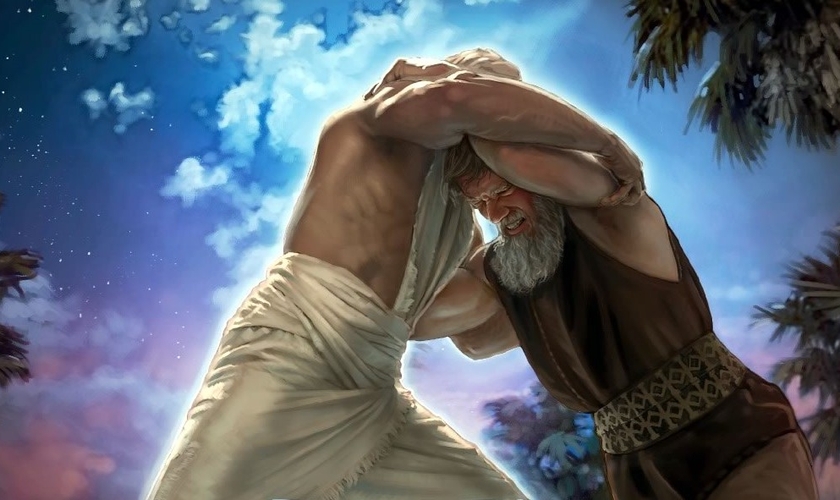
Alas! For that day is great, So that none is like it; And it is the time of Jacob’s trouble, But he shall be saved out of it. (Jer 30:7)
Forget the past speculations you have heard concerning Jacob’s Trouble. Instead let’s read the Bible and it will tell us. Understanding Jacob’s Trouble will unlock a treasure trove of information that will reward us with understanding concerning where we are presently at regarding the end times world as it relates to Yeshua’s bride as well as her role to play and her ultimate destiny.
Before defining Jacob’s Trouble in detail, we must first step back. Before facing Jacob’s Trouble, YHVH had to prepare his people for the face-off with evil they were about to encounter. YHVH will not leave his people defenseless and unprepared to face their enemy. He is a good and loving Father and Shepherd who goes before his children-sheep and prepares them for what is to come—IF they will follow his instructions! IF is a big word. YHVH’s protection and provision is always based on how his people respond to him. The choice is theirs. Wake up and get prepared or go back to the sleep of spiritual complacency.
The Bride of Messiah
Yeshua views the saints as his bride as do the apostolic writers. Yeshua cryptically alludes to this idea several times in the Gospels (Matt 9:15; 22:1–14; 25:1–13; Mark 2:19–20; Luke 12:25–40). Several apostolic writers openly discuss this theme in some of their writings as well.
For I am jealous over you with godly jealousy: for I have espoused you to one husband, that I may present you as a chaste virgin to Messiah. (Col 11:2)
Wherefore, my brethren, ye also are become dead to the law by the body of Messiah; that ye should be married to another, even to him who is raised from the dead, that we should bring forth fruit unto Elohim. (Rom 7:4)
Let us be glad and rejoice, and give honour to him: for the marriage of the Lamb is come, and his wife hath made herself ready. And to her was granted that she should be arrayed in fine linen, clean and white: for the fine linen is the righteousness of saints. And he saith unto me, Write, Blessed are they which are called unto the marriage supper of the Lamb. And he saith unto me, These are the true sayings of Elohim. (Rev 19:7–9)
And there came unto me one of the seven angels which had the seven vials full of the seven last plagues, and talked with me, saying, Come hither, I will shew thee the bride, the Lamb’s wife. (Rev 21:9)
Two Old Testament prophets also predict Yeshua’s marriage to his Israelite bride.
And I will betroth thee unto me for ever; yea, I will betroth thee unto me in righteousness, and in judgment, and in lovingkindness, and in mercies. I will even betroth thee unto me in faithfulness: and thou shalt know YHVH. (Hos 2:19–20)
For thy Maker is thine husband; YHVH of hosts is his name; and thy Redeemer the Holy One of Israel; the Elohiim of the whole earth shall he be called. (Isa 54:5)
In this video, Nathan shares insights about the timing of second exodus, who will be raptured (that is, resurrected at the last trumpet to meet Yeshua in the air), what happens to the saints after the first resurrection or rapture, the timing of the second coming, who will be the bride of Yeshua, and how this all relates to the defeat of Antichrist and Babylon the Great and marriage of the Yeshua. Buckle your seat belts and hang on tightly. This is a fast moving aerial view of many end time Bible prophecies!
By Ya’acov Natan Lawrence Hoshana Rabbah Biblical Resources
This will be one of the most comprehensive articles you have ever read on this subject and contains revelation you will read nowhere else.Hopefully it will help to light your spiritual fires!— Nathan
Arise thou that sleepest, and arise from the dead, and Messiah shall give thee light. (Eph 5:14, also 8–16)
Yom Teruah—The Beginning of the Fall (End-Time) Harvest
Yom Tom Teruah or the Day of Trumpets, Shouting or Shofar Blasts (commonly called “Rosh Hashana”) occurs at the end of the summer months and marked the beginning of the fall harvest or festival season for the ancient Israelites. But this biblical holiday is much more than a time to harvest the late summer and early fall fruits and vegetables from your garden or orchard. Rather, it is a time of the harvest of souls for the kingdom of heaven! Read on and discover how and when this will occur and how you can be part of this glorious event.
In the Creator’s larger plan of salvation for humankind, Yom Teruah is the fourth of seven of YHVH Elohim’s biblical holidays or holy days (colloquially referred to as “feasts”), where the Creator lays out his progressive plan of redemption or salvation. It all starts with Passover in the spring which symbolically and prophetically pictures a new believer coming to faith in Yeshua the Messiah and culminates with the Eighth Day which pictures the now glorified saint-bride of Yeshua living forever in the New Jerusalem in the spiritual dimension of the new heavens on the new earth. So how does the Day of Trumpets figure into this seven-step scenario? As we shall see below, like a puzzle piece, Yom Teruah fits perfectly into the larger panoramic, multidimensional picture of heaven’s plan to create a family of glorified and immortalized humans who will live in a heavenly paradise with their Maker forever. So buckle your seatbelts for a glorious preview of what is to come if you are an ardent follower and lover of Yeshua the Messiah and his word!
Before probing the profound spiritual and prophetic implications of Yom Teruah, consider this. For many believers, the biblical feasts are merely a quaint, interesting if not intriguing ancient biblical ritual worth studying about, but that’s where it ends. This, however, was not the Creator’s intention in his Word. No! He commanded his people to keep, and yes, to celebrate his holy days by stopping one’s daily routine and dedicating an entire set-apart time period to their observance. To be sure, YHVH’s biblical feasts are more than a head trip for Jewish wannabes. Indeed, YHVH intended his people annually, literally and experientially to walk through the seven steps of his glorious plan of salvation. Why? There are many reasons for this that we will discuss in more detail below, but their are several main reasons. Most notably, these steps are a way to transmit to our child key biblical truths relating to their eternal destiny with the hope that they will remain faithful to YHVH all the days of their lives. The feasts also serve to remind the saints about their past history, their present spiritual condition and what lies ahead for them in the future if they remain faithful to YHVH and his Word. Now consider this. Humans typically commemoratively celebrate past notable events in their lives annually such as birthdays, anniversaries, or national holidays. Notice the emphasis on the word past? This is because it is impossible for humans to commemorate future events, since no one can accurately predict the exact timing of any future event. Right? This is not the case with the Creator’s biblical feasts. They are unique in all of human experiences and men’s traditions in that they not only commemorate past historical events, but also present realities or expectations in the believer’s life, as well as, and note this well, future events that have yet to occur. Only YHVH can predict the future, and the fall feasts, at least, allow us mortals to peer into the future to see what the Creator has in store for the human race and, more specifically, the saints who have put their trusting faith in him.
So now let’s unpack the major ramifications of YHVH’s biblical feasts and then zoom in specifically on Yom Teruah to explore the depths and riches of this step in the Creator’s plan of salvation.
Prophetically, the summer months between the Feast of Weeks or Pentecost (in Hebrew Chag haShavuot) in the late spring and the autumn feast of Yom Teruah is a spiritual picture of what is often called the “Church Age,” which is the period of time from the Feast of Pentecost in Acts chapter two until the return of Yeshua the Messiah at the end of the age and lasting for approximately 2000 years. For many people, especially those living in hotter climes, summer is a time of leisure, vacation, weariness and fatigue due to the excessive heat. Likewise, many Bible believers have fallen asleep growing spiritually weary while waiting for the return of the Messiah. Yeshua discusses this issue in the Parable of the Ten Virgins (Matt 25) who all grew weary and fell asleep awaiting the coming of the Bridegroom (Yeshua).
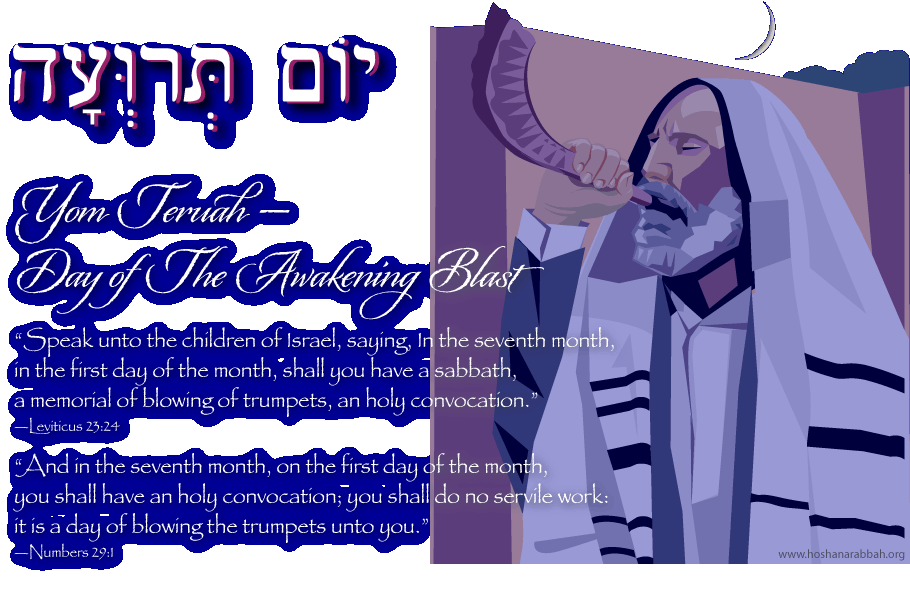
This all changes on the first day of the seventh month of the biblical Hebrew calendar when off in the distance the sound of a shofar blast suddenly pierces the atmosphere and registers in the eardrums of those who have fallen asleep. Not only does this shofar blast signal the beginning of the seventh month when the new crescent moon is sighted, but it announces the return of the Bridegroom (Yeshua) coming for his bride (the virgin saints). As in the Parable of the Ten Virgins, the cry went forth that the bridegroom was coming and all awoke from their slumber to prepare for his arrival. In these end days, that cry is going forth even now for all to hear, to awake and to prepare for the arrival of Yeshua the Messiah.
In the biblical calendar, the visible sighting of the crescent new moon always marks the beginning of the month and is announced by the shofar blast (Ps 81:3). Likewise, on the first day of the seventh month of the biblical calendar, the arrival of the new moon (called Rosh Chodesh) when the shofar sounds marks the beginning of Yom Teruah. This is the first day of the fall (festival) harvest season and is the time when the call goes out for the spiritual drowsy to awake, and to hear the voice of YHVH, to be invigorated by the breath or voice of the shofar, which is symbolic of YHVH’s prophetic word or oracle going forth across the earth in the last days.
Furthermore, the ram’s horn shofar is bent into a curved shape to represent the contrite heart of both the blower and the hearer. This is the season for the righteous to bend their hearts in humility and contrition before YHVH and repent of spiritual lassitude and lukewarmness and to awake to spiritual action and preparation, for the fall feasts point to awesome end time events that will occur at some point in time in the near future. It is a time to be refreshed by the breath of YHVH, and a time of new beginnings. Let YHVH breathe on you, revive you and empower you as you enter into the fall biblical festival season, and as you prepare to meet your King and Redeemer, Yeshua, in the air.
Yom Teruah also begins a season that prophetically speaks of war and battle, for in ancient times the shofar was a weapon of warfare in Israel, and it will be used again as such in the end times. It was used to call Israel to battle, to defeat her enemies with the help of YHVH. The shofar was then used to proclaim victory after the battle was won and to worship YHVH who had given them the victory. The battle against Israel’s enemies still rages on—even in the end times. Today, the enemies of the redeemed Israelites are mostly spiritual. They are the world, the flesh and the devil (Jas 3:15; Eph 2:2–3). Through faith in Yeshua the Messiah who defeated death, hell and the grave, we can have victory over mortality, sin, the devil and this world (1 Cor 15:51–57; Rom 8:27; 1 John 4:4; 5:4; Rev 12:11). As we hear the sound of the shofar calling us to arise from spiritual slumber, YHVH is telling his people to become overcomers, so that they may be worthy to partake of the glories of his eternal kingdom (Rev 2:7, 11, 17, 26; 3:5, 12, 21).
Yom Teruah is also the time of the reaping of the summer harvest. Spiritually speaking, this period will be the time of the reaping of the righteous to their reward (Rev 14:4) and the harvest of the wicked to the great winepress of Elohim’s wrath (Rev 14:14–20). It is the time of the resurrection of the dead in Messiah Yeshua at the end of the tribulation (Matt 24:29) and the beginning of Elohim’s wrath being poured out upon the nations (see Joel 3:11–13). This begins the wrath of Elohim time pictured by Yom Kippur (the Day of Atonement, which occurs ten days after Yom Teruah) before which time the dead saints will have been resurrected and given their spiritual, glorified, second Adam bodies.
The New Moon (Rosh Chodesh) and Yom Teruah—A Day of New Beginnings and Expectancy
In anticipation of Rosh Chodesh (the new moon sighted each month) and hence the beginning of Yom Teruah, there is a sense of expectancy and excitement among the saints. It is a time of watching and praying, for the renewal of the moon (the word new as in new moon [Col 2:16] in the Greek New Testament is kainen meaning “renewal or restoration of something which already exists”and is not the word neos which means “brand new”), which represents “new beginnings, good tidings, the renewal of the individual as well as the community.”
The sixth month on the biblical calendar is traditionally referred to by its non-biblical Aramaic name Elul. Some rabbinical sources see this word as an acronym of “Ani l’dodi v’dodi li,” “I am my Beloved’s and my Beloved is mine,” a quote from Song of Songs 6:3, where the Beloved is YHVH and the “I” are YHVH’s people. In Aramaic (the vernacular of the Jewish people at the time that the month names were adopted), the word Elul means “search,” which is appropriate, because this is a time of year when we search our hearts. (from the web site: http://www.jewfaq.org/elul.htm#Selichot).
During the month of Elul, our focus is to be on repentance, restoration and preparation for the coming of the Messiah. In order to repent one must understand that Scripture defines sins as the violation of YHVH’s Torah, or instructions or teachings in righteousness (1 John 3:4). Sin or chet in Hebrew, in a loose sense, means “a failure in our relationship with Elohim.” Our goal should be to continually move closer to Elohim, but “chet” is behavior that causes us to move away from Elohim.
If YHVH requires his people to turn away from sin and turn to righteousness (the act of which is called repentance), then what is therefore involved in repentance? Repentance or teshuvah in Hebrew, means “to return.” In the biblical context, it means “to return to Elohim” and to behavior required of us by Elohim; in other words, return to obedience to his commandments. While we deeply regret our movement away from Elohim, we must not despair, for YHVH has provided the way for our return to him and he tells us that when we repent, he forgives without delay.
According to Scripture, there are, several basic steps to repentance:
We must first recognize that we have a problem — that we are sinful to the core (Jer 17:9; Rom 8:7; Rom 3:10–18, 23; Isa 64:6). For this to happen, we have to come to grips with the fact that we have broken Elohim’s laws, which define sin (1 John 3:4). Human pride makes this step the hardest one to take.
We must confess our sin before YHVH (Lev 5:5; Num 5:7).
We must turn from our sins and resolve to stop sinning.
We must manifest heartfelt regret for our wrong actions by evidencing remorse and contrition before YHVH and our fellow man, if applicable.
An offering of the legally prescribed sacrifice must be made for the sin (Lev 5:1–20). Yeshua, the Messiah of Israel, became that sacrifice for our sin once and for all when he died on the cross (Isa 53:5; Heb 4:14–5:10; 7:14–8:6; 9:11–10:22).
When we have sinned against our fellow man, not only is confession and forsaking that sin required, but we must make restitution in full of whatever has been wrongfully obtained or withheld from one’s fellow man (Lev 5:14–19; Matt 5:23–25).
We must then accept our Heavenly Father’s unconditional mercy and grace (Ps 103:3–4, 10–17).
The shofar’s blowing is a call to awaken out of spiritual sleep, lethargy, stagnation, slumber and to repent of sin. No man knows the day or the hour of the new moon’s arrival each month (though one who is alert certainly can know the season and year), so the human tendency is to grow weary in waiting, and to grow slack in one’s obedience to YHVH’s righteous commands. Yet when the new moon is sighted and the shofar sounds, this is the signal for the slumbering to awake, for hope to arise, renewal and spiritual revival to occur and action to be taken to put off sin and to draw closer spiritually to YHVH Elohim.
The awakening sound of the shofar blast is the Hebrew word teruah (see Lev 23:24 and Num 29:1 where the phrase “blowing of trumpets” is teruah), which means “the shout or blast of war, alarm, alarm of war, war cry, signal, and sound of tempest.” Teruah derives from the Hebrew root word ruah meaning “alarm, signal, sound or blast of the shofar, to raise a shout.” The name Yom Teruah could therefore have several literal meanings: “the day of the shout, the day of the war alarm or the day of the shofar blast.”
When we understand the significance of this day from a biblical understanding, we realize that Yom Teruah is a day of shouting (with exultant joy or as a shriek in alarm), or a day of shofar blowing. Shofars were blown in biblical times to rally the people together, to alert the people in time of war, to warn the people, or as an instrument (along with shouts) to express the people’s joy, or to praise YHVH.
As we shall see, Yom Teruah prophetically involves all these concepts, for it is a day when YHVH’s people will shout with joy as they gather to meet Yeshua in the air after having been bodily resurrected at the sound of the last shofar blast, but it is also a time of alarm and shrieking on the part of the wicked as a time of war and terror brought on by the judgments of YHVH are about to come upon the earth.
Additionally, Yom Teruah is a day of new beginnings or renewal, to wake up from lethargy and slumber, to be broken out of that sleepy, comfort zone state and to be awakened to action. Again, remember the ten virgins of Matthew 25 who slept in anticipation of the bridegroom’s arrival? When the shout went forth that he was coming they were all awakened. Some were prepared to go into the marriage supper of the bridegroom and some were not. Our Bridegroom is Yeshua.
Yom Teruah Versus Rosh Hashana
Nowhere in Scripture is this festival referred to as Rosh Hashana, which literally means “head of the year”—a reference to the extra-biblical Jewish tradition that the first day of the seventh month is the beginning of the new year. Scripture is very clear about when the biblical new year begins. In Exodus 12:2, YHVH instructs the children of Israel that the month of the abiv barley grain would be the beginning of the year for them. Fourteen days after the beginning of this month the Passover occurs. The beginning of the biblical year is in the early spring of the year when plant life is bursting forth from a long dead winter season. It is a picture of spiritual rebirth or redemption for YHVH’s people.
It is true that the Jewish sages recognize Abib (or Aviv) or Nisan in the spring as the first month of the biblical calendar and the beginning of civil or agricultural year for ancient Israel, now Judaism recognizes the first day of the seventh month (called Yom Teruah in the Bible or Rosh Hashana in modern Jewish tradition) as the beginning of the civil and religious year (Exploring Jewish Tradition, by Rabbi Abraham Witty, p. 120; The Jewish Book of Why, by Alfred Kolatch, pp. 222–223). In fact, the rabbinic Jews maintain the tradition that there are four new years (Kolatch, p. 223; Talmud Rosh Hashana 1:1):
The first of Nisan/Abib for royalty (dating of royal events).
The first of Tishiri for agriculture (the beginning of the harvest season) and traditionally commemorating the creation.
The first of Elul for tithing cattle.
The first of Shevat as the new year for trees.
Additionally, one Jewish scholar believes that the rabbinic tradition that Rosh Hashana is the beginning of the new year actually derives from pagan customs absorbed by the Jewish people while living in Babylon. These ancient pagans had a new year’s festival called Akitu, that happened to fall on the same day as Yom Teurah. Gradually, the Jews assimilated Yom Teruah with Akitu with the result being Rosh Hashana. (For more information on this, go to http://www.karaite-korner.org/yom_teruah.shtml#sdfootnote1sym.)
With all due respect to our Jewish brothers, we choose to follow a more literal and strict biblical determination for when the new year is to start and what the name of the festival of the first day of the seventh month is to be. Furthermore, we choose not to follow traditions that are mixed with or derived from pagan practices. Therefore, we neither recognize Rosh Hashana as the true biblical name for this festival, nor as the beginning of the biblical new year.
Overview of the Biblical Feasts
Before continuing our study on Yom Teruah, the fourth of the seven of YHVH’s annual set-apart festivals when he meets with his people, let us quickly review the other six divine appointments. Without understanding Yom Teruah’s synchronization as it relates to the other feasts and YHVH’s overall plan of redemption as revealed in the seven annual feasts, one cannot fully appreciate this fourth festival.
If you had to sum up the entire message of the Bible in one word what would it be? Probably words such as love, hope, salvation, eternal life or heaven are coming to your mind. But I challenge you to find a better word than the following: r-e-c-o-n-c-i-l-i-a-t-i-o-n. The dictionary defines reconciliation as “to restore to friendship or harmony, to settle or resolve a quarrel, to make consistent or congruous.” When man chose to rebel against YHVH and to give in to sin at the Tree of the Knowledge of Good and Evil at the very beginning he chose the path of separation from his Heavenly Father. Sin causes man to be separated from a totally holy, righteous and sinless Creator. Since that time YHVH has been endeavoring to reconcile man to himself. He has laid out criteria for man to follow for this to occur—for man to once again have a friendly, loving and intimate relationship with his Heavenly Father as did Adam before he sinned.
Do YOU really think that if Yeshau (Jesus) returned today you would be ready to meet him? What about the Scriptures that say that our righteousness is as filthy rags, that the righteous are scarcely saved, that without holiness no one will see Elohim, and that we are lukewarm in our faith and need to go through the refiing fires of YHVH’s loving judgments to burn out the wood, hay and stubble from our lives? To be sure, Yeshua is not coming back for a bride with spot and wrinkle. So what to we need to do to get our lives ready to meet our Maker? Watch this video to learn the answers.
Hebrews 11:35,A better resurrection. This verse indicates that there is more than one resurrection of the righteous dead, and that there is at least one resurrection that is better than another one.
Likely, the first resurrection will be the best resurrection, since the righteous dead saints and the righteous living saints will be resurrected at that time to meet Yeshua in the air at his second coming. The resurrection/s that will occur subsequent to that (whether they occur during the millennium or at the white throne judgment) will likely be inferior to the first resurrection. Why is this?
Those saints who will be part of the first resurrection are those who endured and overcame the world, the flesh and the devil and remained faithful to Yeshua against such opposition. They are the strongest and most righteous saints, since their mettle, loyalty, faith and endurance was tested under the most trying circumstances, and they still remained faithful to Yeshua. They will likely be those who will be greatest in the kingdom of heaven (Matt 5:19).
Those saints who will be resurrected subsequent to that will have had to go through great refining trials because they are spiritually subpar. This will perhaps be because they weren’t faithful in living up to the spiritual light they were given, or perhaps because not as much was given to them in the first place, so not as much was required of them (note the Parable of the Talents in Matt 25:14–30; Luke 12:48).
Those who come to faith in the millennium will likely have a lower reward, since their overcoming faith didn’t need to be as strong. This is because they lived during ideal times when evil was suppressed because Yeshua was ruling the world and Satan was imprisoned in the bottomless pit, thus making it easier to live a righteous life without the struggles and downward pulls of Satan and his demonically controlled world.
All this goes to show that there are levels of rewards in the kingdom of heaven (e.g. Matt 5:19; Matt 25:20–23, 29; Rev 2:23; 2:7, 11, 17, 26; 3:5, 12, 21; 20:12), even as there are levels of punishment (e.g. Luke 12:47–48).
Those who are currently lukewarm believers and who turn their lives around now and who open the door of their life to Yeshua (Rev 3:20) becoming red hot for him prior to his first coming (and first resurrection; Rev 3:15), will have a chance to receive the highest reward in Yeshua’s kingdom, that is, to sit with Yeshua on his throne (Rev 3:21). This shows the mercy and grace of YHVH in that he can take even lukewarm saints who desire to turn their lives around and to repent and reward them with the highest position in his kingdom.
Lest we get smug in our spiritual complacency, let’s not forget what Peter said, “the righteous are scarcely save” (1 Pet 4:18). Every saint living is lukewarm to one degree or another by YHVH’s highest, righteous spiritual standards. Those who don’t think they are lukewarm are blinded by their own pride and self-righteousness, which is the greatest sin of all (Prov 6:16–17)! In fact, the Bible teaches that our best righteousness is as filthy rags (Isa 64:6). Yet, at the same time, there is hope for us all to come to the higher spiritual level! This, however, won’t occur without our having to go through the refining fires of trials (Rev 3:18) or, for some, even great tribulation (Rev 7:14) at the end of the age prior to Yeshua’s second coming.