New Video: YHVH’s Plan of Salvation in the Seven Biblical Feasts

In this video, learn how the seven biblical feasts as outlined in Leviticus 23 are YHVH’s seven-step plan of salvation (or redemption) for mankind. They are the chronological template of the seven steps each one must take to go from being a slave to the world, flesh and the devil in the spiritual Egypt of this world to becoming a child of Elohim (God) forever in the New Jerusalem. The feasts show man how to be reconciled to our Father in heaven through Yeshua the Messiah.

Watch this video now at


YHVH’s Plan of Salvation in the Biblical Feasts

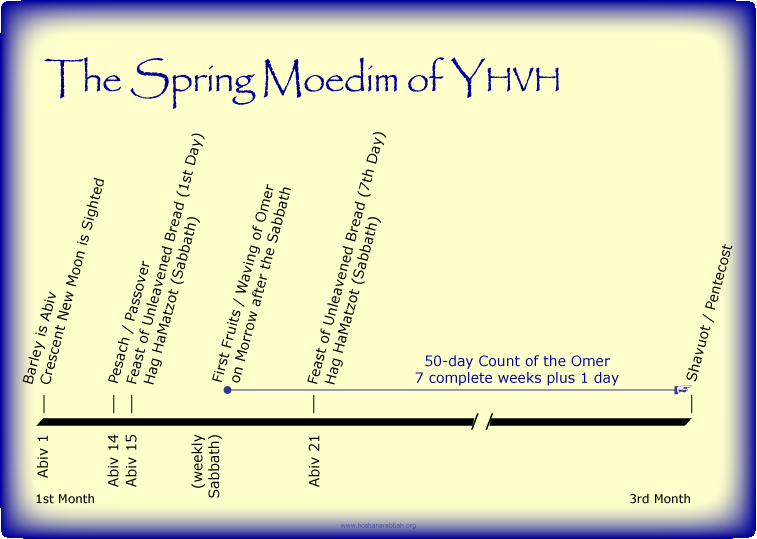
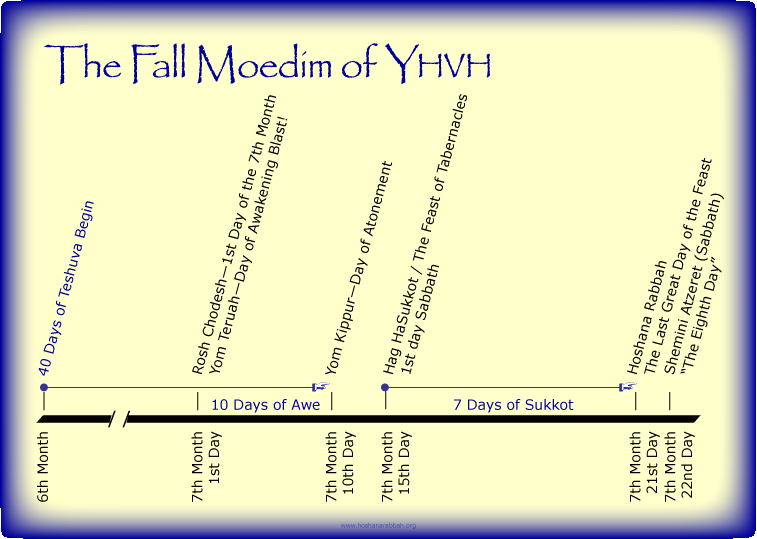
The seven biblical feasts are a chronological step-by-step template of YHVH’s plan of redemption or salvation for mankind. This process begins with Passover—a picture of a believer’s initial salvation, and concludes with the Eighth Day—a picture of eternal life for each bonafide and glorified member of the spiritual family of Elohim. The first step in this spiritual journey starts with one’s turning their back on spiritual Egypt,which is the realm of the world, the flesh and the devil, and embarking on a life-long spiritual journey that leads one progressively to higher planes with the ultimate goal being the paradise of the New Jerusalem—literally a heaven on earth.

moedim_s_sm

Sadly, the church system has failed to reveal these essential truths to believers. It has robbed the saints of their biblical, Hebraic and Torah-based heritage including an understanding of the biblical feasts and has replaced it with many lies. This has left believers without a full moedim_f_smunderstanding both their spiritual heritage and destiny. For most believers caught up in the Babylonian church system, it’s merely a matter of getting saved, doing some good works along the way and going to church. Beyond that, one bides their time standing on the street corner waiting for death or the rapture bus—whichever come first—to take them to heaven. But is this all there is to the believer’s life? What is supposed to happen from the point of one’s initial salvation until they “get to heaven”? Hmm?! Now there’s a good head-scratcher for most!

Thankfully, YHVH hasn’t abandoned his spiritual children to wander aimlessly through the wilderness of life. He has a plan for each of us. Continue reading →


Blog Scripture Readings for 2/17 through 2/23/13

Aside

Parashat Tetzaveh — Exodus 27:20 – 30:10
Haftarah — 1 Samuel 15:2 – 34 **
Prophets — Isaiah 5:1 – 13:22
Writings — Psalms 130:1 – 138:8
Testimony — John 7:1 – 10:21

Most of this week’s blog discussion points will be on these passages. If you have general comments or questions on the weekly Scripture readings not addressed in a blog post, here’s a place for you to post those. Just use the “leave a reply” link below.

The full “Read Through The Scriptures In A Year” schedule, broken down by each day, can be found on the right sidebar under “Helpful Links.” There are 4 sections of scripture to read each day. One each from the Torah, the Prophets, the Writings, and from the Testimony of Yeshua. Each week, the Torah and haftarah readings will follow the traditional one-year reading cycle.

Weekly Blog Scripture Readings for 2/17 through 2/23/13.

** A different Haftarah is read when it is a special sabbath in Jewish tradition. On 2/23 is the traditional “Shabbat Zachor” (Sabbath of Remembrance), which is the Sabbath just before Purim. This haftarah is read as a reminder on the instruction in Deuteronomy 25:17-19 to not forget to remember what Amalek did and to blot out the remembrance of Amalek. It is read at this time because Haman (“the Agagite” Esther 3:1) was a descendent of the king of the Amalekites who had been spared by Saul.


Welcome to the Tabernacle of Moses

If you were the Creator of the universe, what means would you use to communicate with those that you had created through love in your likeness and image? In a remote way, it’s like a human standing over an anthill trying to communicate with the ants. What’s more, how does an all powerful, Spirit Being, loving Father in heaven relate to his mortal children who are but mere dust without vaporizing them with his raw power? The difficulty is compounded when fearful humans don’t want to hear the voice of Elohim, which is what happened when YHVH Elohim’s voice thundered from Mount Sinai. The children of Israel begged him not to talk to them, lest they die. They asked the Almighty One to speak to them instead through Moses (Exod 20:19).

Tabernacle-b 257138

When man sinned at the tree of knowledge and YHVH kicked them out of the Garden of Eden, direct communications between man and his Maker were hampered, if not all but cut off. However, Elohim had a plan to restore the loving relationship he had with man before the rebellion. But if men refuse to hear you when you speak, what are you do?

To be certain, the Almighty doesn’t lack for ways to communicate with men. Man is without excuse when it comes to hearing Elohim, for even the heaven’s declare the glory of the Creator and the plans he has for mankind. The visible things of this creation shout loudly about the spiritual mysteries heaven desires to reveal to its earthly subjects. Furthermore, Elohim speaks to select servants through dreams, visions, signs, wonders, angels, and even jackasses! But how does he speak to a whole nation, if that nation is plugging its ears refusing to hear its Master’s voice?

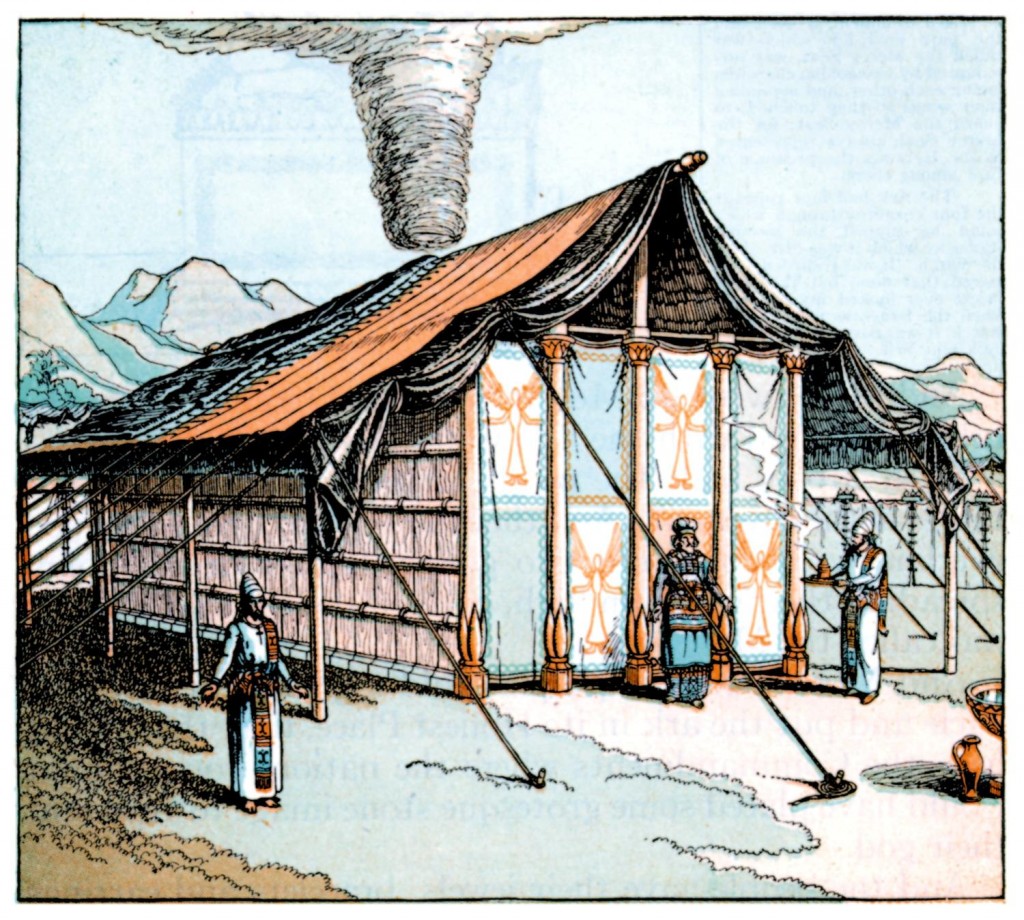
Enter into the picture the Tabernacle of Moses, which was literally a three-dimensional gospel message tract. It is the visual demonstration Continue reading →


Did Yeshua Break the Sabbath?

John 5:18, [Yeshua]… broke the Sabbath. Listen to an interesting and sad, but true story. Many years ago, I was in a meeting where a Christian Bible teacher was giving a message on the end times. In the middle of his teaching and totally out of context, he quoted this passage from John and claimed that Yeshua broke the Sabbath. There was a rustle in the audience of about 300 people. A little later, he made the same statement again and began to deride the Sabbath. This time there was an audible moan from some in the audience — many of whom were Sabbath keepers. A feeling of being hit in the gut went through me. A little later, he made the same statement again, and continued to bash Sabbath observance. This time, I could hold my peace no longer, and I stood up and challenged him in the middle of the meeting. I told him that to say that Yeshua had broken the Sabbath was to call Yeshua a sinner, and that Yeshua had not broken the Sabbath, but some Jewish legal traditions (or halakhah) pertaining to the Sabbath. The speaker was flustered and had no response, and the host of the meeting decided to take an intermission.

A year later, it was announced that this Bible teacher had suddenly and unexpectedly dropped dead in the pulpit while preaching. One can’t help but wonder…

Yeshua didn't come to set men free from the Sabbath. He came to set the Sabbath free from men's unbiblical traditions.

Yeshua didn’t come to set men free from the Sabbath. He came to set the Sabbath free from men’s unbiblical traditions.

Had this false teacher simply pulled down a concordance from his bookshelf and looked up the word broke in the Greek, and had read John’s statement in verse 12 in the context of verses 8–10, he wouldn’t have been teaching this blasphemous heresy about our Master and Savior!

Here is the explanation of this passage: The word broke Continue reading →


The Moon—Pockmarked Like Us

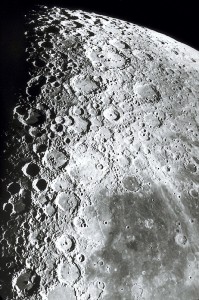
Elohim made two great lights to shine in the darkness—the sun (the greater light) and the moon (the lesser light) (Gen 1:16). The sun is a spiritual picture of Yeshua whom the Bible calls the Light of the world (John 1:9; 8:12), the Sun of Righteousness (Mal 4:2), whose face shines like the sun (Rev 1:16), and who will be the light of the New Jerusalem replacing the physical sun (Rev 21:23).
Moon 19002709

But who does the moon represent in this spiritual picture? If the sun is a picture of Yeshua, the Light of the World, then who has been tasked with the responsibility of reflecting Yeshua’s light into the spiritual darkness of this world? Of course, this is the job of the saints who Yeshua called to be a like light on a hill (Matt 5:14), or a menorah lamp stand (Rev 2:1).

Now think about this. Although the moon is a quarter of a million miles from the earth, because it has no atmosphere to absorb the sun’s light, it is able to reflect the sun’s light to this earth so that a person is able to see in the darkness of night. The amazing thing is that the moon’s surface isn’t a polished mirror. Rather, it’s a dull rocky surface. Not only that, it’s not even flat. It’s pockmarked—covered with huge craters, mountains, valleys and canyons. With such an uneven, gray and nondescript surface, it seems miraculous that it’s even able to reflect any light at all, much less all the way to the earth! This speaks to the unimaginable power of the sun to throw its light such a great distance through space and then to ricochet it off the moon earthward even though the moon’s surface is anything but reflective.

The moon is a perfect picture of each of us. We are nondescript in appearance, possess rough natures, stony hearts, gray dispositions, barren of spiritual fruit, possessing no power of our own, pockmarked by sin, covered by mountains of human pride, and etched with canyons of guilt and shame. In truth, YHVH has not chosen many wise or noble people to reflect the light of his Son, Yeshua, the Sun of Righteousness, but instead he has chosen the weak, foolish, despised and base things of this world to put to shame the things that are wise (1 Cor 1:26–28). As the lesser light, like the moon is to the sun, YHVH has called the saints to be his sons of light (Luke 16:8; John 12:36; Eph 5:8; 1 Pet 2:9) to shine the Light of Yeshua into the midst of a crooked and perverse world (Phil 2:15).

Since Yeshua has called us out of spiritual darkness into his marvellous light, let us embrace and demonstrate the fact that he calls us a chosen generation, a royal priesthood, a holy nation and his own special people by being ready and quick to proclaim his praises to everyone everywhere every time (1 Pet 2:9)!

 

Do You Go to Heaven When You Die?

John 3:13, No one has ascended to heaven. Most Christians believe that when they die, they immediately go to heaven in spite of Yeshua’s clear statement in this verse.

Heaven, Christian -21823731

Some believers see this verse as referring to saints who died before his resurrection, but not true of those who died afterwards, even though Yeshua doesn’t say this. Therefore, they reason, this is why, according to Peter, David, who was born before Yeshua, is still resting in his grave awaiting the last days resurrection (Acts 2:29).

If what the majority of Christians believe on this subject is true, then the saints of old are second-class citizens and YHVH is a respecter persons (which he is not, see Acts 10:34; Rom 2:11) in that they have to wait for resurrection day and for their ultimate reward of eternal life, while saints born since Yeshua receive their glorified bodies immediately upon death.

Laying aside all the church traditions and doctrines of men, what does the Bible in the simplest and clearest terms say about the timing of the saints receiving immortality? Paul states that the resurrection of all the dead saints and their receiving immortality occurs not at the time of their physical death, but at the second coming of Yeshua at the last trumpet (1 Cor 15:51–54; 1 Thess 4:13–18 cp. Rev 11:15, 18).

Actually, men’s eternal inheritance isn’t heaven, but the New Jerusalem, which is coming down from heaven to the new earth (Rev 21:2).