New Video: “Come Out of Spiritual Babylon, My People!”

Are you in a church that’s part of spiritual Babylon the Great—where unbiblical lies are being taught, where doctrines of men and traditions that make the Word of Elohim of non-effect are being lifted up as the truth? Many people are waking up to this sad fact as YHVH is calling them to come out of Babylon as per Revelation 18:4 in preparation for the second coming of Yeshua the Messiah. Watch this video to learn the vital truth and life-changing facts about this issue.


Blog Scripture Readings for 2/24 through 3/2/13

Aside

Parashat Ki Tisa — Exodus 30:11 – 34:35
Haftarah — Ezekiel 36:16 – 38 **
Prophets — Isaiah 14:1 – 21:17
Writings — Psalms 139:1 – 146:10
Testimony — John 10:22 – 13:38

Most of this week’s blog discussion points will be on these passages. If you have general comments or questions on the weekly Scripture readings not addressed in a blog post, here’s a place for you to post those. Just use the “leave a reply” link below.

The full “Read Through The Scriptures In A Year” schedule, broken down by each day, can be found on the right sidebar under “Helpful Links.” There are 4 sections of scripture to read each day. One each from the Torah, the Prophets, the Writings, and from the Testimony of Yeshua. Each week, the Torah and haftarah readings will follow the traditional one-year reading cycle.

Weekly Blog Scripture Readings for 2/24 through 3/2/13.

** A different Haftarah is read when it is a special sabbath in Jewish tradition. On 3/2 is the traditional “Shabbat Parah” (Sabbath of the [Red] Heifer), which is the Sabbath that follows Purim. This haftarah is read as a reminder as we prepare for Pesach (Passover). The Jews say it is a reminder to be ritually pure before Pesach. We would say that it represents Yeshua. It is a unique sacrifice that makes the one doing the sacrifice unclean, but it purifies the one sprinkled by it when mixed with water. For more information, see Natan’s Quick Study teaching on the Red Heifer (Parah Adumah).


When Did Major Unbiblical Traditions of Men Enter into the Early Church?

It’s time to rock the boat of some of you who suffer from the spiritual disease of “non-rock the boatitis.”

Second Peter 2 says,

But there were also false prophets among the people, even as there will be false teachers among you, who will secretly bring in destructive heresies, even denying the Lord who bought them, and bring on themselves swift destruction. And many will follow their destructive ways, because of whom the way of truth will be blasphemed. (2 Pet 2:1–2)

Here is a partial list of the approximate time periods when several major unbiblical doctrines of men crept into the early church from the writings of the early church fathers.

Don't sink my boat! Pleeeze!

Don’t sink my boat! Pleeeze!

The Human Soul Is Immortal

  • A.D. 130— The Epistle of Mathetes to Diognetus, ch. 6
  • Ca. A.D. 155—The First Apology of Justin Martyr, ch. 18
  • Ca. A.D. 180—Irenaeus’ Against Heresies, Book Two, ch. 34
  • Ca. A.D. 180—Irenaeus’ Against Heresies, Book Five, chaps. 7.1; 31.1

Teachings Against the Sabbath and Biblical Feasts

  • A.D. 130—The Epistle of Mathetes to Diognetus, ch. 4. The author calls the Sabbath and biblical feasts “utterly ridiculous and unworthy of notice.”
  • Ca. A.D. 130—Epistle of  Barnabas, ch. 2 (also ch. 14). The author says that the Sabbaths (weekly Sabbath and biblical feasts) are abolished.
  • Early part of second century A.D.—Epistle of Ignatius to the Philippians, ch. 14

Observance of the Lord’s Day (Sunday) Advocated Over Sabbath Observance

  • Early part of second century A.D.—Epistle of Ignatius to the Magnesian, ch. 9. The author says to keep the Sabbath on Sunday.
  • Early part of second century A.D.—Epistle of Ignatius to the Trallians, ch. 9
  • Ca. A.D. 130—Epistle of  Barnabas, ch. 14
  • Ca. A.D. 155—The First Apology of Justin Martyr, ch. 67 Continue reading →
 

The Twice Daily Sacrifice—A Picture of Our Daily Prayer and Praise

Exodus 29:38–42, In the morning…at twilight. (See also Lev 1:1–17 and Num 28:1–15.) This twice daily offering was known as the continual burnt offering (Heb. olah tamiyd), and was offered at the door of the tabernacle (verse 42). The word continual (Heb. tamiyd) means “continually.” The Hebrew word for burnt offering is olah meaning “ascent, stairway or steps,” and derives from the basic Hebrew verb, alah, meaning “to go up, climb or ascend.”
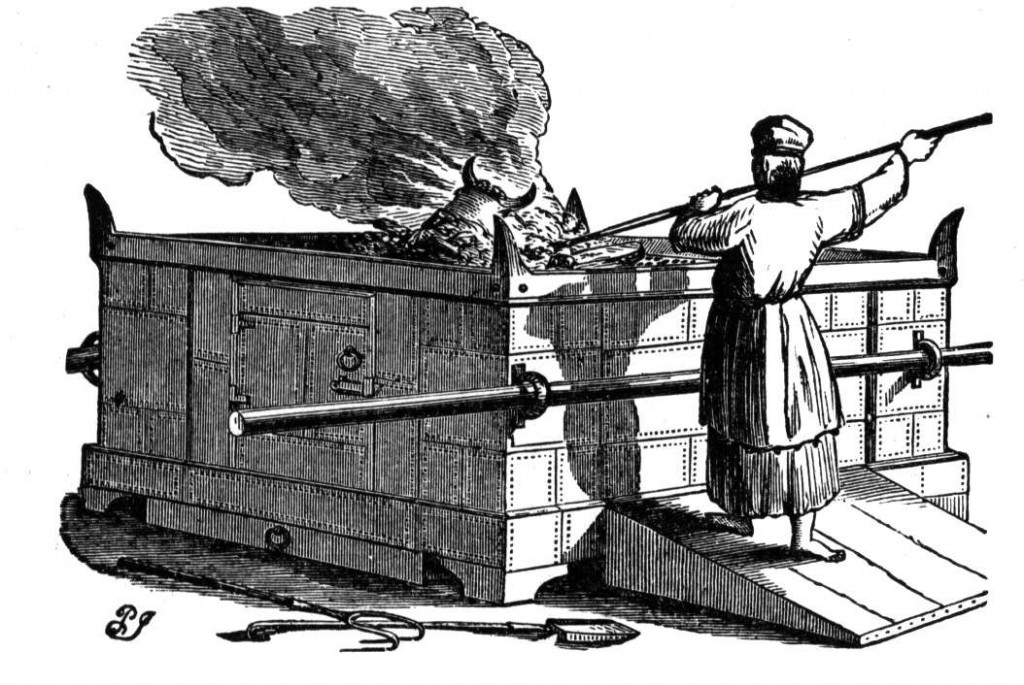
Altar fo Sacrifice -1 632195

In this offering, the fire consumes the entire animal, and the word olah refers to the smoke of this whole burnt offering ascending to heaven, which is a “sweet aroma” to YHVH (verse 41). The olah was an offering or gift (Lev 1:2, Heb. qorban) to YHVH and could be a bull, goat, ram, turtle dove or a pigeon as long as it was a perfect specimen without defect (Lev 1).

If an Israelite sinned, he could bring this gift-offering to the door of the tabernacle where he would place his hands upon the head of the animal, after which the priests would slaughter it, and sprinkle its blood around the altar of sacrifice just inside the door of the tabernacle (Lev 1:2,4,5). The meat was then prepared and arranged on the altar and entirely burnt (Lev 1:6–17). When the sinner laid his hands on the animal, it was as if he were transferring his sins onto the innocent, blemish-free animal, where upon YHVH accepted it as an atonement for the person’s sin (Lev 1:4).

The writer of Hebrews clearly teaches that this offering (along with all the other offerings in the sacrificial system) pointed to Yeshua, our Great High Priest, whose atoning death on the cross fulfilled all the types and shadows of the Levitical, sacrificial system (Heb 4:14–5:7; 7:1–10:18).

Besides the obvious antetypes pointing to Yeshua’s death on the cross, what else can we Continue reading →

 

The Torah and Testimony—A Stone of Stumbling

In the following several verses we see an amazing prophecy concerning the two houses of Israel who, generically speaking, have become the modern church and the rabbinic Jews.

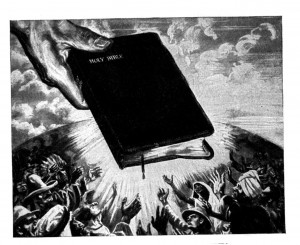
Here Isaiah prophesies about the canonization of the Bible into two subdivision—the Torah (or loosely speaking, the Old Testament) and the Testimony (the New Testament). He also predicts that each of these two religious groups (the Jew and he Christians) would spiritually stumble over or have a problem with the identity of the Messiah, who is the Stone of Stumbling and the Rock of Offense. In general, as we shall see, the Christians struggle with the pro-Torah message of the Old Testament (or Word of Elohim), and the Jews reject the message of the New Testament (or Testimony of Yeshua) about the Messiahship of Yeshua.

Bible for the world

Isaiah 8:14–15, Stone of stumbling. Both houses of Israel (Ephraim and Judah; i.e., the Christian [see notes at Gen 48:14,16] 48: and the Jews) have stumbled over the stone of stumbling, who later on is identified as Yeshua, the Messiah (1 Pet 2:4–8; Rom 9:32–33; 1 Cor 1:23). The non-believing Jews stumbling over the Messiahship of Yeshua who is the Living Torah-Word of Elohim incarnate (John 1:1,14), while the Christians stumble over the Written Torah, which they claim was abolished and is minimally relevant to them.  This stone of stumbling is an obvious reference to Yeshua who is a stone of stumbling to both houses of Israel (i.e., the non-believing Jews and the Christians.) The Christians stumble over or reject (at least, in part)Yeshua who is the Written Torah-Word of Elohim (John 1:1). The non-believing Jews, on the other hand, reject Yeshua, the Living Torah-Word of Elohim who came in flesh form (John 1:14). Continue reading →


Be Wholly Holy As He Is Holy

Isaiah 6:3, Holy, holy, holy. (See also Rev 4:8.) Since these are the words of worship being proclaimed to Elohim in his throne room continually, then holiness must be his chief attribute—not love, mercy, grace, etc. as many teach and believe.
Elsewhere, we learn that YHVH made man and woman in his own image (Gen 1:26–27). What was the reason for this? One reason is that YHVH wants humans to become a part of his spiritual family as sons and daughters (John 1:12; Rom 8:14–15, 23; 9:4; 2 Cor 6:18; Gal 4:5–6; Eph 1:5; 1 John 3:1–2; Rev 21:7). When the saints receive their glorified spiritual bodies at the resurrection, they will be like Yeshua is in his glorified state, although we don’t have a clear idea of what that means (1 John 3:1–2). Man is destined to become part of the God family as the children of Elohim, although no one will ever be equal to him in all his attributes (Isa 44:6, 8).
Because Elohim wants to have glorified children in his spiritual family who will live with him forever, and because his chief attribute is holiness, is this why he wants man to become holy as he is holy (Lev 11:44, 45; 19:2; 20:7; 1 Thess 4:7; 1 Pet 1:15–16; Heb 12:14 cp. Amos 3:3)?