The Feasts, Tabernacle, Man in 3D

Exodus 23:14–19, Three times you shall keep a feast. Conventional Jewish wisdom teaches us that during the three pilgrimage festivals all the individuals of the nation are to appear out of all isolations personally in the presence of the one God of Israel in the festival circle (or chag) around the common sanctuary (where YHVH has chosen to place his name, Deut 16:2,11,15), thereby becoming conscious that each one is connected to all the other members of the nation, with YHVH Elohim, and with the Torah (The Pentateuch—Deuteronomy, p. 310, by S. R. Hirsch).
3D Glasses 1658460

But there is much more than this if we add Yeshua the Messiah of Israel into the picture. Each of the three feasts point directly to him. Passover and the Feast of Unleavened Bread, the Feast of Weeks or Pentecost, and the Feast of Tabernacles all point to Yeshua, since the first three spring feasts point to Yeshua’s first coming, while the last fall feast points to his second coming. Each of these feasts represent milestones in the spiritual walk of the redeemed believer.

But it gets better. There were three sections in the Tabernacle of Moses: the outer courtyard, the holy place and the holy of holies. These correspond with the three parts of man: body, soul and spirit (1 Thess 5:23).

The feasts of Passover and Unleavened Bread are the first two feasts we celebrate in the spring and represent the first steps in a new believer’s spiritual walk. This corresponds with the outer courtyard and relates more to the spiritual cleansing of the outer parts or body of man. It is here that one begins their spiritual walk and relationship with Yeshua, who is the Word of Elohim.

The Feast of Weeks or Pentecost is the next step one takes in their spiritual walk. The holy place speaks of bring the soul (the mind, will and emotions) into submission to the will of YHVH as one advances in their spiritual walk and learns about the fruits and gifts of the Spirit of Elohim, who they are as redeemed Israelites, and about worship and praise.

Finally, the holy of holies corresponds to the Feast of Tabernacles and the Eighth Day and the spirit part of man. This part of the tabernacle speaks more of man’s ultimate spiritual relationship with Elohim. It is here that man relates to Elohim, who is a Spirit, on a spirit to Spirit level (John 4:24; 1 Cor 2:10–13). This points to man’s ultimate destiny as glorified beings in the New Jerusalem as adopted members into the family of Elohim (John 1:12; Rom 8:14–15, 23; 9:4; 2 Cor 6:18; Gal 4:5–6; Eph 1:5; 1 John 3:1; Rev 21:7).

This is just the tip of the iceberg. I’m sure there’s much more to learn on this subject.


Blog Scripture Readings for 2/10 through 2/16/13

Aside

Parashat Terumah — Exodus 25:1 – 27:19
Haftarah — 1 Kings 5:26 – 6:13 (12) *
Prophets — 2 Kings 22:1 – 25:30; Isaiah 1:1 – 4:6
Writings — Psalms 119:145 – 129:8
Testimony — John 3:22 – 6:71

Most of this week’s blog discussion points will be on these passages. If you have general comments or questions on the weekly Scripture readings not addressed in a blog post, here’s a place for you to post those. Just use the “leave a reply” link below.

The full “Read Through The Scriptures In A Year” schedule, broken down by each day, can be found on the right sidebar under “Helpful Links.” There are 4 sections of scripture to read each day. One each from the Torah, the Prophets, the Writings, and from the Testimony of Yeshua. Each week, the Torah and haftarah readings will follow the traditional one-year reading cycle.

Weekly Blog Scripture Readings for 2/10 through 2/16/13.

* Verse numbers in parenthesis refer to the verse number in Christian Bibles.


The Prophetic Implications of Water to Wine

Yeshua’s First Recorded Miracle: Water to Wine

John 2:1–12— And the third day there was a marriage in Cana of Galilee, and the mother of Yeshua was there, and both Yeshua was called, and his disciples, to the marriage. When they wanted wine, the mother of Yeshua said unto him, “They have no wine.” Yeshua said unto her, “Woman, what have I to do with you? Mine hour is not yet come.” His mother said unto the servants, “Whatever he says unto you, do it.” And there were set there six water pots of stone, after the manner of the purifying of the Jews, containing twenty or thirty gallons apiece. Yeshua said unto them, “Fill the water pots with water.” And they filled them up to the brim. And he said unto them, “Draw out now, and bring it unto the superintendent of the dining room.” And they brought it. When the superintendent of the dining room had tasted the water that was made wine, and knew not where it came from (but the servants which drew the water knew;) the superintendent of the dining room called the bridegroom and said unto him, “Every man at the beginning does set forth good wine; and when men have well drunk, then that which is worse, but you have kept the good wine until now.” This beginning of miracles did Yeshua in Cana of Galilee, and manifested forth his glory; and his disciples believed on him. After this he went down to Capernaum, he, and his mother, and his brethren, and his disciples, and they continued there not many days.

Water to wine 20438978

Prophetic Points to Analyze:

  • verse 1— and the third day
  • verse 1— a marriage
  • verse 1— in Cana of Galilee
  • verse 3— wine
  • verse 6— six water pots of stone
  • verse 7— water
  • verse 10— old versus new wine
  • verse 11— this was the first miracle of Yeshua’s ministry

“And the third day there was a marriage in Cana of Galilee …” The phrase “the third day” is a prophetic term meaning “in three thousands years” or “in the third millennia” (cp. Gen 22:4; Exod 19:11; Hos 6:2). In this passage, “the third day” is pointing to the time when there will be a marriage between Yeshua and his bride (the saints, Rev 19:7–9).

The wedding occurred at Cana of Galilee. Galilee is in the historic homeland of the house of Israel (Ephraim) or Northern Kingdom, yet in the time of Yeshua Continue reading →


Make No Mention

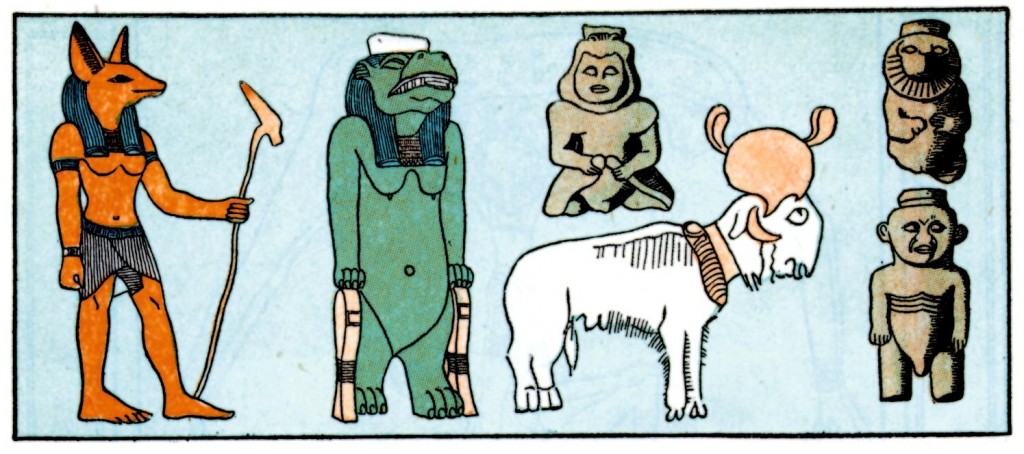
Exodus 23:13, Make no mention of the name of other gods, neither let it be heard out of your mouth. (See also Ps 16:4.) Not only is YHVH against the worship of pagan deities and wants their names to be destroyed (Deut 12:3), but he says that he will take from the lips of his people the names of pagan deities (Hos 2:17), and eventually, he will restore a pure language (presumably one that is free of pagan names) to his people (Zeph 3:9).

256826

Living this Torah principle out today is difficult in view of the fact that such common things as the days of the week and some of the months of the year are named for pagan deities making normal communication without using these names difficult. Nevertheless, the redeemed righteous of YHVH will endeavor to be mindful of this command and speak as cleanly as possible.

In our modern society, only a few people worship ancient pagan deities. In our materialistic and secular society, people are more likely to worship themselves, money, the mind of man, pleasure, power, fame, sex, entertainment, education, possessions, success or whatever else is first place in their lives ahead of YHVH Elohim.

By the way, the name Jesus doesn’t derive from the name of the Zeus, the name of a pagan Greek god, as some have erroneously claimed.


New Video: Why Celebrate the Biblical Feasts?

What’s so important about the biblical feasts? What’s their relevance to the redeemed believer in Yeshua the Messiah? Why are they crucial to your spiritual walk, to understanding the whole Bible, to your relationship with Yeshua, to your eternal spiritual destiny? Watch this video and find out.


Why Study and Celebrate the Biblical Feasts?

If you had to sum up the entire message of the Bible in one word what would it be? Probably words such as love, hope, salvation, eternal life or heaven are coming to your mind. But I challenge you to find a better word than the following: r-e-c-o-n-c-i-l-i-a-t-i-o-n. The dictionary defines reconciliation as “to restore to friendship or harmony, to settle or resolve a quarrel, to make consistent or congruous.” 

When the first humans chose to listen to the lies of the serpent and to rebel against YHVH and to give in to sin at the tree of the knowledge of good and evil at the very beginning, our first parents chose the path of separation from their Heavenly Father. Sin causes man to be separated from our totally holy, righteous, sinless and loving Creator.

Since that time YHVH has been endeavoring to reconcile man to himself. He has laid out the criteria for this to occur—for man to once again have a loving and intimate relationship with his Heavenly Father as did Adam and Eve before they sinned.

Sukkah 2

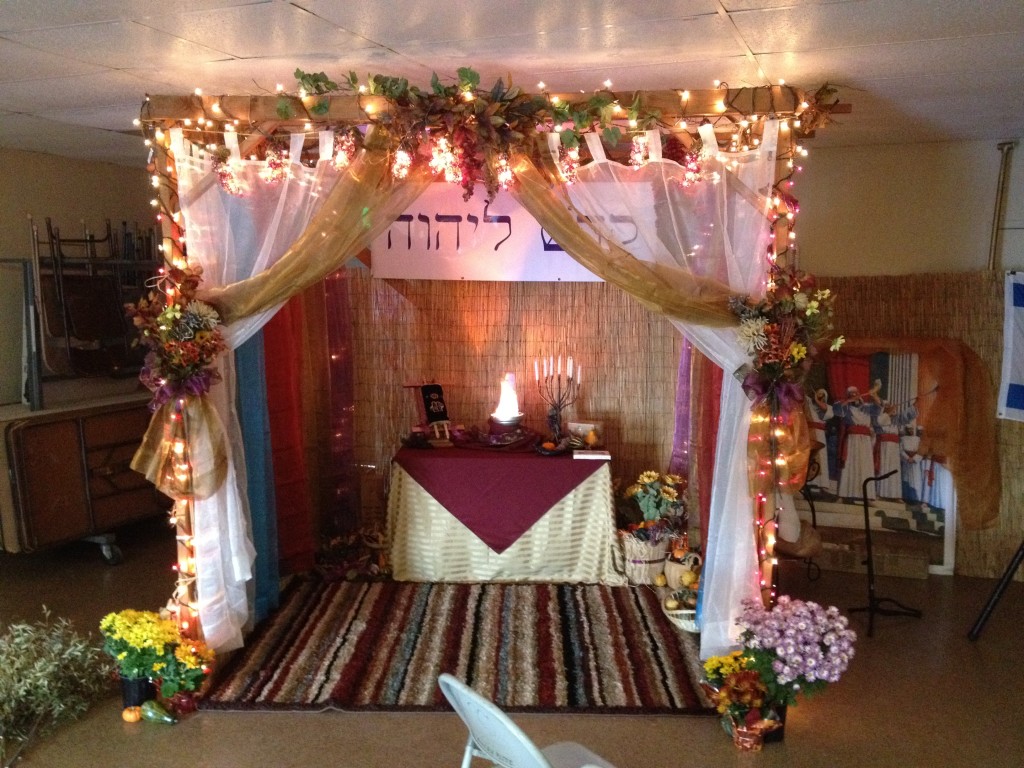
The seven biblical feasts of YHVH prophetically represent the steps man must take to be reconciled to his Heavenly Father. They are the complete plan of salvation or redemption rolled up into an easy-to-understand seven step plan. Though a child can understand these steps, the truths contained therein

Continue reading →


Blog Scripture Readings for 2/3 through 2/9/13

Aside

Parashat Mishpatim — Exodus 21:1 – 24:18
Haftarah — 2 Kings 12:1 – 17 **
Prophets — 2 Kings 15:1 – 21:26
Writings — Psalms 119:33 – 119:144
Testimony — Luke 23:44 – 24:52; John 1:1 – 3:21

Most of this week’s blog discussion points will be on these passages. If you have general comments or questions on the weekly Scripture readings not addressed in a blog post, here’s a place for you to post those. Just use the “leave a reply” link below.

The full “Read Through The Scriptures In A Year” schedule, broken down by each day, can be found on the right sidebar under “Helpful Links.” There are 4 sections of scripture to read each day. One each from the Torah, the Prophets, the Writings, and from the Testimony of Yeshua. Each week, the Torah and haftarah readings will follow the traditional one-year reading cycle.

Weekly Blog Scripture Readings for 2/3 through 2/9/13.

** A different Haftarah is read when it is a special sabbath in Jewish tradition. On 2/9 is the traditional “Shabbat Shekalim”, the Sabbath that falls just before the last rosh chodesh (new moon/month) of the year when the Shekels were “due” into the temple treasury. This haftarah is read as a reminder.