For the written article on this subject, go to https://hoshanarabbah.org/blog/2023/01/22/did-elohim-create-evil-3/.


For the written article on this subject, go to https://hoshanarabbah.org/blog/2023/01/22/did-elohim-create-evil-3/.

To escape the frigid winter US West Coast rainy season, Sandi and I just took a little cruise into the Gulf of Mexico—our first such trip since before COVID hit us like a tidal wave. We were privileged to briefly visit three countries: Cozumel, Mexico; Raotan, Honduras and Belize City, Belize (formerly British Honduras).
The internet connection on the high seas was choppy and intermittent to say the least, but we’re now back home safely, and so please enjoy several pictures that I took of our adventures.
At each stop, we explored the animal and plant life as well as learned a little bit about the local culture and history. During days on the seas, we read, sat on our stateroom balcony and enjoyed the sunrises, sunsets, the moonlight on the waves, the glorious cloud formations and the azure blue green waves themselves. Like a living gigantic amovie screen before us, we can watch these scenes for hours as the ship glides silently through the waters.
I spent a lot of time reading the Bible, a Bible book and a book on trees. Trees and the Bible are my two passions, which is why I refer to myself in the business world as the Treevangelist. Sandi and I also took a lot of pictures. We both have our own cameras. I mostly shoot video and she mostly shoots still photos. We then put our photos and movies together and I share videos of our trips on my YouTube channel. Also, we each of our own binoculars handy, so we can get a close up view of distant objects.
When we’re not doing these things on cruises, we enjoy the fine, onboard dining. I’m proud to say that I only gained two pounds and Sandi stayed even weight wise. When cruising, I usually gain five to eight pounds.
One thing we don’t do when we go on cruises: we didn’t gamble at the ship’s casino, we didn’t go swimming any of the ship’s several pools and hot tubs (I don’t like swimming in dirty water—it’s unkosher to me), we didn’t hang out in the bars or involve ourselves in any other playtime activities on the ship. Frankly, these type of things interest neither of us. We just hang out, enjoy our time together, relax and geek out as much as possible on YHVH’s creation and other things that pertain to the upward spiritual walk.
Now for some photo highlights. Please enjoy.















Genesis 47:13–26, The economic results of famine. Severe food shortages likely brought on by drought resulted in the Egyptian people becoming dependent on the government for food and survival. This is because the people had failed to prepare for such an event.
Because of famine resulting in people starving, the Egyptian government was able to step in and literally take control of the people’s lives, their land and material possessions. The government then collectivized them by moving them into cities where it could “take care of” or control the people. In the process, the government became the master and the people became its serfs, if not slaves.
This all happened in large part because during prosperous times the people failed to make preparations for hard times and thus became unwitting victims of natural circumstances and their own careless lifestyles.
The more a person prepares for hard times such as famine, natural disasters or economic collapse, and the closer they are to the land thus giving them the ability to raise their own food, the less dependent upon the state they will be, the more freedom they will have, and the less likely the government will be able to control their lives. Spiritual freedom is tied to physical independence as well.
In Revelation 13, the Bible prophesies a time coming when the end times Babylon the Great New World Order world ruling economic, political and religious system will exclude earth’s inhabitants from being able to buy and sell food and other life-sustaining essentials unless they take a subcutaneous “mark” on their bodies famously called “the mark of the beast.”
Most people will take this mark resulting in their eternal spiritual damnation, while a few people will refuse to take it.
Hunger and privation, whether man-caused or naturally occurring, can be the means by which an evil governmental system can control its people simply because humans will do and accept virtually anything to feed their starving bodies.
The more Elohim’s saints do now to prepare, especially spiritually, but also physically, for the horrifically hard times the Bible prophesies will occur globally in the end times, the more likely they will be not to deny their faith and to survive the end times spiritually intact and ready to meet King Yeshua the Messiah in the air as his glorified, triumphant bride!
Genesis 47:15, The money has failed. This was a collapse of Egypt’s economic system brought on by a widespread famine. When there is no food to buy, money is worthless, since people cannot eat money. The people were now totally dependent upon the government for their survival, and were willing to sell themselves into bond servitude or slavery to the government just to eat. The Bible in the Book of Revelation indicates that widespread famine will occur in the last days prior to the second coming of Yeshua. We read,
When He opened the third seal, I heard the third living creature say, “Come and see.” So I looked, and behold, a black horse, and he who sat on it had a pair of scales in his hand. And I heard a voice in the midst of the four living creatures saying, “A quart of wheat for a denarius, and three quarts of barley for a denarius; and do not harm the oil and the wine.” (Rev 6:5–6)
Sometime after this, the mark of the beast will be forced on earth’s population (Rev 13:16–17), where no one will be able to buy or sell anything, including food, without this biometric mark. Since the Bible prophesies that a famine will encompass the whole earth in those days, it seems unlikely that this will be the result of a global drought. More likely, this famine will be bought on due to failed economic policies, disease pandemics, war, fuel shortages and supply chain issues. We have already begun seeing the harbingers of this in recent times. This is all the more reason for YHVH’s people who are not ignorant of the times and seasons in which they are living (1 Thess 5:1–11) to prepare themselves most importantly spiritually but also physically.
YHVH went ahead of Jacob and his family and placed them in the grass-covered, well-watered land of Goshen located in the Nile River delta area of northern Egypt where they were likely somewhat isolated from the famine. Similarly, during the hard times of the end days, YHVH promises to protect his saints as well (Rev 12:14).
Genesis 47:21, Moved them into the cities. Collectivization of a nation’s people into cities has often been the goal of oppressive governments. This was true in ancient times and is true today, and will be the case in the end times as the Bible prophesies.
For example, Marxist economic philosophy has always been about collectivizing people under government control by taking control of manufacturing, housing, education and health care and placing it in the hands of the government, or the elites of the ruling party. This idea is put out or sold to the people as a form of security where a nanny state, big government will take care of you from cradle to grave. The problem is that in so doing, one gives up their personal freedom, independence and civil liberties in exchange for security. Since the government now has management over a collectivized population, it can, to one degree or another (at least in pure communist society), control where you go, what you do, where you work, when and what you eat, how you spend your money, how your are educated, whether you receive health care or not, and what you think and say.
Such a system may not be completely the place in many Western nations yet, but what student of history cannot see us moving in that direction? Who cannot see the trajectory of the social, political and economic path that we have been on in the last 60 to 100 or more years as little by little or freedoms and social liberties are being slowly eroded away in favor of more big government control—for people’s good and well-being, of course.
Needless to say, big government never wants an independent populace that is self-sufficient, can feed itself, educate and think for itself, express its own ideas and speak freely, travel freely, or defend itself (against government tyranny and over-reach). Such is the enemy of big-government control and the wealthy elite who control the politicians.
The control and collectivization of people along with big government control is the end times world-ruling system that we see in place just before Yeshua’s return as prophesied in Revelation chapters 13, 17 and 18.
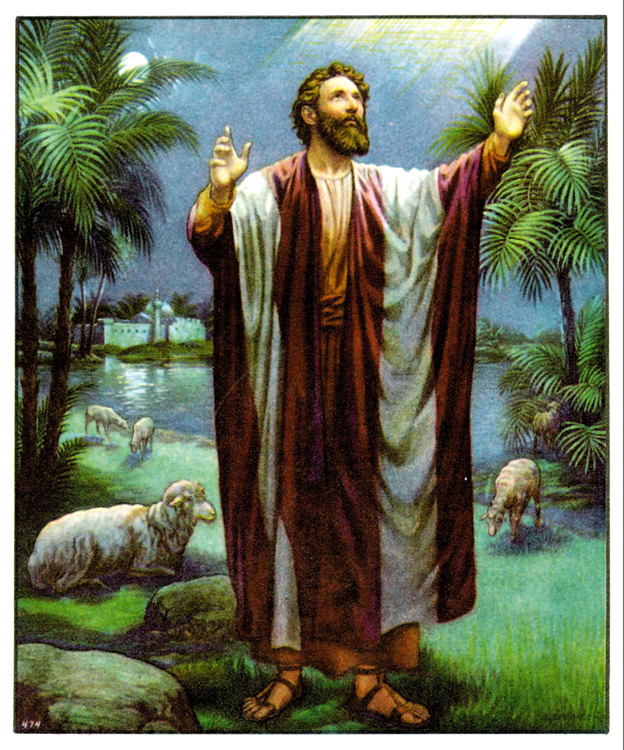
Genesis 22:19; 23:2, Abraham dwelt at Beersheba…Sarah died in…Hebron. At this point, Abraham and Sarah lived in two separate towns some 26 miles apart. Why was this? The Scriptures doesn’t say, so we can only speculate. Perhaps the trial of Abraham’s faith in the previous chapter where YHVH asked him to sacrifice Isaac and Abraham’s compliance to do so put such a strain on their marriage that they separated. Perhaps the idea that YHVH would ask Abraham to sacrifice their only son was so hard for Sarah to believe that she questioned whether Abraham had even heard correctly from YHVH about this. Whatever the case, following YHVH can be tough on marriages and families as Yeshua notes in Matthew 10:34–39. Sometimes families split as a result. Abraham wasn’t unique in his situation.
Ministry is tough on marriages. Often YHVH has his servants perform difficult if not nearly impossible tasks requiring superhuman faith and obedience. In a marriage, it is not uncommon for one person to be more committed to serving YHVH than the other. This difference can result in a differential between the two parties resulting in a split or divergence of commitments, viewpoints, levels of faith and devotion to YHVH. In light of the fact that some ministry assignments are dangerous or can bring on severe trials, persecution or tribulation, sometimes this may be too much for the weaker, less committed party to bear, and there is a separation in the marriage.
In Exodus 4:24–26, in all likelihood, Zipporah and Moses split up over YHVH’s request to circumcise their two sons, for we never hear of Zipporah again, except that Moses had sent her away (Exod 18:2). Some Bible scholars take this mean that he put her away or divorced her (likely because of her refusal to follow him onto the mission field). Later, we find Moses remarrying a Cushite woman (who was likely black; Num 12:1).
David had to leave his first wife Michal, the daughter of Saul, because she despised him for dancing before YHVH’s ark of the covenant (2 Sam 6:14–16, 23).
The situation with the prophet Hosea is notable, as well, in this regard. YHVH required him to marry a wife of harlotry as part of his spiritual walk, so that he would better understand the experience of YHVH who was married to the adulterous nation of Israel. Hosea didn’t even know whether the children born to his wife were his own, or those of another man, yet he was to love her unconditionally anyway.
In the apostolic era, we hear virtually nothing about the wives of the apostles. This in no way indicates that their marriages were troubled, but one can only wonder given the rigors of the spiritual assignment YHVH had given them.
Paul is a case in point. He was likely married, since it would have been uncommon for someone of his spiritual stature to not to have been married in the Hebraic culture in which he lived, yet no mention of his wife is made. At the same time, he mentions a thorn in the flesh to buffet him and to keep him humble (2 Cor 12:7). On can only wonder if this isn’t a reference to a difficult marriage situation. Perhaps his wife became antagonistic at his conversion to Yeshua resulting in his leaving the prestigious and affluent life of the religious elite of his day, and counting his past life as dung (Phil 3:8). This may have been too much for her to bear.
The sad story of Methodist founder John Wesley’s marriage
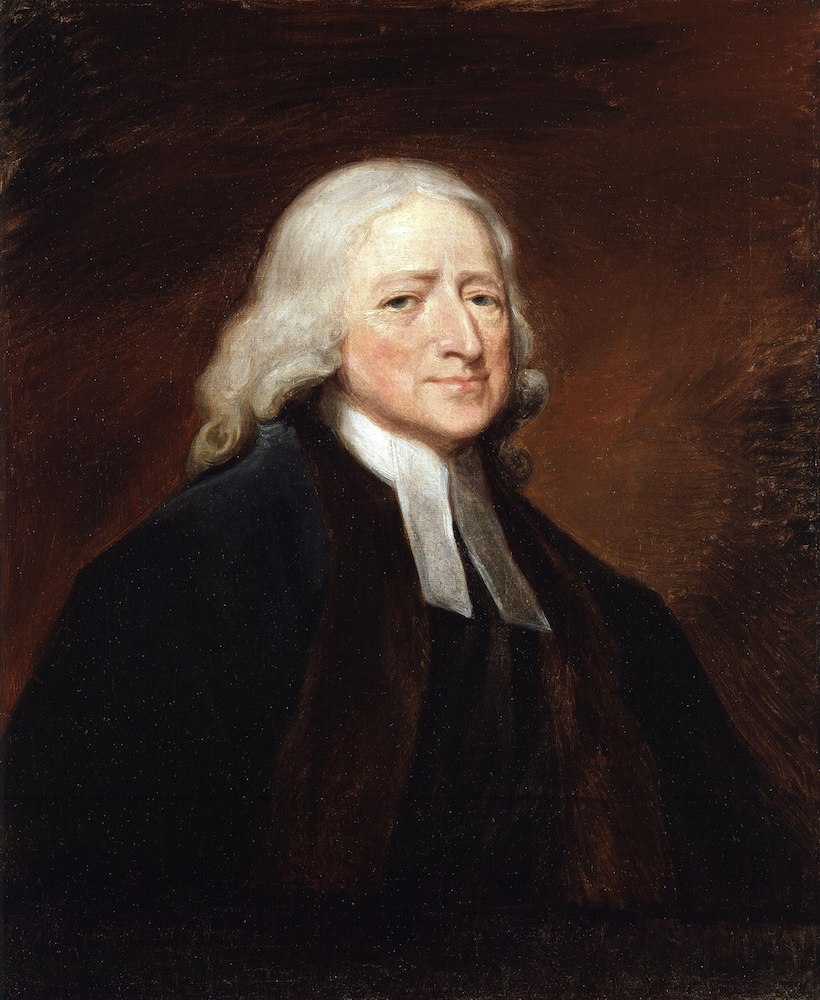
From an article in Christianity Today (https://www.christiantoday.com/article/the-sad-story-of-methodist-founder-john-wesleys-marriage/129376.htm) on 24 May 2018
May 24th marks the day an Anglican priest named John Wesley had a spiritual experience that changed his life, and arguably transformed the church. It’s a truly ‘heart-warming’ day that celebrates the power of conversion and Wesley’s fervent Methodist legacy, but many don’t know a more sombre side to Wesley’s life: his tense and allegedly violent relationship with his wife.
The day is also known as Aldersgate Day, named after the part of London where Wesley had his strange spiritual experience. An Anglican minister, Wesley was a fervent priest but had increasingly been overcome by melancholy and doubt.
On the morning of May 24, 1738, he opened his Bible to read the words: ‘There are given unto us exceeding great and precious promises, even that ye should be partakers of the divine nature.’ Later that day he attended a church service in Aldersagte, where he heard a reading from Reformer Martin Luther’s Preface to the Epistle to Romans.
Then, in Wesley’s words: ‘While he was describing the change which God works in the heart through faith in Christ, I felt my heart strangely warmed. I felt I did trust in Christ, Christ alone for salvation; and an assurance was given me that He had taken away my sins, even mine, and saved me from the law of sin and death.’
Inspired with assurance, John went on with his brother Charles to pioneer the radical movement of Methodism, spreading evangelical revival across the country and the world. But John’s fervent faith also caused profound problems for his marriage in later life: he is believed to have suffered domestic abuse from his wife.
As Lex Loizides explains for Church History Review, Wesley’s marriage to Molly Vazeille in 1751 didn’t begin as a romance, and had filled his brother Charles Wesley with dread.
The dread was appropriate, because in just a few years the couple would be locked in tense conflict. Wesley was increasingly distant from his wife due to his preaching itinerary, while Molly – wrongly – suspected infidelity and struggled with Wesley’s frequent correspondence with other women. Since she was left at home for weeks at a time, but was allowed to open Welsey’s post, she saw letters from many of her husband’s admirers.
She grew antagonistic to Wesley, wrote critical letters and spied on him, accused him of adultery and gave Wesley’s enemies material with which to slander him.
As Lex Loizides explains for Church History Review, Wesley’s marriage to Molly Vazeille in 1751 didn’t begin as a romance, and had filled his brother Charles Wesley with dread.
The dread was appropriate, because in just a few years the couple would be locked in tense conflict. Wesley was increasingly distant from his wife due to his preaching itinerary, while Molly – wrongly – suspected infidelity and struggled with Wesley’s frequent correspondence with other women. Since she was left at home for weeks at a time, but was allowed to open Welsey’s post, she saw letters from many of her husband’s admirers.
She grew antagonistic to Wesley, wrote critical letters and spied on him, accused him of adultery and gave Wesley’s enemies material with which to slander him.
Wesley wasn’t particularly charitable either, and once sent an unflinching message demanding Molly be content and submit: ‘Know me and know yourself. Suspect me no more, asperse me no more, provoke me no more: do not any longer contend for mastery…be content to be a private insignificant person, known and loved by God and me.’
Content she did not become. John Hampson of Manchester wrote that he ‘once entered a room unannounced to find Molly dragging her husband across the floor by his hair’. But John could be violent with his words, once writing: ‘If you were buried just now, or if you had never lived, what loss would it be to the cause of God?’
After years of conflict, Molly eventually left her husband and didn’t return, in 1771. Wesley famously wrote in his journal, in his only comment on his marriage: ‘I did not forsake her, I did not dismiss her, I will not recall her.’
It’s a sad story that shows neither of the couple in a good light. It may shock that the preacher was the victim of domestic violence, but it might be argued that he was ambitious and unkind in hoping for a happy marriage and contented wife, when he was never at home and perhaps temperamentally unsuited for marriage anyway.
Wesley’s marriage is a reminder that even ‘spiritual heroes’ and are vulnerable to profound personal unhappiness. Marriage is a serious matter, and as the liturgy reminds us, is not to be taken lightly.

Genesis 34:1, Dinah…went out. The lure of friendship with the world is a powerful one. Youth are especially vulnerable to the attractions of the world, since it offers things that are new and exciting. But this is not always for their ultimate good as Dinah soon and sadly discovered.
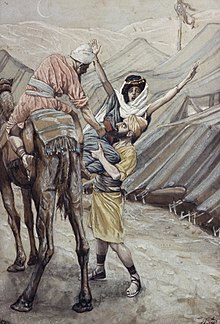
Dinah’s being drawn to friends among the heathen is what caused this whole sorry affair between the sons of Jacob and the inhabitants of Shechem resulting in Dinah’s kidnapping and rape and the massacre of the Shechemites. James the apostle warns us, “Ye adulterers and adulteresses, know ye not that the friendship of the world is enmity with Elohim? Whosoever therefore will be a friend of the world is the enemy of Elohim” (Jas 4:4). Similarly, John states, “Love not the world, neither the things that are in the world. If any man love the world, the love of the Father is not in him. For all that is in the world, the lust of the flesh, and the lust of the eyes, and the pride of life, is not of the Father, but is of the world” (1 John 2:15–16). The lure of the world’s acceptance is a dangerous one that leads one down a slippery slope spiritually as Paul opines. “Do not be deceived: Evil company corrupts good habits” (1 Cor 15:33). Elsewhere, Paul warns the young Timothy to “Flee youthful lusts” (2 Tim 2:22). If the enticements of the world weren’t such a difficult temptation to resist, then he wouldn’t have urged young people to flee them!
Furthermore, YHVH, our loving Heavenly Father wouldn’t be urging his people to come out of the world (Rev 18:4; 2 Cor 6:14–17). Moreover, Solomon, the wisest man who ever lived, and who knew something about the alluring power of sexual and lustful enticements, dedicates the first seven chapters of the book of Proverbs to warning against it. He urges young people to follow the path of wisdom, truth and the fear of Elohim by fleeing the ways of the perverse woman—a metaphor for evil in its every form.
The problem is that most young people feel they are powerful enough to resist the temptations of the world, the flesh and the devil—that they’re an exception to the rule and immune. Sadly, this is pride based on naiveté. As the Scriptures teach us, pride comes before a fall, which results in shame (Prov 16:18; 11:2). “There is a way that seems right to a man, but the end thereof are the ways of death” (Prov 14:12; 16:25). “He who thinks he stands, take heed lest he fall” (1 Cor 10:12). Dinah would have been better off had she heeded this advice.
So how could Jacob have protected his children from worldly influences? After a certain point when young people become adults, this is no longer possible; they have to figure things out for themselves and to make their own choices one way or the other. Until then, parents can somewhat shield their children from the evil influences of the world within the protective confines of the family structure, even as they are inoculating them against the world’s ungodly mores by laying under them a strong, biblically-based spiritual foundation of Truth. After that, however, the young and tender plants have to leave the protective greenhouse of the family and face the exposure of the outside elements—the wind, cold, rain, ice, snow as well as competition from other plants, where they will either stand firm against these adverse forces, or will, to one degree or another, succumb to them.
It is a particular and difficult problem for young people who are raised in godly families to find godly spouses. If they are not part of a spiritual community where the “fishing” is good, then they are forced to go searching for marriage prospects in the world around them. This is a potentially dangerous proposition and a gamble at best. This was likely the case with Dinah, and it turned out badly for her. For this reason, both Abraham and Isaac insisted that their children NOT seek marriage partners from among the Canaanites around them. They went to great lengths to find godly spouses for their children. Jacob would have been well-advised to do the same. Perhaps, however, this was not an option for him after his difficult experience with Laban and the vow he had just made with his uncle at Mizpeh not to cross the Jordan River en route to Babylonia. It seems that this would have precluded Jacob from seeking wives for his children elsewhere, leaving them no choice but seek such among the local heathen populace. Evidently, Dinah’s brothers intermarried with the local girls, which may have contributed to the Israelites’ eventual apostasy and enslavement in Egypt.
Whatever the case, it is not easy for anyone to remain faithful to Elohim in this evil world. If it is difficult for parents to resist the forceful currents of spiritual declension short of divine intervention and empowerment, then how much more so for their children after them?! Many godly people have been asking this same question for a long time as we read in the Gospels,
And those who heard it said, “Who then can be saved?” But He said, “The things which are impossible with men are possible with God.” (Luke 18:26–27)
Then one said to Him, “Lord, are there few who are saved?” And He said to them, “Strive to enter through the narrow gate, for many, I say to you, will seek to enter and will not be able.” (Luke 13:23–24, emphasis added
Genesis 34:9, Make marriages with us. After the Dinah and Shechem incident, the local Canaanites wanted to intermarry with Jacob’s children and steal their inheritance (Gen 34:23). It is the desire of worldly people to pollute and desecrate YHVH’s set-apart people. The world isn’t content to live and let live—to leave the saints alone. It pollutes and destroys everything it touches wants by pulling those of a higher spiritual level down to its low spiritual level. Jacob and his sons, however, remained firm and refused to assimilate with the Canaanites.
Had Jacob succumbed to the alluring offers of the devil, he would have lost his spiritual standing with Elohim as well as his future, promised and covenantal inheritance.
The devil offered Jacob the small reward of temporary peace and prosperity by making assimilating alliances with the heathens in exchange for Jacob’s birthright. Esau made this mistake years earlier, and Jacob knew better than to fall for the enemy’s lies.
The devil tempted Yeshua in the same way after his forty day fast in Matthew chapter four. Satan promised Yeshua temporal and immediate fame, glory and prosperity if he would submit to him. To do so, Yeshua would have forfeited his future higher glory. Instead Yeshua chose the better reward of the delayed gratification that his Father offered him as opposed to the instant carnal gratification the devil offered.
We too must follow the example of Jacob and Yeshua and resist the enemy’s overtures that appeal to our base carnal nature. Instead, we must aggressively fight off the enemy who wants to steal and destroy our inheritance and kill us in the process.
No good can come from intermarrying literally or spiritually with the heathen!
Be not deceived: Evil company corrupts good habits. (1 Cor 15:33)
Ye adulterers and adulteresses, know ye not that the friendship of the world is enmity with Elohim? whosoever therefore will be a friend of the world is the enemy of Elohim. (Jas 4:4)
Be ye not unequally yoked together with unbelievers: for what fellowship hath righteousness with unrighteousness? and what communion hath light with darkness? And what concord hath Messiah with Belial? or what part hath he that believeth with an infidel? And what agreement hath the temple of Elohim with idols? for ye are the temple of the living Elohim; as Elohim hath said, I will dwell in them, and walk in them; and I will be their Elohim, and they shall be my people. Wherefore come out from among them, and be ye separate, saith the Lord, and touch not the unclean thing; and I will receive you, and will be a Father unto you, and ye shall be my sons and daughters, saith the Lord Almighty. (1 Cor 6:15–18)

Nathan explains how to come of the end times world ruling system the Bible calls Babylon the Great as per Elohim’s command to his people in Revelation 18:4.
https://rumble.com/v229fcw-december-24-2022.html