
YHVH Is Raising Up John the Baptist–Type Preachers to Prepare the Way for Yeshua

John was no reed shaking in the wind—and neither are those who are now coming in that spirit to prepare the ways for Yeshua the Messiah’s second coming!

The Gospels contain many curious, arcane and cryptic statements by Yeshua that invite the reader to ponder and reflect on in order to fully understand and appreciate them. Matthew 11:7–12 is one such statement.

As they departed, Yeshua began to say to the multitudes concerning John: “What did you go out into the wilderness to see? A reed shaken by the wind? But what did you go out to see? A man clothed in soft garments? Indeed, those who wear soft clothing are in kings’ houses. But what did you go out to see? A prophet? Yes, I say to you, and more than a prophet. For this is he of whom it is written: ‘BEHOLD, I SEND MY MESSENGER BEFORE YOUR FACE, WHO WILL PREPARE YOUR WAY BEFORE YOU.’  “Assuredly, I say to you, among those born of women there has not risen one greater than John the Baptist; but he who is least in the kingdom of heaven is greater than he. And from the days of John the Baptist until now the kingdom of heaven suffers violence, and the violent take it by force.

This statement of Yeshua is a very telling commentary how he viewed the mainstream religious leaders of his day. This was juxtaposed against his view of John the Baptist, who, though he was of priestly lineage, left the existing religious establishment and went into the wilderness to prepare the way for the coming Messiah. 
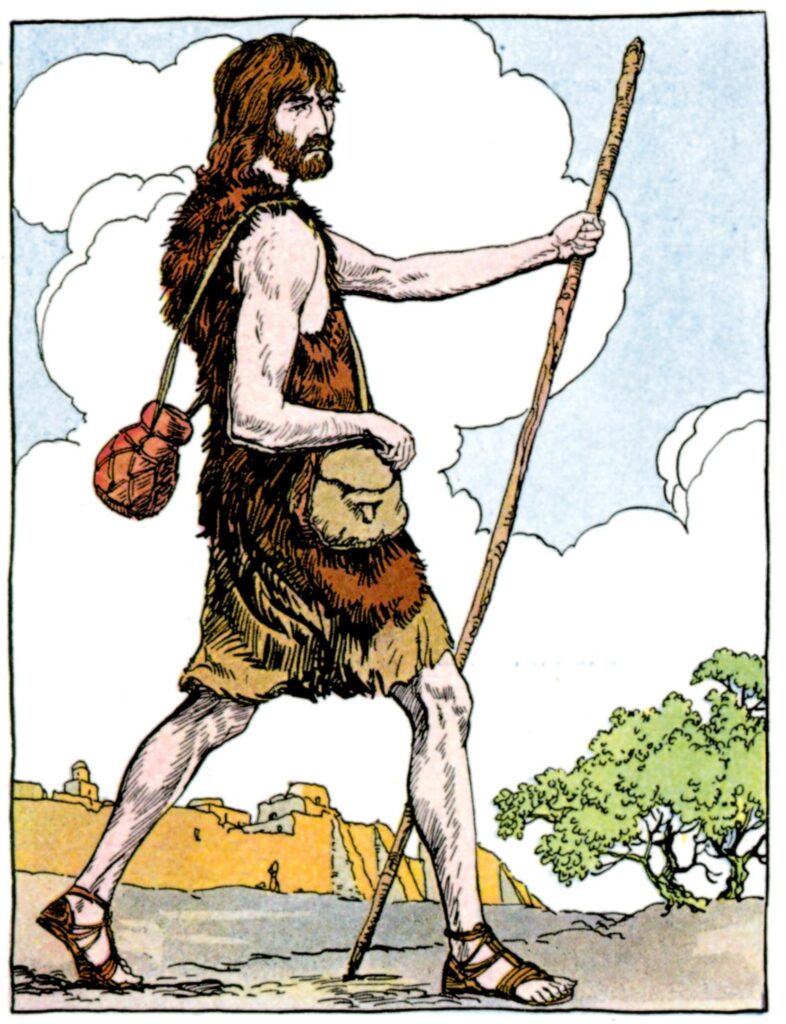
In his Matthew chapter eleven statement, Yeshua also predicts that a whole new genre of preachers would arise who, unlike the typical soft-spoken preachers of mainstream religion, would be violent and forceful in their demeanor and approach. Violent in the sense of confronting the religious establishment and the lukewarmness and sin of the people as he forcefully advanced the agendas of the kingdom of heaven against the opposing forces of a reluctant and recalcitrant spiritual environment.

With regard to John, who was a spiritual pioneer and pacesetter for this new breed of preacher, and who would enter the placid and staid religious waters of his day like a hurricane, let us consider the implications of this as well as Yeshua’s  view of John. John’s background is part of the context of this iconoclastic individual, which we will now view under a magnifying lens. 

To start with, John’s father, Zachariah, was of such a priestly status that he was allowed to minister in the inner portions of the temple itself. Yet John left this system to fulfil a ministry mission that was even greater than that of his father. Although John likely did not realize it at the time—for he was simply following the leading of the Spirit—he, by Yeshua’s own declaration, was to become the greatest prophet of all time up until then. To fulfil that divine mission, John had to exit the existing religious system and its status quo into which he was born, and execute that mission from outside of that system. Why? Because the Jewish religious system of the day would not, never did, and still does not recognize Yeshua as the Messiah. In fact, they viewed him as a threat to their religious tradition not to mention their secure positions of power and wealth, and on numerous occasion, they even tried to murder him. Eventually, they finally succeeded. 
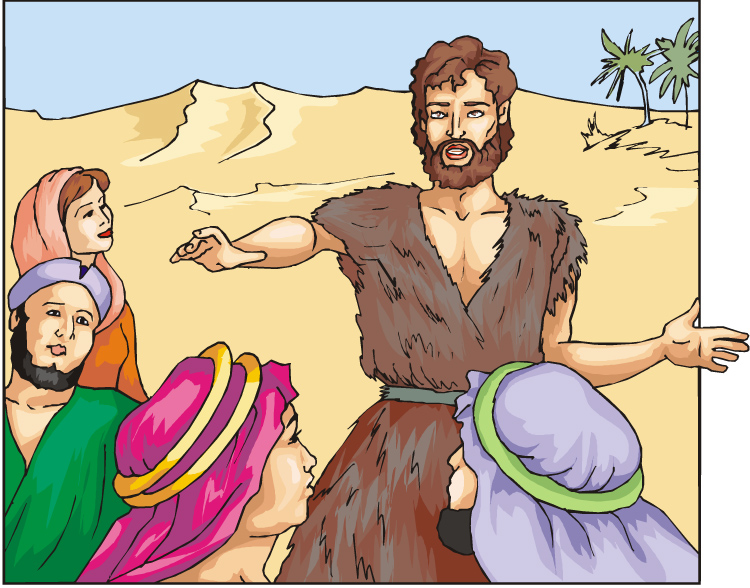
YHVH called and raised up John, who was a special vessel, to stir the pot of the religious system of his day in hopes of waking up his few saints who were trapped in that system. It was John’s divine mission to put out a forceful call to those who had ears to hear to exit the Babylonian system of that day in preparation to meet Yeshua the Messiah. (YHVH is doing similar work in our day through similar type people as per the prophecy of Malachi chapter four.)

It was against this backdrop of constant religious antagonism and persecution that John executed his mission to prepare the way for Yeshua the Messiah, which involved clashing with the rich, powerful religious leaders of his day, who were concurrently in league with both the political and economic forces in control of that geographical region. The Truth and light of Messiah was literally confronting the satanic darkness of man’s religious, economic and political agendas. To use a jungle warfare term, John was the point man in this cosmic conflict, thus he took the incoming fire. To be sure, this was no place for a spiritual neophyte or weak-kneed, limp-wristed pansy in the pulpit. This was a struggle to the death—a literal clash with demonic god-like Titans. Therefore, YHVH raised up a man with a powerful background for a tough assignment. John was immersed in the Spirit while still in the womb, and Scripture deems his parents to be spiritually faultless. His father was of high repute as a Levitical priest, plus John was the cousin of Yeshua the Messiah himself. This was no average family even in human terms. No. John was no spiritual lightweight in the boxing ring of religion. Out of the fiery forge and crucible of his familial background come a mighty sword of a man who YHVH raised up to lay a spiritual ax to the root of the religious tree of his day and to the man-made system that was leading people astray and making of none-effect the Word of Elohim by their traditions. John was no pansy, no weak reed shaking in the wind, no well coiffed, tailored suit wearing pastor in the pulpit speaking man-pleasing, flattering and ear-tickling words to pew warmers religious addicts sitting passively and comfortably in padded benches in neat little rows beneath stained glass windows getting their weakly religious fixes. No! YHVH called and commissioned John, who was a rugged man for a rugged job to prepare the way for the Messiah, who himself would carry this battle against the religious system to an unprecedented level in an effort to call out YHVH’s true followers, who would worship Elohim in Spirit and in Truth instead of merely playing religious games.

This now brings us to Yeshua’s cryptic, slightly arcane and even a bit sarcastically-tinged statement about John and those who followed him about a reed shaking in the wind.

What is a reed shaking in the wind anyway? It is a weak blade of grass that moves with the slightest breeze. In human terms, it is someone who puts their finger to the wind to determine its direction and then bends accordingly. Such a person follows the popular currents of thought and the prevailing and popular mores or zeitgeist (or spirit of the age) of the time and accommodates himself and his message accordingly to curry the favor and popularity of the masses. These are the kind of leaders we see in the mainstream Christian church system of our day. They are often well coiffed, well-dressed and wear soft clothing as part of their marketing strategy, and speak soft words so as not to offend “the giving units”. Few, however, preach repentance. Fewer yet preach the gold standard of biblical righteousness, which is YHVH’s Torah-Truth of which Yeshua the Messiah was the living, walking breathing personification and our example to follow.

Yes, John came to lay the ax to the status quo of a religious system of his day that was keeping people in a state of being spiritually obese, comfortable, happy, paying their dues, non-questioningly and spiritually lukewarm.
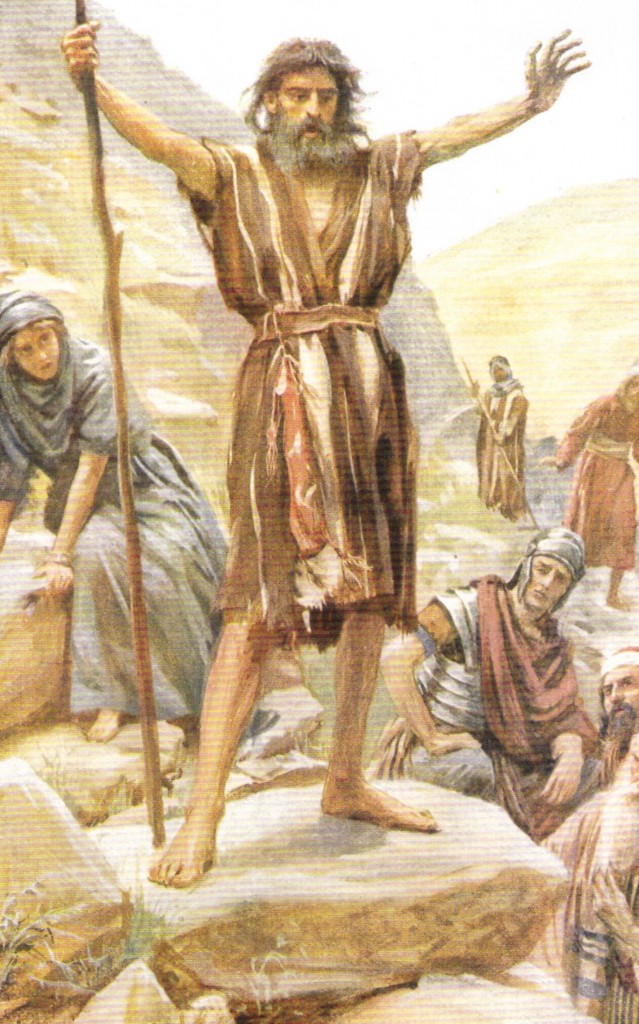
Yes, John was popular. Many if not most of the inhabitants of Judea made the long, hot and arduous trek down from the Judean mountains to the lowest spot on earth (an apt geographical representation of the current state of the  religious system of that day…and ours) into the Jordan River Valley near the Dead Sea (another apt geographical description of the religious system of John’s day…and our day as well) to hear this goat-skinned clad, locust and honey-eating and wild-eyed preacher man. When they arrived, did he tickle their ears with gentle happy, happy-talk religious platitudes? Did he tell them that “Come to Jesus because he has a wonder plan for your life?” Or, “Come to Jesus and he’ll help improve your self esteem.” Or, “Say a prayer, receive forgiveness and go to church and pay your tithes, and now that you’re once saved always saved, just go and stand on the street corner, while waiting for the rapture bus to take you to heaven before all the you-know-what hits the proverbial fan.” Or “Come to Jesus and if you buy my how-to books and videos, then I’ll show you how he’ll make you healthy and wealthy here and now on demand.” No! This was not even close to John’s message. Rather it was…

[W]hile Annas and Caiaphas were high priests, the word of Elohim came to John the son of Zacharias in the wilderness. And he went into all the region around the Jordan, preaching a baptism of repentance for the remission of sins, as it is written in the book of the words of Isaiah the prophet, saying: “THE VOICE OF ONE CRYING IN THE WILDERNESS: ‘PREPARE THE WAY OF THE LORD; MAKE HIS PATHS STRAIGHT. EVERY VALLEY SHALL BE FILLED AND EVERY MOUNTAIN AND HILL BROUGHT LOW; THE CROOKED PLACES SHALL BE MADE STRAIGHT AND THE ROUGH WAYS SMOOTH; AND ALL FLESH SHALL SEE THE SALVATION OF ELOHIM.’ “Then he said to the multitudes that came out to be baptized by him, “Brood of vipers! Who warned you to flee from the wrath to come? Therefore bear fruits worthy of repentance, and do not begin to say to yourselves, ‘We have Abraham as our father.’ For I say to you that Elohim is able to raise up children to Abraham from these stones. And even now the ax is laid to the root of the trees. Therefore every tree which does not bear good fruit is cut down and thrown into the fire.” (Luke 3:2–9) 

In the last days, prior to Yeshua’s second coming, if we correctly understand the end time prophetic implications of the Book of Malachi chapters three and four, YHVH will raise up John the Baptist–type preachers, who will be coming in the spirit of Elijah, and who will be preaching a hard and unpopular message. They will be warning YHVH’s people to repent of sin, and return to the ancient spiritual paths as taught by the biblical fathers of the Christian faith by getting back to YHVH’s Torah-Truth. This will be the unpopular and disturbing message of, to put it in modern vernacular, “to turn or burn” (see Mal 4:1, 3 and 6b). May those who have ears to hear, and who are children of the light, hear and understand the times and seasons in which we are living (1 Thess 5:1–10).


 

John the Baptist-Type Preachers Are Preparing the Bride

As prophesied by Isaiah and Malachi the prophets, YHVH is currently raising up John the Baptist-style preachers to prepare the way for Yeshua’s (Jesus’) second coming. They are calling Christians out of the spiritual Babylon of churchianity, which is a mixture of truth and error, good and evil, and to repentance and back to their Torah-based, biblical roots.

These preachers are NOT pansies in the pulpits like the majority of Christian pastors, but are rough-hewn, plain spoken and fearless servant of YHVH Elohim, who are laying the spiritual ax to the tree of the anemic, lukewarm, idol-worshipping, man-pleasing religious system called modern Christianity. Can you handle this, or are you content to play church and remain in your spiritual state of lukewarm complacency?

Watch this video, be challenged to grow up spiritually, so you will be the chaste and righteous bride for which Yeshua the Messiah is coming back to marry.

The Bible is clear: not all Christians will be the bride of Yeshua! The choice is yours.


How to Receive Spiritual Light

The Gospel of John chapters seven to nine are a prophetic picture of what will occur at the end of the thousand year millennial reign of King Yeshua the Messiah. In this video, Anna explains the prophetic implications of the Last Great Day of the Feast of Tabernacles, Yeshua being the river of life, the prophetic picture of the Eighth Day, the man born blind, Yeshua being the Light of the world and how this relates to the coming New Jerusalem.

She also reveals how all people fall into three spiritual categories and what the fate of each will be either reward or punishment at the white throne judgment seat at the end of Millennium.

Each of us fits into one of these categories depending on how we respond to Yeshua the Messiah, who is the river of life and the Light of the World.

Will we receive rewards or punishment, life or death?

The choice is now ours to make.


What does, “Lead us not into temptation,” mean?

In the Lord’s Prayer, Yeshua instructs his disciples to pray, “Lead us not into temptation, but deliver us from the evil one.” What does this mean? Does this mean that our Father in heaven leads us into temptation?

The following are notes from Nathan’s commentary on this verse that will hopefully clear up this confusion.


Matthew 6:13, Lead [or bring] us not into temptation [Gr. peirasmos]. What is the meaning of this phrase found in “the Lord’s Prayer” ? Why did Yeshua instruct his disciples to ask his Father not to lead them into temptation, and how does one reconcile this verse with what James says in his epistle?

Let no one say when he is tempted, “I am tempted [Gr. peirazō from peirasmos] by Elohim”; for Elohim cannot be tempted [Gr. peirazō] by evil, nor does He Himself tempt [Gr. peirazō] anyone. But each one is tempted [Gr. peirazō] when he is drawn away by his own desires and enticed. Then, when desire has conceived, it gives birth to sin; and sin, when it is full-grown, brings forth death. Do not be deceived, my beloved brethren. (Jas 1:13–16)

Temptation is the Greek word peirasmos meaning “putting to a proof, an experience, a discipline, a trial, a provocation, calamity or by implication, adversity, temptation.” Obviously this word as several meanings. Here are how some other English translations render this phrase:

And do not lead us into hard testing, but keep us safe from the Evil One. (CJB)

And do not bring us to the time of trial, but rescue us from the evil one. (NRS)

Bring us not into sore trial… (Adam Clarke in his commentary on this verse)

Peirasmos can also refer to a trial with a beneficial purpose or effect. Indeed, YHVH tests the faith of his people to make them spiritually strong and to prove if they will remain faithful and obey to him or not (see Deut 8:2–5). Moreover, trials come to the saints or are divinely permitted for their betterment (Luke 22:28; Acts 22:19). James goes so far as to say,

My brethren, count it all joy when you fall into various trials [peirasmos], knowing that the testing of your faith produces patience. But let patience have its perfect work, that you may be perfect and complete, lacking nothing. (Jas 1:2–4)

So in James 1:13–16, the Greek verb for to tempt (peirazō which is the verb form peirasmos) takes on a more precise meaning when read in the context of verse 12, 

Blessed is the man who endures temptation [peirasmos]; for when he is approved, he will receive the crown of life which the Lord has promised to those who love Him. (Jas 1:12) 

By placing verses 13–16 in context with verses 2–4 and 12, we see that the trials (peirasmos) that come from Elohim are for our spiritual growth and development or for our betterment, whereas temptations (also peirasmos) which come from somewhere else can lead or tempt us to sin, and thus are not from Elohim. 

Evidently, E.W. Bullinger in his Companion Bible has in view James’ discussion of good trials versus bad temptations, which is why states that the  word temptation in Matthew 6:13 is better translated as trial, which in this case is a more apt translation of the word peirasmos. The CJB, NRS and Adam Clarke in their translations above seem to agree.

Interestingly, we read in Matthew 4:1,

Then Yeshua was led up by the Spirit into the wilderness to be tempted [peirazō] by the devil.

In this case, the Spirit of Elohim led Yeshua into the wilderness to be tempted by Satan. Here the Father was using the adversary to be put Yeshua to the test for is betterment. 

Undoubtedly, all of these concepts may be difficult to collate much less to wrap one’s brain around in light of the nuanced meanings of peirazō and peirasmos and the varied scriptural contexts in which these words are used. Suffice it to say, YHVH does allow his children to go through trials, but how we react to them and the choices we make will determine the outcome for us whether good or bad. If we sin, it is not because YHVH tempted us to sin; rather, it is the devil who does that. However, YHVH tests, disciplines, refines and proves his children to purify, refine and to make them strong, even as wind, rain, snow, ice, drought and heat make strong trees.

So when Yeshua told us to pray, Do not lead or bring us into temptation or, more correctly, hard testing or time of trial, but deliver us from the evil one, we are basically asking the Father to go easy on us and to keep or deliver us from the snares of the enemy, who is intent on causing us to sin thus potentially shipwrecking us spiritually. 

This is also the understanding of Adam Clarke, the Wesleyan Methodist scholar who wrote and published a well known Bible commentary in the early 19th century, where he translates temptation as “sore trial” and states that some of early church fathers understood this verse to mean, “do not lead us into trials that we cannot bear.” Clarke goes on to say that peirasmos not only implies violent assaults from Satan, but also sorely afflictive circumstances, none of which we have, as yet, grace or fortitude to bear.


Did Elohim Create Evil?

What or who is the source of evil on the earth? Is it God (YHVH Elohim), the devil or something else? This is a legitimate and honest question since so much evil exists all around us. If YHVH Elohim is the Creator of everything, then does this mean that he also created evil? If so, then how can this be, since the Bible reveals that YHVH is all good, loving, holy, righteous and sinless and perfect? If not, then who or what is the source of evil? It is important to understand the source and origin of evil, for the answer reflects either positively or negatively on the innate character of Elohim and the validity of the Bible, which promotes itself as the inspired Word of Elohim.

The answers to the question of who created evil seem like an unanswerable conundrums to many people. In attempt to resolve this issue, too many people have thrown up their hands in frustration only to become agnostics or even atheists. In reality, the answer is quite simple, and no one’s faith needs to be shaken much less obliterated as we will discover below. Frankly, to answer this seeming perplexing question, it is necessary to stop thinking like finite humans, start thinking outside the paradigmatic box of our physical earthly existence and understand the concept of evil from a biblical, heavenly and logical perspective. It is then that the answer as to the source and origin of evil neatly reveals itself as we are about to discover below. 

The belief that YHVH Elohim created evil is often based on a single passage in the Bible. In Isaiah 45:7 we read, 

“I [YHVH speaking] form the light, and create darkness: I make peace, and create evil: I, YHVH, do all these things.” (KJV, emphasis added)

Based on this verse, some people believe that all the evil that occurs in the world is YHVH’s fault. The stickler, however, is this: If he is the creator of evil, how can everything about him and all that he does also be good?  Because of the belief that YHVH created everything including evil, some people have refused to serve and obey YHVH and questioned or even rejected his Truth as found in the Bible. After all, they reason, how can we believe much less serve a God who claims to be good, yet who is also the creator and purveyor of evil? These are valid considerations that need addressing.

In addressing this issue, let’s first ask a simple question. What does the Bible mean when YHVH says, “I create evil,”? For a better understanding of this seeming enigmatic phrase in Isaiah, let us look at how some other English Bibles translate this same verse. As we are about to discover, there is not a unanimous consensus among Bible translators as to the exact meaning of the biblical Hebrew word for evil. We will soon see that the biblical definition of evil is perhaps broader than at first thought. This alone can change one’s perspective dramatically regarding one’s understanding of the concept of evil. Perhaps our perspective is limited resulting in our coming to wrong conclusions.

I form the light and create darkness, I make peace and create calamity [Heb. ra]; I, the LORD, do all these things.’ (NKJV, emphasis added)

I form the light and create the darkness, I bring prosperity and create disaster [Heb. ra]; I the LORD, do all these things. (NIV, emphasis added)

I form light and create darkness, I make well-being and create calamity [Heb. ra], I am the LORD, who does all these things. (ESV, emphasis added)

I form light, I create darkness; I make well-being, I create woe [Heb. ra]; I, ADONAI, do all these things. (CJB, emphasis added)

Based on how other Bibles translate the Hebrew word for evil, this begs an important question. What is the biblical Hebrew word for evil and what is its definition in light of the fact that different Bibles translate the Hebrew word for evil so differently? The Hebrew word in question is ra or ra’ah It is the generic Hebrew word meaning “evil”, but, as we see below, it can mean much more than “evil” (as quoted from the Online Bible Deluxe Software Program): 

  •  1a) bad, disagreeable, malignant
  •  1b) bad, unpleasant, evil (giving pain, unhappiness, misery)
  •  1c) evil, displeasing
  •  1d) bad (of its kind – land, water, etc)
  •  1e) bad (of value)
  •  1f) worse than, worst (comparison)
  •  1g) sad, unhappy
  •  1h) evil (hurtful)
  •  1i) bad, unkind (vicious in disposition)
  •  1j) bad, evil, wicked (ethically)
  •  1j1) in general, of persons, of thoughts
  •  1j2) deeds, actions n m
  • 2) evil, distress, misery, injury, calamity
  •  2a) evil, distress, adversity
  •  2b) evil, injury, wrong
  •  2c) evil (ethical) n f
  • 3) evil, misery, distress, injury
  •  3a) evil, misery, distress
  •  3b) evil, injury, wrong
  •  3c) evil (ethical)

As we can see, “evil” is only one of the many and varied definitions of the Hebrew word ra, which can also mean “distress, adversity, unhappiness and sadness” among other things. 

Now in light of the broader meaning of the word ra, let us ask a couple of questions and briefly explore the concept of evil. For example, can “bad” things happen to people that end up being good for the person in the end? Similarly, are there things that on the surface appear to be bad, injurious and hurtful, but in reality are for our own safety and protection? Absolutely yes to both questions. Perhaps you have never thought of bad or “evil” in this way, but it, nevertheless, is within the definition of biblical word for evil. Keep these points in mind as we proceed in our discussion and expand our understanding of the concept of bad and evil .

Let’s continue to broaden our understanding of the Hebrew word ra. According to The Theological Wordbook of the Old Testament, the primary definition of Hebrew word ra is “the lack of quality or inferior quality of something or someone and is thus unable to meet standards of value or function beneficially.” The word can connote “moral deficiencies” and is contrasted to the Hebrew word tov which is the generic word meaning “good”. The TWOT goes on to note that Elohim [as the Just Judge of the universe] acts with painful punishment against evil or ra against people who refuse to repent of their wicked, evil or sinful actions. If he failed to take such action against evil, then evil would take over the earth and universe. Do you think this is impossible or that this has never happened before? If so, go read what Scripture says about Satan and the angelic rebellion that occurred before the creation of humans (see Isa 14:12–17; Ezek 28). It happened once and it can happen again.

Let’s now explore another ramification concerning the concept of evil and its source and origin. Is YHVH the creator of evil in a direct sense, or is he merely the creator of the spiritual machinery that set up the laws of cause-and-effect such that evil consequences are the result of wrong choices that people make? That is, when people break YHVH’s laws, evil (in the sense of punishment) befalls them as a result of their actions and the resulting consequences that they bring on themselves. I believe that the answer to this question is yes. Even as blessings and goodness are reaped by those who follow his laws, so curses come upon those who disobey YHVH. You reap what you sow. One is the cause of either the evil or the blessings that comes upon them per the choices they make. As we go along in this study, we shall see that the Bible reveals that people bring evil upon themselves by their wrong choices. So yes,  YHVH created the laws and along with consequences, good or bad, that will fall on people based on their obedience or disobedience to his laws. In this sense, his Torah-laws that, in reality, or neutral. What humans do vis-à-vis these laws based on the choices they make and their subsequent actions will determine the consequences they will experience whether good or evil, blessings or curses, life or death, rewards or punishment, victory or calamity. This is akin, on the physical level to the law of gravity, which is in itself neutral. It is a blessing in that it keeps people from floating into outer space and to their ultimate death. However, at the same gravity becomes a curse if one jumps off a cliff or a tall building. Whether the law of gravity is a blessing or a curse is based on the choices that one makes.

Continue reading
 

Congregation Elim Online Shabbat Fellowship Invite

Nathan Lawrence, along with co-leader Donna Nash (from North Carolina), is hosting a regular online Shabbat gathering via Zoom. If you are interested in joining the group, please send me a request at natanl@earthlink.net. To date, we have been meeting continuously since November 2021.

This online gathering is only open to those who are serious about living in accordance with YHVH’s written Torah, and who are believers in and lovers of Yeshua the Messiah, the Living Torah. 

If you make a request to join the group, please share with Nathan your personal testimony of your salvation (how you came to faith in Yeshua the Messiah) and a statement about your basic biblically-based beliefs. Nathan may then ask you a few questions follow-up questions via email or by phone if clarifications are necessary. 

To date, we have a wonderfully geographically eclectic group of polite and respectful folks from all over the U.S. and several foreign countries as well. Nathan (and sometimes Donna and others) gives a Bible teaching, and there is plenty of questions and answers as well as discussions where folks share their edifying insights on various biblical topics as led by the Spirit of Elohim. We also pray for one another and sometimes even have a little praise and worship.

Shalom.