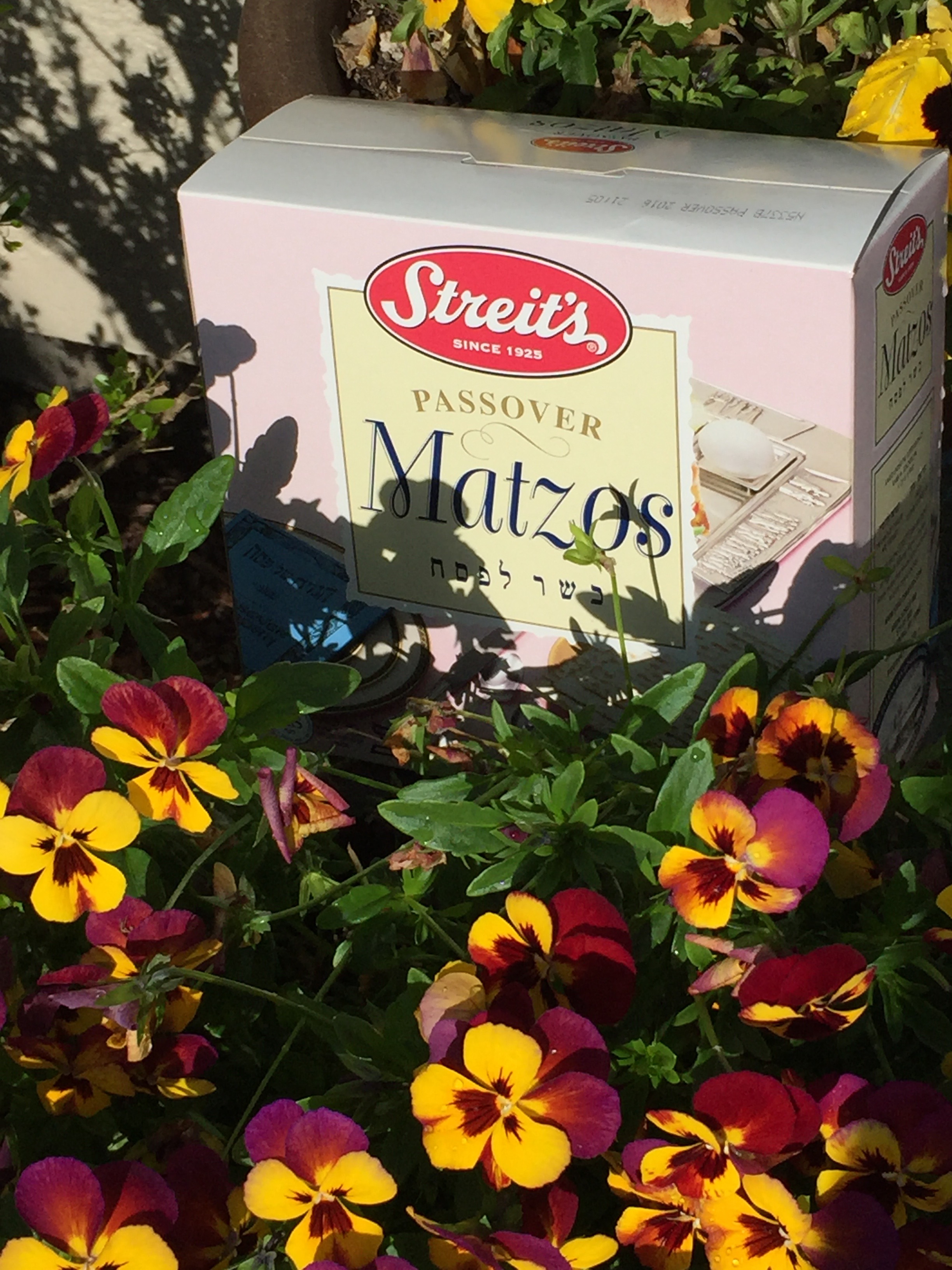
Why the box of matzot in the pansies?

IMG_3846

What speaks of YHVH’s glory more than flowers?

Yeshua thought so. He declared that all the glory of Solomon’s kingdom wasn’t even equal to that of a common lily.

Amazing! Men get all excited over their own creations: palaces, works of art, and great human accomplishments, yet we often overlooks the flowers. Why? Because flowers take the glory away from men and point it to Elohim where it all belongs.

That’s why I put the box of matzah in a planter full of pansies.

YHVH’s feasts, like the flowers, point to YHVH Elohim. The unleavened bread points to Yeshua, the Living Torah-Bread of Life who is the Creator of all including the flowers.

It all comes back full circle and it all fits together in my way of thinking like a puzzle making a beautiful picture. Matzot—flowers—Yeshua—the Torah—the Bread of Life— the Creator—the biblical feasts—the glorious beauty of Elohim.

Ponder, reflect, meditate, get in the river of life and enjoy!


Have a Joyous Last Day of the Feast of Unleavened Bread!

Feast of Unleav. Brd, Joyous3865


Video: Firstfruits Day and the Death and Resurrection of Yeshua


Video: Let us Celebrate the Feast of Unleavened Bread


Video: The Feast of Unleavened Bread Insights


How to Overcome Sin!

Sin

Dealing With the “Leavening” in Our Lives

Throughout Scripture, leavening is a spiritual metaphor for sin, pride, hypocrisy, malice, bitterness and false religious doctrine (Pss 71:4; 73:21; Hos 7:4; Matt 16:6; Mark 8:15; Luke 12:1; 1 Cor 5:8–6; Gal 5:9). Even as a small amount of leavening agents in bread (e.g., yeast and various chemical agents) will quickly permeate bread dough causing it to rise, so a little sin can rapidly infect our lives (or like a quick spread cancer disease) and take us away from Elohim’s path of righteous-living.

The Scripture teaches us to be overcomers (Rom 12:21; 1 John 2:13–14; 5:4) eradicating the leavening of sin from our lives. We must overcome the world, the flesh and the devil (Jas 3:15). Yeshua admonished each of the seven Messianic assemblies to be overcomers (Rev 2:7,11,17,26; 3:5,12,21; see also Matt 24:13). For those who overcome, there will be great rewards—a spiritual inheritance; they will be sons of Elohim (Rev 21:7).

The Greek word for overcome is nikao (Strong’s G3528) meaning “to conquer, to get the Continue reading →


Paul’s Model for One-On-One Evangelism

Spiritual discussion

Acts 17:24–32, Paul’s model for one-on-one evangelism. In Paul’s encounter with the Greek philosophers on Mars Hill, he uses the five step evangelistic approach that Yeshua used as recorded in his encounter with the rich young ruler in Mark 10:17–22). This five-step approach is as follows:

Paul first establishes the character and nature of the one true YHVH Elohim who is the Creator of all things and man should seek him, for man owes all to him (vv. 24–28).

Then Paul shows how the Greeks have not been following the true Elohim, but have been sinning by worshiping false gods (i.e., idolatry), which is a violation of the Torah (v. 29).

Next, Paul further alludes to the Torah by establishing that Elohim’s divine nature or character (which is revealed in the Torah) transcends idols, material possessions or anything else devised by men whether artistic or philosophical in nature (v. 29). These things were the chief false gods of the ancient Greeks, for which Paul was taking them to task.

Paul then tells the Greeks that Elohim is calling men to repentance for ignorantly following man-made idols and philosophies, (which is sin, or Torahlessness, 1 John 3:4) (vv. 30–31).

After this, Paul points the Greeks to Yeshua (vv. 30–31).

From this evangelistic encounter, Paul gained some converts (v. 34).