Exodus 19 Versus Hebrew 4:16 on Coming Before Elohim

Why is it essential to study the example of the children of Israel preparing themselves to come into the presence of YHVH in Exodus 19? After all, if Yeshua did it all for us, we can just come boldly before the Father’s throne anytime, anyway we want, right (Heb 4:16)?

9842706

Let’s explore this concept a little to see what the Bible has to say about it.

Paul says in I Corinthians 10:11,

Now all these things happened to them [i.e., the children of Israel] as examples, and they were written for our admonition, upon whom the ends of the ages have come. (See also Rom 15:4.)

The writer of Hebrews has something similar to say in his prefatory remarks to his statement in Hebrews 4:16 about coming boldly before the throne of YHVH through the merits of the sinless righteousness of Yeshua our High Priest. In the preceding several verses, the author draws upon the example of the children of Israel (Heb 4:1–10) as an example for us not to follow. They were a faithless and disobedient lot (they rebelled against the Torah-word of Elohim)!

Then in Hebrew 4:11, the author starts with the connecting word “therefore,” indicating that what follows is related to that which preceded it. He goes on to admonish us not to follow the Israeites’ example of disobedience (i.e., Torahlessness or lack of faith in and obedience to the word of Elohim).

Next, the author likens the word of Elohim to a sharp two-edged sword Continue reading →


What Does YHVH Require of Humans to Come into His Presence?

What are the terms and conditions to coming into the presence of Elohim? Even though now we have access to the Father by the blood of Yeshua the Lamb of Elohim, and even though the veil between the Holy of Place and the Holy of Holies (representing the divine presence or throne room of Elohim) has been opened for all to come in), what can we learn from this passage about preparing ourselves to come into YHVH’s presence? Let’s read and find out.

Mt. Sinai 2-20474010

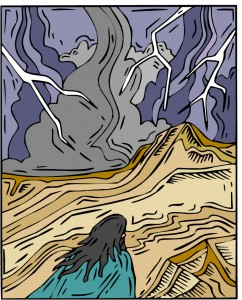
Exodus 19, An invitation. In this chapter, YHVH invites his people to come near to him, to receive his Torah, and to enter into a spiritual relationship with him. He had just delivered them from their sins, suffering and bondage when he led them out of Egypt (Exod 19:4). He now offered them enticing blessings and status among the nations of the world (Exod 19:6) if, and only if, his people would agree to his terms and conditions (Exod 19:5).

But YHVH would not allow his people to accept his benefits on their terms, but only on his terms. This is where men and religious systems have missed it: they want to accept YHVH on their own terms, not YHVH’s terms. Such is the religion of humanism—that man knows better than YHVH what is good for him, which is the religion the serpent pawned off on the first man and woman at the tree of knowledge. The problem is that accepting YHVH on our terms is called sin, which leads to misery and eventually to eternal death!

There are preconditions to meeting with YHVH and coming into relationship with him—coming to his high and holy mountain, his place of abiding, and his presence. Continue reading →


New Video: The Two Sticks Message from Abraham to the New Jerusalem

In this teaching, Natan Lawrence traces the spiritual history of the one new man (i.e., born-again believers) back to Abraham, through the prophets, then to Yeshua and apostles and forward to the New Jerusalem. Why is this important to know? Because it’s the history of your spiritual family, and to know your spiritual heritage and destiny, you need to have a sense of your family history.


The Two Sticks Message from Abraham to the New Jerusalem

The Story of Redeemed Israel from Abraham to the New Jerusalem

The truth of the two houses of Israel literally permeates the entire Bible from Genesis to Revelation. Entire chapters and whole books of the Bible are dedicated to this message, so it’s not one that can be ignored. Multiple books could be written and numerous sermons preached on this subject. However, just for the fun, let’s see if we can condense this vast subject down into a short teaching, and yet still capture the essence of what the Bible reveals on this vital topic.

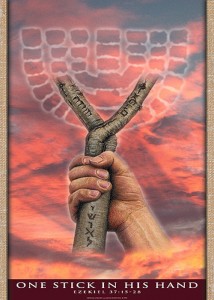
One Stick in His Hand

Image courtesy of messianicisrael.com

The biblical prophets likened the nation of Israel to an olive tree that had split into two sub-trunks. One of these smaller trunks represented the nation of Judah, while the other smaler trunk the nation of Ephraim (and Manasseh) or Samaria. It was the same tree with the same main trunk and roots, but it became smaller trunks. One trunk went one way, and the other went the other way. Eventually, YHVH broke these two trunks off of the main trunk of the olive tree, but then promised to graft them back into the main tree trunk and make of two nations one nation or one tree again. Before discussing this, let’s review some family history.

A Special People—A Special Assignment

Back in Genesis, nearly 4000 years ago,

Continue reading →


Blog Scripture Readings for 1/27 through 2/2/13

Aside

Parashat Yitro — Exodus 18:1 – 20:23
Haftarah — Isaiah 6:1 – 7:6; 9:5–6 (9:6–7) *
Prophets — 2 Kings 7:1 – 14:29
Writings — Psalms 113:1 – 119:32
Testimony — Luke 20:1 – 23:43

Most of this week’s blog discussion points will be on these passages. If you have general comments or questions on the weekly Scripture readings not addressed in a blog post, here’s a place for you to post those. Just use the “leave a reply” link below.

The full “Read Through The Scriptures In A Year” schedule, broken down by each day, can be found on the right sidebar under “Helpful Links.” There are 4 sections of scripture to read each day. One each from the Torah, the Prophets, the Writings, and from the Testimony of Yeshua. Each week, the Torah and haftarah readings will follow the traditional one-year reading cycle.

Weekly Blog Scripture Readings for 1/27 through 2/2/13.

* Verse numbers in parenthesis refer to the verse number in Christian Bibles.


What Can I Do on the Sabbath?

What can I do on the Sabbath? This is a  question that many people have—especially our children. The Sabbath can be a joyful and exciting day.

The Sabbath can be a joyful and exciting day.

The Sabbath can be a joyful and exciting day.

As we look to the Bible for answers to this question, we find many wonderful possibilities to make this day not only enjoyable, but spiritually meaningful and edifying.

As we study the Scriptures, we see that certain activities were viewed to be within the perimeters of the purpose of the Sabbath, which is to draw humans closer to Elohim, their Creator, and to one another. These activities include…

  • The Scriptures were read and taught to the people on the Sabbath day (Luke 4:16; Acts 13:14–15, 27,44; 15:21; 17:2).
  • The Word of Elohim could be taught on the Sabbath (Mark 6:2; Luke 4:16-27,31; Acts 13:15–48; 15:21; 16:13; 17:2; 18:4).
  • Preaching occurred on the Sabbath (Acts 13:42; 15:21).
  • Exhorting (or strongly encouraging or urging) one another occurred on the Sabbath (Acts 13:15).
  • The gifts of the Set-Apart Spirit of Elohim were practiced on the Sabbath in the congregation (1 Corinthians 12 and 14).
  • Work connected with religious service was lawful on the Sabbath (Num 28:9; Matt 12:5; John 7:23).
  • Good deeds and works of mercy are lawful on the Sabbath such as healing the sick (Matt 12:11–12; Mark 3:1–5; Luke 6:6–10; 13:10–13; 14:1–4; John 5:8–16; 9:14).
  • Acts needed to sustain life could be performed on the Sabbath such as feeding farm animals, pulling an ox out of a ditch or performing a circumcision (Matt 12:1–5; Mark 2:23–26; Luke 6:1–4; 13:15; 14:5; John 7:22–23).
  • One is not to go out of one’s dwelling place on the Sabbath to gather food (to work, earn a living; see Exod 16:29–30), but attendance of religious meeting is acceptable (see below).
  • Yeshua attended synagogue on the Sabbath (Mark 1:21; 6:2; Luke 4:16; 6:6; 13:10).
  • Paul attended synagogue on the Sabbath and taught or discussed the Scriptures (Acts 13:14, 42; 17:2 and 18:4).
  • The apostles encouraged believers to attend synagogue on the Sabbath (Acts 15:21).
  • Traveling a short distance to get to the Sabbath services is acceptable (Acts 1:12).
  • Sabbath services could be held outdoors in a beautiful setting even if it was necessary to hike there on foot (Acts 16:13).
  • Gather together to worship YHVH on the Sabbath (Lev 23:3; Isa 66:23; Ezek 46:3; Acts 16:13; 18:4).
  • It was acceptable to heal the sick on the Sabbath (Matt 12:9–14; Mark 3:1–6; Luke 6:6–11; 13:14; John 5:9; 9:14)

Most of these principles apply to the seven biblical feasts as well.

Now a question for you the reader: What are some Sabbath activities that you do that not only honor YHVH and the Sabbath, but bring you into a closer relationship with him and our fellow redeemed Israelites? How about for the kids? How can we keep them excited about the Sabbath?

One possibility of a Sabbath activity is our Torah Explorers Torah study guide for young people available for free at http://www.hoshanarabbah.org/parshiot.html. My adult Torah study guide is located at this link as well. Enjoy!


Sabbath Glue

The Glue That Holds a Family and Spiritual Community Intact

As a Jewish saying goes, even though the Jewish people have been keeping the Sabbath for thousands of years, it’s not that the Jews have been keeping the Sabbath, but rather that the Sabbath has been keeping the Jews. As a weekly rallying point, the Sabbath acts a spiritual glue that helps to hold the family and religious community together.

22475730

The joy, peace, timelessness and eternal nature of the Sabbath is felt no more than on Erev Shabbat (the eve of the Sabbath).

Preparations in the home have been made all week for this family and community event. Expectations are high. It is as if a curtain suddenly drops between acts in a theater and the curtain lifts to reveal a completely new set and scene. “Suddenly, the frenzied pace of life is slowed; the concerns of the outside world recede; and all doubts and worries are set aside” ( Abraham B.Witty, Exploring Jewish Tradition, p. 153). It’s a whole new world, a whole new feeling. Time stops. It is time to focus on those things which are of the greatest meaning in life and which are of enduring and eternal value: one’s Creator, one’s family, and spiritual orientation and instruction.

At this point, if the reader happens to own the movie Fiddler On the Roof, I suggest that you play the part at the beginning of the movie where the Jewish society prepares for the Sabbath and then ushers in the Sabbath over the Friday evening meal. After viewing this, one will have a better idea of the idea of the sanctity of the Sabbath and the central role it plays in the Hebrews’ life. As one author notes, “A[n] … important principle concerning the stability of the Jewish family is seen in the description of the Sabbath observance that is given in Fiddler [on the Roof]. In the small village of Anatevka in pre-Communist Russia, there is a sense of joyous anticipation as the Sabbath draws near (see Isa 58:13). The seventh day of the week is a dramatic symbol of community. It may be summed up in the word holiness. For Tevye and his family, holiness means an act of separation from many of the routine and mundane affairs of life. From the moment Golde, his wife, lights the Sabbath Eve candles until the first star appears in the sky some twenty-four hours later, there is a sense of wellbeing and spiritual satisfaction in the midst of their seething society. The Jewish community of Anatevka is in constant threat of another Russian pogrom. Yet we catch a snatch of this spiritual serenity as, around the Sabbath table, Tevye and Golde sing “A Sabbath Prayer” to all five daughters. The song concludes, ‘May YHVH protect and defend, may YHVH preserve you from pain. Favor them, O Lord, with happiness and peace. O hear our Sabbath prayer. Amein’” (Our Father Abraham: Jewish Roots of the Christian Faith, by Marvin Wilson, pp. 223–224).

The Sabbath has helped the observant Jew to refocus, sustain serenity and regain divine perspective in the midst of the weekly pressures of life, so ought “the Lord’s Day [Sunday] for the Christian ought … provide renewal in similar ways” (Wilson, pp. 223–224). Although a nice thought, the comparison between Sabbath and Sunday is without scriptural precedence or mandate. Such thinking ignores the divinely revealed truth and reality of the Sabbath and its uniqueness and sanctity as compared to any other day of the week, including Sunday for the Christians—a day which never has been, nor ever will be sanctified by the Creator of the Universe as a day of rest from our work and a time for special communion with him.