Shabbat Shalom Preparedness

YHVH Commands Man to Work for Six Days

One can’t fully appreciate the Sabbath unless one has worked during the previous six days, and, in turn, has a need for and, hence, a reason to rest. In fact, YHVH commands man to work for six days and bring in or to gather all his food. No gathering of food is to occur on the Sabbath.

Six days ye shall gather it [manna]; but on the seventh day, which is the Sabbath, in it there shall be none. (Exod 16:26)

After one has labored intensely all week, one is ready to rest, and happily so! It’s time to “kick back” and to enjoy the fruits of one’s labors, and then to lift one’s spiritual sights above the mundane plain in order to discover (or reconnect with) the greater and higher meaning life, which should involve loftier aspirations than merely slaving away for transitory material necessities and wants.

The Preparation Day: Preparing for the Sabbath

Prepare food for Shabbat on the six day (Friday).

Prepare food for Shabbat on the sixth day (Friday).

The Creator not only commands man to work for six days as a precursor to resting on the seventh day, but to fully enjoy the peace, rest and sanctity of the Sabbath, the Scriptures instruct man also to prepare ahead of time for this day.

And it shall come to pass, that on the sixth day they shall prepare that which they bring in; and it shall be twice as much as they gather daily … And he said unto them, This is that which YHVH hath said, To morrow is the rest of the set-apart Sabbath unto YHVH: bake that which ye will bake to day, and seethe that ye will seethe; and that which remaineth over lay up for you to be kept until the morning. (Exod 16:5, 23; see also Mark 15:42; Luke 23:54; John 19:31)

Not only should food preparation be on our “to do” list for the sixth day, but consider doing the following as well to insure one’s full enjoyment of the Sabbath:

  • Have clothes washed and clean for the Sabbath.
  • Fill the car with gas if you have to travel to be with a congregation.
  • Do all your shopping, so that no buying or selling has to occur on the Sabbath.
  • Prepare your own personal “Garden of Eden” by cleaning the house, mowing your grass.
  • Think and plan ahead what activities you might want to do on the Sabbath that will edify you and your family spiritually and bring you closer to Elohim.

Once all your work is done, and you’ve prepared for the Sabbath, now sit back and enjoy!

Shabbat shalom from my family to yours!


The Prophetic Implications of the The Song of Moses

Exodus 15:1, This song. This Song of Moses may be more aptly titled, “The Song of the Redemption,” for it is a song about our Heavenly Redeemer, as we shall now discover.

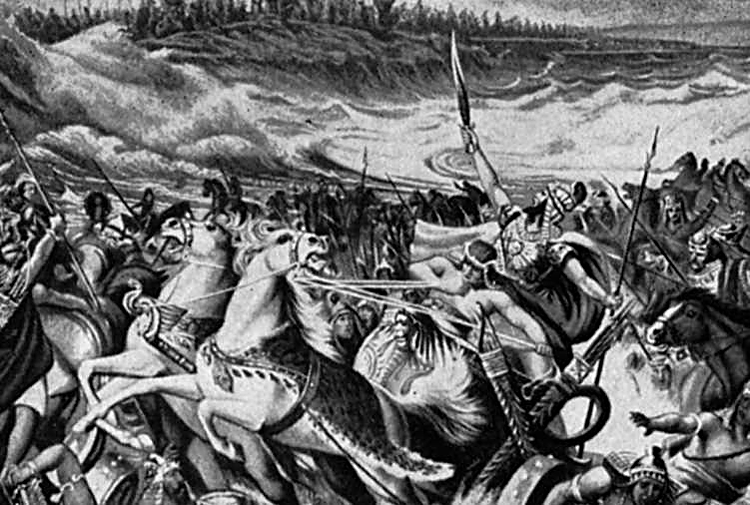
Pharaoh and his army drowning in the Red Sea.

Pharaoh and his army drowning in the Red Sea.

I will sing. Will this Song of Moses be sung again in the future? In Revelation 15:3, we see that the glorified bride of Yeshua will be singing the Song of Moses. Why is she singing this joyous song? Because YHVH has delivered her from his judgments of wrath that he is pouring out upon a wicked end times world. These same redeemed Israelites are those whom YHVH has brought out of Babylon the Great as part of the second exodus of redeemed Israelites from the nations where they have been long scattered and spiritually enslaved. The Song of Moses here (in Rev 15:3) also relates to the Song of the Lamb. As we shall see next, the Song of Moses in Exodus 15 does relate to Yeshua the Lamb. Exodus 15:2, The LORD [Heb. Yah]. Yah is the shortened form of YHVH. The verse goes on to say about this same Yah “that he has become my salvation [Heb. Yeshua].” It literally says that YHVH has become Yeshua! This is yet another Tanakh (OT) prophecy confirming the deity of Yeshua. I will praise him. The KJV translates this phrase as “I will prepare him a habitation.” The ArtScroll Stone Edition Tanach has, “I will build him a sanctuary.” Couple this with verse 17, which speaks of “the sanctuary [Heb. miqdash],” which YHVH has made for his dwelling, and we have a solid reference to the Tabernacle of Moses, which YHVH instructed the Israelites to build, so that he could dwell among them (Exod 25:8), and commune with them (verse 22). What’s more, everything in the tabernacle pointed to Yeshua, the salvation of YHVH, and to his death on the cross to redeem man from sin and bring him into close communion with the Father in heaven! Exodus 15:6,12, Your right hand. Three times this phrase is found in the Song of Moses. Who is the outstretched arm or YHVH? It is Yeshua (Isa 53:1 cp. Isa 52:10; 40:10; Ezek 20:34–35) who is presently at the right hand of Elohim (e.g., Rom 8:34; Col 3:1; etc.). Exodus 15:12, The earth swallowed them. Even as the earth (or seas) swallowed up Pharaoh (a picture of Satan) who was attempting to destroy YHVH redeemed people, the earth will come to the rescue of the end times saints who have fled into the wilderness after leaving the Babylon the Great world system (Rev 12:16).


Shabbat Shalom—The Creator’s Gift to Weary Man

New Video Release

The Sabbath is one of the Creator’s greatest gifts to mankind, and this free gift is still available to all who will receive it.

Learn how the Sabbath intimately connects you to your spiritual heritage and to the Creator, as well as how it prophesies about your spiritual destiny.

In this video, Natan Lawrence warmly and passionately discusses the joy and blessings that are yours when you celebrate the Sabbath—a day that YHVH Elohim consecrated for man’s spiritual enrichment.


Blog Scripture Readings for 1/20 through 1/26/13

Aside

Parashat Beshalach — Exodus 13:17 – 17:16
Haftarah — Judges 4:4 – 5:31
Prophets — 1 Kings 21:1 – 22:53; 2 Kings 1:1 – 6:33
Writings — Psalms 106:1 – 112:10
Testimony — Luke 16:1 – 19:48

Most of this week’s blog discussion points will be on these passages. If you have general comments or questions on the weekly Scripture readings not addressed in a blog post, here’s a place for you to post those. Just use the “leave a reply” link below.

The full “Read Through The Scriptures In A Year” schedule, broken down by each day, can be found on the right sidebar under “Helpful Links.” There are 4 sections of scripture to read each day. One each from the Torah, the Prophets, the Writings, and from the Testimony of Yeshua. Each week, the Torah and haftarah readings will follow the traditional one-year reading cycle.

Weekly Blog Scripture Readings for 1/20 through 1/26/13.


Yeshua Was the Life of the Party—But in a Different Way

Nuggets from Luke 14: Yeshua Was a Salty Character

Luke 14:1, House of one of the rulers. Yeshua was invited to a Sabbath meal at the home of a Pharisee who was a ruler (likely a wealthy member of the Sanhedrin). Had Yeshua been a typical man, he would have engaged in the customary small talk of a polite and gracious dinner guest not wanting to offend his host. Yet Yeshua was not there to schmooze—to curry anyone’s favor in an effort to gain personal influence. As he required his own disciples to maintain a salty or spicy demeanor at all times (Matt 5:13; Luke 14:34–35), he was definitely up to the task to lead his disciples by example.

"May I have your attention please? Yeshua has something to say."

“May I have your attention please? Yeshua has something to say.”


The following discussion that Yeshua initiates is what some may consider to be a prime example of how to insult one’s host and the other guests. Continue reading →


When Does the Biblical New Year Start?

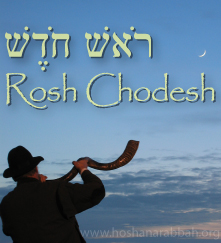
Exodus 12:2, Month. It is the Hebrew word chodesh (Strong’s H2320/TWOT 613b) meaning “the new moon, month, monthly, the first day of the month, the lunar month.” It is found in the Tanakh (Hebrew Scriptures or Old Testament) 276 times and is translated in the King James Version as “month” 254 times, “new moon” (20 times), and “monthly” (1 time). We see that from these definitions that the terms “month” and “new moon” are synonymous. It has been understood for millennia that ancient Israelites began their month with the new moon.

rosh_chodesh 2

Why was it important for the Israelites to know when the new moon occurred and when the month began? The dates of the annual biblical festivals that YHVH gave to Israel and instructed them to observe were determined based on when the new moon occurred (Lev 23:5, 6, 24, 27, 34).

The next question to answer is this: when does the biblical month begin?

For modern astronomers the term “new moon” means something different than it did to the ancients, including those who YHVH inspired to write the Bible. Ancient calendars were determined by the moon, while modern ones are not. Some biblical expositors teach that the new moon begins when the moon is in conjunction or in line with the earth and the sun and is in its dark phase. Others believe that the month begins just after the moon has moved out of its dark phase and begins to show a sliver of light, which is called the visible or crescent new moon. Who is right?

Some Bible teachers claim that there is no place in the Scriptures that specifically states that the new moon begins at the first visible sliver after being dark for several days. Therefore, they reason, it is an assumption to say that it does, and therefore, the new moon should be determined from its conjunction with the earth and sun while it is in its dark phase. While on the surface, this may seem like a valid argument, one important verse in the Scriptures, however, and some simple logic quickly disproves this notion. It is Genesis 1:14.

And Elohim said, “Let there be lights in the firmament of the heaven to divide the day from the night; and let them be for signs, and for seasons [moedim/biblical festivals], and for days, and years.”

In this verse we see that the sun and the moon are “signs” for seasons, days and years. The word “sign” is the ­Hebrew word owt/ אות (Strong’s H226; TWOT 41a) meaning “sign, signal, mark, token, emblem, signboard, standard.” In the Tanakh, owt describes such visible (not invisible) signs as Noah’s rainbow (Gen 9:12–13, 17), Cain’s mark (Gen 4:15), circumcision (Gen 17:11), and the Sabbath (Exod 31:13, 17; Ezek 20:12). In addition, owt is used some 80 times in the Tanakh to refer to miraculous signs. These include the plagues of Egypt (Exod 7:3; Deut 4:34, etc.), the sign of the virgin birth of the Messiah (Isa 7:11, 14); YHVH miraculous signs to Gideon (Judg 6:17) and King Hezekiah (2 Kgs 20:9; Isa 38:7). In addition, Aaron’s rod that budded was a sign or token (Num 17:25). Many more examples could be given.

What do all these examples of how the Bible uses the Hebrew word owt have in common? They were all a visible sign that one could see. This is the definition of the word owt and how it is used in the Hebrew Scriptures. Simply stated, the visible sliver of the new moon fits the definition of owt as used in Genesis 1:14, while the astronomical conjunction (when the moon is in its dark phase and is invisible to the eye because the earth is between the moon and the sun) does not. Psalm 104:19 is definitive biblical proof that the moon’s purpose is to determine the biblical feasts when it says YHVH “appointed the moon for seasons [Heb. moedim, which means ‘appointed times’ or ‘biblical holidays’].” The moon cannot be a visible sign to determine seasons or biblical festivals if it is hidden or dark.

The fact that ancient Israelites determined the new moon based on the sighting with the naked eye of the moon’s sliver has been substantiated repeatedly by historians and religious scholars over the past 2000 years. 


The Fall of Egypt and the Fall of Babylon the Great

Exodus 10:3, Thus says YHVH Elohim of the Hebrews. What Moses did would be similar in our day to going to the president of the U.S., who is the head of the most powerful and advanced nation on earth, and saying, “The God of the people of El Salvador says to you…” How much impact would such a demand have on the president? However, when YHVH deputizes a person for a divine mission, YHVH, the Creator of the universe, and just one person make a majority!

21831363

How long will you refuse to humble yourself before me? The sovereign Creator ultimately demands that all submit to his will and purposes. Those who refuse to do so imperil themselves. The Scriptures record that YHVH held other leaders accountable for exalting themselves against him—for refusing to humble themselves:  Nebuchanezzar (Dan 4:19ff), Belshazzar (Dan 5:22), Zedekiah (2 Chron 36:12), Lucifer (Isa 14:13ff) and Herod (Acts 12:21–23).

Furthermore, those who put their trust in false gods will come under the judgment of the one supreme and true God. As Elohim judged the false gods of Egypt one by one and brought that arrogant nation down, he will do the same in the end days with Babylon the Great and the gods of this world.

1752048

We see a striking parallel between the plagues YHVH brought upon Egypt and those he will bring upon the rebellious inhabitants of earth just prior to Yeshua’s second coming. For example, the seventh plague of the seventh vial is an ultimate expression of the fierceness of Elohim’s wrath upon a rebellious and still blaspheming world (Rev 16:17–21). Seventy-five pound hailstones will fall from heaven and the earth will quake beneath. There will be no hiding place from Elohim’s wrath. Additional end-time plagues that replicate those of Egypt include grievous sores to come upon men (Rev 16:2), the seawater and fresh water turning to blood (Rev 16:3–4), and darkness upon the earth (Rev 16:10). After this, Babylon the Great will fall (Rev 18:2), even as ancient Egypt fell under the mighty blows of YHVH’s judgment.

Psalms chapter two summarizes the rebellious arrogance of men, and their conspiracy against the Creator to keep control of their kingdoms. Elohim will laugh at them from heaven and will send his Son to judge them and to break their kingdoms in pieces with a rod of iron. Kiss the Son now and worship him if you expect to escape these judgments (Ps 2:12)!

What gods do we have in our lives that we are holding on to? Each of the plagues against Egypt was a direct strike against one of the many gods of Egypt (Exod 12:12; Num 33:4). (See notes at Exod 7:14.)