What Is Sin and How to Overcome It

1 John 3:4, Sin is the transgression of the Torah. For a list and discussion the use of the word sin in the Testimony of Yeshua along with all of its synonyms, see The Companion Bible (appendix 128).

Why must we overcome sin?The Scriptures teach us to be overcomers (Rom 12:21; 1 John 2:13–14; 5:4). We must overcome the world, the flesh and the devil (Jas 3:15). Yeshua admonished each of the seven Messianic assemblies to be overcomers (Rev 2:7, 11, 17, 26; 3:5, 12, 21; see also Matt 24:13). For those who overcome, there will be great rewards—a spiritual inheritance; they will be sons of Elohim (Rev 21:7).
Sin

The Greek word for overcome is nikao (Strong’s G3528) meaning “to conquer, to get the victory, prevail.” Nikao is where the word nike comes from.

What is Sin?

  • Sin is the anything that violates the Torah-instructions or laws of Elohim (1 John 3:4).
  • Sin is unrighteousness (1 John 5:17; YHVH’s Torah commands define what righteousness is, Ps 119:172).
  • Sin is not believing in Yeshua, who is the Torah-Word of Elohim incarnate (John 3:18; 16:9).
  • Sin is failing to do (or not to do) that we which we should be do (or not do)—i.e., a sin of omission (Jas 4:17).
  • Sin is putting me-first (my desires, impulses), not YHVH first (his will) in our lives. It is humanism. It is following the lie of the devil: man can have it his way regardless of what YHVH’s Word says, and not suffer any consequences for it. This is the big lie from the serpent in the Garden.
  • Sin is a direct challenge to YHVH’s authority in our lives. It is arrogance and self exaltation against YHVH’s will. It involves lack of belief in his Word. It is putting his will above his Word.

How to do we overcome sin? 

  • Know the biblical definition of sin.
Continue reading →


Beware of Antichrist!

1 John 2:18, The Antichrist. Other biblical references that many Christians scholars believe allude to the end times Antichrist figure include:

  • The Beast (Rev 13:4)
  • The abomination that causes desolation (Matt 24:15)
  • The desolator (Dan 9:27)
  • The man of sin (or lawlessness), the son of perdition (2 Thess 2:3)
  • The little horn (Dan 7:8)
  • The Assyrian (Mic 5:5; Isa 10:5; 14:25)

Devil 32200902

Many antichrists. How does John define this spirit? From 1 John 2:18–19, 22; 4:3; 2 John 7 we learn that the Antichrist and all spirits of antichrist have come out of the first century apostolic faith of the Jewish Christian community. From these passages we also learn that the spirit of antichrist denies that Yeshua is the Messiah (Savior and Redeemer of man), denies that Yeshua is part of the “Godhead,” is deity and is the Son of Elohim, and denies the incarnation of Yeshua. This is how the Bible defines the spirit of antichrist.

What should be our reaction when we encounter this demonic spirit of antichrist? The wise counsel of John in his second epistle sums up our firm conviction on this matter.

Whoever transgresses and does not abide in the doctrine of Messiah does not have Elohim. He who abides in the doctrine of Messiah has both the Father and the Son. If anyone comes to you and does not bring this doctrine, do not receive him into your house nor greet him; for he who greets him shares in his evil deeds. (2 John 9–11)

What additionally can we learn about the person of the Antichrist and the spirit of antichrist from the four passages where antichrist is mentioned in John’s epistles?

From 1 John 2:18–19, 22; 4:3; 2 John 7 we learn that the Antichrist and all spirits of antichrist have come out of the first century apostolic faith of the Jewish Christian community. This eliminates some of the world’s large religions (e.g., Hinduism, Buddhism) as being contenders for the end times religious system of the Antichrist. That leaves pagan Christianity and Islam. From these passages we also learn that the spirit of antichrist denies that Yeshua is the Messiah (Savior and Redeemer of man), denies that Yeshua is part of the “Godhead,” is deity and is the Son of Elohim, and denies the incarnation of Yeshua. Only Islam adheres to these beliefs.


Omer Count

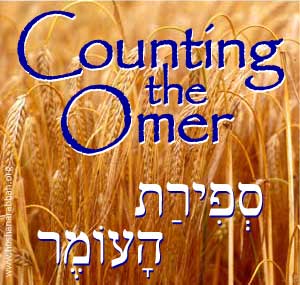
We are in the 5th week of seven weeks of the counting of the omer. Today is the 33rd day of 50 days in the counting of the omer leading up to the biblical Feast of Weeks (Pentecost). (Lev 23:15-16)

omer_count


How the Church Divorced Itself From Its Jewish Roots

From A.D. 70 to A.D. 135—How the Church Became Divorced From Its Hebraic Roots

What is called Christianity today in many ways is very dissimilar, and in many respects, outright antagonistic to the religion of the first-century, Book of Acts believers. How did this come to be?

Many modern Christian churches prides themselves on being “a New Testament church,” yet what they practice and believe is often very different from and even opposed to the teaching and practices of the apostles and primitive, first century church. For example, life for the apostolic believers in Jerusalem revolved around the temple (Acts 2:46; 3:1; 5:19-21; 5:42; Acts 21:26; 22:17; 24:18; 25:8; 26:21), and for those outside of the land of Israel, on most Sabbaths, they attended the local synagogue (Acts 13:14; 14:1; 17:1–2; 18:4, 7, 8, 19, 26; 19:8). Not only did the first apostles and early believers not celebrate any pagan influenced holidays such as Easter, Christmas, Halloween, Lent, and the rest, but they adhered to the Torah or law of Moses (see references below). The Book of Acts record is also clear that early believers kept the Bible festivals (as outlined in Lev 23; Acts 2:1; 18:21; Acts 27:9; 1 Cor 5:8; Jude 12) of Passover, Unleavened Bread, Pentecost, Day of Trumpets, Day of Atonement, Feast of Tabernacles, and the Eighth Day.

What’s more, the book of Acts records that both Stephen and Paul were falsely accused of teaching that the laws and customs of Moses were nullified, and, as a result of this false accusation, both lost their lives defending Torah-obedience.

A hundred other examples could easily be given showing how the Christian church has veered away from the Hebrew or Jewish roots of its faith, but hopefully, the reader gets the point.

So what happened to cause Christianity to veer so widely from the Hebrew or Jewish roots of its faith and to arrive at the place where it hardly resembles that religious faith from which it sprang? This is not an easy question to answer since one must look back nearly 2000 years and attempt to reconstruct the times in which our spiritual forefathers lived. Moreover, we must understand what was transpiring politically, religiously, and socially at the time to answer this question properly. It is also imperative that we understand the contextual social and linguistic fabric, the backdrop of history, and the parade of  political and economic events which happened one after another between the years of A.D. 70 and A.D. 135. Then and only then can we understand how the church became divorced from its Hebraic roots and became Greco-Roman and Western in nature and combined itself with an admixture of with pagan and antibiblical doctrines along with pagan practices, traditions and beliefs.

Now, let us go back nearly 2000 years for a short lesson in history. The early church was Continue reading →


Overview of the Book of Numbers (B’midbar

The English name Numbers derives from the fact that in this book the Israelites are counted or numbered on several occasions (see chapters 1, 2, 3, 4, 26). Leviticus ends with YHVH instructing his people to count their flocks for tithe purposes, while Numbers begins with YHVH, as the ultimate Good Shepherd (or in Hebrews, YHVH Rohee), counting the Israelites themselves, who are the sheep of his pasture (Pss 74:1; 79:13; 95:7; 100:3). The fact that this counting took place in the wilderness proves that it was not for political or national economic reasons, but was in fulfillment of YHVH’s Torah instructions. Each Israelite was to give a half-shekel of silver toward the maintenance of the tabernacle. The shekels then counted would give the exact number of Israelites (Exod 30:12–16).

65289250

The Hebrew name B’midbar meaning “in the wilderness” originates from the fact that this book chronicles Israel’s wandering in the wilderness. The Book of Exodus, on the other hand, records the deliverance of Israel from Egypt, its establishment as a nation, its covenantal relationship with YHVH and the construction of the tabernacle (mishkan), which was the symbol of YHVH dwelling or tabernacling in the midst of his chosen people. The Book of Leviticus deals with the inner workings of that tabernacle and the mechanics of how sinful man could maintain a right spiritual relationship with a righteous Elohim. This was accomplished through the agency of the Levitical priesthood that would function within the tabernacle as a human intermediary between man and his Creator.

Continue reading →


How Does the Bible Define “Judaizer”?

Who Is the Real Judaizer?

Mainstream Christians often label those believers in the gospel and who adhere to the Torah Judaizers. Is this a correct label and is the biblical historical origin of this term?

The term Judaizing or Judaizer as the mainstream Christian understands it today isn’t found in the New Testament per se. However, church historians and Bible teachers have applied this term retrospectively to those in the primitive Christian church as well as to modern saints who advocated adherence to the Torah. This is ironic since Paul advocated Torah obedience to the believers in Rome (who were both Jewish and Gentile). So while Paul teaches Torah observance on the one hand, many believe that Paul was teaching liberty from the Torah (in book of Galatians, for example) on the other hand. This has led to much confusion about what Paul really believed. Was he conflicted in his beliefs being both for and against the Torah? Or maybe he gradually changed his opinion from pro-Torah to anti-Torah. This latter proposition seems unlikely since Bible scholars tell us that Romans and Galatians were written nearly at the same time. So the term Judaizer as used by modern Bible scholars seems to be a canard ­— a fabricated concept, or a concept built on a false premise.

The term Judiazer is found only in two verses in the entire Bible. The first place is in Esther 8:17 where the Greek Old Testament (LXX) uses the Hebrew verb yachad meaning “to become a Jew,” or “to profess oneself to be Jewish.” It was used in reference to those Persians who suddenly “converted” to Judaism to escape Jewish persecution. The final reference is found in Galatians 2:14 were Paul was accusing Peter, not of being Torah-obedient, but rather of adhering to non-biblical Jewish traditions, which forbad Jews and Gentiles from eating together. In reality, adherence to these extrabiblical Jewish traditions was Judaizing — a fact that seems to be missed by the majority of Christian scholars from the second century to this day! This isn’t a new thing, for Yeshua accused the learned Jewish religious leaders of his day of the same thing: “making the word of Elohim of no effect through your traditions which you have handed down” (Mark 7:15). Earlier he said, “You reject the commandment of Elohim, that you may keep your tradition” (Mark 7:9).

In reality, what Paul was fighting against was not the Torah, which he advocates, defends and claims to follow himself in a number of places in his writings, but he rejects the idea that one can be saved by their works including circumcision. After all, this issue was the focus of the debate of the first Jerusalem council in Acts 15. In combatting the false notion that circumcision, for example, must be a prerequisite to salvation, Paul opposes this idea in grand and logical step-by-step fashion in the book of Romans, and again in the book of Galatians in a knock-out-the-opponent-quickly manner. So if we’re to apply the term Judaizer to anyone, it must be applied to those advocating a works-based salvation formula, not to those who teach that salvation is by grace alone through faith in Yeshua with the spiritual fruits of conversion being love toward Elohim and one’s fellow man as defined by the Torah — something this author strongly advocates. Sadly, this fundamental truth of who a Judaizer really seems to have been missed by the majority of early church fathers and modern mainstream church theologians who have continued to repeat the anti-Semitic viewpoints handed down to them from the second century church fathers, and who fear rejection from their peers and supporters if they go against millennia of church tradition.