We are in the 5th week of seven weeks of the counting of the omer. Today is the 29th day of 50 days in the counting of the omer leading up to the biblical Feast of Weeks (Pentecost). (Lev 23:15-16)


We are in the 5th week of seven weeks of the counting of the omer. Today is the 29th day of 50 days in the counting of the omer leading up to the biblical Feast of Weeks (Pentecost). (Lev 23:15-16)
Parashat B’midbar — Numbers 1:1 – 4:20
Haftarah — Hosea 2:1 (1:10)* – 2:22 (20)*
Prophets —Jeremiah 24:1 – 30:24
Writings — Job 41:1 – 42:17; Song of Songs 1:1 – 5:16
Testimony — 1 John 1:1 – 5:21; 2 John; 3 John
Most of this week’s blog discussion points will be on these passages. If you have general comments or questions on the weekly Scripture readings not addressed in a blog post, here’s a place for you to post those. Just use the “leave a reply” link below.
The full “Read Through The Scriptures In A Year” schedule, broken down by each day, can be found on the right sidebar under “Helpful Links.” There are 4 sections of scripture to read each day. One each from the Torah, the Prophets, the Writings, and from the Testimony of Yeshua. Each week, the Torah and haftarah readings will follow the traditional one-year reading cycle.
* Verse numbers in parenthesis refer to the verse number in Christian Bibles, which can at times differ from verse numbers in Hebrew Bibles.
Weekly Blog Scripture Readings for 5/18 through 5/24/14.
In this brief study, we will examine the characteristics of a society that is spiritually backslidden. Jeremiah the biblical prophet more than 2500 years ago talked about such society (Jer 2:19) that had forsaken YHVH Elohim, the God of the Bible (Jer 1:16; 2:3, 19), and turned, from one degree or another, to Baal worship (Jer 1:16; 2:8, 23, 28; 5:19; 7:8, 17; 9:14; 11:13, 17; 12:16; 23:13). What does this have to with those living in the twenty-first century and what can we learn from this?

Though the prophet Jeremiah is specifically addressing societal conditions of ancient Israel who had turned away from fully following YHVH Elohim, the main issues still apply to any society, ancient or modern, that forsakes biblical spiritual values for secular and materialistic ones. Down through the ages humans are still driven by the same fleshly passions. Although the theater, costumes and actors may have changed, it is still the same play. Human nature has never changed! When a society fails to learn the lessons of history, it will repeat the same mistakes of the past again and again.
While the name Baal — one of the gods of the ancient biblical Canaanites — may mean nothing to modern people, the Hebrew word baal simply means “lord” or “master.” In modern terms, whatever mores, principles or ideals a society has given itself over to and therefore dominates that society become de facto the lord, master (or Baal) or god of that society.
Human history tends to repeat itself over and over again. What has happened before will happen again, because human nature remains the same. We can learn many valuable lessons from mistakes of those who have preceded us. If we don’t, we will make the same mistakes and suffer the same consequences (judgments) as our forefathers.
YHVH Elohim is every-loving and gracious and he constantly warned his people in biblical times to repent of their sins and turn back to him. He is doing the same thing in our day if we will admit our stubborn pride, humble ourselves, and turn back to obeying his ways that bring healing, peace and eternal life.
In the past, the ancients worshiped concrete images that represented the depraved and dark side of man where physical idols represented the ideas behind Baal worship. Continue reading
What will you be doing on Sunday, June 8, 2014? Washing your dirty laundry?  Mowing the grass? Just hanging out with your secular family or friends? Going to church and learning how the Torah is irrelevant and passé?
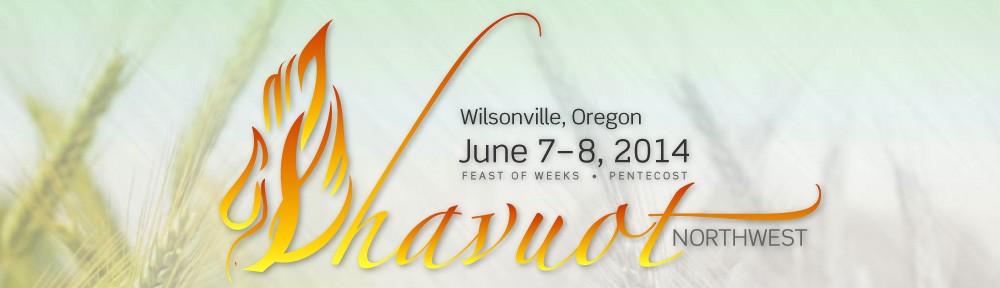
How about coming to the higher spiritual level and joining us for Shavuot Northwest 2014 at the Stein-Boozier Barn at Murase Plaza in Wilsonville, Oregon? Not only can you celebrate the biblically commanded Feast of Weeks (Hebrew: Shavuot; Greek: Pentecost) and be pleasing to your Father in Heaven by getting in sync with His times and seasons, but there are many other benefits as well.
For more information and to register, go to ShavuotNW.org
2 Peter 1:5–7, Add to your faith. This list of seven character qualities shows us the progressive steps one must go through to become mature spiritually.
Faith: First there is initial faith in YHVH Elohim, which is the starting point in our spiritual walk. This is the same faith Abraham had when YHVH told him to leave Babylonia, and it was accounted to him for righteousness sake (Gen 15:6; Rom 4:3).

Virtue: Next, initial faith in Elohim is “filled out with” (as J. P. Green translates it) virtue, which is defined as “moral excellence.” This is can be no less than one’s learning to conform our lives to the high standards of the Torah, which tells us how to walk in relationship with Elohim (as summarized by the first four of the ten commandments) and our fellow man (as summarized by the last six of the ten commandments). Virtue is the opposite of sin, and the Torah shows us what sin and moral excellence are by showing us what to do (the path of blessing and life) and what not to do (the path of curses and death).
Knowledge: Second, as one begins to walk out Torah-obedience, one gains a deeper and more perfect understanding of the heart, will and mind of Elohim as expressed in the Creator’s instruction manual for living — the Torah, which is the path that leads to life. At the same time, one gains an understanding of the opposite side, which is that of sin that leads to death.
Self-control: Third, as one gains a fuller understanding of the difference between good and evil, right and wrong as defined by YHVH’s instructions in righteousness, the Torah, and as one fortifies oneself morally by choosing consistently to do the right thing, one gains self-control. One learns to control or master one’s fleshly passions and desires including selfishness, pride, greed, anger and lust and all the other works of the flesh (Gal 5:19–21).
Perseverance or patience: Fourth, as one becomes proficient and consistent in self-control, one begins to learn patience or perseverance, which is steadfastness, constancy and endurance. At this stage in one’s spiritual development, one becomes less likely to be buffeted or thrown off balance by one’s own carnal impulses or by those of other people that are directed at us (persecution).
Godliness: Fifth, as our life more consistently begins to reflect the heart, mind and will of YHVH Elohim as exemplified in his Torah and as walked out by Yeshua, the Living Torah-Word, then our words, thoughts and actions will begin to reflect the very character and nature of our Father in heaven, which is godliness, to those around us, even as the moon reflects the light of the sun into the darkness of the night world. At this point, who we are is more defined by the character of Elohim than by the carnal, sin nature of the typical man.
Brotherly kindness: Sixth, obedience to the Torah naturally results in our being kinder and gentler to those around us, since the Torah demands that we treat others how we want to be treated (Matt 7:12; Rom 13:8–10).
Love: The seventh step to spiritual maturity is love, which is the summation of all the fruit of the Spirit (Gal 5:22–24) and is the highest level of spiritual attainment (1 Cor 13:1–13). This type of love is unconditional, and is an unselfish love for others even when there is no personal benefit to be gained. This is the love of Elohim — the love that he has for men, and the love that he wants us to develop, so that we will be like him, so that he can live with us forever in his eternal kingdom. After we have matured through these seven steps, we become spiritually and morally complete or perfect and are ready to spend eternity with YHVH Elohim in the New Jerusalem of heaven on earth.

Shabbat, June 7th through Shavuot, June 8th at the Stein-Boozier Barn (at Murase Plaza) in Wilsonville, Oregon.


WHAT IS SHAVUOT ALL ABOUT?
In the roughly 49 days between Passover (Pesach) and the Feast of Pentecost (Chag haShavuot), a momentous spiritual dynamic occurs.
This period of time is comprised of forty-nine days or seven days of seven weeks, which is seven times seven—the biblical number for complete or full perfection. Add one day and you arrive at Pentecost.
Additionally, fifty is the biblical picture of jubilee picturing redemption from the enslavement to this world.
Historically, the children of Israel were redeemed from their sins by the blood of the lamb on the first Passover in Egypt. At this time, YHVH betrothed himself to Israel (Exod 6:7). YHVH then led them out of Egypt into the wilderness, and on Shavuot he married them at Sinai (Exod 24 cp. Ezek 16:8; Jer 2:2; 31:32).
At the same time, YHVH gave them his Torah, which was their ketubah or marriage vows.Shavuot is a picture of the bride of Yeshua the Messiah coming into full maturity spiritually and coming to marriageable age. She has gone from being a spiritual child and slave in Egypt to becoming the fully mature spiritual bride and queen of the King of the universe.
At the time of Yeshua, he betrothed himself to both houses of Israel on Passover. Then, on Pentecost, he sent his Spirit, the Comforter, as a seal of this covenant. He hasn’tmarried his bride (that’s you and me) yet — something that occurs at his second coming.
In the mean time, he has placed her in a 2000-years-long wilderness to help her to get ready for him — to fall in love with him (to love him by keeping his Torah commands; John 14:15) by receiving his Torah into her heart.
In the end times just before his second coming, Yeshua is going to bring his bride (the saints who keep his Torah commandments and have the testimony or gospel of Yeshua,Rev 12:17; 14:12) out of the wilderness of Babylon (called the Second or Greater Exodus), and they will repent of their Torahless ways.
We are now getting ready for this day.
Understanding the prophecies of the Bible that speak of these end-time events, and understanding who the principal players are (the two houses of Israel: Judah and Ephraim) is the key to insure that we’re ready for our Messiah — that we’ll be wise and not foolish virgins who have our lamps full of oil (the Torah and Spirit of Elohim).
Shavuot, along with Passover (Pesach) and the Feast of Tabernacles (Sukkot) are three times each year when YHVH commands his people to gather together to celebrate before him (Exod 23:14–17).
You can fulfill this command and move forward into your spiritual destiny by joining with your fellow redeemed Israelites from the greater Portland area and the Pacific Northwest at Shavuot NW in Wilsonville, Oregon.
See you there!
Jeremiah 17:14, Heal me, O YHVH. This is a plea to YHVH, the Great Physician. Only he can heal the hardness (17:1) and crooked deceitfulness or weakness (17:9) of Israel’s heart. Various prophets link the concept of healing to that of the two houses of Israel being reunited, being restored to their promised land and spiritual inheritance, returning to Torah and the establishment of a Messianic kingdom on earth. Here are some thoughts on these things:
The Breech Will Be Repaired
Those who are returning to the Sabbath in its full spiritual sense and are returning to the “old (ancient, everlasting) paths” (Jer 6:16) are called “repairers of the breach” (Isa 58:12; Amos 9:11).

What is a breach? By dictionary definition a breach is “an infraction or violation of a law; a broken, ruptured or torn condition; a split, crack or divide between two sides; a break in friendly relations.” This is what occurred when the northern kingdom was torn away from King Rehoboam causing a split in the nation of Israel (1 Kgs 11:13, 29–40; 12:1–20).
The last question the disciples asked Yeshua before his ascension was whether he was about to restore the kingdom to Israel (Acts 1:6). What was Yeshua’s response to them? He told them to preach the gospel everywhere (verse 8). This message of restoration and repairing the breach was the focus of what Paul called the ministry of reconciliation (2 Cor 5:18) and the middle wall of partition between Jews and non-Jews coming down and the making of one new man out of two through the atoning sacrifice of Yeshua (Eph. 2:11–19).
The “Sick” Will Be Healed
The hireling and self-seeking shepherds of Israel who should have cared for, healed and fed YHVH’s sheep have instead left them in a weakened, sickly and malnourished state (Ezek 34:4, 16). Yeshua came to heal his sick sheep (Ezek 34:8–31).
Spiritual Blindness Will Be Healed
In Hebraic thought, blindness is a metaphor for spiritual blindness, lack of spiritual enlightenment, and especially Torahlessness; that is, it is a reference to those who are blinded to the light of YHVH’s truth (Isa 29:18; 42:7, 16, 18–19; 43:8; Jer 31:8, see also Rom 11:25; Isa 56:10).