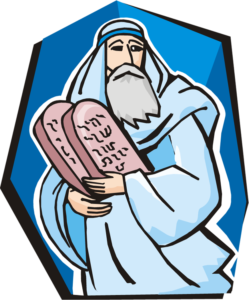
John 5:46–47, Believed Moses. These two verses at the end of chapter five can easily be overlooked, but their implications are huge. Quite simply, Yeshua is saying that those who don’t believe the writings of Moses (i.e. the Torah) won’t believe the words of Yeshua who himself upheld the Torah and taught its validity in the lives of his disciples.
This then begs the following question: Where does this leave all those who claim to be followers of Yeshua, but who believe that the law of Moses was abrogated? It’s hard to be absolutely black and white on this matter, since only YHVH can judge the heart condition of each individual, for undoubtedly many who claim the law was “done away with” still actually adhere to many of the law’s tenets (e.g. you shall not steal, murder, lie, commit adultery, worship idols and you shall honor your parents, etc.) and are thus obedient to the law to one degree or another.
However, we can safely say that it’s a matter of degrees. That is to say, to the degree that we don’t believe the words of Moses, we don’t believe the words of Yeshua who was a proponent (and, in reality, as the Word of Elohim, the Originator) of the Torah-law of Moses.
John makes a similar statement in his first epistle from which we can deduce the following: To the degree we don’t keep the (Torah) commandments of Elohim, we won’t know him; that is to say, conversely, if we keep his commandments which are a reflection of his character, will and heart, we will be able to know what pleases him, which in turn will determine the depth of our spiritual relationship with him (1 John 2:4).
In reality, these should be simple concepts to grasp and put into practice in one’s spiritual walk, yet, sadly, most religious leaders have misled Christians to believe anything and everything but the simple truth of the Bible and instead have concocted convoluted man-made doctrines and theological theories resulting in unbiblical church traditions by which they have made the word of Elohim of no effect (Mark 7:13). It’s time for Elohim’s people to come out of the Babylonian church system with its webbed mixture of truth along with half-truths and outright lies (Rev 18:4).
Moreover, Yeshua is saying here that Moses’ prophecies about the coming Messiah formed the foundation for all the subsequent biblical messianic prophecies and the eventual coming of Yeshua the Messiah. If one couldn’t believe these prophecies of Moses, how would they recognize, much less believe in, Yeshua when he did come?
Exodus 29:38–42, In the morning…at twilight.(See also Lev 1:1–17 and Num 28:1–15.) Heb. erev meaning “twilight or between the evenings.” According to Alfred Edersheim, the morning sacrifice was offered at 9 AM and the evening sacrifice was offered at approximately 6 PM, since Israel is closer to the equator making the day and night portions on average closer to twelve hours each (The Temple–Its Ministry and Service, p. 108, by Alfred Edersheim). He then goes on the show that by the time of Yeshua, the Jews had changed the time of the evening sacrifice, so that it commenced earlier. By this time, the lamb was killed at about 2:30 PM with the pieces being laid on the altar about 3:30 PM. The whole evening sacrifice service would last until about 4:00 PM (ibid., pp 108–109).
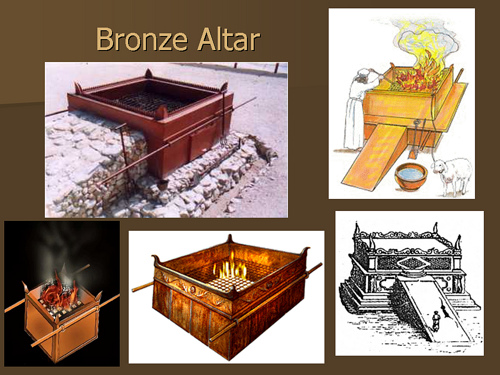
This twice daily offering was known as the continual burnt offering (Heb. olah tamiyd), and was offered at the door of the tabernacle (verse 42). This sacrificial offering has great spiritual implications for the serious disciple of Yeshua and relates to his or her daily life. The word continual (Heb. tamiyd) means “continually.” The Hebrew word for burnt offering is olah meaning “ascent, stairway or steps,” and derives from the basic Hebrew verb, alah, meaning “to go up, climb or ascend.” In this offering, the fire consumes the entire animal, and the word olah refers to the smoke of this whole burnt offering ascending to heaven, which is a “sweet aroma” to YHVH (verse 41). The olah was an offering or gift (Lev 1:2, Heb. qorban)to YHVH and could be a bull, goat, ram, turtle dove or a pigeon as long as it was a perfect specimen without defect (Lev 1). If an Israelite sinned, he could bring this gift-offering to the door of the tabernacle where he would place his hands upon the head of the animal, after which the priests would slaughter it, and sprinkle its blood around the altar of sacrifice just inside the door of the tabernacle (Lev 1:2, 4, 5). The meat was then prepared and arranged on the altar and entirely burnt (Lev 1:6–17). When the sinner laid his hands on the animal, it was as if he were transferring his sins onto the innocent, blemish-free animal, where upon YHVH accepted it as an atonement for the person’s sin (Lev 1:4).
The writer of Hebrews clearly teaches that this offering (along with all the other offerings in the sacrificial system) pointed to Yeshua, our Great High Priest, whose atoning death on the cross fulfilled all the types and shadows of the Levitical, sacrificial system (Heb 4:14–5:7; 7:1–10:18).
Psalm 149:1, 3, In the assembly of the saints…dance. (On the dance, see Ps 150:1, 4.) Hebraic worship dance should be an aspect of praise and worship in the congregation of the saints according to the Psalms. Certainly, at the very least, dancing should be occurring on the three pilgrimage feasts or chagim: the Feast of Unleavened Bread, the Feast of Weeks and the Feast of Tabernacles. The Torah refers to each of these three appointed times (Heb. moedim) as chag meaning “festival.” The root word of chag is chagag meaning “to celebrate, keep a solemn feast or holy day, to move or go around in a circle, march in a sacred procession, to reel to and fro in a giddy manner.” Indeed Davidic dancing at joyous celebrations such as the biblical feasts has been a Hebraic tradition since time immemorial.
John 5:18, [Yeshua]…broke the Sabbath. Allow me to share an interesting and sad, but true story from my life about a false Christian teacher that I went head-to-head with. Many years ago, I was in a meeting where a Christian Bible teacher was giving a message on the end times. In the middle of his teaching and totally out of context, he quoted this passage from John and claimed that Yeshua broke the Sabbath. There was a rustle in the audience of about 300 people. A little later, he made the same statement again and began to deride the Sabbath. This time there was an audible moan from some in the audience—many of whom were Sabbath keepers. A feeling of being hit in the gut went through me. A little later, he made the same statement again, and continued to bash Sabbath observance. This time, I could hold my peace no longer, and I stood up and challenged him in the middle of the meeting. I told him that to say that Yeshua had broken the Sabbath was to call Yeshua a sinner, and that Yeshua had not broken the Sabbath, but some Jewish legal traditions (or halakhah) pertaining to the Sabbath. The speaker was flustered and had no response, and the host of the meeting decided to take an intermission.
A year later, it was announced that this Bible teacher had suddenly and unexpectedly dropped dead in the pulpit while preaching. One can’t help but wonder if he had come under divine judgment for blasphemously teaching that Yeshua was a sinner by supposedly breaking the fourth commandment.
Had this false teacher simply pulled down a concordance from his bookshelf and looked up the word broke in the Greek, and had read John’s statement in verse 12 in the context of verses 8–10, he wouldn’t have been teaching this blasphemous heresy about our Master and Savior!
Here is the explanation of this passage: The word broke is the Greek word luo meaning “to loose, untie someone or something bound, to dissolve, destroy.” According to The Theological Dictionary of the NT, luo means “to free from prison, open something closed; destroy fetters, foundations, walls; to release.” What Yeshua was breaking was the Jews’ extra-Torah legal traditions that made the Sabbath a burden by prohibiting the alleviation of human suffering and need on this day (John 5:8–10). He was in no way violating the actual Torah, since there is no Torah-law prohibiting healing on the Sabbath or carrying one’s bed role. In attempting to follow the Torah through men’s traditions, many of the Jews of Yeshua’s day had actually omitted the weightier matters of the Torah (justice, mercy and faith, see Matt 23:23), and had forgotten that YHVH is more concerned with heart issues rather than religious legalism, since he desires mercy over sacrifice, and the knowledge of Elohim over burnt offerings (Hos 6:6).
Any tradition of man that violates the letter and the spirit of the Torah is an illegal tradition. Yeshua was only violating an illegal tradition of men. Therefore, in the eyes of the Jews he was breaking the Torah. In reality, he was loosing (not breaking) the Torah from the traditions of men that had corrupted the true intent of the Sabbath law. A better translation of this verse would be, “he…loosened/untied the Sabbath [from men’s legalistic traditions].” Yeshua didn’t come to set men free from the Sabbath. He came to set the Sabbath free from men’s unbiblical traditions.
Psalm 145:1–21, An acrostic psalm. This is one of several acrostic psalms in the Bible. An acrostic is a poem, word puzzle, or other composition in which certain letters in each line form a word or words. In this case, the first letter of each verse begins with the next letter of the Hebrew alphabet beginning with aleph and ending with tav. However, for some reason the letter nun is missing, which is why there are only 21 verses instead of 22 verses in this psalm.
This psalm begins with the phrase, “I will extoll/exalt/bless you,” and then goes on to list the attributes of YHVH, and why and how humans should extoll him.
א I will exalt him.
ב Every day I will bless you.
ג He is great.
ד Generation to generation will praise you.
ה YHVH’s splendrous glory.
ו The might of YHVH’s awesome deeds.
ז The recollection of YHVH’s abundant goodness.
ח YHVH is gracious and merciful.
ט YHVH is good.
י Let his creation thank YHVH.
כ YHVH’s kingdom is glorious.
ל Inform mankind of his mighty and glorious deeds.
מ YHVH’s kingdom and dominion is forever.
נ The letter nun is omitted from this acrostic. The Jewish sages state that the reason the psalmist omitted the letter nun, which suggests the word n’philah meaning downfall, was to comfort that knowing that downfalls would take place, the Israelites would be comforted to know that by the fact that Elohim supports the fallen ones as verse 14 promises. In explaining this omission, the Jewish sages may be reading into the text something that is not there. After all, there are some 430 other words in the biblical Hebrew lexicon that begin with the letter nun. Who’s to say that some of these words may not have been a better choice than n’philah? It also stands to reason that since every other verse in this psalm is a praise declaration of one type or the other, why wouldn’t the missing nun verse also follow this pattern? Therefore, perhaps the psalmist left this letter out intentionally, so that the reader could fill in the blank suggesting his own reason for or way of extolling YHVH providing it begins with the letter nun.
ס YHVH straightens the fallen ones and those who are bent.
ע YHVH supports those who hope in him and are humble.
פ YHVH opens his hand and supports every living thing.
צ YHVH is righteous in all of his ways.
ק YHVH is close to all those who call upon him.
ר YHVH will fulfill the desires of those who fear him.
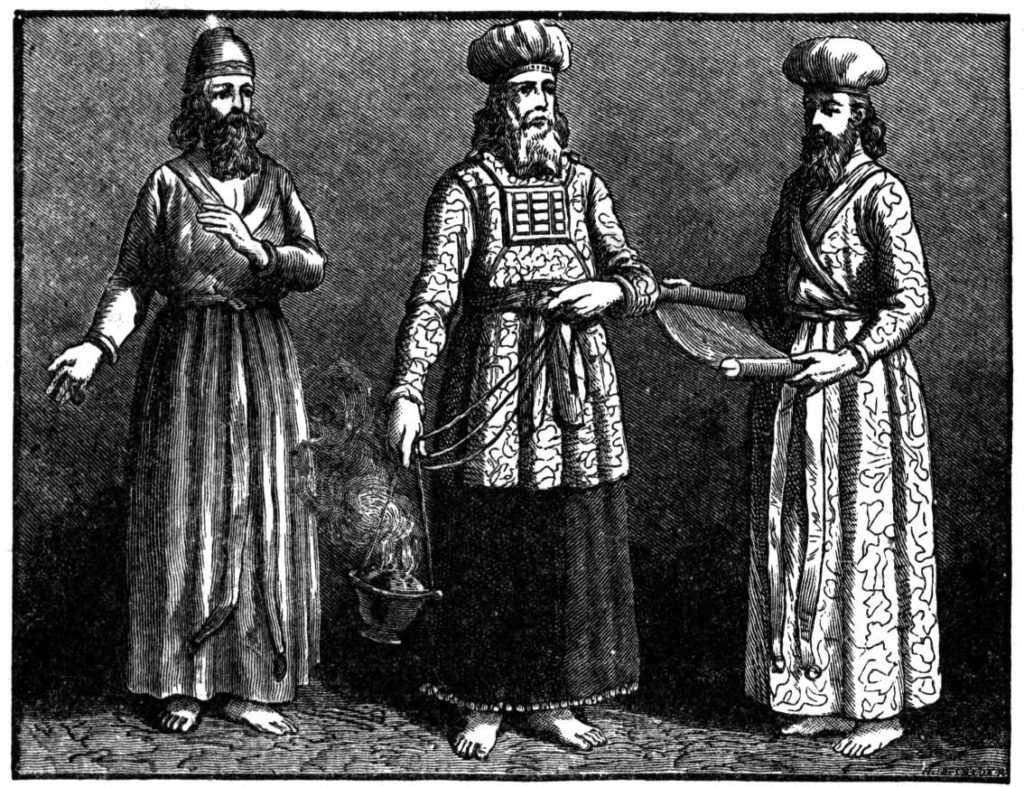
Now let’s note the seven steps of consecrating the priests and compare them with the steps a believer goes through to become a “chosen generation, a royal priesthood, a set-apart nation, a peculiar people that you should show forth the praises of him who has called you out of darkness into his marvelous light” (1 Pet 2:9). Notice how these seven steps relate to the steps a new believer takes in his conversion process and how they relate to one’s spiritual journey from outside the mishkan where the altar of the red heifer is located representing the cross of Yeshua, then into the door of the tabernacle (i.e. Yeshua who is the door), to the altar of sacrifice (i.e. a prophetic picture of communion) to the bronze laver (i.e. immersion for the remission of sins and being washed in the water of the Word of YHVH), into the set-apart place where the Ruach (Spirit of Elohim) is and onward and upward spiritually into intimate relationship with the Father. In Exodus chapters 28 and 29 we find the following:
Step One: They were taken from among the children of Israel ( Exod 28:1). This prefigures divine election (see John 15:16). YHVH calls or chooses each person. Yeshua called his disciples. They did not call or choose him, but they had to respond to that call.
Step Two: They were brought into the door of the tabernacle (Exod 29:4). The door of the tabernacle is Messiah Yeshua who is the door to the sheepfold. No man comes to the Father except through Yeshua (John 10:1–5, 7, 9) The door is four colors which speak of the person and work of Yeshua: blue, scarlet, white and purple. It also speaks of the four Gospels, which is the door to understanding the Person and work of Yeshua.
Step Three: They were washed (Exod 29:4). Upon accepting the work and Person of Yeshua one must be immersed for the remission of sins (Acts 2:28) to identify spiritually with the death, burial and resurrection of Yeshua (Acts 2:38; Rom 6:3–14), and the washing of the water of the Word (Eph 5:26).
Step Four: They were clothed in their official garments (Exod 29:4–9). The redeemed believer is to put on the robes of righteousness (note Gal 3:27, “For as many of you as have been baptized into Messiah have put on Messiah”). Paul talks about fruits of righteousness through Yeshua in Philippians 1:1. Righteousness is Torah obedience (Ps 119:172) and is a mark of the end time believers/saints (Rev 12:17 and 14:12) and of the bride of Messiah (Rev 19:8).
Step Five:They laid their hands on the head of the animals which were sacrificed (Exod 29:10–26, 32–33). The blood of an animal was shed and sprinkled on Aaron and his sons and matzah (unleavened bread) was waved and burnt and they ate the flesh of the ram and the matzah.
Each born-again believer has to take personal responsibility for his own sins. The sacrifice of Yeshua, the Lamb of Elohim, at the cross must become personal to each person (see Heb 10:19; 13:12; 1 Pet 1:2; 1 John 1:17 and Rev 1:5). Each believer has his own personal relationship with Yeshua. Each must eat the flesh and drink the blood of Yeshua individually (John 6:35–58). Communion is a personal and individual matter.
Step Six: They were anointed with oil (Exod 29:21). Each person must receive the Set-Apart Spirit (Ruach) of Elohim (see Acts 8:17; 19:6).
Step Seven: They are sanctified or set-apart for a special, divine purpose (Exod 29:44). Only after going through these steps is one set-apart unto YHVH as a set-apart priesthood doing the set-apart work of YHVH (see Rom 15:16; 1 Cor 1:2; 6:11; Heb 10:10,14; 1 Pet 2:9).
Only on the basis of following YHVH’s steps, as outlined above, can one have fellowship with the Father. And what was the result of this consecration process? Relationship with the Father! Read Exodus 29:44–46 below,
And I will sanctify the tabernacle of the congregation, and the altar: I will sanctify also both Aaron and his sons, to minister to me in the priest’s office. And I will dwell among the children of Israel, and will be their Elohim. And they shall know that I am YHVH their Elohim, that brought them forth out of the land of Egypt, that I may dwell among them: I am YHVH their Elohim. (emphasis added)
This is all accomplished through Yeshua living in us spiritually. Yeshua is the Chief Cornerstone of our faith (Eph 2:20). He is the end result or goal of the Torah (Rom 10:4). He is the Author and the Finisher of our Faith, the Beginning and the End, the Aleph and Tav (Alpha and Omega) of everything.
To whom coming, as unto a living stone, disallowed indeed of men, but chosen of Elohim, and precious, you also, as lively stones, are built up a spiritual house, a set-apart priesthood, to offer up spiritual sacrifices, acceptable to Elohim by Yeshua the Messiah. Wherefore also it is contained in the Scripture, “Behold, I lay in Tzion a chief corner stone, elect, precious, and he that believes on him shall not be confounded. Unto you therefore which believe he is precious, but unto them which be disobedient, the stone which the builders disallowed, the same is made the head of the corner, and a stone of stumbling, and a rock of offence, even to them which stumble at the word, being disobedient: whereunto also they were appointed. But you are a chosen generation, a royal priesthood, a holy nation, a peculiar people; that you should shew forth the praises of him who has called you out of darkness into his marvelous light, which in time past were not a people, but are now the people of Elohim, which had not obtained mercy, but now have obtained mercy. (1 Pet 2:4–10)
Our faith in Yeshua stays alive and vibrant because of the sacrifices of devotion and praise we offer up daily, morning and night. We are called to do the same work the priests of old did, but in a spiritual or fuller sense.
Exodus 27:20,Pure oil of pressed [or beaten] olives.
The Making of Pure Olive Oil , the Menorah and the Believer’s Life
Let’s discuss how this pure olive oil prepared, and how this a picture of the redeemed believer. This is an enlightening subject!
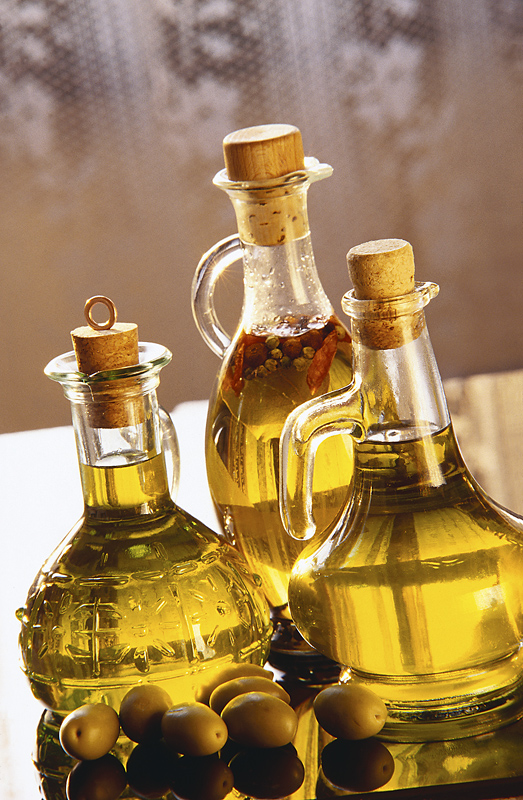
Olive oil is made by crushing and pressing ripe olives. Whole olive fruit consists of 10 to 40 percent oil, and the fruit pulp is 60 to 80 percent oil. Producers use hydraulic presses to squeeze the oil out of the fruit under low pressure. This technique, called cold pressing, generates little heat, and so the oil retains its flavor, color, and nutritional value.
Cold-pressing commonly is carried out in several stages, with only some of the oil being extracted at each stage. The process remains basically the same throughout, but the quality of the oil declines with each pressing. In most cases, olives are cold-pressed at 40 °F (4 °C).
The first pressing gives the highest quality oil, which is usually called virgin olive oil. Virgin olive oil is more expensive than other vegetable oils, so it often is considered a gourmet item. The lower-quality oils from later pressings are often blended in small amounts with such refined oils as soybean or cottonseed oil. Olive oil that comes from the final pressing is inedible. This oil, called olive residue or olive foots, is used in cosmetics, detergents, soap, medicines, and textiles.
The olive fruit may be oval or oblong. As it matures, it turns from green to yellow to red to purple-black. It has a smooth skin, and its flesh surrounds a hard pit. Both the flesh and the seed in the pit contain oil, which makes up 10 to 40 percent of the mature fresh fruit’s weight. Fresh olives contain oleuropein, a bitter substance that makes them unpleasant to eat before processing. During processing, this substance is largely or entirely removed.
The olive tree’s bark and leaves are a soft gray-green, and its trunk becomes gnarled as it ages. Olive trees live longer than most other fruit trees. There are olive trees in Israel that may be more than 2,000 years old.
A mature olive tree may have as many as 500,000 small flowers. Most of the flowers are imperfect, and fruit cannot grow from them. They give off pollen, which is usually carried from flower to flower by the wind. Most varieties of olive trees bear a large crop one season and a small crop the next.
Cultivation of new olive trees occurs through takingcuttings off from an olive tree and rooting them. The trees will grow in many types of soil but need good drainage. To produce large fruit, the grower must irrigate and prune the trees, and thin the fruit. Fertilizers that add nitrogen to the soil can increase yields. The olive tree will grow where the climate is hot and dry. But for bearing good fruit, the tree needs a moderate supply of water. The fruit matures from October to January and is injured if the temperature falls below 26 °F (-3 °C).
Harvesting olives requires careful handling. Olives grown for their oil may be mechanically harvested. Olives grown for eating must be picked by hand. Workers place the fruit in small boxes and haul it to the processing plant.
Most green olives are prepared by the Spanish process. In this process, unripe, yellowish-green olives are placed in lye solution. The lye removes most of the bitter taste of the oleuropein. The olives are washed and then fermented in brine.
Adam Clarke, in his biblical commentary, says regarding Exodus 27:20 that the very ripe and oil-filled olives, after having been picked, when slightly bruised or pressed (before being crushed by mortar stones in a mill) will express the purest, most flavorful and highest quality oil. This oil that flows spontaneously with little or no application of force is called the mother drop.
According to TheStone Edition Chumash, only the purest oil could be used for the lamp (menorah)—the purest of the pure! This was obtained by slightly pressing the very ripe olives, but without crushing them. A minute quantity of oil would be squeezed out—only a drop or so—from each olive. This oil was more pure than any of the other oil subsequently obtained via crushing.