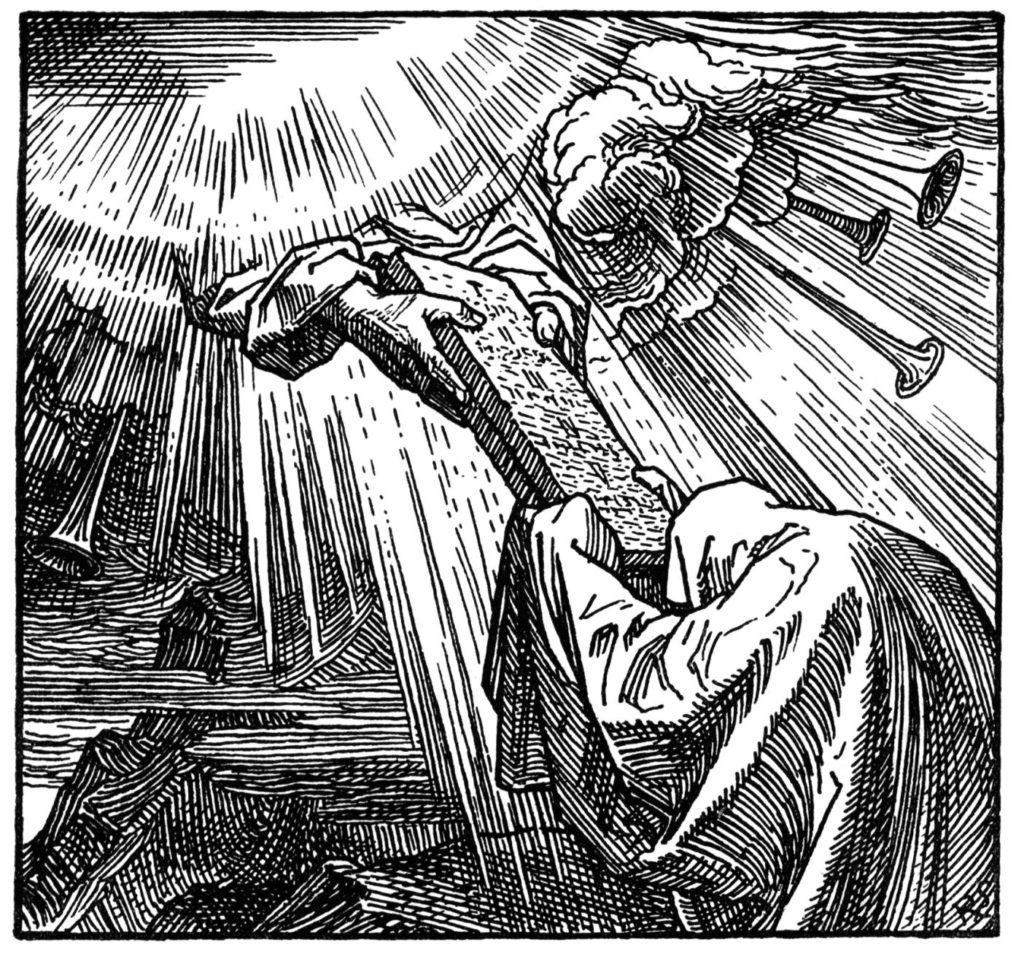
Who and what is a priest? YOU?!

Genesis 14:8, Priest. (Heb.cohen). The Meaning of the Term Cohen Explored. This is the first occurrence of this Hebrew word in Scripture. According to The Theological Wordbook of the Old Testament (or The TWOT), the exact etymological meaning of cohen is unknown since it underlying verbal root does not appear in the Tanakh. 

However, in light of the usage of the word cohen in the Bible, the verbal root is assumed to mean “serving as minister.” This is because the Bible uses cohen not only in reference to those who served in ecclesiastically (as in the Levitical priesthood), but also those who were the first born (or patriarchal) and spiritual heads of their families (Exod 19:22). A cohen could also refer to non-Levitical spiritual ministers (e.g. Melchizekek in Gen 14:8 and Jethro in Exod 2:16; 18:1). The word was also used of those holding ministry offices in a secular or civil government (1 Kgs 4:5; 20:26; 1 Chron 18:16, 17). Truthfully, it is not known whether some of these government officials were actual descendant of Aaron or not such as Ira the Jairite, who was David’s chief minister or cohen (2 Sam 20:26). In at least one case, cohen is used in reference to the sons of King David who served as officials in his administration (2 Sam 8:18), although, as The TWOT points out, the Hebrew of the MS may be in error since the LXX fails to include the term cohen in this verse. 

Moreover, in a sense, all Israel were priests (Exod 19:6), or at least that was to be their spiritual destiny presuming they served YHVH faithfully and did not forget his Torah-law (Hos 4:6). The Bible’s looser designation of the term priest to include non-Levites, and eventually and potentially all Israelites prefigures the eventual royal priesthood of all believers as predicted in Exodus 19:6 and Isaiah 66:21 and was carried forth to its prophetic fulfillment by the apostolic writers to include all Israelites (1 Pet 2:9; Rev 1:6; 5:10; 20:6). who are “the Israel of Elohim (Gal 6:16).


Below is an article that I wrote nearly 20 years ago as I was just starting out as a congregational pastor. This was one of the first article that I wrote and published on our near Hoshana Rabbah website. It is still as relevant now as it was then, for the Word of Elohim is timeless, his Truth and standards of righteousness never change and human nature remains the same.

If Yeshua Calls You a Priest, Then Act Like One!

Scripture reveals that the saints are to be a holy or set-apart (kadosh) priesthood, not a profane (worldly and polluted) one. Which are you? Kadosh or profane?

YHVH Is Preparing His Saints to Be a Kingdom of Priests

In the Bible, YHVH declared that it was the destiny of the Israelite nation to become a kingdom of priests (Exod 19:6). As such, he commissioned them to become a light to the heathen nations around them and to lead them to YHVH—the one true Elohim (Deut 4:6–8). This is why YHVH in his sovereignty positioned the nation of Israel at the crossroads of the major trade routes of the ancient world—between three continents: Africa, Asia and Europe. Israel did not fulfill this prophetic destiny because of sin and rebellion. They desired to conform their lives to the standards of the wicked nations around them rather than conform to YHVH’s standards of righteousness as revealed in the Torah-law. 

Those who come to faith in Yeshua the Messiah become children of Abraham and are thus Israelites (Rom 4:16; 9:8-11; Gal 3:7, 9, 14, 28-29) who have been grafted in to the olive tree of Israel (Rom 11:11–32); they are the current “Israel of Elohim” (Gal 6:16). Ancient Israel never fulfilled its divine calling to be a kingdom of priests and a light to the nations of the world. YHVH’s calling and purposes for Israel are without repentance (Rom. 11:29). What ancient Israel failed to accomplish because of disobedience, rebellion and faithlessness will be left to grafted in Israel—the one new man in Yeshua the Messiah—to accomplish. Yeshua commissioned his disciples to preach the good news (or gospel) of the kingdom of Elohim to the world (Mark 16:15; Acts 1:8). But more than that, his disciples were to become that kingdom of priests that ancient Israel missed the opportunity to become.

We read in the Testimony of Yeshua (or New Testament) that the saints of YHVH will be called kings and priests (or a kingdom of priests) of YHVH-Yeshua the Messiah and will reign with him during the 1000-year Millennium or Messianic Age.

…[T]o him, the one who loves us, who has freed us from our sins at the cost of his blood, who has caused us to be a kingdom, that is, cohanim [priests] for YHVH, his Father… (Rev 1:5–6, CJB)

…[At] the cost of blood you ransomed for YHVH persons from every tribe, language, people and nation. You made them into a kingdom for YHVH to rule, cohanim [priests] to serve him and they will rule over the earth. (Rev 5:9–10, CJB)

Blessed and set-apart is anyone who has a part in the first resurrection; over him the second death has no power. On the contrary, they will be cohanim [priests] of YHVH and of Messiah, and they will rule with him for the thousand years. (Rev 20:6, CJB)

During the Millennium, Messiah will be the King of kings. His government will be a theocracy with him, as the High Priest-King, at the head. The children of Israel operated under a theocratic from of government with Moses as the priest-king (he was from the priestly tribe of Levi and was called a king in Deut 33:4-5) as the human head of state. David Stern in his Jewish New Testament Commentary (p. 10) describes the role of the biblical priest to be like that of a prophet and to serve as spokesman and mediator between YHVH and man. The prophet speaks to man on behalf of YHVH, the priest to YHVH on behalf of man. In terms of practical job-description their primary duty was to offer sacrificial animals on the altar.

Continue reading
 

The Voice of YHVH: A Gentle Stream or a Mighty River?

Isaiah 8:6–7, Waters of Shiloach/Shiloah/Siloam…waters of the River. Here the prophet is contrasting the stream that flows from the Gihon Spring and empties into the Pool of Siloam in S.E. Jerusalem with the Euphrates River. When YHVH’s people reject the gentle waters of his river of (Torah-) life and instead find their joy in the mighty river of men’s carnal and rebellious ways after which the majority seek, as a judgment, YHVH’s will allow his people to be overrun and overcome by that river in which they have put their trust.

The waters of the Gihon Spring are here contrasted against those of the mighty Euphrates River, which calls to mind two other scriptural principles as well. The straight, narrow and unpopular way of YHVH’s Truth is juxtaposed against the broad and popular way of the world, the flesh and the devil. Moreover, these contrasting symbols call to mind the still, small and gentle voice of YHVH versus the loud, demanding and brash voice of the world, the flesh and the devil. Elijah learned at the mountain of YHVH that his Creator was not in the earthquake, the wind or the fire, but speaks quietly and gently to his servants (1 Kgs 19:12). 

This is the same voice to which the psalmist makes reference when he declares, “Be still I know that I am Elohim” (Ps 46:10). On the other hand, when humans refuse to listen to the gentle voice of their heavenly Parent, Elohim is forced to raise his voice in judgment against his rebellious children at which time his voice thunders, breaks things and shakes everything (Pss 18:13; 29:1–9; cp. 32:8–9).


Blog Scripture Readings for 11-29 Through 12-5-20

Aside

Parashat Vayishlach — Genesis 32:4 (3)* – 36:43
Haftarah — Obadiah 1:1-21
Prophets — 1 Samuel 5:1 – 11:15
Writings — Psalms 58:1 – 64:10
Testimony — Mark 4:20 – 7:37

Our new annual Scripture Reading Schedule for 2020-2021 with daily readings that began on 10/11/20 is now available to download and print. The link to the previous 2019-2020’s Scripture Reading Schedule will still be available on the right sidebar under “Helpful Links” into next year. If you are using a mobile device or tablet, the link may be below, meaning you’ll need to scroll down instead.

Most of this week’s blog discussion points will be on these passages. If you have general comments or questions on the weekly Scripture readings not addressed in a blog post, here’s a place for you to post those. Just use the “leave a reply” link or the “share your thoughts” box below.

The full “Read Through The Scriptures In A Year” schedule, broken down by each day, can be found on the right sidebar under “Helpful Links.” There are 4 sections of scripture to read each day: one each from the Torah, the Prophets, the Writings, and from the Testimony of Yeshua. Each week, the Torah and haftarah readings will follow the traditional one-year reading cycle.

* Verse numbers in parenthesis refer to the verse number in Christian English Bibles when they differ from Hebrew Bibles or the Tanakh.

Weekly Blog Scripture Readings for 11/29 through 12/5/2020.


Why Does the NT Emphasize the Death of Yeshua More Than His Resurrection?

I recently received a comment on this blog from a man who believes that it was Yeshua’s resurrection that atoned for man’s sins and not his death. Is this a new wind of doctrine that’s circulating out there?

When I suggested that he do a search of the New Testament to see if the death or the resurrection of Yeshua was emphasized more, and when I told him that his belief was heretical and false, he turned angry, vitriolic and attacked me. I had to delete his comments. Can’t have this kind of nonsense around here. I requested of him an honest and polite discussion on this subject, but instead he attacked me personally. That’s his problem, not mine.

Anyway I decided to do a study on the subject, and this one is hot off the press, so to speak. Please enjoy.


The Testimony of Yeshua (or New Testament) has more than twice as many references to the death of Yeshua (more than 99 references) than to his resurrection (approximately 49 references). Why is this? Why did the apostolic writers emphasize the death of Yeshua the Messiah more than his resurrection? This fact has perplexed some of us for years. We now will briefly explore why this may be.

To be sure, the resurrection of Yeshua is a momentous event in the history of the world not to be minimized or understated in any way, and is not sub par to the importance of his incarnation, life or death. Furthermore, had Yeshua not resurrected from the dead, there would be no hope of the resurrection of the saints, for as Paul writes,

And if Messiah is not risen, then our preaching is empty and your faith is also empty. Yes, and we are found false witnesses of Elohim, because we have testified of Elohim that He raised up Messiah, whom He did not raise up—if in fact the dead do not rise. For if the dead do not rise, then Messiah is not risen. And if Messiah is not risen, your faith is futile; you are still in your sins! Then also those who have fallen asleep in Messiah have perished. If in this life only we have hope in Messiah, we are of all men the most pitiable. (1 Cor 15:14–19)

Adding to the perplexing fact that the Testimony of Yeshua emphasizes the death of Yeshua over his resurrection is that notable fact that of the seven biblical feasts mentioned in Leviticus 23 and elsewhere in Scripture, there no feast that specifically points to the resurrection of Yeshua. The day of Passover addresses Yeshua’s death and the Feast of Unleavened Bread, the next biblical feast completely skips past the resurrection. After that comes the Feast of Weeks, which corresponds to the day of Pentecost in Acts chapter two, which also occurred after Yeshua’s resurrection. 

So why is there no biblical holiday, contrary to popular but ill-informed opinion, specifically portraying the resurrection of the Messiah? In answer to this question, some Bible students will point to the so called  “Feast” of First Fruits (Lev 23:9–13) as the biblical holiday that answers to the resurrection of Yeshua. While First Fruits Day (the correct biblical name for this occasion) does definitely point prophetically to Yeshua’s resurrection, this day was neither a biblical feast or miqra kodesh or a high holy day Sabbath. Rather, it was a moed or divine appointment (all biblical feasts are moedim [the plural of moed] but not all moedim are feasts) on which the Levitical priest performed the ritual of offering up a sheaf of the barley first fruits before Elohim. But for the rest of the Israelites, First Fruits Day was not a Sabbath-day of rest or holy or sacred assembly (Heb. miqra kodesh). Rather it was a common work day when the Israelites went into their in the fields to harvest the newly ripened barley. (I discuss this subject at length in my 23 page article on this subject available at https://www.hoshanarabbah.org/pdfs/firstfruits.pdf.) To call First Fruits Day a feast is a misreading, if not a twisting, of Scripture. Facts are stubborn things for some people to deal with, but facts are truth, and truth is still truth regardless of people’s opinions to the contrary.

Continue reading
 

Psalm 46—Discovering Layers of Meaning in Scripture

Psalm 46:1–11, Amidst geo-political turbulence, divine protection and a heavenly lifeline exists for the saints. What is the overall message of this psalm? Even though the chapter subheading of my NKJV Bible, for example, describes this psalm as “God the refuge of his people and conqueror of the nations,” there is a deeper, more inspiring message to be discovered here that this title misses. Let’s dig into this precious morsel of the Word of Elohim to discover what this life-changing message is.

When it comes to discovering the hidden golden nuggets in Scripture, one must be willing to become a spiritual hardrock miner who is not averse to the difficult work of picking away at the seemingly unyielding and implacable rock and soil to uncover the mother lode of hidden treasure underground. Like digging for gold, the deeper one digs into Scripture and the more time and effort one invests in the process, the more likely one is to pull the unspeakably valuable treasures out of the spiritual bedrock of the Bible. I have been digging into this Rock of Ages daily for more than fifty years, and my heart and mind still tingle and pulsate with enthusiasm (please look up the meaning of the word enthusiasm for a cool nugget  of truth that reveals why I purposely chose this word) when I discover new treasures therein.

To uncover these nuggets that lay below the surface words of Scripture, it is critical to understand an important fact: There are at least four layers of understanding to be found buried in the Word of Elohim. Let’s discover and briefly explore what these are. 

Laying on the surface of Scripture, we find the peshat or literal meaning of what has been written. For example, a literal man named Noah built a literal ark of wood that floated on a literal flood of literal water,  Moses led the children of Israel out of Egypt, and Yeshua was a carpenter’s son from Judea who lived in the first century. On a moral or philosophical level, the ten commandments, for example, are literal rules of righteous conduct that apply to our daily lives.

Digging deeper, we come to the next level as we drill down deeper into the Word of Elohim. This is the remez or suggested or hinted at meaning of a scriptural passage. For example, the Torah talks about “an eye for eye” when it comes to criminal justice. This may be taken literally to mean that if you injure someone’s eye, your eye is to be similarly injured as payment for your crime, thus evening the scales of justice. Moreover, an injured eye does not require the death penalty, and the crime of murder requires more than a slap on the wrist. So what this verse is really saying or hinting at beyond its literal or peshat level meaning is that the punishment must fit the crime.

Continue reading
 

More Tools for Coping With the Craziness of the World Around Us—Meditations on Psalms 26 and 27

Psalm 26

Psalm 26:4–5, I have not sat. We must be careful about building friendship relationships with idolators (those who don’t put Elohim first in their lives) or hypocrites (those who claim to put Elohim first, but their actions speak otherwise), for in reality, they’re both idolators. Why must we carefully choose who our friends are? Because “evil company corrupts good habits” (1 Cor 15:33). The world doesn’t understand why the righteous want nothing to do with the wicked. As Scripture says, “In regard to these, they [the heathen] think it strange that you do not run with them in the same flood of dissipation, speaking evil of you”(1 Pet 4:4).

In the Bible and in reality, there are only two groups of people on earth: those who are part of the Israel of Elohim (Gsl 6:16) or the commonwealth or nation of redeemed Israel (Eph 2:11–19), and those who are Gentiles or heathens. This fact translates into two realities on the ground for the saint: those around us who are in a relationship with Yeshua the Messiah are our brethren and members of our spiritual, forever family, and those who are not. With regard to the latter group, those therein are part of the saints’ mission field, and it is our responsibility to share the gospel with them in hopes of bringing them into a relationship with Yeshua. In reality, they are not our spiritual family and therefore cannot be part of our inner circle of friends, otherwise, they will drag us down spiritually as 1 Corinthians 15:33 warns us against. James and John address this issue directly and succinctly:

Adulterers and adulteresses! Do you not know that friendship with the world is enmity with Elohim? Whoever therefore wants to be a friend of the world makes himself an enemy of Elohim. (Jas 4:4)

Do not love the world or the things in the world. If anyone loves the world, the love of the Father is not in him. (1 John 2:15)

Psalm 27

Psalm 27:1–14, The Jews traditionally read this psalm during the month of Elul (the sixth month) just before the fall biblical feasts of the seventh month, since they are eluded to therein. These elusions include

Verse 5: pavillion is suk, the root word for sukkah (relating to Sukkot or the Feast of Tabernacles).

Verse 5: ohel means “tabernacle” (also relating to Sukkot or the Feast of Tabernacles).

Verse 6: sacrifice [of joy]. Sacrifices of joy are the thanksgiving, love and peace offerings made to YHVH during the biblical pilgrimage feasts to the tabernacle of Elohim (ohel, v. 5; (this refers to all the fall feast of Atonement, Trumpets, Tabernacles and the Eighth Day).

Verse 6: joy is teruah (this directly refers to Yom Teruah or the Day of Trumpets and indirectly to the other fall feasts).

Psalm 27:1, My light…salvation…fear…strength of my life. What more does a person need? The saint has the light of Yeshua and the Word of Elohim (these are synonymous) to guide him in the gross or thick spiritual darkness of this world. He also has the divine promise of salvation or deliverance from any and every enemy that would come against him to kill, steal and destroy including death, which is the ultimate enemy. Finally he has the divine strength or power of the Creator at work in his life through the indwelling presence of the Spirit of Elohim in all areas of his life. Beyond this, there is nothing to fear in this life. In fact, many times I have quoted this verse and applied it to a particular part of my body that needed healing, and I have received divine healing. For example, as I was writing this, I humbly, yet boldly declared this promise over a pain in my back, and I was instantly healed. I now don’t have to go to the chiropractor. HalleluYah!

Psalm 27:2, Enemies…foes. Too often when reading scriptures that contains these words, we assign a person or name them. But consider this: Our foe or enemy may be a situation or condition (e.g. a health condition, emotional distress, financial problems, difficult life circumstances [e.g. flood, fire, drought, weather conditions]), or a demonic spirit entity that is behind a person or situation that is our enemy. Moreover, our enemy may be our own sinful condition or wrong attitudes, and we are now reaping the deleterious consequences thereof. So before automatically blaming someone else for our problems and the consequences thereof in our lives, let’s rethink who are what our enemies may really be.

Psalm 27:4, Dwell in the house of YHVH. How does one dwell in the house of YHVH all the days of one’s life? Is this merely hyperbolic, fanciful thinking and rhetoric on the part of the psalmist, or is it actually possible to do? Obviously as physical humans, we are confined to life on this earth while living in the earth suite of  our physical bodies. At the same time, we are seated with Yeshua in heavenly places (Eph 2:6), and our affections are on heavenly things (Col 3:2); therefore, we exist in two realities or dimensions at the same time: an earthly physical dimension and a heavenly or spiritual dimension. How? Simply this: We are a tripartite being of spirit, soul and body (1 Thess 5:23). Though the body part of is confined to this earth, our soul (mind, will and emotions) and spirit can operate from and in the spiritual dimension of heaven through our relationship with Elohim through Yeshua and through the power of his word and Spirit. We can allow the Spirit to operate through us and direct and guide everything that we do, say and think, and in so doing, we are dwelling in the house or family (Heb. bayith) of YHVH, while, in a sense, temporarily living abroad on this earth away from the real home of our Father’s heavenly house, which in due time at the end of this age is coming to this earth. Amein and halleluYah!

To behold. Literally to see as a seer in an ecstatic state, to perceive by experience or with intelligence. (See also Ps 63:12.) There is more than one way to come into contact with the beauty, favor, delightfulness or pleasantries of YHVH. 

To inquire in his temple. The psalmist talks about going into the tabernacle to encounter YHVH. Since there is no longer a physical tabernacle in which the saints can go to seek YHVH, where do they now go? 

The saint is the tabernacle or temple of the Spirit of Elohim (1 Cor 3:16; 2 Cor 6:16), and the Spirit dwells in one’s personal spirit. This means that one must go inside himself to seek and behold beauty of YHVH. Perhaps this is “the secret [or the covered, private, hidden or protected] place” to which the writer makes reference in v. 5.

Psalm 27:5, In the time of trouble. The house of YHVH (as discussed in my commentary on the previous verse) is the place where YHVH will hide his saints in the time of trouble. If one fails to make the house of YHVH a place of refuge during trouble-free times, how can expect to know anything about this secret place of YHVH much less go there or rely on it during troublesome times?

Set me high upon a rock. In the secret place of YHVH (which in other places I refer to as my “God-bubble” or “the spiritual force field” that surrounds me, or which the psalmist elsewhere refers to as taking refuge under the wings of the Almighty), we will find a mighty and solid rock on which to stand during times of trouble. That Rock is Yeshua our Savior, the Written and Living Word of Elohim.

Psalm 27:4, 8, Inquire…seek. Literally “look for, consider or reflect.” Such an effort takes time and energy to do, and to accomplish, one must quiet down the rambunctiousness of the soul (the mind, will and emotions), so that one’s inner man or personal spirit can rise up and speak as it is informed and directed by the Spirit of Elohim.