The Tabernacle of Moses and the Deification or Theosis of Man

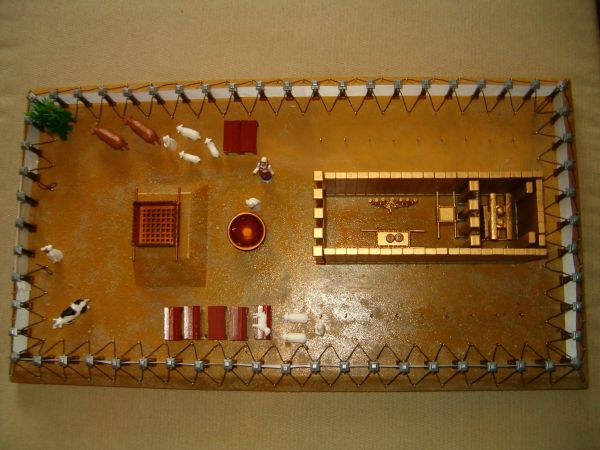
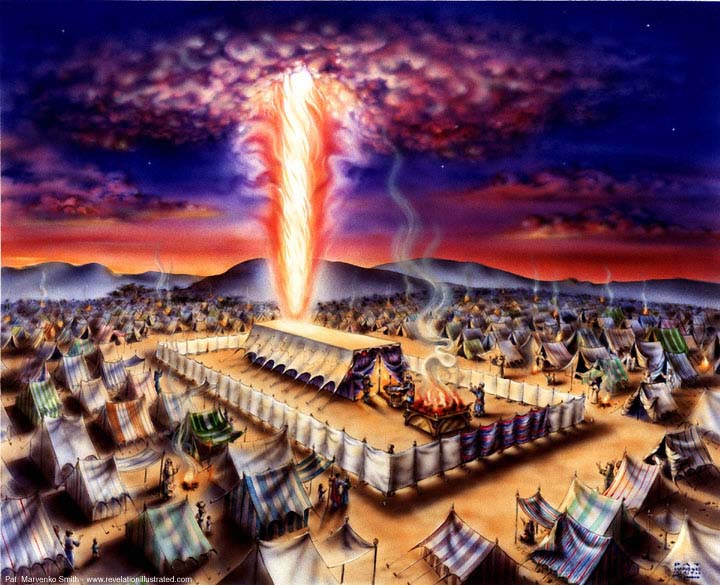
The Tabernacle of Moses from its front to back represents one’s progression in their spiritual journey starting with their initial salvation leading to the glorification of the physical body and eternal life in YHVH’s eternal spiritual kingdom. Entering through the front door of the tabernacle and progressing to the holy of holies is from the human perspective as one moves toward Elohim; it is the perspective of moving from the human to the spiritual plane of existence or that of the earthbound looking heavenward. However, from YHVH Elohim’s view from the glory cloud that has hovering over the holy of holies just above the ark of the covenant, the perspective was different. It was from the inside looking out, or from heaven looking downward. We will discus the contrasting viewpoints between the human and divine in a moment.

In the outer court of the tabernacle, all the rituals and furnishings pointed to death and judgment, as well as to washing or cleansing. These prophetically foreshadowed salvation through Yeshua’s atoning death on the cross, with Yeshua being the door to salvation, and one’s need to accept his death on the cross for one’s sins followed by the need of baptism for the remission of sins. In the set-apart (kadosh or holy) place inside the tabernacle, everything pointed to life, light, food, fragrant incense, the fruits and gifts of the Set-Apart Spirit—or life in a spiritual relationship with Elohim subsequent to one’s taking the beginning steps in the salvation process. The outer court speaks of basic salvation for the redeemed believer in Yeshua, while the holy place speaks of spiritual growth and maturity, of moving from spiritual babyhood and then growing into spiritual adulthood or maturity. 

To understand this process of growing in spiritual maturity, it is necessary to comprehend the tripartite composition of the human being. Paul speaks of man being subdivided into three parts—body, soul and spirit (1 Thess 5:23). The tabernacle’s outer court seems to relate more to the physical or bodily realm of the person, while the holy place speaks more of the soul or intellectual, volitional and emotional aspects of one’s inner or psychological makeup. Finally, the holy of holies portrays man approaching YHVH through the realm of a person’s inner or personal spirit. 

As one progresses into the tabernacle, it is as if YHVH is drawing a person into an ever deeper relational walk with him starting at the most basic level progressing upward until one is finally communing with YHVH on a Spirit-to-(human personal)-spirit level (in the most holy place). It is the Father’s desire that his children progressively grow until each of us is communing with him at the highest spiritual level (see John 4:23–24). 

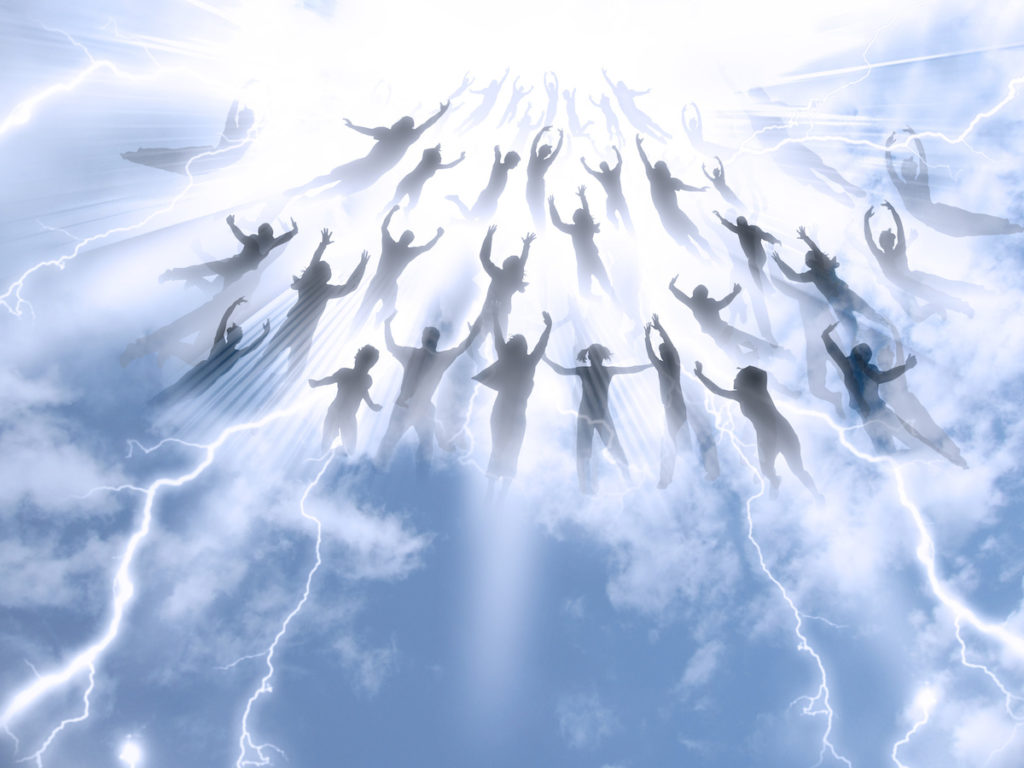
As noted earlier, this forward progression from the tabernacle’s entrance to its innermost room is but one way to view a person’s spiritual progression into the realm of the Spirit of Elohim. From YHVH’s perspective looking from the inside of the tabernacle outward, the view changes. Although one has to enter the tabernacle through the outer gate and then go through various rites and rituals relating to a cleansing process before being allowed into the tabernacle itself, at the same time, we see YHVH starting to work with the person from the inside out. When a person initially comes into a spiritual relationship with his Creator, YHVH first regenerates the person spiritually by putting his Set-Apart Spirit in the spirit of the person. In a sense, if the tabernacle is a picture of the tripartite subdivision of a person’s life (body, soul and spirit), then YHVH starts working from the inside out in one’s personal spirit, which is one’s personal holy of holies that is inside of them, if you will. From there, the Set-Apart Spirit goes to work on the person’s soul (mind, will and emotions) to transform it spiritually into the image of Yeshua (Rom 8:28–29). This process will last a person’s lifetime. Finally, at the resurrection at Yeshua’s second coming, the saint’s will receive their redeemed and glorified or god-like body (1 John 3:1–2). At this time, they will become full-fledged, immortal spirit-children of Elohim (John 1:12). Though the Bible teaches that humans can become sons of Elohim and be like him as part of his divine family, man will never be equivalent to Elohim in a full sense (Isa 45:5, 6, 12, 18–19, 21–23). Only Elohim is the Creator, is without a beginning, and is all powerful, all knowing and all present. Man will never attain to this level.

The process of man going from being a physical and human creature to becoming an immortal and glorified child of the Most High, in theological terms, is called theosis. This is an ancient Christian concept that is still held by the Eastern Orthodox Church and refers to the spiritual process that occurs resulting in the deification of man. The goal of theosis is to become “like” (though not equal to) Elohim and to become eventually united with him spiritually. Theosis is the biblical concept of a redeemed or spiritually regenerated individual “becoming a partaker YHVH’s divine nature” (2 Pet 1:4), and being adopted into the family of Elohim (see the verses below). It is about man becoming like Elohim—becoming part of the family of Elohim as a child of Elohim (John 10:34; Ps 82:1; 1 John 3:1–3).

This is our theosis, that as the Ruach haKodesh (the Set-Apart Spirit) identified Yeshua as the Son of Elohim at his baptism, so we take the first steps of becoming a son of Elohim at our baptism when we become a new creation through Yeshua and the work of the Set-Apart Spirit (Gal 2:20; 2 Cor 5:17). At that time, one is begotten into the family of Elohim, and when one receives one’s glorified body at the resurrection one will be fully born or adopted into the family of Elohim as a full-fledged son of Elohim, for, as the Scripture says, we will be like him, for we will see him as he is (1 John 3:1–3).

Paul refers to theosis in several places when he uses the term adoption.

For you have not received the spirit of bondage again to fear; but you have received the Spirit of adoption, whereby we cry, Abba, Father. (Rom 8:15)

And not only they, but ourselves also, which have the firstfruits of the Spirit, even we ourselves groan within ourselves, waiting for the adoption, to wit, the redemption of our body. (Rom 8:23; also 9:4)

To redeem them that were under the law, that we might receive the adoption of sons. (Gal 4:5)

Having predestinated us unto the adoption of children by Yeshua the Messiah to himself, according to the good pleasure of his will… (Eph 1:5)

The apostolic writers make further reference to theosis in several other places as well.

Continue reading
 

Exodus Chapters 29 and 30—Natan’s Commentary Notes

Exodus 29

Exodus 29:1, Hallow. Heb. qadash meaning “to dedicate, consecrate, set-apart, observe as holy, to be treated as sacred or majestic.”

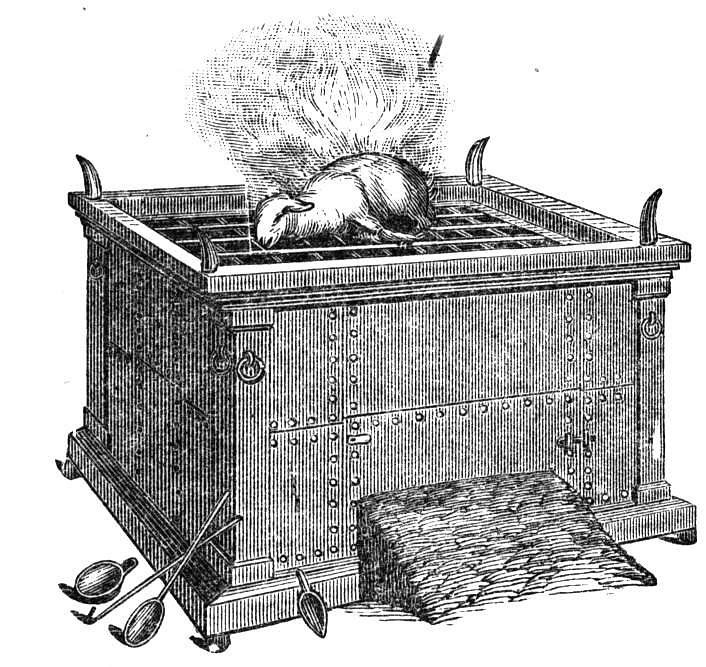
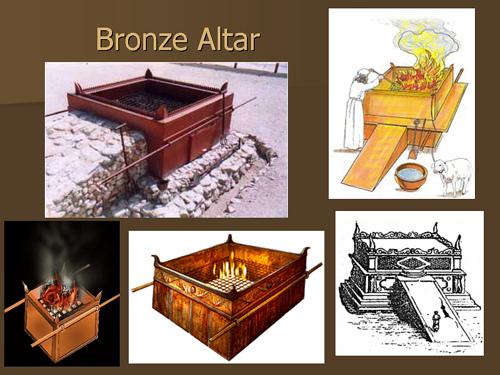
Exodus 29:12, Horns of the altar. The four horns of the altar of sacrifice was the place where the blood of atonement was sprinkled (also Lev 4:4, 17, 18, 25, 30, 34; 8:15; 9:9; 16:18). 

But there’s more. Horn is the Hebrew word qeren meaning “horn, hill or ray.” This word is used to describe the rays of light rays emanating from the face of Moses after his encounter with YHVH (Exod 34:29) and the horns of an animal (Ps 69:31). In ancient cultures, the horn was a metaphor for physical strength or spiritual power (Deut 33:17; 2 Sam 22:3; Ps 18:2). Elsewhere, YHVH is referred to as man’s “horn of salvation” meaning he is the strength of our salvation. The Hebrew word for salvation is yesha meaning “deliverance, rescue, safety, welfare, victory, prosperity.” The root of yesha is the verb yasha meaning “to save, to deliver, to give victory.” Not only is YHVH called our “horn of salvation” in the Tanakh, but this designation is applied to Yeshua as well in the Testimony of Yeshua (Luke 1:69). Interestingly, Yeshua is a derivative of the Hebrew name Yehoshua (or Joshua), which also derives from yasha. 

It should be evident from this quick study that the horns of the altar are a picture of Yeshua, who is the horn or strength of our salvation and who shed his blood for our sins on the altar of the cross. 

This being the case, why then are there four horns on the altar? This is likely symbolic of the four attributes of Yeshua, even as the four colors of cloth used throughout the tabernacle prophetically symbolize the same thing. Crimson speaks to Yeshua’s humanity, purple to his kingship, blue to his divinity, and white to his sinlessness or righteousness. 

Additionally, the Jewish sages view the four horns as symbolizing the four corners of the earth, for, in Hebraic thought, the earth is nothing more than a large altar dedicated to Elohim. (See The ArtScroll Tehilim/Psalms commentary on this verse and notes at Ps 118:27.) 

More importantly, the horns on the four corners of the altar prophetically and symbolically point to the fact that Yeshua’s blood poured out at the cross saves all humans (from the four corners of the earth who would trust in him) from their sins.

Exodus 29:13, 17, (also Lev 1:9 cp. Matt 23:26; 2 Cor 7:1) Entrails/inwards…legs. In the process of cleansing the animal to be sacrificed, there are two lessons here for us. First, Yeshua was perfect, totally clean and spotless Lamb of Elohim sacrificed for the sins of man. Second, the saints are to become living sacrifices (Rom 12:1–2). This means we are to be like Yeshua—totally clean on both the inside and outside. Yeshua rebuked the religious hypocrites of his day for being like whited sepulchres and for being like cups that were clean on the outside but dirty on the inside (Matt 23:26–27). As the sacrifice was laid on the alter (Exod 29:18), and as Yeshua went to the altar of the cross, so we must lay our lives down as a living sacrifice as well.

Continue reading
 

If Yeshua Calls YOU a Priest, Then Act Like One!

Exodus 28


Scripture reveals that the saints are to be a holy or set-apart (kadosh) priesthood,
not a profane (worldly and polluted) one. Which are you? Kadosh or profane?

YHVH Is Preparing His Saints to Be a Kingdom of Priests

In the Bible, YHVH declared that it was the destiny of the Israelite nation to become a kingdom of priests (Exod 19:6). As such, he commissioned them to become a light to the heathen nations around them and to lead them to YHVH—the one true Elohim (Deut 4:6–8). This is why YHVH in his sovereignty positioned the nation of Israel at the crossroads of the major trade routes of the ancient world—between three continents: Africa, Asia and Europe. Israel did not fulfill this prophetic destiny because of sin and rebellion. They desired to conform their lives to the standards of the wicked nations around them rather than conform to YHVH’s standards of righteousness as revealed in the Torah-law. While ancient Israel failed in its divine mission to evangelize the world, in these last days, through Yeshua the Messiah, YHVH has raised up his people (the Israel of Elohim, Gal 6:16) to be that holy priesthood tasked with spreading the good news of the kingdom of Elohim globally (1 Pet 2:9; Dan 7:18; Rev 1:6; 5:10; 20:6; Isa 66:21). Let us now explore how YOU be a part of fulfilling this divine commission.

First, who are you? Knowing this will enable you to understand your divine calling and mission.

Those who come to faith in Yeshua the Messiah become children of Abraham and are thus Israelites (Rom 4:16; 9:8-11; Gal 3:7, 9, 14, 28-29) who have been grafted in to the olive tree of Israel (Rom 11:11–32); they are the current “Israel of Elohim” (Gal 6:16). Ancient Israel never fulfilled its divine calling to be a kingdom of priests and a light to the nations of the world. YHVH’s calling and purposes for Israel are without repentance (Rom. 11:29). What ancient Israel failed to accomplish because of disobedience, rebellion and faithlessness will be left to grafted in Israel—the one new man in Yeshua the Messiah—to accomplish. Yeshua commissioned his disciples to preach the good news (or gospel) of the kingdom of Elohim to the world (Mark 16:15; Acts 1:8). But more than that, his disciples were to become that kingdom of priests that ancient Israel missed the opportunity to become.

We read in the Testimony of Yeshua (or New Testament) that the saints of YHVH will be called kings and priests (or a kingdom of priests) of YHVH-Yeshua the Messiah and will reign with him during the 1000-year Millennium or Messianic Age.

[T]o him, the one who loves us, who has freed us from our sins at the cost of his blood, who has caused us to be a kingdom, that is, cohanim [priests] for YHVH, his Father… (Rev 1:5–6, CJB)

[At] the cost of blood you ransomed for YHVH persons from every tribe, language, people and nation. You made them into a kingdom for YHVH to rule, cohanim [priests] to serve him and they will rule over the earth. (Rev 5:9–10, CJB)

Blessed and set-apart is anyone who has a part in the first resurrection; over him the second death has no power. On the contrary, they will be cohanim [priests] of YHVH and of Messiah, and they will rule with him for the thousand years. (Rev 20:6, CJB)

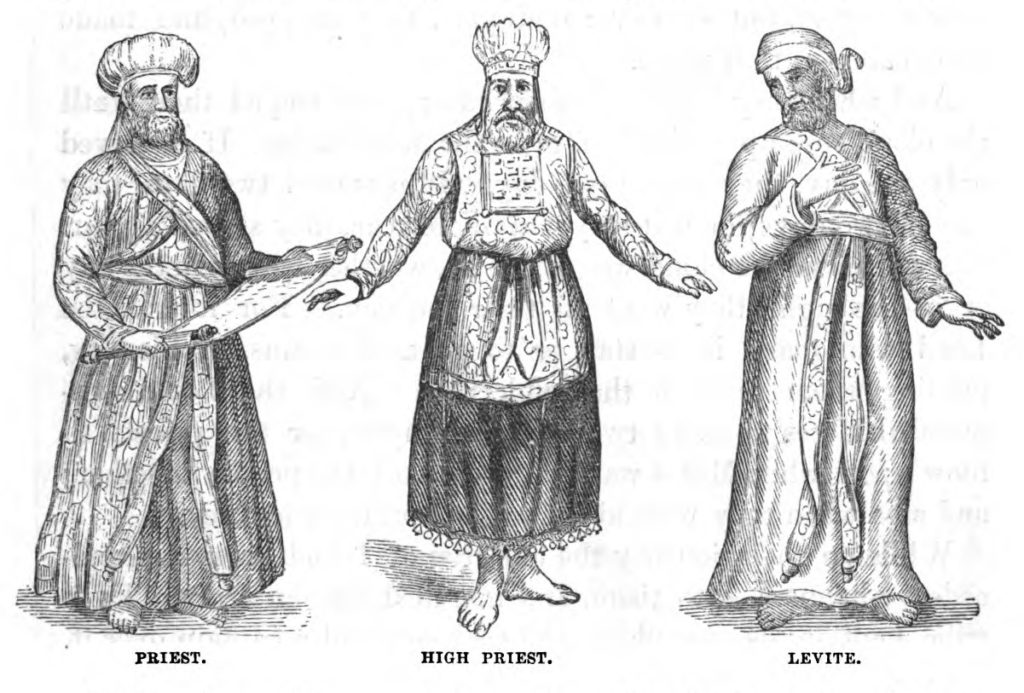
During the Millennium, Messiah will be the King of kings. His government will be a theocracy with him, as the High Priest-King, at the head. The children of Israel operated under a theocratic from of government with Moses as the priest-king (he was from the priestly tribe of Levi and was called a king in Deut 33:4-5) as the human head of state. David Stern in his Jewish New Testament Commentary (p. 10) describes the role of the biblical priest to be like that of a prophet and to serve as spokesman and mediator between YHVH and man. The prophet speaks to man on behalf of YHVH, the priest to YHVH on behalf of man. In terms of practical job-description their primary duty was to offer sacrificial animals on the altar.

Of those who will be the priests to reign with Messiah during the Millennium, Christian commentator Matthew Henry says in his commentary on Revelation 1:5-6 that Messiah has made believers kings and priests to YHVH and his Father. As such they overcome the world, mortify sin, govern their own spirits, resist Satan, prevail with YHVH in prayer, and shall judge the world.”

This is an apt description of those who will qualify to become priests in YHVH’s kingdom, but let’s define some words Henry uses in his descriptions. How does Scripture define sin? Sin in its simplest definition is the transgression of YHVH’s Torah-law (1 John 3:4). Henry says that the Saints as priests will “judge the world.” What does this mean? Do you know of any secular judge who makes judgments without following some legal code upon which civil law is based? Of course not. What legal code is Scripture based upon? The Torah-law YHVH gave to the children of Israel through Moses. In numerous places YHVH instructed the priests and kings of that time to rule and judge on the basis of his Torah-law. When they failed to do so YHVH sent prophet after prophet to warn them to turn from their wicked ways and return to following YHVH’s laws. 

What standard of righteousness do you think YHVH’s kings and priests will rule and judge from during the Millennium? There is only one standard of truth outlined in Scripture: that is the Torah (Ps 119:142, 151), which is YHVH’s Torah, which by strict etymological and scriptural definition simply means YHVH’s “instructions, teachings and precepts in righteousness.” Since YHVH’s standards of righteousness do not change, for his character and nature do not change (Mal 3:6) despite what religious men may say or do, it stands to reason that YHVH’s kings and priests will be Torah-obedient set-apart or holy ones (or the saints). In fact, this is how the book of Revelation defines the saints: they keep the Torah-commandments of YHVH and have faith in Yeshua the Messiah (Rev 12:17; 14:12). Yeshua goes on to say in Matthew 5:19 that those who keep his Torah-law will be called the greatest in his kingdom (i.e. they will be kings and priests), while those who do not keep his Torah-law will be called the least in his kingdom. In other words, the higher the level of obedience to Torah the higher will be one’s rewards and responsibilities in YHVH’s kingdom. Yeshua told his disciples that if they loved him they would keep his (Torah) commandments (John 14:15, 21).

The Saints Are Called to Be a Set-apart (Kadosh) Nation

If you have repented of your sins, been washed in the blood of the Lamb and been born of the Holy or Set-apart Spirit (Heb. Ruach haKodesh) you are part of a set-apart priesthood. This is your identity according to Scripture. Get this into your spirit and every day live out the reality of it!

Continue reading
 

Exploring the Tabernacle of Moses Continued

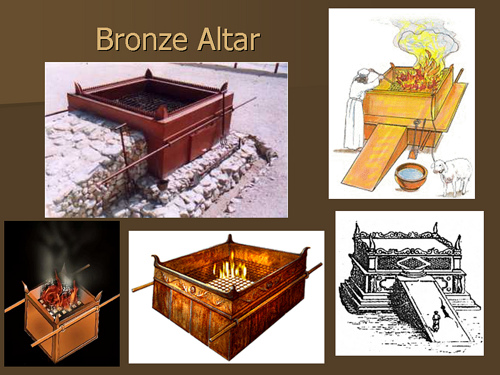
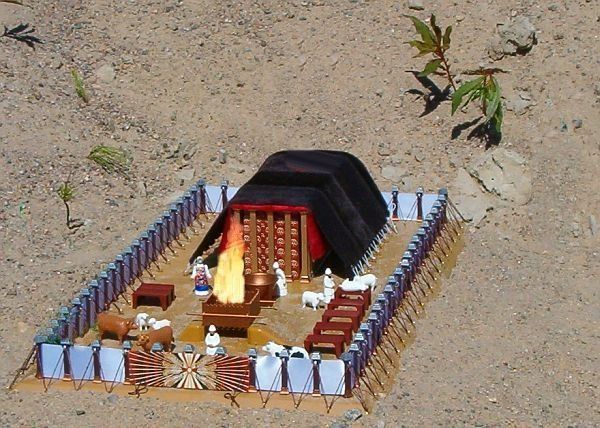
Exodus 27:1–8, An altar. As we continue our tour of the Tabernacle of Moses, the Torah takes us next to the bronze altar of sacrifice just inside the tabernacle’s door. Everything occurring in the tabernacle revolved around this altar—EVERYTHING! This fact is highly significant, since this altar points to the “altar” of the cross on which Yeshua the Messiah died for our sins. This is one truth that the mainstream church has gotten wonderfully right: the cross and what happened there is the central point of the gospel message. One cannot read the writings of the apostles and fail to see this unless one is sadly spiritually naive and spiritually blind! 

Just inside the door of the tabernacle was the altar of sacrifice. It was made of acacia wood overlaid with bronze, which is a prophetic picture of Yeshua the Messiah bearing the judgment for men’s sins on the cross. The blood of the sacrifice was poured out on the ground at the base of the altar symbolically picturing Yeshua shedding his blood at the cross. Two lambs were offered at the altar morning and evening (Exod 29:38–42). This pictures our need to come humbly before our Father in heaven morning and evening in prayerful devotion as living sacrifices to confess our sins, to praise and thank him for saving us from the penalty of our sins, which is death (Ps 51:16–17; Heb 13:15; 1 John 1:7–9; Rom 6:23).

The Altar of Sacrifice in More Details. Upon understanding that the Person and work of Yeshua is the way into spiritual life, light and truth, one must also recognize that one’s sin liability keeps one from a having personal relationship with one’s Creator. The broken fellowship with our Father in heaven due to our uncleanness because of our sin is the reason for this. For one to have a relationship with a sinless, perfect, totally set-apart or holy Elohim,the sin problem has to be dealt with. Sin must be atoned for along with the resulting guilt, shame and penalty (i.e. death) that sin brings. In the Tabernacle of Moses, the liability and effect of sin is dealt with at the altar of the red heifer outside the gate of the tabernacle, which represents the work of Yeshua at the cross (Heb 13:10–13). There one was purified and made ready to come into the actual tabernacle. Upon doing so, the first thing one encountered when entering the tabernacle was the altar of sacrifice where both kosher animals and unleavened bread (made of the finest flour and the purest olive oil) were offered, and a wine libation was poured out twice daily (morning and afternoon, Num 28:1–8). These all picture the body of Yeshua being broken and slain for sinful man and our need to “eat” his body and “drink” his blood in a spiritual sense to which the communion elements of the Lord’s supper taken on the Passover during the seder meal symbolically point (John 6:35–58). 

The fire on the altar was to be kept burning at all times; it was never to go out (Lev 6:13). Additionally, before ministering at the altar, a priest was to always wash his hands and feet at the bronze laver (Exod 30:17–21), and to put on the priestly robes (Lev 6:10). These activities are prophetic shadows that point to the ministry of Yeshua before the throne of the Father in heaven. There, as our heavenly high priest, he, in an ultimate state of purity and perfection is ever making intercession for his saints and reconciling us to the Father (Eph 2:18; 1 Tim 2:5; Heb 7:25–26; 8:1–2, 5–6; 9:11–22; 10:19–22; 1 John 2:1).

At the twice daily offering (the morning shacharit and the afternoon minchah), a yearling lamb was sacrificed on the north side of the altar, or its left side as viewed from the holy of holies, which represents the throne of Elohim. (Furthermore, north is significant since Scripture seems to indicate that the third heaven where Elohim dwells is in the northern region of the sky [Isa 14:13].) The lamb’s blood was then sprinkled round about the altar as an atonement for sin, while a wine libation was poured out onto the altar, and unleavened bread was cooked and offered at the same time on the altar (Num 28:1–8; Lev 1:11). The fact that the lamb was killed on the north or left side of the altar is prophetically significant, since it points to Yeshua’s first coming as the Suffering Servant Messiah, the Lamb of Elohim. The left side is significant, since the left hand (usually the weaker hand), in Jewish thought, represents grace and mercy, while the right hand (usually the stronger hand) represents strength, power and judgment. At his first coming, Yeshua was like a lamb led to the slaughter (Isa 52:13–53:12, especially note 53:7), as he spilled his blood as an atonement for men’s sins (Isa 53:5–6,10). Upon his death and glorious resurrection, he returned to heaven where he took his rightful place as the right arm of YHVH Elohim (Acts 7:55–56; Rom 8:34). At Yeshua’s second coming, he will come, this time not as a lamb led to the slaughter, but in power and glory as a regnal warrior on a white stallion to judge the wicked and to reward the righteous. After that, he will assume his rightful position as King of kings and Lord of lords over the earth during the Millennium as revealed in the Book of Revelation.

Continue reading
 

A Tabernacle Tour—The Gospel Message Acted Out

Exodus 25

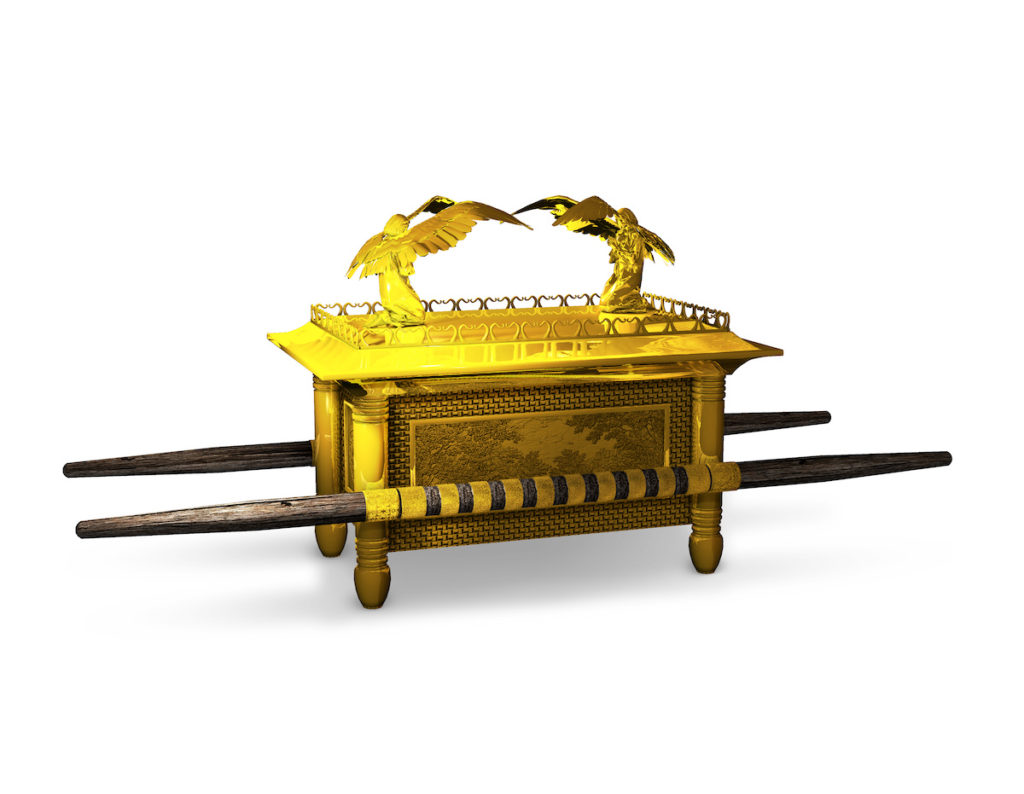
Exodus 25:10–22, Ark. The ark of the covenant was a small box of acacia wood overlaid in gold, which contained the golden pot of manna, Aaron’s rod that budded and the two tablets of stone containing the ten statements of Elohim—commonly called the Ten Commandments. Against the ark was leaned a scroll of the complete Torah (Deut 31:26).

Covering the ark was a golden cap called the mercy seat or kapporet and is related to the word kippur as in Yom Kippur, the Day of Atonement. Both share a common Hebrew root, which is the word kapar, which according to The Theological Wordbook of the Old Testament (TWOT) means “to make an atonement, make reconciliation, purge”) and the mercy seat—the golden “lid” covering the ark of the covenant located in the D’veer (i.e. the inner shrine of the Tabernacle of Moses)­—which in Hebrew is the word kapporet was “the place of atonement or the place where atonement was made.” The TWOT defines what happened at the kapporet as follows:

“It was from the … mercy seat that [YHVH] promised to meet with the men [of Israel] (Num 7:89). The word, however, is not related to mercy and of course was not a seat. The word is derived from the root ‘to atone.’ The Greek equivalent in the LXX is usually hilasterion, “place or object of propitiation,” a word which is applied to [Messiah] in Rom 3:25. The translation ‘mercy seat’ does not sufficiently express the fact that the lid of the ark was the place where the blood was sprinkled on the day of atonement. ‘Place of atonement’ would perhaps be more expressive.”

The mercy seat covering the ark that contained the Torah is a vivid symbolic picture of YHVH’s mercy triumphing over his judgment (Jas 2:13). We all deserve death for violating his commandments, for the wages of sin is death (Rom 6:23) and sin is the violation of YHVH’s Torah commands (1 John 3:4). However. Yet when we repent of our sins and place our faith in Yeshua’s atoning death on the cross as payment for those sins, YHVH forgives us and grants us his merciful grace.

Everything in, on and around the ark pointed to Yeshua. Inside the ark was the golden pot of manna, which points to Yeshua who the bread of life—the Word of Elohim made flesh. Aaron’s rod that budded speaks of Yeshua’s role as the ultimate high priest due to his atoning and life-giving work at the cross. The two stone tablets and the Torah scroll speak of the Yeshua who was the Word of Elohim from the foundation of the world (John 1:1,14), and whose words or instructions in righteousness the saints are instructed to follow (John 14:15; 1 John 2:3–6; Rev 12:17; 14:12).

Overshadowing the mercy seat were two golden cherubim with outstretched wings. This is a picture of YHVH’s throne in heaven, which is surrounded by cherubim and other living creatures that sing his praises and minister to him (Rev 4).

The Ark of the Covenant in More Detail

The ark of the covenant is the gold-covered acacia wood box with the pure gold crown or mercy seat upon which are the two gold cherubim that represented the very throne and glorious Presence of YHVH himself. Inside the box were the tables of the Torah, Aaron’s rod that budded (Num 16) and the golden pot of manna (Exod 16:32–34). Against the ark was leaned a scroll of the complete Torah (Deut 31:26).

Once a year, on the Day of Atonement, the high priest entered this part of the tabernacle to make atonement for his sins and those of the nation of Israel (Exod 16:14–19). The most set-apart place was also called the oracle (D’veer), for it was here that YHVH often met with and talked to Moses giving him instructions on how to govern the Israelites (Exod 25:21–22).

The gold-covered wooden box pictures resurrected and glorified humanity raised to that place by the work of Yeshua and the mercy of YHVH. Two realities identify the bride of Yeshua: Spirit and truth (John 4:23); namely, the truth of Torah of the Written Torah (the box contained the two stone tablets) and that of the Living Torah who is the Manna or Bread of Life. In addition, Aaron’s rod that budded (also in the box) pictures the authority and fruitfulness of the priesthood of believers (2 Pet 2:5-9) through the work of Yeshua on the cross (see also Rev 11:17; 12:14). Additionally, the Torah scroll leaning up against the ark illustrates to us that without total dependence on Yeshua (his work at the cross and partaking of the spiritual manna of Yeshua’s broken body we cannot properly keep the Torah. Only with Yeshua living in the heart of a regenerated believer by the power of his Spirit can one keep the Torah. Without the Torah leaning on Yeshua, the Torah becomes the dead letter of the law (2 Cor 3:6)!

As the high priest sprinkled the mercy seat with blood seven times on Yom Kippur so Yeshua bled seven times: at Gethsemane, from the scourging, the crown of thorns, nail in the left hand, nail in the right hand, nail in the feet and the spear in his side.

Exodus 25:21, The testimony. This is the Torah in codified form or what became known as the law of Moses. Prior to this, the Torah was YHVH’s oral instructions to men passed on down generationally from teacher to student, from father to son. Moses, under instructions from Elohim, wrote this oral Torah down as it was transcribed to him on Mount Sinai (Exod 24:12) and to which additions were made on an as-need basis as YHVH subsequently spoke to Moses from his earthly throne of the tabernacle (Exod 25:22).

Continue reading
 

What does the Tabernacle of Moses have to do with YOU?

Exodus 25

Exodus 25:1–7, An offering is collected for the tabernacle. All Israel contributed to the building of the tabernacle (Exod 25:1–7), yet YHVH chose only two Israelite artisans, Bezalel and Aholiab (Exod 31:1–6), filled them with the Spirit of Elohim “in wisdom, understanding, knowledge an in all manner of workmanship …” to oversee the building of the tabernacle. This teaches us that the work of YHVH is a joint effort of the every member of the body of YHVH-Yeshua, but that YHVH will endow certain individuals with unique gifts of the Spirit in order to accomplish his specific plans and purposes (Eph 2:22; 4:11; Rom 12:4–8; 1 Cor 12 and 14).

Exodus 25:2, That they may bring me an offering.Interestingly, this is the only place in the Scriptures where an offering was taken of YHVH’s people to support the work of the ministry. In one other place in the Bible, a collection was taken, but what was its purpose and who was it for? (See 1 Cor 16:1–3 and Acts 11:27–30.) This is not to say that the saints should not give of their substance to help support their spiritual leaders. What did Paul teach about the saints supporting the work of the ministry—especially those who are spiritually feed them? (Read 1 Cor 9:1–18; 1 Tim 5:17–18; Gal 6:6–9.) The main point we wish to make here is that the taking of offerings or the passing of the plate isn’t a biblical norm. People were expected to give, but of their own freewill and without pressure or coercion from their spiritual leaders. What did Yeshua say about giving? (Note Acts 20:35; Luke 6:38.) What did Paul say to those who do not share their substance with (or sow sparingly to) those who teach them? (Look at 2 Cor 9:6.) What should be our heart attitude when giving to the ministry of Elohim? (See 2 Cor 9:7.) What are the blessings from Elohim that one can expect from giving cheerfully? (Read 2 Cor 9:8–11.)

Exodus 25:8–9, A sanctuary…tabernacle

The Tabernacle of Moses

If you were the Creator of the universe, what means would you use to communicate with those that you had created through love in your likeness and image? In a remote way, it’s like a human standing over an anthill trying to communicate with the ants. How do you do it? Similarly, how does an all powerful, Spirit Being, loving Father in heaven relate to his mortal children who are but mere specks of dust without vaporizing them with his raw power? The difficulty is compounded when fearful humans don’t want to hear the voice of Elohim, which is what happened when YHVH Elohim’s voice thundered from Mount Sinai. The children of Israel begged him not to talk to them, lest they die. They asked the Almighty One to speak to them instead through Moses (Exod 20:19). 

Continue reading
 

Who and what is a priest? YOU?!

Genesis 14:8, Priest. (Heb.cohen). The Meaning of the Term Cohen Explored. This is the first occurrence of this Hebrew word in Scripture. According to The Theological Wordbook of the Old Testament (or The TWOT), the exact etymological meaning of cohen is unknown since it underlying verbal root does not appear in the Tanakh. 

However, in light of the usage of the word cohen in the Bible, the verbal root is assumed to mean “serving as minister.” This is because the Bible uses cohen not only in reference to those who served in ecclesiastically (as in the Levitical priesthood), but also those who were the first born (or patriarchal) and spiritual heads of their families (Exod 19:22). A cohen could also refer to non-Levitical spiritual ministers (e.g. Melchizekek in Gen 14:8 and Jethro in Exod 2:16; 18:1). The word was also used of those holding ministry offices in a secular or civil government (1 Kgs 4:5; 20:26; 1 Chron 18:16, 17). Truthfully, it is not known whether some of these government officials were actual descendant of Aaron or not such as Ira the Jairite, who was David’s chief minister or cohen (2 Sam 20:26). In at least one case, cohen is used in reference to the sons of King David who served as officials in his administration (2 Sam 8:18), although, as The TWOT points out, the Hebrew of the MS may be in error since the LXX fails to include the term cohen in this verse. 

Moreover, in a sense, all Israel were priests (Exod 19:6), or at least that was to be their spiritual destiny presuming they served YHVH faithfully and did not forget his Torah-law (Hos 4:6). The Bible’s looser designation of the term priest to include non-Levites, and eventually and potentially all Israelites prefigures the eventual royal priesthood of all believers as predicted in Exodus 19:6 and Isaiah 66:21 and was carried forth to its prophetic fulfillment by the apostolic writers to include all Israelites (1 Pet 2:9; Rev 1:6; 5:10; 20:6). who are “the Israel of Elohim (Gal 6:16).


Below is an article that I wrote nearly 20 years ago as I was just starting out as a congregational pastor. This was one of the first article that I wrote and published on our near Hoshana Rabbah website. It is still as relevant now as it was then, for the Word of Elohim is timeless, his Truth and standards of righteousness never change and human nature remains the same.

If Yeshua Calls You a Priest, Then Act Like One!

Scripture reveals that the saints are to be a holy or set-apart (kadosh) priesthood, not a profane (worldly and polluted) one. Which are you? Kadosh or profane?

YHVH Is Preparing His Saints to Be a Kingdom of Priests

In the Bible, YHVH declared that it was the destiny of the Israelite nation to become a kingdom of priests (Exod 19:6). As such, he commissioned them to become a light to the heathen nations around them and to lead them to YHVH—the one true Elohim (Deut 4:6–8). This is why YHVH in his sovereignty positioned the nation of Israel at the crossroads of the major trade routes of the ancient world—between three continents: Africa, Asia and Europe. Israel did not fulfill this prophetic destiny because of sin and rebellion. They desired to conform their lives to the standards of the wicked nations around them rather than conform to YHVH’s standards of righteousness as revealed in the Torah-law. 

Those who come to faith in Yeshua the Messiah become children of Abraham and are thus Israelites (Rom 4:16; 9:8-11; Gal 3:7, 9, 14, 28-29) who have been grafted in to the olive tree of Israel (Rom 11:11–32); they are the current “Israel of Elohim” (Gal 6:16). Ancient Israel never fulfilled its divine calling to be a kingdom of priests and a light to the nations of the world. YHVH’s calling and purposes for Israel are without repentance (Rom. 11:29). What ancient Israel failed to accomplish because of disobedience, rebellion and faithlessness will be left to grafted in Israel—the one new man in Yeshua the Messiah—to accomplish. Yeshua commissioned his disciples to preach the good news (or gospel) of the kingdom of Elohim to the world (Mark 16:15; Acts 1:8). But more than that, his disciples were to become that kingdom of priests that ancient Israel missed the opportunity to become.

We read in the Testimony of Yeshua (or New Testament) that the saints of YHVH will be called kings and priests (or a kingdom of priests) of YHVH-Yeshua the Messiah and will reign with him during the 1000-year Millennium or Messianic Age.

…[T]o him, the one who loves us, who has freed us from our sins at the cost of his blood, who has caused us to be a kingdom, that is, cohanim [priests] for YHVH, his Father… (Rev 1:5–6, CJB)

…[At] the cost of blood you ransomed for YHVH persons from every tribe, language, people and nation. You made them into a kingdom for YHVH to rule, cohanim [priests] to serve him and they will rule over the earth. (Rev 5:9–10, CJB)

Blessed and set-apart is anyone who has a part in the first resurrection; over him the second death has no power. On the contrary, they will be cohanim [priests] of YHVH and of Messiah, and they will rule with him for the thousand years. (Rev 20:6, CJB)

During the Millennium, Messiah will be the King of kings. His government will be a theocracy with him, as the High Priest-King, at the head. The children of Israel operated under a theocratic from of government with Moses as the priest-king (he was from the priestly tribe of Levi and was called a king in Deut 33:4-5) as the human head of state. David Stern in his Jewish New Testament Commentary (p. 10) describes the role of the biblical priest to be like that of a prophet and to serve as spokesman and mediator between YHVH and man. The prophet speaks to man on behalf of YHVH, the priest to YHVH on behalf of man. In terms of practical job-description their primary duty was to offer sacrificial animals on the altar.

Continue reading