Who and what is a false prophet?

Deuteronomy 13:1, If there arise a prophet.

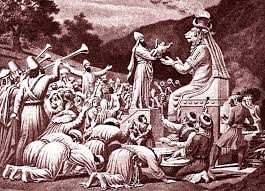
In the church not only is the term “prophet” carelessly thrown about, so is the term “false prophet” as applied to any God-fearing individual who simply “misses” hearing the word of Elohim correctly, but isn’t guilty of leading Elohim’s people astray spiritually into heathenism. For years, I had been using this term too broadly and generically (as many in the church do) to apply to those who either prophecy presumptuously out of the dictates of their own heart, or who hear a word from Elohim but incorrectly interpret it or misapply it (as was the case with Nathan the Prophet who repented for telling David incorrectly that it was YHVH’s will for him to build the temple), as well as to those evil prophets who lead YHVH’s people away from the Word of Elohim and into paganism.

The term “false prophet” is not to be found in the Tanakh (or Old Testament) at all, and is only found several times in the Testimony of Yeshua (or New Testament) and is applied to patently evil, satanic individuals. Therefore, based on the biblical evidence, it is incorrect to apply this term to a godly individual who, for example, makes an accurate prophecy, but gets the dates wrong, or somehow misinterprets a prophetic message from YHVH. 

Although the term “false prophet” isn’t found in the Tanakh, there are many warnings given against individuals who, through their false prophecies, lead YHVH’s people astray into idolatry or who don’t urge the people to repent and get back to YHVH’s straight paths of Torah-obedience, or who otherwise involved in ungodly activities (e.g. Deut 13:1–5; 18:20–22; Jer 23:9ff; 28:1ff; Ezek 13:2ff; Isa 28:7). The term “false prophet” doesn’t strictly apply to a godly person who isn’t leading YHVH’s people into apostasy.

Therefore, based on the biblical evidence, the godly person who “misses it,” so to speak, should be more correctly called a presumptuous prophet (Deut 18:22), or foolish prophet (Ezek 13:2) or a carnal prophet (i.e. who speak out of the flesh; Ezek 13:1). As such, I can see no biblical precedence for applying the derogatory term “a false prophet” to such a person.


To Be Holy or Not Determines the Blessing or the Curse

Deuteronomy 11:26–28, A blessing and a curse. This passage begins with the words, “Behold, I set before you this day a blessing and a curse; a blessing, if you will obey the commandments of YHVH your Elohim, which I command you this day; and a curse, if you will not obey the commandments of YHVH your Elohim, to go after other gods, which you have not known” (Deut 11:26–28). 

After this, in verse 29, YHVH instructs the Israelites that upon entering the Promised Land, they are to stop between the mountains of Gerizim and Ebal, which are located at the entry point of the land. The former mountain represents a blessing, while the later represents a curse. The town of Shechem is located between the two mountains. The Hebrew word Shechem means “shoulder” or “back” (Strong’s H7927). The shoulder supports the head, which through the disposition of the mind and the direction in which the head is pointed, determines the path a person will walk whether good or evil. 

It was at Shechem, between the two mountains representing good and evil, that Israel renewed its covenant with YHVH before entering the Promised Land (Josh 8:30–35). The power of the covenant that the people made with YHVH on that day thousands of years ago is still visible in the modern land of Israel: Mount Ebal is bare and devoid of vegetation, while Mount Gerizim is lush and green with foliage. This fact stands as a loud testimony and reminder to man today to the power of blessing and cursing, and to the reality and validity of YHVH’s Torah, its covenants and its ability to bless or curse us depending on whether we obey it or not.

Israel renewed its covenant with YHVH at Shechem at the plains (or oak trees) of Moreh (Deut 11:30). What was significant about this place? This was this exact spot, at the entry point to the Promised Land, that YHVH had established his covenant with Abraham some 500 years earlier. We read about this in Genesis 12:6, “And Abram passed through the land unto the place of Shechem unto the plain [or oak] of Moreh [or teacher].” And it was to this same spot that YHVH brought Israel to renew his promises he had made to Abraham. It was there YHVH would begin to teach them to walk victoriously and righteously before him in their promised inheritance IF they would choose to obey his Torah (or his instructions in righteousness) and to turn their backs on the pagan gods and practices of the nations around them. It was at the same spot that Jacob, upon entering the Promised Land, buried all his family’s false gods and pagan accoutrements (Gen 35:4). 

YHVH is calling his people today to make the same choice as the end times saints prepare to enter into our promised inheritance as YHVH’s kings and priests ruling with Yeshua on this earth. YHVH is urging his people to come out of Babylon (Rev 18:4)­—to come out from the world and to be separate and to touch no unclean thing (2 Cor 6:17).

As noted earlier, this passage of Scripture starts with Israel having to choose between the blessing and the curse—obeying YHVH’s commands, which leads to life, or disobeying them, which leads to death (Deut 11:26; see also 30:15–20). Making the right choices as we go through life is what determines our outcome both here on earth and eternally, whether good or bad, life or death. Earlier YHVH declared that it was Israel’s spiritual destiny to become a nation of priests (Exod 19:6), and as such Israel would become an example to the nations of the world of YHVH’s righteousness and the wisdom of Torah (Deut 4:6–8). 

YHVH is calling his people today who have put their faith in Yeshua, the Messiah of Israel, to be a royal priesthood (1 Pet 2:9), and to prepare to reign with Yeshua as kings and priests in his millennial kingdom (Rev 1:6; 5:10; 20:6).  But first they must learn to reign over the kingdom of their own lives by overcoming the world, the flesh and the devil. To be a priest of YHVH Elohim requires choosing righteousness over wickedness, the holy (set-apart) over the profane (that which is defiled, polluted or worldly, see Ezek 44:23; 22:26). One cannot represent a holy, set-apart, sinless and righteous Elohim before the nations of the world unless one is set-apart (from the world) oneself. Yeshua told his disciples that though they were in the world, they were not to be of the world (John 17:11, 14). YHVH admonished his people to be holy or set-apart as he is holy or set-apart (Lev 11:44 and 45), and the writer of the Epistle to the Hebrews declares, “Follow peace with all men and holiness, without which no man shall see YHVH” (Heb 12:14).

One cannot choose that which is holy (kodosh or set-apart) from that which is unholy (defiled or polluted) unless one knows what is holy and what is not. YHVH, not man, determines what is holy. In the rest of this Torah portion, YHVH outlines various times, places, things, actions and foods that are holy to him by which his people can enter into holiness and holy communion with him. There are holy times (the weekly Sabbath, YHVH’s annual festivals and the sabbatical year), holy places (where YHVH places his name for his people to gather to worship him), holy food (clean verses unclean meats), holy income (our material income is sanctified or made holy through our tithing a portion of it to YHVH), holy lips (YHVH’s people are forbidden to allow the names of pagan deities to come on their lips, and to take YHVH’s name in vain), and YHVH’s people are to destroy any pagan, corrupting, defiling influences (the false gods of the heathens) by putting these things out of their lives. 

Being holy or set-apart is the saint’s mission and destiny as YHVH’s set-apart people, and it all depends on the choices we make, for good or for evil, to obey YHVH or to disobey him.


Blog Scripture Readings for 8-5 Through 8-11-18

Aside

THIS WEEK’S SCRIPTURE READINGS FOR STUDY AND DISCUSSION:

Parashat Re’eh — Deuteronomy 11:26 – 16:17
Haftarah — Isaiah 54:11 – 55:5 | Numbers 28:9-15; Isaiah 66:1-24**
Prophets — Hosea 1:1 – 9:17
Writings — 1 Chronicles 9:28 – 15:29
Testimony — 1 Thess 4:1 – 5:28; 2 Thess 1:1 – 3:18; 1 Timothy 1:1 – 2:15

Our annual Scripture Reading Schedule for 2017-2018 is available to download and print.

Most of this week’s blog discussion points will be on these passages. If you have general comments or questions on the weekly Scripture readings not addressed in a blog post, here’s a place for you to post those. Just use the “leave a reply” link below.

The full “Read Through The Scriptures In A Year” schedule, broken down by each day, can be found on the right sidebar under “Helpful Links.” There are 4 sections of scripture to read each day: one each from the Torah, the Prophets, the Writings, and from the Testimony of Yeshua. Each week, the Torah and haftarah readings will follow the traditional one-year reading cycle.

** A different Haftarah is read when it is a special sabbath in Jewish tradition. This week it is Shabbat Rosh Chodesh on the traditional calendar. Otherwise, Isaiah 54:11 – 55:5 would be read.

Weekly Blog Scripture Readings for 8/5/18 through 8/11/18.


Colossians Two—Difficult Passages Explained

Colossians 2:14, Having wiped out. Here Paul mentions that Yeshua blotted out the handwritings of legal decrees that were against us when he died on the cross (Col 2:12–15). What was against us? It was the Torah law that specified that the sin of adultery carried the death penalty (Lev 20:10). For those who are washed in Yeshua’s redeeming blood and have been buried with him by water immersion or baptism (Col 2:12 cp. Rom 6:3–11), the devil, who is the accuser of the brethren (Rev 12:10), no longer has any legal basis against which to lay the charges of the sin of unfaithfulness against us before the Almighty (Col 2:15). Likely, there is a heavenly record of each man’s sins written in one of the books (which are in addition to the book of life) mentioned in Revelation 20:12. These books be opened at the last judgement and will be used to determine one’s eternal rewards based on one’s works of righteousness (v. 12). Some will be granted eternal life, while others will be destroyed in the lake of fire (v. 15). As mentioned, those who are under the blood of Yeshua and whose names are written in the Lamb’s book of life, there is no condemnation. 

In this passage, Paul may be alluding to the law of the jealous regarding an unfaithful woman (Num 5:11–31). In this case, the Torah instructs a man to bring his wife whom he suspects of adultery before the priests along with an offering of barley meal. What follows is one of the Torah’s more curious rituals. The priests, in front of the woman, sprinkle some dirt from the door of the tabernacle into an earthen vessel filled with holy water. Her head is uncovered, and she is then made to hold the barley meal, while she is put under oath and questioned about her alleged extramarital sexual activities. A curse is put on her if she Continue reading


Did Elohim Create Evil?

A Look at Deuteronomy 8:3

In Isaiah 45:7 we read, “I [YHVH speaking] form the light, and create darkness: I make peace, and create evil: I, YHVH, do all these things.” Based on this verse, some readers may be led to believe that all the evil that occurs in the world is YHVH’s fault, therefore, as the creator of evil, how can he be good? Some have even refused to serve and obey YHVH and rejected the truth of Scripture on the basis of this logic. But what is the truth?

First, let us analyze the Hebrew word for evil: ra/GR (spelled: resh, aiyn; Strong’s H7451; TWOT 2191). It is the generic Hebrew word meaning “evil” also meaning (quoted from Online Bible Deluxe Software Program):

  • 1a) bad, disagreeable, malignant
  • 1b) bad, unpleasant, evil (giving pain, unhappiness, misery)
  • 1c) evil, displeasing
  • 1d) bad (of its kind—land, water, etc)
  • 1e) bad (of value)
  • 1f) worse than, worst (comparison)
  • 1g) sad, unhappy
  • 1h) evil (hurtful)
  • 1i) bad, unkind (vicious in disposition)
  • 1j) bad, evil, wicked (ethically)
  • 1j1) in general, of persons, of thoughts
  • 1j2) deeds, actions
  • 2) evil, distress, misery, injury, calamity
  • 2a) evil, distress, adversity
  • 2b) evil, injury, wrong
  • 2c) evil (ethical)
  • 3) evil, misery, distress, injury
  • 3a) evil, misery, distress
  • 3b) evil, injury, wrong
  • 3c) evil (ethical)

As we can see, evil is only one of the many and varied definitions of the Hebrew word ra, which can also mean “distress, adversity, unhappiness, sadness” and so on. Can “bad” things happen to a person and end up being actually good for that person? Of course. Such has happened to all of us many times in our lives. Keep this point in mind as we study this subject.

According to The Theological Wordbook of the Old Testament, the word ra has as its primary definition “the lack of quality or inferior quality of something or someone and is thus unable to meet standards of value or function ­beneficially.” The word can also connote “moral deficiencies” and is contrasted to the Hebrew word tov, which is the generic word meaning “good.” The TWOT notes that Elohim (as the Just Judge of the universe) acts with painful punishment against evil (ra) people who refuse to repent of their wicked or evil actions. If he failed to do this, then the forces of evil would take over the earth and universe.

But is YHVH the creator of evil in a direct sense, or is he the creator of the laws of cause-and-effect that go into effect automatically when evil people break them? Can evil (in the sense of punishment) that befalls a person be the result of their actions even as those who follow his laws reap blessings and goodness?

Moses Maimon known as Maimonides or the Rambam, a medieval Jewish Bible scholar and sage, discusses this issue in his classic book, The Guide to the Perplexed. He starts from the premise that all that YHVH created was good or tov as is stated several times in the creation account of Genesis one. If Scripture is true and cannot be broken, then Elohim is not the creator of evil or wickedness in that sense of the meaning of the Hebrew word ra. But as we have seen, this is not the only definition of the word ra.

To the western mindset, Rambam points out, darkness and evil are negative existence, but existence nonetheless, like two sides of the same coin. To the Hebrew mind, evil is not even a part of the coin. Since YHVH cannot create evil, for all that he created was good, then the “evil” he created had to be good and all other evil exists outside of his creation. In other words, there are two kinds of evil: ultimate evil that is the total negation of all good, Continue reading


Does YHVH humble and afflict us? If so, why?

Deuteronomy 8:2–3, 6ff, YHVH afflicted/humbled you. Does the concept of YHVH afflicting his people bother you? Perhaps he will do this to us if and when we need it. The word afflict/anah (Strong’s H6031) literally means “to become low, depressed, put down or stoop.” (Note some other places where anah is used: Pss 55:19; 88:7; 90:15; 119:71, 75.) Scripture says that Israel exited Egypt with “a high hand/upraised arm” (Exod 14:8 and Num 33:3). The word high/upraised can connote haughtiness or arrogance, or it can mean that the children left Egypt triumphantly and in jubilation waving banners (The ArtScroll Stone Edition Chumash, p. 369). What do you think? Did they leave Egypt in a spirit of contrition or arrogance? If the latter, then perhaps, in YHVH’s eyes, they need some humbling. 

Are we any different? Do we need to be humbled? Down through the ages, YHVH has allowed his servants to suffer, but it was for their spiritual growth and benefit. What did Paul say about his thorn in the flesh? (See 2 Cor 12:7.) Why did Job experience what he did? (Read Job 42.) The process of humbling us so that we might have a higher view of YHVH, and a lower view of ourselves is not a bad thing! When we become contrite and humble before YHVH and more dependent on him, the blessings, power, anointing and provision of YHVH are able to flow into our lives more readily.

How has YHVH been trying to humble your flesh that he might bring you to a deeper level spiritually? The ArtScroll Chumash comments, “It is true that Elohim subjected the people to some hardships in the wilderness, but even that was for their good; just as a father may chastise his child to prepare him for the future” (p. 983). Consider this issue in light of the sufferings of YHVH’s servants while they were faithfully awaiting their spiritual inheritance as recorded in Hebrews 11. (Compare this with Jas 1:12–17 and 1 Cor 3:13.) Also consider the two types of judgments of YHVH as recorded in Scripture: his judgments unto repentance and his judgments unto death. What are some examples of each? If YHVH’s saints stay close to him spiritually, they won’t have to go through the latter type of judgment. (Examples: Noah and the flood; Lot and Sodom and Gomorrah; the Israelites in the plagues on Egypt; the saints and the tribulation, the great tribulation versus the wrath of Elohim periods at the end of the age [these are three separate time periods or events]; see also Heb 12:3–11). 

Why did YHVH have to afflict the children of Israel? This is because the Scriptures tell us that Israel left Egypt with “an high hand.”

And YHVH hardened the heart of Pharaoh king of Egypt, and he pursued after the children of Israel: and the children of Israel went out with an high hand. (Eoxd 14:8)

And they departed from Rameses in the first month, on the fifteenth day of the first month; on the morrow after the passover the children of Israel went out with an high hand in the sight of all the Egyptians. (Num 33:3)

“An high hand” in Hebrew is the word ruhm meaning “to rise, rise up, be high, be lofty, be exalted.” Human pride is anathema and an abomination to YHVH Elohim:

These six things doth the LORD hate: yea, seven are an abomination unto him: A proud look, a lying tongue, and hands that shed innocent blood… (Prov 6:16–17)

On the other hand, we elsewhere read,

But he giveth more grace. Wherefore he saith, Elohim resisteth the proud, but giveth grace unto the humble. (Jas 4:6)

For all those things hath mine hand made, and all those things have been, saith the LORD: but to this man will I look, even to him that is poor and of a contrite spirit, and trembleth at my word. (Isa 66:2)


Blog Scripture Readings for 7-29 Through 8-4-18

Aside

THIS WEEK’S SCRIPTURE READINGS FOR STUDY AND DISCUSSION:

Parashat Eikev — Deuteronomy 7:12 – 11:25
Haftarah — Isaiah 49:14 – 51:3
Prophets — Ezekiel 42:1 – 48:35
Writings — 1 Chronicles 4:1 – 9:27
Testimony — Colossians 1:1 – 4:18; 1 Thessalonians 1:1 – 3:13

Our annual Scripture Reading Schedule for 2017-2018 is available to download and print.

Most of this week’s blog discussion points will be on these passages. If you have general comments or questions on the weekly Scripture readings not addressed in a blog post, here’s a place for you to post those. Just use the “leave a reply” link below.

The full “Read Through The Scriptures In A Year” schedule, broken down by each day, can be found on the right sidebar under “Helpful Links.” There are 4 sections of scripture to read each day: one each from the Torah, the Prophets, the Writings, and from the Testimony of Yeshua. Each week, the Torah and haftarah readings will follow the traditional one-year reading cycle.

Weekly Blog Scripture Readings for 7/29/18 through 8/4/18.