Does the Old Testament Advocate Slavery? Absolutely not!

Leviticus 25:42, Slaves. The Hebrew word slaves or bondmen is ebed meaning “slave, servant, man-servant, worshiper (of Elohim), servant (of Elohim, e.g. Levite, priest or prophet).” Ebed derives from the basic Hebrew root word and verb, abad, meaning “to work or serve.” The word abab refers to service that can be directed toward people, things or Elohim. In biblical usage, if directed toward things, abad can refer to tilling the earth, dressing a vineyard, working flax or constructing a city. When abad is used in reference to serving YHVH it can refer to Levitical and priestly service. In Hebraic thought, such service is considered joyous, not bondage. This same service can be directed toward pagan deities as well. When used in reference to serving another man, abad transforms into the noun ebed meaning “slave or servant.” As discussed below and as pointed out by The TWOT, the concept of Hebrew slavery isn’t akin to the modern concept of slavery where the slave possesses no basic human rights. This was not the case in ancient Israel. The Hebrew slave, on the other hand, occupied a position of status involving rights and trust. The Torah required this to be case as this and other Torah passages demonstrate.

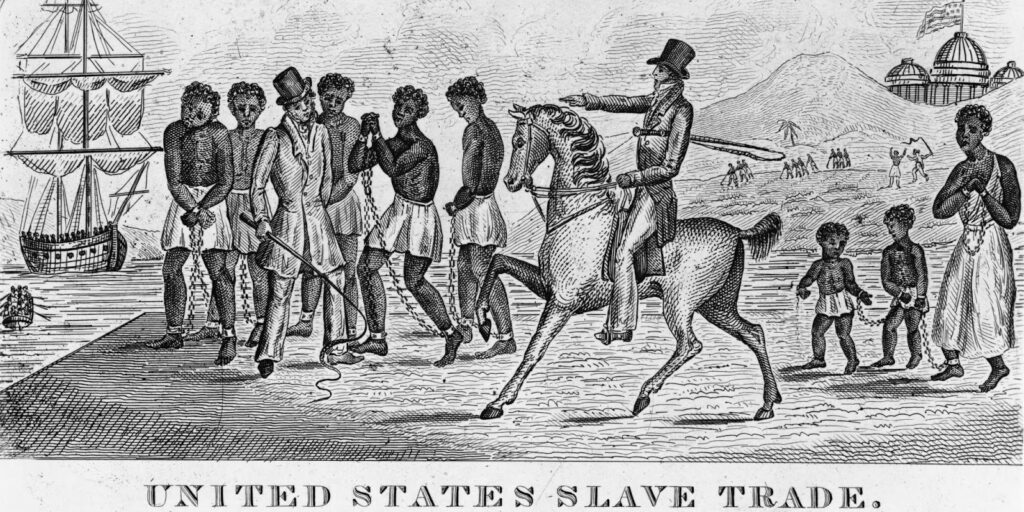
Leviticus 25:45, You may buy. This passage advocates “slavery” among the Israelites. Yet, this is not the slavery the American Negroes, for example, experienced prior to the Civil War. It must be remembered that slavery was rife in the ancient world (as it still is, illegally, today in many countries). Often slaves, however, were able to own homes and livestock and to maintain families as was the case with the Israelites in Egypt and the Jews in Babylon. In this case, these slaves were more like servants or feudal serfs. For example, in Israel, the Gibeonites became the slaves of Israel, but they continued to dwell in their own cities, and enjoy Israel’s military protection (Josh 9). Also, it must be remembered that when Israel conquered an opponents’ land or army, they often inherited slaves from those countries or slaves from other countries the conquered country itself had enslaved. What were the Israelites to do with these people who had been dispossessed of their lands? Send them back to countries that no longer existed, or to which they were no longer welcome? Send them back into heathen situations? Instead, YHVH allowed Israel to bring these captured people into Israel where they could live among a Torah-obedient people who worshipped the God of Israel, YHVH Elohim, where they would be taught to love Elohim totally and their neighbors as themselves. In time, these slaves would be assimilated into the tribes of Israel through intermarriage and become part of Israel and thus be elevated in their social status. In this sense, slavery was a means of evangelizing those who found themselves in the lowest echelons of the ancient world. It was ostensibly a way to bring them into the ways of the Torah thereby elevating them spiritually and socially from their previous enslaved heathen condition.

Leviticus 25:55, Servants [Heb. ebed]. The Hebrew word Ebed means “a servant or bondman” and derives from the word abad meaning “to work (in any sense), to serve, enslave, to be or keep in bondage, be a bondmen, do (use) service, to worship or obey. Obviously, as is the case with many Hebrew words, ebed and abad have a wide range of meanings from the slave and bondservant, who was at the lowest socio-economic level of ancient Israelite society to the Levitical priest (Num 4:19; 2 Chron 8:14) who found himself at the highest and most respected level of society. What is the greater and sublime spiritual truth that this verse teaches us? Simply this. All of YHVH’s people were once in bondage in the spiritual Egypt of their past life unable to escape their bondage to the world, the flesh and the devil. Then YHVH mercifully intervened and set us free and now we belong to him. The redeemed of YHVH must never forget that without his mighty arm of salvation, we would all still be slaves to Pharaoh, a symbol of Satan, and eternal death is the final outcome of this slavery. On the other hand, YHVH offers his redeemed saints eternal life if they will now serve and obey him. Is this not a whole lot better than what the devil has to offer his slaves? Is not faithful and obedient service the least that the saint can offer YHVH in gratitude for the great blessings and gifts that he offers those who accept him as their new Master—their loving Father in heaven?

Are my servants [or slave.] Here YHVH declares that “the children of Israel are my slaves [or servants, Heb. ebed], whom I have taken out of the land of Egypt—I am YHVH, your Elohim.” Here YHVH states dogmatically that he brought or redeemed the Israelites out of slavery to Egypt so that they could become his slaves. Does this trouble you? Being a slave of YHVH didn’t seem to trouble the apostles of Yeshua who referred to themselves many times as YHVH’s bondservants or slaves (e.g., Rom 1:1; Tit 1:1; Jas 1:1; 2 Pet 1:1; Jude 1:1; Rev 1:1). Perhaps their view of slavery is different than ours. Did they not see two categories of slavery and that all humans fall into one or the other category: slavery to the world, flesh and the devil that leads to death as compared to “slavery” to the Word and the Spirit of YHVH that leads to life? There is no escape. One is either a slave to the law of sin and death or to the law of the Spirit of life in Messiah Yeshua (Rom 8:1–2). Those who have been redeemed by the blood of Yeshua have become Yeshua’s purchased possession as Paul says in 1 Corinthians 6:19–20:

What? Know you not that your body is the temple of the Set-Apart Spirit which is in you, which you have of Elohim, and you are not your own? For you are bought with a price: therefore glorify Elohim in your body, and in your spirit, which are Elohim’s.

Do you live your life, make choices, do or don’t do things, say or don’t say things every day with the realty that your are a slave to YHVH? Is Yeshua truly your Lord and Master? It is easy to make the claims that he is, but living out the reality is a totally different things!


 

Deuteronomy 23 and 25—Natan’s Commentary Notes

More from Deuteronomy 23

Deuteronomy 23:9, Keep yourself from every wicked thing. An aspect of physical warfare or, more importantly as it pertains to the saint, in spiritual warfare that many Bible teachers who teach on the subject fail to cover is the spiritual state of the warrior.  The focus is usually on the enemy or the battle tactics employed, but, again, not on the condition of soldier who is going up against the enemy of the people of Elohim. This section of the Torah covers this oft-overlooked subject (vv. 9–14). 

The word wicked as found in this verse is the generic Hebrew word ra or ra’ah meaning in its most basic sense “evil, bad or distress.” So what does the Torah state in this passage that makes a person evil or bad and unclean and is thus offensive to Elohim? Simply this: bodily emissions that happen to naturally emanate from the human body whether it be human waste or seminal emissions. Such occurrences take a man from a state of ritually purity or being clean (Heb. tahor) to being unclean (Heb. tamay). The solution to the problem is, in the case of nocturnal emissions, cleansing by water, and in the case of the eliminations of bodily waste, burying the waste. What this teaches us it that if one goes into battle in an unclean state, this is offensive to Elohim, and the soldier may not have the favor of Elohim while he is engaging the enemy in battle. This is not a good thing for the warrior!

When it comes specifically to spiritual warfare (as outlined in 1 Cor 10:4–6 and Eph 6:10–18), the drash or homiletical level understanding of this passage teaches us that when engaging the enemy in spiritual battle, the saint must be as clean as possible spiritually. That means that all unconfessed sins need to be repented of and that all illicit behavior must be eliminated from one’s life if one expects the benefits of YHVH’s miraculous aid. One be continually washed clean of sin by the blood of Yeshua the Messiah and by the water of the Word and the Spirit of Elohim.

Because these principles of ritual and spiritual purity are usually not taught to the saints, it is no wonder that many times our prayers are not answered and that the enemy trounces Christians on the streets, in the courts, in the political arena and many other battlefields in various venues in our society. 

All this is to say that the saint must clean up his own act and house first before confronting the enemies of Elohim to do the same. Both Yeshua and Paul address the hypocrisy of those who point the fingers at others while guilty of the same or similar sins.

Judge not, that you be not judged. For with what judgment you judge, you will be judged; and with the measure you use, it will be measured back to you. And why do you look at the speck in your brother’s eye, but do not consider the plank in your own eye? Or how can you say to your brother, ‘Let me remove the speck from your eye’; and look, a plank is in your own eye? Hypocrite! First remove the plank from your own eye, and then you will see clearly to remove the speck from your brother’s eye. (Matt 7:1–5)

Therefore you are inexcusable, O man, whoever you are who judge, for in whatever you judge another you condemn yourself; for you who judge practice the same things. But we know that the judgment of Elohim is according to truth against those who practice such things. (Rom 2:1–2)

Deuteronomy 25

Deuteronomy 25:4, You shall not muzzle. According to Hirsch, this law applies not only to animals, but to workmen as well. It stands to reason logically, if YHVH cares about feeding animals while working, how much more should employers be concerned for their workmen? Rashi disagrees and says it refers only to animals (and not to workmen) and specifically to those animals that are involved in the production of food as would be the case with an ox that was used in treading out grain (to separate the kernel from the chaff). Paul disagrees with Rashi and views this Torah command as a more broadly applicable proverb implying that an employer should not deprive his employees of their wages. He specifically applies this principle to individuals who minster the gospel (1 Cor 9:9; 1 Tim 5:19). Those who work in YHVH spiritual field (the church), Paul reasons, should be supported by those they serve.

Continue reading
 

The Five-Fold Ministry Explained

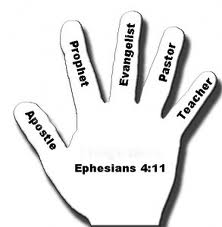
Did the so-called fivefold ministry offices cease after the New Testament era, or do they continue function in the body of Yeshua to this day? In our day, most people agree that the ministries of the evangelist, teacher and pastor are still in operation today, but many say that the offices of apostles and prophet have ceased to operate. Yet in verse 13, we read that these offices would operate “till we all come to the unity of the faith and of the knowledge of the Son of Elohim, to a perfect man, to the measure of the stature of the fullness of Messiah…,” which hasn’t happened yet. Therefore, it would stand to reason, that all these ministry offices are still needed today.

He. It must be kept in mind that Yeshua is the epitome of and over all (authoritatively) ministry offices that follow in this verse. When we ascended to heaven, he spread his own abilities out, as it were, among those he called to be leaders over his spiritual flock below (see Eph 4:8). Collectively, these ministry offices should be doing the work that Yeshua himself would be doing were he here on this earth presently.

Apostles. In addition to the twelve original apostles (including Matthias who replaced Judas Iscariot, Acts 1:26), here is a list of the other apostles, which might be called Yeshua’s ascension-gift apostles (Eph 4:8):

  • James, the half brother of Jesus and leader of the Jerusalem church (Gal 1:19)
  • Barnabas (Acts 14:14)
  • Paul (e.g. Acts 14:14)
  • Apollos (1 Cor 4:6–9)
  • Timothy and Silvanus (1 Thess 1:1 and 2:6)
  • Epaphroditus (Phil 2:25)
  • Titus, and other un-named apostles—at least two (2 Cor 8:23)
  • Andronicus and Junia (Rom 16:7)
  • Yeshua is the Apostle and High Priest of our confession (Heb 3:1)
  • Including Judas Iscariot, this makes a total of at least 26 apostles who are mentioned in the Testimony of Yeshua. 

With this list in mind, it now becomes logical to divide the apostles into at least three categories or level. Yeshua is the Chief Apostle. The original 12 that Yeshua appointed (minus Judas Iscariot) and possibly Paul would be the next tier. They are the foundational apostles. Yeshua mentions that the 12 apostles will rule over the 12 tribes of Israel and that the 12 foundations of the New Jerusalem are named after the 12 apostles (Rev 21:14). It seems that Yeshua commissioned these foundational apostles in direct, face-to-face encounters. After this come the lowest tier or ascension-gift apostles (Eph 4:8), which are all the other apostles.

Apostle Defined

Apostolos means “a delegate, messenger, one sent forth with orders.” According to the Theological Dictionary of the New Testamentapostolos originally was a military or naval term relating to an expeditionary force that was sent out or dispatched. It came to be applied to a band of soldiers, or colonists and their settlement as well as to the commander of the expedition or an admiral. A common feature of all the definitions of the word was its passive character. In none of the definitions is there any suggestion of initiative on the part of the apostle. The word denotes the quality of being sent. In the New Testament, apostolos always denotes a man who is sent with full authority and is synonymous with the Hebrew word shaliach as is evidenced in John 13:16. Here is a legal term relating to one who is lawfully charged to represent the person and cause of another. This meaning is confirmed by the juxtaposition in this verse of the Greek wordsdoulos/kurios and apostolos/pemptsas. Here the servant (doulos) stands under full jurisdiction of his master (kurios) and derives from him all that he is. Apostolos also denotes the “commissioned representative of a congregation” (Acts 13:2ff). Finally, the term signifies the “bearers or proclaimers of the NT message.” The latter meaning applied to not only the original twelve apostles that Yeshua commissioned and sent out, but to the first Christian missionaries or their most prominent representatives (Acts 14:414). According to Paul, the apostles (1 Cor 12:28f) aren’t officials of the congregation, nor the chief of such officials, but are officers of Yeshua by whom the church is built (ibid. vol 1, p. 407ff). 

Attributes of an Apostolic Ministry 

  • Elohim sets or appoints (puts in place, establishes) apostles (as he also does prophets, teachers, etc., 1 Cor 12:28).
  • An apostle is called by God, not men (Gal 1:1).
  • They minister in the power of God, not the wisdom of men (Mark 16:20 cp. 1 Cor 2:1–5).
  • Elohim appoints apostles by the revelation of the Holy Spirit and as confirmed by other established elders ( Acts 9:15Acts 13:2-4Acts 22:21).
  • An apostle is given a specific mission to a specific group of people (Gal 2:8–9Acts 13:2–4).
  • They are spiritual pillars (Gal 2:9).
  • They form part of the spiritual foundation of the church (along with prophets, Eph 2:20).
  • They lay spiritual foundations for others to build on (1 Cor 3:10).
  • They facilitate unity (along with the other five-fold ministries) within the body of Yeshua (Eph 4:11–13).
  • They help the body of Yeshua to mature, to grow up, and to be built up (Eph 4:11–13).
  • Apostles bring revelation to the church (Eph 3:5Gal 1:11–12).
  • Apostles establish, set, and correct doctrine (Acts 2:4215:19–30).
  • They raise up new ministries and ordain elders (Rom 15:20Acts 14:23).
  • They impart spiritual gifts (Rom 1:11).
  • They defend the gospel­—are defenders of the faith (Phil 1:17).
  • The apostles in the NT were persecuted and rejected or even killed for their service to the body of Yeshua (e.g. 1 Cor 4:11–13Luke 11:49Acts 5:1840). This is because they’re on the forefront of YHVH’s spiritual battle to advance his kingdom into the enemy’s territory.
  • One has to grow into becoming a fully function and a spiritually powerful apostle. Yeshua’s 12 apostles asked him to increase their faith (Luke 17:5Mark 16:15 cp. John 21:3 and Acts 2:14).
  • An apostle may initially not be baptized in the Spirit, but once having received this spiritual empowerment will be released into the full authority of the office, as was the case with the original 12 apostles.
  • Apostles take their marching orders directly from Yeshua (Acts 1:2).
  • Apostles have authority to pronounce judgment on sinners within the body of Yeshua (Acts 5:3–101 Cor 5:1–5).
  • Apostles work many signs and wonders (Acts 5:12).
  • Apostles lay down the doctrinal foundation within the body of Yeshua (Acts 2:422 Pet 3:2).
  • Apostles are often called to testify before secular and religious leaders (Acts 5:29).
  • Often apostles have to stay in the thick of the spiritual battle while the rest of the saints escape from harm’s way (Acts 8:1).
  • After the gospel is preached in an area, apostles are sent in to establish spiritual order and to plant congregations (Acts 8:14).
  • Apostles go into new areas to preach the gospel (Acts 13:1–14:7).
  • Apostles along with elders are called to help resolve conflicts within the body of Yeshua (Acts 15:26).

There are false apostles (2 Cor 11:13Rev 2:2).

He gave some to be …prophets. The Greek word prophetes translated as prophetsome 140 times in the NT and means “one who, moved by the Spirit of God and hence his organ or spokesman, solemnly declares to men what he has received by inspiration, especially concerning future events, and in particular such as relate to the cause and kingdom of God and to human salvation; of men filled with the Spirit of God, who by God’s authority and command in words of weight pleads the cause of God and urges salvation of men; in the religious assemblies of the Christians, they were moved by the Holy Spirit to speak, having power to instruct, comfort, encourage, rebuke, convict, and stimulate, their hearers.

According to the TDNTprophetes as it relates to the primitive church was inspired speech of charismatic preachers through whom Elohim’s plan of salvation for the world and his will for the life of individual believers was made known. The prophet knows something of divine mysteries (1 Cor 13:2), about Elohim’s saving will for the Gentiles (Eph 3:5f), and one of his chief concerns is to declare imminent eschatological events (Rev 22:6f). He also knows other aspects of the future (Acts 11:2821:10f). The prophet speaks on contemporary issues as well relating to the ministry of the gospel (Acts 13:1ff1 Tim 1:184:14), and edifies, comforts and exhorts the members of the body of Yeshua (1 Cor 14:3Acts 15:32). Through his preaching, he brings to light the secret wickedness of men (1 Cor 14:25). Since he speaks with a sense of God-given authority, he gives authoritative instructions (ibid., vol. 6, p. 848).

He gave some to be …evangelists. An evangelist (Gr. yoo-ang-ghel-is-tace) by definition is a bringer of good tidings or news, or one who heralds of salvation through the Messiah and who were not apostles. It derives from the word euanggelidzo meaning “to preach the gospel, bring or declare good tidings or news. This word occurs only three times in the NT (Acts 21:8 of Philip; Eph 4:11 as listed among the other “fivefold” ministry offices; and in 2 Tim 4:5 of Timothy). The TDNT says that this term denotes a function more than an office. In the NT, it appears that all apostles were evangelists, but not all evangelists were apostles, and that former was subordinate to the latter. They are more than mere missionaries, since they preach in and lead congregations as well (2 Tim 4:25; ibid., vol. 2., p. 736f).

Continue reading
 

Numbers 22 on False Prophets and Religious Game Players

Numbers 22

Numbers 22:5, Pethor…by the river. Balaam was from the land of Pethor, which is “by the River.” This is a reference to the Euphrates River, the great river of Babylon (The ArtScroll Stone Edition Chumash, p. 857). Thus Balaam was a Babylonian, although he may have been a transplanted Edomite according to some Jewish scholars (see The ArtScroll Bereishis/Genesis Commentary on Gen 36:32). 

One of the aspects of Babylon of the last days is her religious system (Rev 13:11ff) the head of which is the false prophet (Rev 16:13; 19:20; 20:10). The Babylonian religious system of the end days is a blend of both good and evil (reminiscent of the tree by that name in Eden from which the serpent beguiled Adam and Eve away from YHVH’s path of truth and righteousness into a false religious system). 

In the last days, YHVH is calling his people out of that false religious system (Rev 18:4) with its false prophets who prophesy a mixture of good and evil. 

Is not modern traditional Christianity a mixture of good and evil, truth and error (i.e. doctrines and traditions of men along with some paganism mixed in)? Reflect on the implications of this. To what degree have you heeded YHVH’s call to “come out of her”—namely, any man-made religious or church systems that has components that are contrary to the Word of Elohim? 

Like many people who are a part of mainstream Christianity, the Scriptures seems to indicate that Balaam had some knowledge of the truth of YHVH, but he refused to wholeheartedly submit to YHVH’s word and will (2 Pet 2:15). 

Let us not forget Yeshua’s warning about false prophets arising in the last days who might deceive the very elect (Matt 24:24).

Numbers 22:10ff, Crossing over. Many carnal people—especially those playing at religion—want to be like YHVH’s saints, and to be the recipients of the blessings of Israel, and to be numbered among YHVH’s chosen, but few want to walk the difficult walk of holiness and righteousness required to receive these blessings and privileges. These may very well be the spiritual tares that surreptitiously exist along side the saints within their congregations.

Many people will “court YHVH” by getting as close to him as possible without actually crossing over that spiritual river that divides the land of Israel from the rest of the world. Those who actually cross over become an Ivrit or a Hebrew—a word which means “to cross over.” Abraham was one who crossed over. He forsook Babylon and crossed over the Euphrates and Jordan Rivers in his journey westward en route to the Promised Land as he followed YHVH’s leading. He was the first Hebrew (Ivrit) or “one who crossed over.” 

Crossing over means going from being a worldly Babylonian to becoming the Israel of Elohim (Gal 6:16; Eph 2:11–13) and a child of Abraham (Gal 3:29). It also means surrendering one’s life totally to the Elohim of the Hebrews who is YHVH. 

The sacrifice of crossing over is too great for most people to make and requires the payment price of a high price—the death of self, pride, one’s own will and perhaps a change in lifestyle and the loss of one’s friends and status in the world. To leave the world or spiritual Babylon and to cross over the Jordan River to YHVH’s side and come into the land of Israel as a spiritual Hebrew means that the fame and fortune that this world has to offer must be laid aside and one must become a servant-slave of YHVH. Moreover, it means embracing YHVH’s Torah as the law of life—Elohim’s instructions in righteousness. 

Balaam couldn’t cross over all the way. He still preferred the riches and fame Babylon had to offer. He was willful, carnal and greedy (Jude 11). 

Many religious game-players or cultural Christians in the mainstream church are like Balaam. They want the Savior part of Yeshua, but not the Lord part. How serious are you about serving YHVH? 

Continue reading
 

Who Is a Prophet or Not?

Just because someone claims to be prophet speaking for Elohim does not make it so.

Numbers 12:6, A prophet among you. 

The Basis Requirements for Being a Prophet of Elohim

The Torah reveals the basic requirements of a prophet. If a person is a prophet, YHVH will reveal himself to a person as per the instructions Numbers 12:6 (see also Jer 23:28). The context of these instructions was the misuse of the mouth in accusation against an elder in Israel. Evidently, Aaron and Miriam (who was a prophetess, Exod 15:20) thought they had gotten a prophetic word from Elohim and felt justified in correcting Moses on that basis. They were wrong and YHVH’s punishments were swift and severe.

There Are Eleven Levels of a Prophet

A little known fact in modern-day church prophetic circles is that the Bible reveals that there are eleven levels of a prophet. The list below is adopted from The Guide to the Perplexed (by Moses Maimonides [or the Rambam] pp. 241–245.) Most so-called prophets in the church if they are on the list of the requirements for being a true prophet are at the lowest levels. This fact alone should cool the prophetic jets of most who think they’re Elohim’s elect and anointed prophet to the body of Yeshua. In reality, considering Israel’s long history, the Scriptures reveal that there were very few Elohim-sent prophets. Long periods of time passed without there being a true prophet of Elohim in Israel. There was no shortage of false and carnal-minded prophets, however. Now here’s the list:

  • Divine assistance given to a person to induce or encourage him to do something good and grand (e.g. Judg 2:18; 1 Sam 11:6; 1 Chr 12:18; Exod 2:17; 1 Sam 16:17). Scripture often records this occurrence when it states, “And the Spirit of YHVH came upon so and so…”
  • The person feels as if something came upon him, and as if he had received a new power that encourages him to speak. Such a person is said to speak by the Set-Apart Spirit. The books of Psalms, Proverbs, Ecclesiastes, Song of Solomon, Daniel, Job, Chronicles and the rest of the Ketuvim (Writings or Hagiographa) were written under the inspiration of the Set-Apart Spirit. See also 2 Sam 23:2; Num 11:25; 2 Chron 20:14–15; Num 23:5; etc.) Often prefaced by the phrase, “The Spirit of YHVH spoke to me…” or “So and so prophesied…”
  • Below are the levels of a prophet. Not all people who have these experiences are prophets. Those who hold the biblical office of a prophet will experience these things regularly and will manifest the biblical fruits, power, authority and anointing of a prophet.
  • This is the lowest class of a prophet. Those who introduce their speech by the phrase, “And the word of YHVH came unto me…” or a similar phrase. Sometimes he will see a prophetic allegory in a dream. Such was the case with Zechariah.
  • The prophet hears in a prophetic dream something clearly and distinctly, but does not see the speaker as in the case of the call of young Samuel (e.g. 1 Sam 3).
  • A person addresses the prophet in a dream, as was the case in some of the prophecies of Ezekiel (e.g. Ezek 40:4).
  • An angel speaks to him in a dream. This applies to most of the prophets in Scripture (e.g. Gen 31:11).
  • In a prophetic dream it appears to the prophet as if YHVH spoke to him (e.g. Isa 6:1, 8; 1 Kgs 22:19).
  • Something presents itself to a prophet in a prophetic vision; he sees allegorical figures, such as were seen by Abraham in the vision “between the pieces” (Gen 15:9–10); for it was in a vision by daytime, as is distinctly stated.
  • The prophet hears words in a prophetic vision, but does not see the person speaking to him; as is said in reference to Abraham, “And behold, the word came to him, saying, This shall not be thine heir.” (Gen 15:1, 4). This occurred to Paul on the road to Damascus (Acts 9:3ff)
  • The prophet sees an angel that speaks to him in a prophetic vision as happened with Peter in his vision of the sheet from heaven (Acts 10:3) (also Rev 19:10; 22:9)
  • He sees an Angel (or Messenger) of YHVH (literally, the preincarnate YHVH Yeshua) that speaks to him in a vision, as was the case when Abraham was addressed by an angel at the sacrifice of Isaac (Gen 22:15) and many other places where the Messenger of YHVH speaks to his servants directly (e.g. Gen 12:7; 16:7–13; 17:1, 22; 18:1; 22:11, 15; 32:24–32; 35:1; Exod 3:2; 13:21; 14:20; 33:9–11; 34:5; Num 11:25; Deut 31:15–16; Num 22:35–38; Josh 5:13–15; Judg 6:11–23; 13:3; Isa 6:1ff; John in the Book of Revelation).

If you fancy yourself being a prophet, where are you on this list? Probably near the bottom. Until Elohim elevates you, it might be best to hold your peace and wait a little longer on him.

A False prophet Versus a Carnal or Presumptuous Prophet

Continue reading