

Isaac—A Character Sketch
Isaac was successful and blessed. (Gen 26:12–14, 29)
Isaac was obedient to his father.
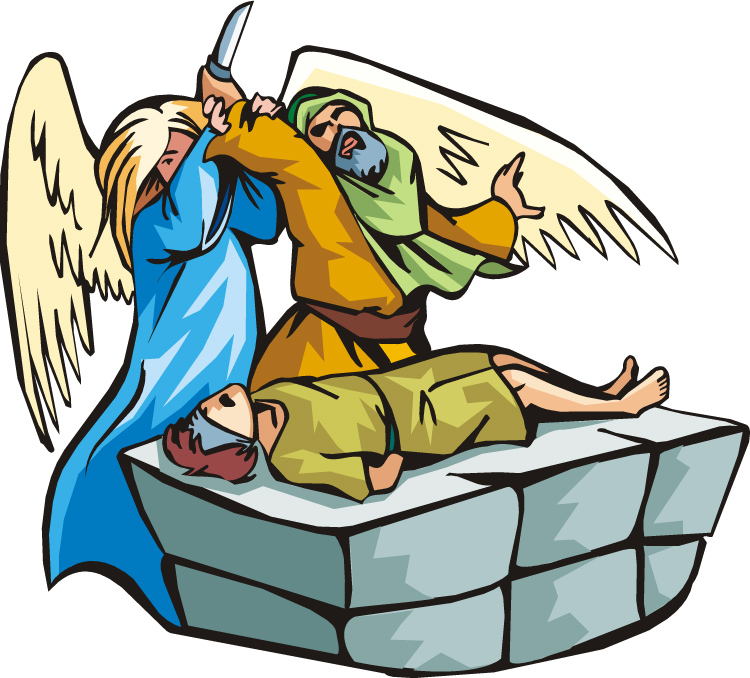
- At age 37 Abraham bound Isaac to the altar (in Heb. this event is called the akeidah or the binding, Gen 22).
- Isaac was obedient to marry Rebekah, his parents’ choice, unlike Esau who married a heathen girl.
- He trusted and had faith in his parents, even as he trusted his life with his father at the akeida.
- He had deep and personal relationship with YHVH (e.g., Gen 24:63; 26:24).
- Here we learn that obedience to and faith in and love for our parents leads to devotion to YHVH. Honoring one’s parents is the beginning step in learning to honor YHVH and to entering into relationship with him. That is why the fifth commandment to honor one’s parents is placed after the commands to love Elohim. In Genesis 24:63 and 25:21, (see The Stone Tanach rendering of this verse as well as The ArtScroll Beresheis, p. 1048, which says Isaac prayed abundantly and urgingly, i.e., persistent prayer, a penetrating prayer or request), we see that Isaac had a deep and personal relationship with his Creator.
He had strong faith.
- Though childless and barren, Isaac and Rebekah kept their faith in the promises of YHVH alive (Gen 25:19–26). In verse 21 we see Isaac seeking YHVH for the answers to life’s dilemmas and tough problems (he had a vibrant and abiding relationship with his Heavenly Father). The same can be said of Rebekah (v. 22).
- Though the local Philistines opposed Isaac in the digging of wells and even vandalized his property, he was a peacemaker and refused to feud over his legal rights to these wells. He avoided strife and quarreling with his neighbors (Gen 26:15–22). After digging the third well, YHVH brought comfort to Isaac’s weary soul (Matthew Henry’s Commentary, p. 38).
- Isaac was charitable toward his unsaved neighbors. Though Abimelech and his people had wronged Isaac, he did not rebuke them for stealing the first two wells. Was this a sign of Isaac’s meekness or weakness? Some biblical scholars say no (e.g., Matthew Henry) and some say yes (e.g., Gleanings in Genesis by Arthur Pink, p. 233). Whatever the case, Isaac was meek and operated under a philosophy of peace through strength (Gen 26:16, 29). He was willing let his neighbors defraud him, even as Abraham did of Lot, trusting that YHVH would bless him in the long run. He repeatedly turned the other cheek when wronged in honor preferring others (Rom 12:10)
What are some comparisons between the three patriarchs?
- Abraham was the man of the altar. He built altars as a form of worship to YHVH. The altar is mentioned more times in connection with Abraham than the other two patriarchs. Abraham established a pattern of worship in his life, thus setting an example for his descendants to follow.
- Isaac was the man of the well. Wells are mentioned seven times in connection with Isaac. In the Bible, water wells along with springs and rivers are a metaphorical picture of salvation, of a blessed life, of the Holy Spirit, of the Word of Elohim and of abiding in the presence of and receiving spiritual life from Elohim.
- Jacob was the man of the tent. The tent is mentioned more times in connection with Jacob. A tent speaks of the home as a place of habitation and raising a family.
- When all taken together, the lives of Abraham, Isaac an Jacob teach us the importance of a life dedicated to worshipping YHVH and putting him firsts in one’s life, of abiding in his presence and seeking the spiritual life that he has to offer through his word and Spirit, and then creating a home atmosphere where these values are passe onto our children.
What are the spiritual implications of the altar, the well and the tent in the Tabernacle of Moses?
The Abrahamic Covenant is the covenant of salvation (by grace through faith, see Rom 4). The spiritual significance of the altar, well and the tent are expressed in the layout of the Tabernacle (or tent) of Moses in the wilderness, which is a picture of the steps one must take to receive YHVH’s free gift of salvation or redemption from sin’s death penalty. In one’s spiritual journey toward YHVH Elohim, one must come to the altar of sacrifice (a picture of the cross), and then to the bronze laver (a picture of baptism or immersion for the remission of sins, spiritual cleansing, the washing of the water by the word, and receipt of the Holy Spirit). Afterwards, one enters the tent or tabernacle to commence a deeper and more intimate relationship with YHVH. Do we not see this progression in the lives of the patriarchs? They went from the altar to the well, and then into the tent (later the Tabernacle of Moses wherein were the 12 loaves of bread representing the 12 tribes of Israel) from which sprang the 12 sons or tribes of Jacob the tent-dweller?
This shows us how we come into a spiritual relationship with our Father in heaven: We have to start with an encounter with Yeshua at the cross. From there, we ritually cleansed through baptism which among other things, pictures our being the washed in the water of Elohim’s Word and being filled with and led by his Holy Spirit. From there, we enter into an intimate relationship with YHVH as we come into his home (the tabernacle is a picture the new heavens and the new earth with the holy of holies picturing the New Jerusalem).
Rebekah—A Character Sketch
Rebekah was modest, possessed a servant’s heart, and was selfless and kind.
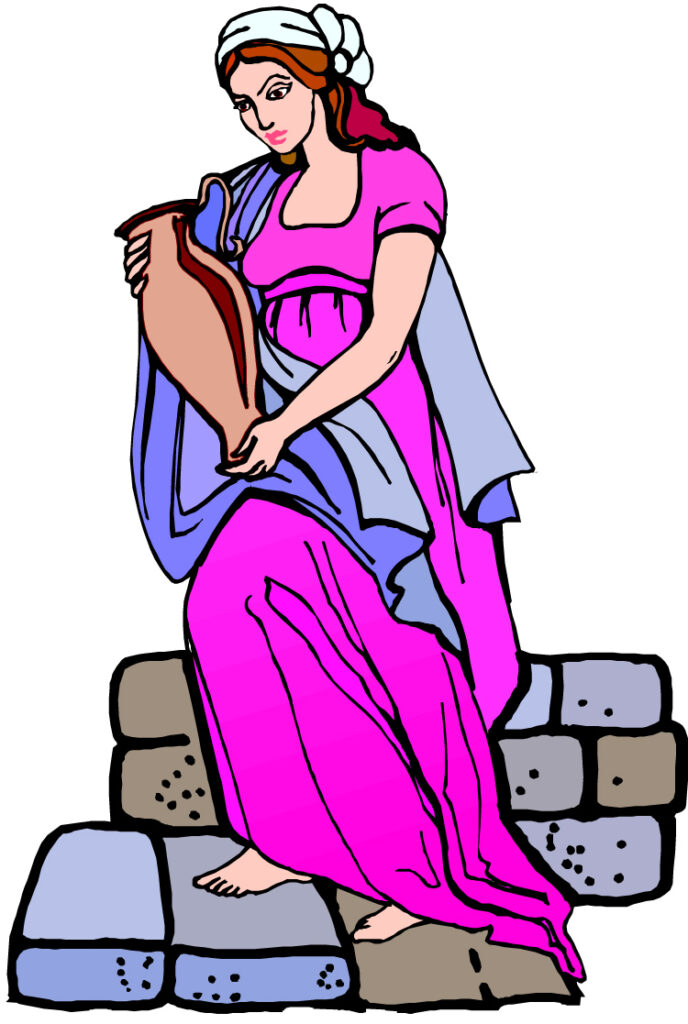
Genesis 24:11–21 recounts Eliezer’s encounter with Rebekah at the well. He was not interested in a wealthy girl for Isaac. He preferred someone who was down to earth and modest—the kind of woman who would draw water herself, rather than having a servant do it for her. Eliezer also wanted to see how the girl would behave away from her home atmosphere, so that he would have a more accurate perspective of her character. At the well, the girl would be natural and act in accordance with her own character rather than acting otherwise to placate familial expectations. At home, however her behavior might well reflect the constraints of her family’s cultural expectations. She passed the test, for she spoke only about bringing water for him, and then went on to draw water for his camels. It was second nature to Rebekah that another’s needs should be provided for. This act spoke volumes about her great kindness and here predisposition of serving others including total strangers. That his camels had do be watered was so obvious to her that she saw no need to ask what to do it. Unlike the other girls at the well who wasted their time in idle chatter and gossip, Rebekah did her task quickly and without delay. Rebekah acted in a most exalted manner in that she lowered the jug herself to spare Eliezer the effort and then actually brought the jug near his mouth, so he would not even have to hold it. Furthermore, she drew all the water for the camels through sheer physical exertion, and this was the great proof of her kindness (kindness denotes an intention to do something which is not obligated). In their first drink, 10 camels would consume 140 gallons of water! That Rebekah would undertake such a strenuous task so eagerly for a total stranger is a supreme indication of her sterling character (The Stone Edition Chumash, pp. 111–113).
She was dignified and possessed savoir-faire.
In Genesis 24:62–67 we read that Rebekah displayed personal modesty when she covered her face before meeting Isaac. She recognized intuitively that the stranger she had just encountered was a holy person. Finally, Isaac brought her to his mother’s tent, for it had become apparent that she was a fitting successor to Sarah. It was then that Isaac loved her, for he saw in her one who possessed a spirit that could create a godly home and infuse it with the spiritual qualities to turn it into a temple with her as its priestess. Isaac could love only a mate who could be his companion in creating YHVH’s chosen people. In Rebekah he found such a woman (ibid., p. 119).
She was a praying woman. (Gen 25:21–22)
She was able to hear the voice of YHVH and believe his word.
She was a discerner of character. (Gen 27:1ff)
To guard the word of YHVH that had been given to her earlier that the older son would serve the younger and to insure that the birthright would go to Jacob, and to keep the birthright promises and blessings from going to Esau, a wicked and profane individual, who had no interest in perpetuating the Abrahamic Covenant, Rebekah took to scheming. She knew that Esau was not worthy of such a divine mission and destiny, and that this responsibility should go to Jacob. She was more in tune with Elohim’s will in this matter than even Isaac.
Patriarchs were incomplete without matriarchs.
The patriarchs did not function as individuals; their mission in life required the partnership of a wife worthy to be a matriarch to YHVH’s people. This is clear in the relationship of Abraham and Sarah. So, too, only after Isaac married Rebekah did Abraham give him everything he had, which included all his blessings. Only now, therefore, when Jacob was going to find his proper match, could Isaac confer upon him the blessing of Abraham” (ibid., p. 143, comment on Gen 28:1–5).
Isaac and Rebekah—Prophetic Types and Shadows of Messiah and the Saints
There are many prophetic spiritual types and shadows to be found in the Torah that point to Yeshua the Messiah in one way or the other. A series of events in Isaac’s life beginning in Genesis 22 and culminating in chapter 24 provide us some amazing antetypical glimpses into events that would surround the life of Yeshua the Messiah some 1800 years later.
Genesis 22, As we noted in the previous parashah, the Akeidah or binding of Isaac on Mount Moriah is a graphic prophetic antetype of Yeshua’s crucifixion on the altar of the cross. But note the conclusion of this incident in verse 19. There we see that Abraham returns to his young men with no mention made of Isaac being with him. Where was Isaac? Obviously, he was accompanying his father, however Scripture fails to mention this. Interestingly, according to rabbinical folklore, Isaac was actually killed, but that he was later resurrected. This further strengthens the assertion that the Akeidah was a prophetic picture of the substitutionary and expiatory death of Yeshua at the cross and his subsequent resurrection. If Isaac was an antetype of Yeshua, then logically, Abraham would be a type of Elohim the Father. So for illustrative purposes, let’s assume that Isaac’s absence is a picture Yeshua’s crucifixion and , following this scenario, when does Isaac (or Yeshua) next appear on the scene? A wonderful story is about to unfold!
Genesis 24:1, After the death of Sarah, Abraham’s first order of business was to find a wife for Isaac. Similarly, after Yeshua was resurrected from the dead he returned to heaven where his Father began to prepare a spiritual bride for him.
Genesis 24:2ff, Who did Abraham employ to procure a bride for his son? It was Eliezer, his eldest and most trusted servant. In Hebrew, Eliezer means “El (God) is my helper.” Who is the Chief Servant, if you will, of the Father in heaven who is presently searching for and preparing a bride for Yeshua his Son? It is the Holy Spirit of Elohim, who Scripture refers to the Comforter or Helper (John 14:16, 26; 15:26; 16:7).
Genesis 24:10, Eliezer went to Babylon to find a bride for Isaac. In the last days, is not YHVH calling his people (the potential bride for his Son) out of Babylon in order to prepare them to be the bride of Yeshua? (See Rev 18:2, 4.)
Genesis 24:14ff, Eliezer puts Rebekah to the test to determine her suitability as a wife for Isaac. Presently, the Father is testing the saints to determine their suitability as a wife for Yeshua. Not all redeemed believers will be the wife of Yeshua. Some will be the least in the kingdom of Elohim and some will be the greatest (Matt 5:19), and not all the virgins were allowed in to the wedding supper (Matt 25:1–13). There are levels of rewards for the saints in the kingdom of Elohim based on the status of their robes of righteousness which are the righteous works of the saints (Rev 19:7–9).
Genesis 24:16, Although Rebekah lived in Babylon, she was a virgin (Heb. betulah). She had not fornicated with any other men. Similarly, the Father is looking for a virgin bride for Yeshua who, though in the world, is not of the world (John 17:11, 14), and who has not spiritually “fornicated” with the world. (See 2 Cor 11:2; Eph 5:27.)
Genesis 24:16, Rebekah is found at a well drawing water. This a prophetic picture of the end time bride of Yeshua, who will be found drawing water from the spiritual wells of salvation or Yeshua (Isa 12:3). From Yeshua she will be filling her vessels or lives with the Torah (the Word of Elohim) and the Spirit of Elohim (John 4:23–24). Not only that, Eliezer had ten camels (Gen 24:10) that Rebekah watered (verse 19), which is likely a picture of the ten lost and scattered tribes of Israel, who are the lukewarm Christians, the foolish virgins, and the least in the kingdom who still have not come out of Babylon (see Rev 12:17; 14:12). Rebekah feeding, or watering the camels may be a prophetic picture who are feeding or discipling Christians who still need to come out of spiritual Babylonian religious systems (Rev 18:4). After all, Malachi prophesied that in the end times just before the second coming (Mal 4:1–3) the people of YHVH would be returning to the Torah and turning their hearts back to the spiritual fathers of their faith (Mal 4:4–6). Blessed are those who are discipling their Christian brethren in the ancient and good paths of Torah (Jer 6:16), while at the same time preaching the gospel (Rev 12:17; 14:12).
Genesis 24:16ff, Rebekah demonstrated a humble, modest, hard-working and submissive spirit. This is the type of spiritual demeanor that Yeshua is looking for in his spiritual bride.
Genesis 24:22, Eliezer gives gifts to Rebekah as a down payment or “earnest money” showing the seriousness of Abaham’s offer to Rebekah. Similarly, Yeshua promised to send his Holy Spirit to his disciples as a down payment or earnest of his future intentions to “marry” them (2 Cor 1:22; 2 Cor 5:5; Eph 1:14). Furthermore, Eliezer gives Rebekah a finger ring and an ear ring. The Bible indicates in several places that the servants of YHVH are to remember his ways—the Torah—in all that they do and think as if it were a mark on their head and hands (Exod 13:9,16; Deut 11:18). In Revelation 22:4, we read that YHVH will write his name on the foreheads of his people in the New Jerusalem. Of course, those who serve the devil will have his counterfeit mark of possession on their heads and hands as well (Rev 14:9).
Genesis 24:54, Eliezer wanted to leave Babylon immediately with Rebekah and return to Abraham. This is prophetic of YHVH’s plea to his end time people to leave end time Babylon the Great (Rev 18:4)—a religious, economic and political system that represents all that is evil and contrary to the Word, will and ways of YHVH-Elohim and Yeshua his Son.
Genesis 24:55, Although Eliezer and Rebekah wanted to leave her father’s house in Babylon, her family was not willing to let go of her, but insisted that she remain with them in Babylon. In the end times, some believers will heed YHVH’s call to come out of religious Babylon the Great, while others will be reluctant to leave succumbing rather to the allurements of Babylon to stay “in her” (see Rev 18:3 cp. 2 Thess 2:1–12 with emphasis on verse 10–12).
Genesis 24:58, Rebekah was a woman of faith and was willing to immediately leave her home in Babylon to marry Isaac in Canaan, whom she had never seen. Those saints who wish to be the bride of Yeshua must be willing to leave the defilement of spiritual Babylon and to follow the Lamb wherever he goes, even though they have never seen him (Rev 14:4).
Genesis 24:62, The very next time we see Isaac after the Akeidah is in this verse where he is meditating, supplicating and paying at the well of Lachairoi, which means, “well of the living one seeing me.” This is a prophetic picture of Yeshua the Son, in heaven awaiting his return to the earth after his resurrection. There in the Presence of his Father, the Living One who sees him, and from whose throne flows the river of life, Yeshua is making intercession for the saints who are his bride to be (Rom 8:34; Heb 7:25).
Genesis 24:64, Rebekah arrives from Babylon on a camel—a semi-kosher animal, which chews its cud, but does not have a completely split hoof (Deut 14:7). This animal is emblematic of Babylon. The word Babylon means “confusion by mixture,” thus it is a confusing mixture of good and evil like the tree in the Garden of Eden by the same name. This alludes to the fact that the bride of Yeshua who comes out of spiritual Babylon (Rev 18:4), like the animal Rebekah was riding, will not be a perfectly “kosher” or righteous or Torah-obedient bride, but will be a mixture of good and evil. This also points to the grace of Elohim who loves us and accepts us as his Son’s bride, even though we are still somewhat worldly and carnal.
Now let’s look at this prophetic picture from a slightly different angle. Eliezer is a prophetic picture of the Spirit of Elohim finding and preparing a bride for Isaac (a picture of Yeshua). Rebekah answers the call of the Spirit, leaves Babylon, and with her come the ten camels picturing the ten tribes of Israel, which she is responsible for feeding and bringing out of Babylon. It is our role as redeemed Torah-obedient Israelites who have faith in Yeshua to share the truth of the Torah with as many of our Christian brethren as possible who are still caught up in many non-biblical and even pagan religious traditions of mainstream Christianity. As we give them water (the Word of Elohim) from the wells of salvation (i.e., Yeshua who is both the Written Torah and the Living Torah, i.e, the Word of Elohim that was made flesh, see John 1:1, 14), many will increasingly desire to come out of spiritual Babylon (Rev 18:4) and return to the Promised Land of the Hebraic roots of their faith. This fulfills Malachi’s end time prophecy about the hearts of the children being turned back to their fathers (Mal 3:6).
Genesis 24:65,When Rebekah arrives in the Promised Land, Isaac came out to meet her, his bride, who had just come from Babylon. This is a prophetic picture of Yeshua coming from heaven to meet his spiritual bride in the air at the resurrection of the saints (1 Cor 15:51–53; 2 Thess 4:13–18; Rev 11:14–18). Meanwhile, Rebekah covered herself with a veil. This prophetically points to the saints of Yeshua who will receive their glorified bodies at the resurrection at his second coming. It is also a picture of the New Jerusalem descending upon the bride of Yeshua like a glorious spiritual bridal gown at the end of the Millennium (Rev 21:2).
Genesis 24:63, Rebekah found Isaac meditating in the field. Meditate is Hebwrew word jUå/suwach meaning “muse, commune, speak, complain.” This is the only place in the Tanakh where this word is found. According to The TWOT, the basic meaning of this verb seems to be “to rehearse, repent, or to over a matter in one’s mind,” and involves inward our outward (audible) contemplation. The parent noun is vjhå/siha meaning “prayer, thought, communication, or pious mediation.” This is the second mention in the Bible of someone praying (the first is few verses earlier in Gen 24:12–14).
Genesis 24:67, Upon meeting, Isaac immediately takes Rebekah to his tent to consummate the marriage. This prophetically speaks of the marriage supper of the Lamb where Yeshua and his bride become one (Rev 19:7–9).
