Exodus 34:1–35, Prophetic pictures of Moses’ second ascension of Mount Sinai. Moses’ second ascension of Mount Sinai is a prophetic and allegorical picture of the saints’ resurrection and glorification at the second coming of Yeshua the Messiah.
According to Jewish tradition, Moses ascended Mount Sinai to receive the second set of stone tablets containing the Ten Commandments on the first day of the sixth biblical month or 30 days before Yom Teruah, which occurs on the first day of the seventh month. Forty days later on Yom Kippur he descended from the mountain carrying with him the second set of tablets as a sign of YHVH’s forgiveness of the children of Israel after the golden calf incident. This signaled YHVH’s renewed relationship with Israel after they had repented of golden calf worship.
We know that in biblical times a biblical Israelite bride, while waiting for her betrothed to arrive from his father’s house, would hear a shout and the sound of the shofar in the distance as her bridegroom approached (Matt 25:6 cp. Matt 24:31; 1 Thess 4:16; 1 Cor 15:51–52). If she were alert and not asleep (as were the ten virgins in Matt 25:1–13), she would have had time to put on her wedding robes, trim her lamp’s wick (an ancient version of a flashlight), and have it filled with oil and ready to light as soon as he arrived, since he would be coming at night time.
Prophetically, the Scriptures indicate that the saints of Yeshua are to be resurrected and to meet the returning Messiah Yeshua in the air at the seventh or last shofar blast most likely on Yom Teruah (Day of the Trumpets also known as the Day of Shouting or Shofar Blasts, see 1 Thess 4:16; 1 Cor 15:52; Rev 11:15–18). From the time the saints begin hearing the shofar blasts in the distance signaling the arrival of Yeshua the Bridegroom until their ascension (at the resurrection) to meet King Yeshua in the air roughly seems to correspond to Moses’ ascension of Mount Sinai on the first day of the sixth month. That being so, then Moses’ descent with the stone tablets—the tokens of a renewed covenant between YHVH and Israel on Yom Kippur (the Day of Atonement)—would correspond to Yeshua returning to earth with his just-resurrected saints. As Moses saw the glory of YHVH in the cleft of the rock the second time he ascended Mount Sinai (Exod 33:18–23; 34:5–9), and as he descended in a glorified state, his face shining with the glory of YHVH, so the saints will resurrect to meet Yeshua in the air, see his glory, and will return with him with their own glorified immortal bodies (1 Cor 15:42–54; 1 Thess 4:16–17).
First John 3:2 says, “Beloved, now are we the sons of Elohim, and it does not yet appear what we shall be, but we know that, when he shall appear, we shall be like him; for we shall see him as he is.” These resurrected saints are those who have heeded YHVH’s call to come out of Babylonian, golden calf-type religious systems (i.e. Christo-pagan churchianity, Rev 18:4) where paganism has been mixed with the truth of the Scriptures. These same saints are now waiting to enter into an everlasting (marital) covenant with YHVH-Yeshua (Rev 19:7–9). They are those who love Yeshua and his the Torah-commandments (Rev 12:17; 14:12).
In the end times there will be a great spiritual revival as many people are saved and come to faith in Yeshua out of the great tribulation period (Rev 7:14). Some of these new converts to Yeshua the Messiah will be native Israelites, along with many Gentiles, who have been spiritually grafted into the nation of Israel, and all of whom have repent of the golden calf worship of Torahlessness and false religious systems. If we can trust the end time prophetic chronology of the fall biblical feasts, we see that this momentous and glorious event will occur in the time period leading up to the Day of the Trumpets when many people will wholeheartedly repent and receive the covering of the blood of Yeshua for their sins, as pictured by the Day of Atonement. This will be a continuation of the process of the rebirth and reunification of the two houses of Israel (loosely speaking, Ephraim who is he church, and Judah who are the Jews) that began in the apostolic era.
The Bible likens this process to branches being grafted into an ancient olive tree, or to the unification of Jews and Gentiles becoming into the “one new man” Israel of Elohim through faith in and the blood of Yeshua the Messiah (Rom 11:13–24; Ezek 37:15–28; Eph 2:11–19; Gal 6:16).
Exodus 33:12–13, Grace.The mainstream church places a great deal of emphasis on the message of grace. The biblical doctrine of grace finds its roots in this chapter in the Torah and not in the apostolic writings as the mainstream church teaches.
The noun grace (Heb. chen) is found six times in chapters 33 and 34. The adjective gracious (Heb. chanan and channuwn)as an attribute YHVH’s character is found three times in chapters 33 and 34. Six is the number of man and three is the number of Elohim. That is to say, the grace of the entire Godhead covers man completely even when his children turn away from him and give into golden calf worship. His grace for his people rejoices or triumphs over his fiery and consuming judgments (Exod 33:4; Jas 2:13; Pss 85:10; 89:14; Mic 7:18; Eph 1:7; Rom 5:8) that they deserve for their stiff-neckness and sinful rebellion against his commands (Exod 33:3).
The Hebrew word for grace is chen/IJmeaning “favor, grace, charm, acceptance.” The Hebrew word chen (found 69 times in the Tanakh), which is translated as grace, in this verse is equivalent to the Greek word charis/cariV, which is found 156 times in the Testimony of Yeshua and is translated as grace 130 times in the KJV.The equivalency of these two words is confirmed by the translators of the Septuagint (the Greek Tanakh) who used charis in place of chen when translating the Hebrew Tanakh into Greek beginning in the third century b.c.
According to TheTWOT, in the vast majority of occurrences of chen in the Tanakh, the focus of attention is not on the giver, but on the recipient. The emphasis is on the relationship of the superior to an inferior (e.g. a king to his subjects). What this teaches us is that despite sin and rebellion against him, YHVH (the king) is gracious (to humans, his subjects). Contrary to what many in the church have been led to believe, the grace of Elohim is a very prominent theme in the Tanakh. Examples of this include Noah who found grace in YHVH’s eyes (Gen 6:8), or the children of Israel although dead in their sins in Egypt and deserving of YHVH’s wrath, they were saved by the blood of the lamb. There are a number of other references to the grace of Elohim in the Tanakh as well (Gen 18:3; Exod 3:21; 33:16,17; 34:9; Ps 84:11; Zech 12:10).
Exodus32:1, Moses delayed coming. Moses is a prophetic picture of Yeshua. Moses’ descending from Mount Sinai is a prophetic picture of Yeshua descending from heaven to the earth the first and second time. When the people presumed that Moses delayed his coming, they fell to the temptation to syncretize with the heathen religious system around them by yielding to their baser nature giving in to the lusts of their flesh as expressed in golden calf worship. Heathen, man-made religious systems have lower moral and spiritual standards than those of YHVH. In many respects, the mainstream church has done the same thing as the ancient Israelites by acting as if Yeshua has delayed his second coming, and by conforming to some of the world’s standards and customs. This is a form of golden calf worship, which is a mixture of Torah-truth and pagan practices. Yeshua warned his disciples against this proclivity of humans to grow impatient and spiritually cold wile waiting for his return (Matt 24:48).
Exodus32:2, Break off the golden earrings.The Christian people have generously given the mainstream church much gold and other wealth over the past 1900 years. In the mean time, with that wealth, the church system has constructed many huge religious monuments. These are monuments, in part, to the gods of materialism, and is a form of golden calf worship. Neither Yeshua nor his disciples needed vast sums of money, resources or monuments to spread the gospel message. What they lacked in material resources they made up with passion for the gospel message and with the anointing of YHVH to proclaim that gospel with miraculous power. What the mainstream church largely lacks in passion and the anointing to spread the gospel, they now, sadly, substituted with wealth and religious monuments.
On Shavuot (the Feast of Weeks or Pentecost), at Mount Sinai, YHVH entered into a marriage covenant with the children of Israel, but they were not ready to live up to the terms of that covenant. Those terms, simply stated, involved the Israelites being faithful and obedient only to YHVH, Israel’s Elohim (God) and spiritual husband, and to follow his instruction in righteousness, the Torah. This Israel quickly demonstrated they were not willing to do, for they had hardly said “I do” to their marriage vows (Exod 24:3, 7) when they turned their hearts away from YHVH and began worshipping the golden calf—a pagan deity from Egypt. After the golden calf incident and up until Yom Teruah (the Day of Trumpets or Shofar Blasts) when Moses received the second tablets of stone from YHVH containing the Ten Commandments, the children of Israel, the bride of YHVH, prepared herself not only to receive YHVH’s instructions again, but this time to be faithful to her marriage vows. This Israel did. She remained faithful to YHVH for approximately 38 years while trekking through the wilderness of Sinai, after which she entered the Promised Land and “stayed the course” until after the death of Joshua. What can we as Bible believers learn from ancient Israel that applies to us today?
Sadly, the cycles of history often repeat themselves. This time, it involved the spiritual descendants of the children of Israel who were at Mount Sinai. In the early first century A.D., the redeemed Israelite followers of Yeshua received the Torah written on the fleshly tablets of their hearts by the finger of the Spirit of Elohim on the Day of Pentecost (Shavuot) as recorded in Acts 2. But starting in about A.D. 70 with the destruction of the temple in Jerusalem and continuing up through the Second Jewish Revolt of a.d. 135 until the time of Emperor Constantine (in the fourth century), the first-century spiritual bride of Messiah had, to a large extent, abandoned YHVH’s Torah-commandments and turned, to one degree or another, to a mixed form of worship (of which ancient Israel’s worship at the golden calif was a prophetic foreshadow) where some pagan practices were assimilated into the early churches’ belief system (most notably, Sunday replaced the Sabbath, and Christmas, Easter and other paganistic holidays replaced the biblical feasts).
Moses’ descent of Mount Sinai on Yom Teruah with the second set of tablets containing the Torah prophetically foreshadows Yeshua’s second coming. As Moses renewed YHVH’s covenant with the repentant Israelites after the golden calf incident and the Israelites remained faithful for a long time afterwards, even so, Yeshua, at his second coming, will establish a renewed covenant with his faithful end time saints who have come out of golden calf-type religious systems.
In our day, YHVH is calling out a remnant of people from the church who are leaving behind the pagan traditions of golden calf worship and who are returning to the ancient blessed paths of YHVH’s Torah-instructions in righteousness. The book of Revelation speaks of a group of end-time saints who will say “I do” to YHVH (Rev 14:4), and whose identifying mark is their faith in Yeshua the Messiah (i.e. the gospel message) and yet who faithfully keep YHVH’s Torah-commandments (Rev 12:17 and 14:12).
When Yeshua returns on or near Yom Teruah at the end of this age, he will be ready to marry a bride that is without spot and wrinkle and who has come out of the end-times Babylonian religious whore system (Rev 18:4). This bride who will be wearing the robes of righteousness of Torah-obedience (Rev 12:17; 14:12; 19:7–9) will be ready to enter into a new covenantal agreement—a wedding contract or ketubah—with Yeshua (Heb 8:7–13), the Bridegroom, ever to remain faithful to him and never again to return to Baal or golden calf worship. He will lead his wife into the Messianic Age or Millennium, even as Joshua, a prophetic foreshadow of Yeshua, led the younger generation of wilderness Israelites into the Promised Land.
Golden Calf Worship Among YHVH’s People Today
Let’s look at the series of events that occurred as the children of Israel were leaving Egypt, which have major relevance to what is occurring in mainstream Christianity in our day. If we fail to learn the lessons of history, we’ll likely repeat the mistakes of history. It has to do with golden calf worship.
YHVH redeemed the children of Israel out of Egypt and set the slaves free. He blessed them not only by giving them their freedom, but by giving them the wealth (gold and silver) of Egypt as well. We read that the Israelites exited of Egypt with a high hand. They were victorious, free and wealthy.
YHVH led them into the wilderness en route to the Promised Land—normally an eleven day journey. They had some difficulties: Pharaoh tried to kill them at the Red Sea, they lacked clean drinking water, and they had food issues, but YHVH provided them deliverance from Pharaoh, gave them clean water, manna and meat, and they overcame these trials.
Next, YHVH led the Israelites to the foot of Mount Sinai, and on Shavuot he made a covenantal agreement with them and gave them his Torah as their national constitution. They agreed to obey him and to keep his commandments. He promised to bless them if they remained faithful to him.
Moses went up to Mount Sinai to receive the Torah-covenant on two tablets of stone. While he was gone for 40 days, the people grew worried and anxious and become weary of waiting for Moses to return. This was a test they had to pass of their faithfulness. Would they be faithful to YHVH and keep his commandments, or would they stray spiritually from the path of righteousness YHVH had given them and they had agreed to follow?
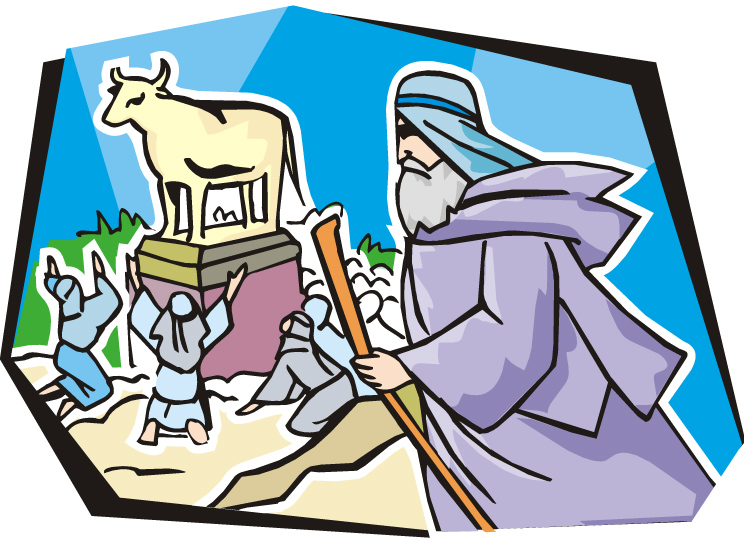
The Israelites got tired of waiting, and took the gold from Egypt and turned it into a golden calf, and then they rose up to play (to party). They even called their revelry a feast to YHVH! They used religious verbiage like “YHVH” and “feast” to add legitimacy to their illegitimate activities, but this didn’t change the sin of their behavior. Sin is still sin regardless of how we attempt to cloak it in spiritual terms and costumes in an attempt to justify our wicked behavior.
Moses then came down from Sinai with the stone tablets, saw the people worshipping the golden calf and the people playing, and he brought judgment against those who were unfaithful to YHVH and rewarded those who had been faithful to him.
Let’s now analyze this story to see what spiritual lessons we can glean from it.
YHVH blessed the children of Israel by setting them free from Egypt, giving them honor as freedmen, taking them to himself to be his own special people, giving them a religion, a legal code and much material wealth. What was the first job assignment YHVH gave his people to do? It was to build a tabernacle so that YHVH might dwell in their midst.
YHVH gave the Israelites wealth from Egypt not only as a remuneration for their years of slavery in that nation (Torah teaches that a workman is worthy of his hire), but he gave them wealth so they could build him a home. Instead, what was the first thing the Israelites did with their wealth? They built a golden calf in honor of their past life in Egypt.
The golden calf represented the spiritual idols or strongholds of sin that were already in their hearts, and which they failed to leave behind in Egypt. Though the Israelites had physically come out of the idolatry of Egypt, they hadn’t gotten Egypt’s idols out of their own hearts. When the way of the wilderness became too tough and their faith was tested (i.e. would they remain faithful to YHVH in the time of trial and delayed expectations?), instead of trusting YHVH, they grew weary and defaulted to following the idols in their hearts. What were these idols or false gods? They were wealth, materialism and pleasure and entertainment. In Matthew 6:33, Yeshua told his disciples to seek first the kingdom of Elohim and his righteousness and all these things (i.e. physical blessings) will be added to you and the cares of this life will take care of themselves. Instead of seeking the first YHVH’s kingdom and righteousness, the Israelites took the wealth YHVH had given them to be used to build him a tabernacle, and they got tired of waiting for Moses to come down form the mountain, and they built a golden calf in honor of their true heart’s desires and then they rose up to play. They didn’t abandon their faith entirely. They didn’t totally turn their back on YHVH. They simply built a calf supposedly in honor of YHVH. Total abandonment of YHVH’s Torah would have been too blatant a sin. Instead, they kept the parts of YHVHism that were appealing to them and blended it with the idols of their heart that they had brought with them from Egypt. This was spiritual adultery (i.e. worsipping other gods besides YHVH). This is what Yeshua decried as serving YHVH and mammon, which is idolatry.
What can we learn from this sad story? Are we any different than the Israelites? How does it apply to us? Recall the words of Paul in 1 Corinthians 10:11. Speaking of the children of Israel, he wrote,
Now all these things happened to them as examples, and they were written for our admonition, upon whom the ends of the ages have come.
We can easily see the splinter of sin in the eyes of the ancient Israelites, but can we see the beam of sin in our own eyes? Can we not see that often we’re guilty of the same sin as the children of Israel? We are guilty of attempting to serve both Elohim and mammon.
Consider this. At the time of our initial salvation or conversion, YHVH saved us out of our own personal Egypt. He showed us much mercy and grace by delivering us from captivity to the world, the flesh and devil. He proved his love to us by showering us with blessings in hopes that we would remain faithful to us. However, our faithfulness to him has to be tested. Will we remain faithful to him through the trials of the wilderness of life en route to the Promised Land of YHVH’s eternal kingdom? While we’re waiting for the second or greater Moses, Yeshua the Messiah, to come down from the spiritual Mount Sinai of heaven to finalize his marriage covenant with us at his second coming, are we getting weary of waiting? Remember Peter’s words of exhortation to us all in this regard:
Beloved, I now write to you this second epistle (in both of which I stir up your pure minds by way of reminder), that you may be mindful of the words which were spoken before by the holy prophets, and of the commandment of us, the apostles of the Master and Savior, knowing this first: that scoffers will come in the last days, walking according to their own lusts, and saying, “Where is the promise of His coming? For since the fathers fell asleep, all things continue as they were from the beginning of creation.” For this they willfully forget: that by the word of Elohim the heavens were of old, and the earth standing out of water and in the water, by which the world that then existed perished, being flooded with water. But the heavens and the earth which are now preserved by the same word, are reserved for fire until the day of judgment and perdition of ungodly men. But, beloved, do not forget this one thing, that with YHVH one day is as a thousand years, and a thousand years as one day. YHVH is not slack concerning His promise, as some count slackness, but is longsuffering toward us, not willing that any should perish but that all should come to repentance. But the day of YHVH will come as a thief in the night, in which the heavens will pass away with a great noise, and the elements will melt with fervent heat; both the earth and the works that are in it will be burned up. Therefore, since all these things will be dissolved, what manner of persons ought you to be in holy conduct and godliness, looking for and hastening the coming of the day of Elohim, because of which the heavens will be dissolved, being on fire, and the elements will melt with fervent heat? Nevertheless we, according to His promise, look for new heavens and a new earth in which righteousness dwells. Therefore, beloved, looking forward to these things, be diligent to be found by Him in peace, without spot and blameless; and consider that the longsuffering of our YHVH is salvation… (2 Pet 3:1–15)
Sadly, many of us have become weary of waiting for the promise of Yeshua’s coming. We haven’t turned our back totally on Yeshua and his Torah, but we have turned back to some of the ways of Egypt. The idols that have been laying hidden in our hearts and which we have been secretly worshipping all along are rising to the surface, and we’re beginning to make golden calf monuments to them. These are our real masters — our real gods, for, in reality, they take precedence over obedience to and faith in YHVH. We may give lip service to Elohim, but he’s not the only Master of our lives! We reason within ourselves, “I’ve been waiting for YHVH-Yeshua for a long time now. I have struggled to be faithful to him. While others around me are enjoying the good life, I’ve been sacrificing by not giving in to seeking my own pleasures. I’m getting tired of waiting, so now I’m going to enjoy this physical life a little more than I have been. YHVH won’t mind if I enjoy the mammon and the pleasures of this life and put off just a little seeking first his kingdom and righteousness.” And so we justify ourselves in our sin of idolatry (golden calf worship) as we move seeking YHVH with all of our hearts to the back burner of our lives.
This was the problem with the five foolish virgins of Matthew 25. They didn’t prepare themselves for Yeshua’s coming. They came to believe that Yeshua was delaying his coming, so they went out to play and to have a good time while waiting (Matt 24:48). To that servant, Yeshua promised to come in a day when he wasn’t expecting and to punish him accordingly along with the rest of the wicked. He called that servant a hypocrite — one who knows better, but does the wrong thing anyway (Matt 24:49). The same is true of the five foolish virgins. The result of their actions was that they weren’t permitted entrance into the wedding supper of the Lamb. They sold their spiritual birthright, like Esau, for a bowl of lentils, so they could enjoy the pleasures of sin for a season, and they lost out on the biggest blessing of all when they forsook YHVH for mammon!
The children of Israel made the golden calf while waiting for Moses to come down from Mount Sinai with the stone tablets the first time. Moses broke the tablets when he saw the golden calf because the Israelites had broken their covenant with YHVH. YHVH forgave the people of their idolatry, and invited Moses to go back up to Mount Sinai the second time to get another set of stone tablets. Moses came back down on Yom Teruah, and YHVH graciously renewed his covenant with the people.
Similarly, in our day, YHVH’s people (i.e. the Christian church) have broken their covenants with YHVH and turned to golden calf worship involving mixing heathen practices with the truth of the Bible. We accepted Yeshua at the time of our initial salvation or conversion, and we agreed to make him the Master of our lives. For most of us, Yeshua really isn’t our Master.
This isn’t just true of the mainstream Christian church, but of most of YHVH’s people who have supposedly come back to the Torah and are part of the so-called the Hebrew Roots Movement. How is this? Many of them are mixing Sabbath and feast day observance with the religion of Egypt, while still calling it “a feast to YHVH.” They’re not observing his divine appointments wholeheartedly as YHVH commands because their job, education or other secular activities are more important to them. This is golden calf worship! It’s worshipping money, pleasure and entertainment more than Elohim. How is that this is any different than the children of Israel worshipping the golden calf and calling it a feast to YHVH? What was YHVH’s view of this? He wanted to destroy them, for their loyalty to the idols of Egypt, which in reality, had taken precedence over obedience to him. Only the intercessions of Moses on behalf of the sinful and spiritually adulterous Israelites spared them from YHVH’s annihilation.
Additionally, the modern church including those in the Hebrew Roots Movement are largely sold out to mammon, money and entertainment. How many pastors, Bible teachers and ministers do you know who don’t get paid for what they do, or if so, very little? Instead they largely support themselves from secular work? In other words, they serve YHVH voluntarily with little or no remuneration? Have I proved my point? Many have become spiritual peddlers and are in it for the money. They would deny this, but their actions speak louder than their words. They’re hirelings!
As Moses came down from Mount Sinai on Yom Teruah to renew the covenant with YHVH, so Yeshua will return for his bride on Yom Teruah in the last days to begin the process of finalizing his marriage covenant with her. Will she be ready for him? Are we the foolish bride like the lukewarm Laodiceans who were too busy pursuing mammon, money and pleasure (Rev 3:14–21), or will we be the wise bride of Yeshua’s parable who had her lamp ready and was seeking first the kingdom of Elohim and his righteousness? This is what the lamp filled with oil represents spiritually. The Laodiceans thought they were pretty well off spiritually because they were wealthy physically, yet Yeshua viewed them as spiritually destitute and miserable. This was their true spiritual state. This fairly describes many if not most of us in the western church.
The American and western church is in a Laodicean state spiritually. So is the Messianic or Hebrew Roots Movement. For too many people, their religious expression is largely superficial. We have the trappings of biblical obedience, but the false gods and idols of our heart are just below the surface waiting to emerge when the going gets tough. These idols have been there all along, for we never rid our lives of them from our Egyptian past. During the wilderness journey of our life and our faith is tested and we start to get weary, we’ll default to theses idols of mammon, wealth, and pleasure instead of seeking first the kingdom of Elohim?
To find out where we stand spiritually in this regard, where our true spiritual allegiance is, we must ask ourself some hard questions. For example, do I honor YHVH first with my time, talent and treasure? Do I put my job and schooling first over obedience to YHVH’s weekly Sabbath and annual sabbaths — the biblical feasts? Do I honor YHVH diligently by giving him the first fruits of my financial increase? Or am I still letting loyalty to Pharaoh (Satan) and Egypt (this world and money) and my own pleasure and entertainment (the self) dictate how and to what degree I will go all the way in serving YHVH?
It’s not easy serving YHVH wholeheartedly and completely while in exile in Babylon. The tentacles of the Babylon the Great New World Order system have wrapped themselves around all aspects of our lives and our thinking. Coming out of Babylon and getting ready for Yeshua the Messiah, our heavenly Bridegroom’s return involves making hard choices. Who do we love more? Babylon or Yeshua?
Because money, pleasure and materialism are the number one American gods, YHVH will bring judgment against them. Our economic system is going to collapse, along with that of the world at some time in the near future. There will be an economic reset that will occur that will put most of us in physical poverty. This is when the Babylon the Great New World Order mark of the beast system will be unveiled and initiated. We will have to depend either on YHVH to provide for us, or on a mark of the beast in order to buy and sell. What will we choose? If we’re not putting YHVH first NOW in all areas of our lives and seeking first his kingdom and righteousness, no matter what our excuses and self-justifications are or how much we’re deluding ourselves into believing otherwise, we will not pass the test. This is golden calf worship! Will we serve YHVH or mammon (Babylon the Great, New World Order)? That is the question we must ask ourselves.
What does YHVH require of his people? Two Scriptures sum it up.
And now, Israel, what does YHVH your Elohim require of you, but to fear YHVH your Elohim, to walk in all His ways and to love Him, to serve YHVH your Elohim with all your heart and with all your soul, and to keep the commandments of YHVH and His statutes which I command you today for your good. (Deut 10:12–13)
But on this one will I look: On him who is poor and of a contrite spirit, and who trembles at My word. (Isa 66:2)
Is Yeshua really our Master in all areas of our life, or just in the areas that we’ve submitted to him, with all the other areas relegated to golden calf worship?
What I’m teaching here is the voice of one crying in the wilderness — the voice of John the Baptist to prepare the way for Yeshua.
In those days came John the Baptist, preaching in the wilderness of Judaea, and saying, “Repent ye: for the kingdom of heaven is at hand. For this is he that was spoken of by the prophet Isaiah, saying, ‘The voice of one crying in the wilderness, prepare ye the way of YHVH, make his paths straight.’” (Matt 3:1–3)
Summary and Conclusion
The Israelites were saved by the strong arm of YHVH and the blood of the lamb on the door posts of their homes. They then left Egypt, and were given YHVH’s instructions in righteousness at Mount Sinai concerning how to live a set-apart life. Yet when the going got rough they reverted to the pagan practices and gods of Egypt all the while deceiving themselves into believing they were worshiping YHVH (Exod 32:3–8):
Then all the people tore off the gold rings which were in their ears and brought them to Aaron. He took this from their hand, and fashioned it with a graving tool and made it into a molten calf; and they said, “This is your god, O Israel, who brought you up from the land of Egypt.” Now when Aaron saw this, he built an altar before it; and Aaron made a proclamation and said, “Tomorrow shall be a feast to YHVH.” So the next day they rose early and offered burnt offerings, and brought peace offerings; and the people sat down to eat and to drink, and rose up to play. Then YHVH spoke to Moses, “Go down at once, for your people, whom you brought up from the land of Egypt, have corrupted themselves. They have quickly turned aside from the way which I commanded them. They have made for themselves a molten calf, and have worshiped it and have sacrificed to it and said, ‘This is your god, O Israel, who brought you up from the land of Egypt!’”
History repeated itself at the time of Jeroboam and again in the first-century A.D.—the early church era. On the Day of Pentecost Israel was again given the Torah (written on their hearts by the Spirit or Ruach of Elohim), yet when persecution arose at the end of the first-century A.D., the early church went into apostasy forsaking the weekly Sabbath and annual Sabbaths (the biblical feasts), the kosher laws, and many other aspects of the Torah, and they accepted pagan practices (Christmas, Easter, Sunday, and so on), which they melded with the truth of the Scriptures—the Word of Elohim.
How does “golden calf worship” reflect in the mainstream church culture of our day? In what way does the mainstream church worship idols and end up breaking YHVH’s commandments? Why are so many Christians beginning to recognize that “our [spiritual] fathers have inherited lies” (Jer 16:19), and that they have followed “traditions of men by which the Word of Elohim has been made of none effect” (Matt 15:6 and Mark 7:7, 9)?
Is the Father now beginning to call a people out of religious Babylon (confusion or mixture, see Rev 18:4), and preparing a set-apart people to be the bride of Yeshua, who will be without spot and blemish, and will be adorned in the robes of Torah-righteousness through the power of the resurrected Yeshua (Rev 12:17; 14:12; 19:7–8)?
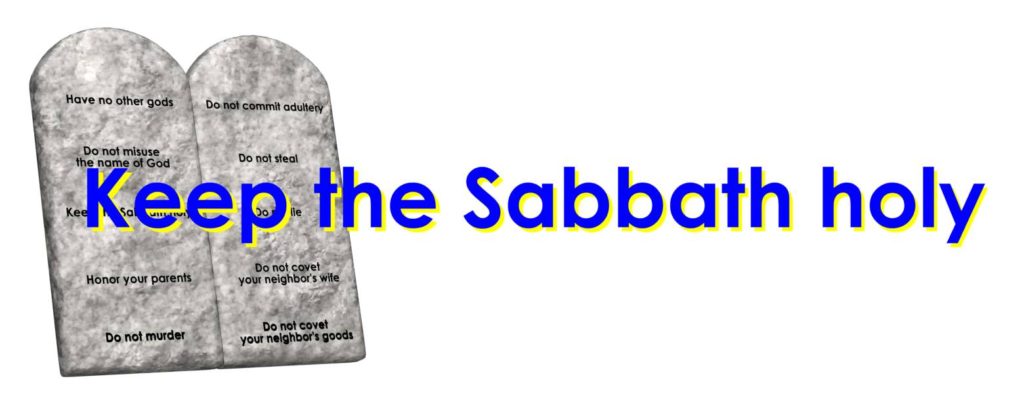
Exodus31:13–17, My Sabbaths you shall keep. Note that Sabbaths is plural. This is a reference not only to the weekly Sabbath, but to the feast day Sabbaths as well. However, the seventh day Sabbath remains central to YHVH’s spiritual economy for his people. In fact, it was so central to the spiritual life and YHVH’s people that he designated it to be a visible and outward sign of the special relationship between him and his people. Let’s explore this idea.
Why did YHVH designate it as a sign (“signal, distinguishing mark, banner,” Exod 31:12) between him and Israel? As YHVH’s set-apart people, Israel was distinguishing itself from the surrounding nations who did not keep the Sabbath. What distinguishes the saints today as YHVH’s set-apart people from the non-believing heathen around them? Certainly our love for one another is a distinguishing mark, according to Yeshua (John 13:35). Yeshua also said that if we love him we will keep his Torah commandments (of which the Sabbath is the fourth of the ten commandments, John 14:15; Exod 20:8). John was inspired to write that those who say they know Elohim and don’t keep his Torah-commandments (of which the Sabbath is a foundation stone) are liars and the truth is not in them (1 John 2:3–6). And finally, Yeshua told those who were Torahless (i.e. workers of iniquity or lawlessness) to depart from him, that he didn’t know them even though they claimed to be his followers and had done many religious works in his name (Matt 7:21–23). Although the Sabbath and the biblical feasts may not be the exact sign of the Renewed Covenant, Elohim’s Sabbaths are foundation stones of the Torah, and the keeping of them remains to this day for the saints of Elohim (Heb 4:9).
TheArtScroll Stone Edition Tanach translates verse 15 as follows:
For six days work may be done and the seventh day is a day of complete rest, it is sacred to [YHVH] … (emphasis added)
What is complete rest? What is the connection between “complete rest” and the idea of sacredness or being set-apartness or kadosh? The people of YHVH are called to separate the kodesh from the common or profane:
Her priests have violated my Torah, and have profaned my set-apart/kodesh things: they have put no difference between the kodesh and profane [common, polluted] neither have they showed difference between the unclean and the clean, and have hid their eyes from my Sabbaths, and I am profaned among them. (Ezek 22:26)
And [the priests] shall teach my people the difference between the kodesh and profane, and cause them to discern between the unclean and the clean. (Ezek 44:23)
What is common or profane is that which is commonly done on the other six days of the week.
Exodus31:14, Sabbath…profanes it.Profaning or polluting the Sabbath with secular activities is a sin. Sabbath desecration is as much a capital offence in YHVH’s eyes now as it was then. The wages of sin is still death (Ezek 18:4; Rom 6:23).
Exodus31:18, Written with the finger.The Sabbath was ordained by Elohim and written by his finger. How dare men subsequently declare that the Sabbath was changed and that what YHVH wrote with his finger in tablets of stone is now irrelevant or passé! What hubris and arrogance on men’s part to counter the will and laws of Elohim with silly, specious and vacuous justifications for man-made and unbiblical teachings. Such edicts of men will not stand, but will blow away like dust in the wind, will be burned to ashes in the fiery judgment of Elohim, and will fall by the wayside like all the other traditions of men, which have dared to make the word of Elohim of no effect!
John 8:32, Know the truth. “The truth shall make you free” is an often-quoted axiom, but few understand its deeper biblical implications. When Yeshua made this statement to Jews, what did he mean? To Yeshua what is truth? Two verses later, he mentions being a slave to sin. What is sin, and what does that have to do with truth? As many times as you’ve heard this axiom, have you heard anyone explain verse 32 in the larger context of Yeshua’s statement? We will now do so below.
We violate the sanctity of Scripture if we impose on it our own meanings. This is a cavalier and presumptuous approach to understanding the Bible and can hardly be called “rightly dividing the word of Elohim” (1 Tim 2:15).This practice often occurs with this verse. To do so is to twist the meaning of the Scriptures to fit our own human vicissitudes, agendas and biases. This is humanism and insults the mind, will and sovereignty of the Almighty as divinely revealed in his Holy Word.
To properly understand this verse, we must look solely to the Bible for the keys to understanding it. We can start this process by first asking the question, what is truth?
The Bible defines its own terms when it calls the Torah truth (Ps 119:142 and 151). The truth of Torah (i.e. the law of Moses) will set a person free, for when one hears and obeys the Torah, one ceases sinning (i.e. violating YHVH’s Torah-law; 1 John 3:4), and therefore doesn’t come under the penalty of the Torah-law’s judgment for breaking it, which the Bible calls sin and which leads (ultimately) to eternal death (Ezek 18:4; Rom 6:23). When one is not under the judgment of sin, one is free. With freedom comes life.
Yeshua the Messiah himself is also the truth (John 14:6), for he is the Living Torah-Word of Elohim (John 1:1, 14). When we place our trusting faith in Yeshua and follow him, his spiritual life in the form of his Set-Apart Spirit will then flow through us and empower us to walk away from sin and follow the spiritual light of his Torah, which will keep us sin-free. This is the path that leads us toward the ultimate freedom from eternal death resulting in everlasting life (John 8:52). As such, sin will no longer have any legal claim on us, and thus we will not come into condemnation, but will pass from death into everlasting life (John 5:24). This is possible because Yeshua has taken upon himself our past sins (Rom 3:25), paid the legal penalty of them, and wiped our spiritual slate clean and has given us a fresh start in life (Gal 2:20; 1 Cor 5:17) to walk sin-free (in accordance with his standards of righteousness, which is the Torah). This is the result of knowing the truth and experiencing the freedom that comes therefrom.
It’s astounding how so many people have been taught to believe the exact opposite of the truth—that the laws of Elohim will place you under bondage instead of setting you free!
Now that you have been set free from the traditions of men, which make of none effect the word of Elohim, you now have the freedom to understand the fuller, biblical meaning of Yeshua’s statement, “And you shall know the truth and it shall make you free.”
Society around us is telling us that all there is to life is to get a good education, pursue YOUR dreams, go into the corporate world, get your paid vacation and health care, climb the ladder of success, have fun, party, make lots of money and then retire at 50 of 55 and spend the rest of your life playing. Society is telling us that God is irrelevant, the Bible is a passé tale, family, marriage, and traditional values are for uneducated morons and that nothing else matters except to fulfill YOUR desires and wants. If what society is telling us is true, then why are more young people than ever lonely, empty, and committing suicide? Obviously something is wrong with this picture. In this talk, we discuss this issue and bring the wisdom of the ages to bear on this crucial topic.
John 7:37–41, On the last day. Haggai 2:1 is occurred on Hoshana Rabbah, the Last Great Day. In Haggai 2:7, the coming Messiah is referred to as the “Desire of All Nations,” and the prophet assures the Jews of his time that who were building the second temple, that though it was inferior in physical glory to Solomon’s Temple, it would experience a greater glory than even the previous temple. This is because the promised Messiah would be coming to that second temple.
Indeed, Yeshua come to the second temple and glorified it with his presence, but that temple is now long gone. The Testimony of Yeshua teaches us that the saints are now the temple of Elohim, since they are the temple of the Set-Apart Spirit (1 Cor 3:16; 2 Cor 6:16). The saints become that temple when the Spirit fell on them on the Day of Pentecost as recorded in Acts 2, and when the Spirit falls on and inhabits each saint subsequently. This is the glory of Elohim coming on individuals—Yeshua inhabiting the temple of his body. And this is only the beginning of the heavenly glory that the saints can hope to experience as 1 Cor 2:9 tells us, for a greater, and incomprehensible glory is yet coming to the overcoming saint (see also Isa 4:3–6 and 1 John 3:1–3).
In verse 37, Yeshua invites those who thirst spiritually to come to him. How thirsty are we for the spiritual waters of salvation that he has to offer? As Ps 118:24, the Hoshana Rabbah psalm, notes, we must cry out to the Messiah for salvation by declaring, “Hoshianah!” or “Save us now O Great One!” Similarly, we must come to the wells of salvation (Heb. Yeshua) and drink deeply (Isa 12:3) if we are to experience heaven’s blessing.
In verse 38, Yeshua declares that only those who believe in him will experience heaven’s outpouring of spiritual water for the thirsty soul. Each saint needs the glory of YHVH to fill his temple, so that the rivers of living water can flow out of us onto others. When we are baptized in the Set-Apart Spirit, our spiritual cup will be filled and will run over onto others, and we will become a river of life to those around us.
In verse 39, Yeshua explains that this river of life will flow once he has been glorified and the Spirit of Elohim has been poured out. Yeshua has been glorified and the Spirit poured out on the saints. This is what the second temple water pouring ceremony prophetically prefigured and hoped for—something that has already occurred. Therefore, at Sukkot, when we do the water pouring ceremony, we also need to realize that the Spirit has already been given. Therefore, it behooves the saint on the Last Great Day to present himself as an empty vessel to YHVH and let him fill us anew so that we can be a river of life to those around us.
Interestingly and related to verses 37 to 39, in verses 40 to 41, the gospel records that there was theological division and strife among the people pertaining the work and person of Yeshua. This juxtaposition of concepts implies that division and strife in the body of Yeshua prevents the outpouring of the Spirit. The glory of Elohim can’t fall on the body or temple of Yeshua’s body unless it is together in one place and in one accord as the saints were on the Day of Pentecost. This is a serious warning and a call for saints to put away strife and division and to come together in one accord, so that YHVH may glorify his temple by the outpouring of his Spirit thus empowering the saints to be a river of life to those around them.
John 7:37–38, On the last day. This was the last day of the seven-day long Sukkot (Feast of Tabernacles) celebration known as “the Last Great Day” (in Heb. Hoshana Rabbah). On this day, a joyous festival occurred called the Water Pouring Ceremony, where the Jews prayed for rain for the upcoming agricultural season resulting in a bountiful harvest. These rains were referred to as the former (fall) and latter (spring) rains, and were necessary to bring the crops to fruition. The Jewish people also believed that these rains were prophetic of a great outpouring of the Set-Apart Spirit that would occur during the Messianic Age (or Millennium), to which Sukkot was a prophetic allusion resulting in a great harvest of souls (again relating to the fall harvest season during which the feast of Sukkot occurred each year). During the Water Pouring Ceremony, the Jews would joyously sing Isaiah 12:2.
Behold, God (Heb. El) is my salvation [Heb. Yeshua]; I will trust, and not be afraid: for the LORD [Heb. Yah] JEHOVAH [Heb. Yehovah] is my strength and my song; he also is become my salvation [Heb. Yeshua].
Here, in typical Jewish poetic style using encrypted Hebraisms, Yeshua is claiming to be deity and the Messiah, and to be source of salvation or living waters without overtly saying it.