The Mighty Ten

Exodus 20—An Overview of the Ten Statements (or Commandments

The Ten Statements or The Ten Commandments by which they are more commonly known are but the mighty cornerstone of the 613 commandments of the Torah. From these ten statements, all the biblical commands, both in the Old Testament or Tanakh and the New Testament or Testimony of Yeshua emanate.

The Jewish sages teach that all 613 are implied in the Ten; or that the Ten can be expanded into 613. The Tanakh (Old Testament) and Jewish writings contain a number of phrases that express the quintessential essence of the Torah. One of these best-known passages naming several of these phrases is in the Jewish Talmud: “[R.] Simlai said, ‘613 commandments were given to Moses—365 negative mitzvot (commandments), the same as the number of days in the year, and 248 positive mitzvot, the same as the number of parts in a man’s body. David came and reduced them to eleven (Ps 15), Isaiah to six (Isa 33:15), Micah to three (Mic 6:8), Isaiah again to two—“Observe and do righteousness” (Isa 56:1). Then Amos came and reduced them to one, “Seek me and you shall live” (Amos 5:4)—as did Habakkuk, “The righteous one will attain life by his trusting [or by faith] faithfulness (Hab 2:4)”’ (Makkot 23b–24a, abridged, from the Jewish New Testament Commentary, by David Stern, p. 565). 

We see some of these same Torah summation-type statements in the Testimony of Yeshua. For example, the phrase, “the just shall live by faith” is found in three passages of the Testimony of Yeshua (Rom 1:17; Gal 3:11; Heb 10:38); In Leviticus 19:18, we find the phrase, “you shall love your neighbor as yourself,” which is the summation of the last five of the famous Ten Commandments. This in itself is a summation of all of the 613 Torah commandments that relate to human relationships, which we see in Yeshua’s famous “Golden Rule” passage of Matthew 7:12, “Therefore all things whatsoever you would that men should do to you, do you even so to them, for this is the law and the prophets.” Paul echoes this concept in Romans 13:8, “Love does not do harm to a neighbor; therefore love is the fullness of the Torah.” Love is the foundation and quintessential concept behind the Torah-law of Elohim. Yeshua states this in Mark 12:29–31, 

“And Yeshua answered him, ‘The first of all the [Torah] commandments is, Hear, O Israel; YHVH our Elohim is one Master: And you shall love YHVH your Elohim with all your heart, and with all your soul, and with all your mind, and with all your strength. This is the first commandment. And the second is like, namely this, you shall love your neighbor as yourself. There is none other commandment greater than these.’”

Love must be the motive behind all our righteous deeds or else our actions count for nothing (1 Cor 13:1–13). The concept of love and the keeping of YHVH’s Torah-law are codependent actions. One cannot exist without the other. John, in his epistle, discusses this idea at length in 1 John 2:7–11; 3:11–24; 4:7–21 where he states that “Elohim is love” (1 John 4:8, 16), and that one’s love of Elohim and man is linked to obedience to the Torah commandments (1 John 2:3–11; 3:11–18). As YHVH first loved us, we should love our fellow man (1 John 4:7–11), in word, deed and in (Torah) truth (1 John 3:18). This relates to Yeshua’s admonition to his disciples in John 14:15, “If you love me, keep my Torah-commandments.”

Lest one recoil at the thought of having to keep 613 commandments of the Torah please be advised of the fact that there are approximately 1050 commandments in the Testimony of Yeshua!


What’s So Special About the Shofar?

Exodus 19:16, 19 Voice of the trumpet [shofar].

The Ram’s Horn Shofar and Its Spiritual Significance 

In Jewish thought, the Scriptures speak of three great shofar blasts that have historical and prophetic significance: the first, last and great or final shofar blasts.

The First Trump (or shofar blast) occurred on Shavuot at the giving of the Torah (Matan Torah) at Mount Sinai (Exod 19:16, 19). This shofar blast was of heavenly origin and is the first time the Bible records the sound of the shofar being heard.

The Last Trump (or shofar blast) occurs on Yom Teruah (the Day of Trumpets/Shofar Blasts, commonly called Rosh Hoshana) is the day of the awakening blast calling the saints to prepare their spiritual garments in preparation for the coming Messiah or Bridegroom. This shofar blast corresponds to the last trumpet blast of Revelation 11:15 after which the resurrection of the righteous occurs (1 Cor 15:51–53).

The Great Trumpet or Final Trumpet (or shofar blast called the Shofar HaGadol) is blown on Yom Kippur (Day of Atonement) signifying the Elohim’s day of judgment and the return of Messiah Yeshua as the King and Judge of the earth. At this time, it seems likely that he will destroy Babylon the Great with its new world order religious, political and economic system (Rev 19:1–21 cp. Rev 18) just before the establishment of his millennial kingdom (Rev 20:1–10). Historically on the Day of Atonement, the jubilee trumpet sounded in Israel on the fiftieth year. At this time, the captives were set free, debts were forgiven and all land was returned to its original owners. Matthew says that Yeshua the Messiah will return with a great sound of a shofar (trumpet, Matt 24:30–31; 1 Thess 4:16). Perhaps this is a reference to the shofar ha-gadol when Yeshua returns to earth, will set the spiritual captives free from enslavement to the enslaving economic, religious and political tentacles of end time Babylon the Great.

What’s So Special About the Sound of the Shofar?

The Shofar

The ram’s horn shofar is a uniquely biblical instrument. Although the enemies of Elohim’s truth have misappropriated, counterfeited or perverted much of what is found in the Bible, so far as this author knows, the shofar is one thing that Satan, the adversary of all that is good, and his followers have left alone. Amazingly, the shofar is like the proverbial “hot potato” that it too hot for the devil and his followers to touch. Why is this? What is it about the shofar that causes Elohim’s enemies to leave well it alone? Let’s explore the mystical qualities of this biblical instrument of divine origination that has the ability to stir the human heart at its deepest level, to pierce the heavens, to bring man back to Elohim and vice versa, and to send spiritual shock waves through the devil’s camp.

The Word Shofar Defined

The Hebrew word shofar (pl. shafarot) occurs 72 times in the Tanakh (Old Testament) and is usually translated into English as trumpet and simply means “ram’s horn.” What could possibly be so special about a ram’s horn? The answer possibly lies in root word from which shofar derives—shapar meaning “to be pleasing.” Derivatives of this word include sheper, which is translated as beauty in Genesis 49:21, and shipra meaning “fairness or clearness (of sky)” (Job 26:13). The root shapar is found only once in the Scriptures in Psalm 16:6 where David, filled with praise to Elohim, describes the blessings from above that have fallen on him as most beautiful or pleasant

Continue reading
 

Rebutting the Entitlement Mentality in the Church

Who me???

Exodus 19:10, Consecrate them today. 

How to Come Into the Presence of YHVH Elohim

How did Israel, as a bride-to-be, prepare herself to meet with YHVH? How are YHVH’s people now to be preparing themselves for their spiritual marriage with Yeshua? (Compare Exodus 19:10 with Revelation 19:7–9.) What is the righteousness of the saints (mentioned in Rev 19:8)? Righteousness is defined in Psalms 119:172 as, “…all thy [Torah] commandments are righteousness.” If what the Scriptures define as righteousness (i.e. the Torah) was “nailed to the cross,” as is popularly taught, then who is in error? The Scriptures or those who teach against YHVH’s Torah laws? 

Why it important to ask these questions? Simply because popular religious notions as taught by respected religious leaders often get lodged into the thinking of well-meaning people, who then need to ask themselves whether these notions line up with Scripture or not (see 1 Thess 5:21 cp. Acts 17:11). As the serious Bible student will soon discover, often what is taught in churches does not line up with the Word of Elohim. By studying the Bible assiduously, including the lives of those who have gone before us as recorded in Scripture, the Word of Elohim, including the chronicles of the lives of those recorded within its pages, can become a mirror in which we can view our own lives. Let us now pursue this trail to see where it leads.

Discussion A. Why is it essential to study the example of the children of Israel preparing themselves to come into the presence of YHVH in Exodus 19? After all, if Yeshua did it all for us, we can just come boldly before the Father’s throne anytime, anyway we want, right (Heb 4:16)?

Let’s explore this concept a little to see what the Bible has to say about it.

Paul says in I Corinthians 10:11,

Now all these things happened to them [i.e. the children of Israel] as examples, and they were written for our admonition, upon whom the ends of the ages have come. (See also Rom 15:4.)

The writer of Hebrews has something similar to say in his prefatory remarks to his statement in Hebrews 4:16 about coming boldly before the throne of YHVH through the merits of the sinless righteousness of Yeshua our High Priest. In the preceding several verses, the author draws upon the example of the children of Israel (Heb 4:1–10) as an example for us not to follow. They were a faithless and disobedient lot in that they rebelled against the Torah-word of Elohim.

Continue reading
 

How many ways are there to “heaven”?

Exodus 19:2, Before the mountain.The children of Israel coming to Mount Sinai and preparing themselves to meet YHVH Elohim and to receive his instructions in righteousness is symbolic of the spiritual path that all humans must take if they want to meet their Maker as we will learn in the brief study below.

Throughout history, humans have invented a whole boatload of religions and philosophical ideologies in an effort to reconcile man to heaven. The Creator has placed eternity in the heart of man (Eccl 3:11); therefore, humans instinctively know that there is something more to this physical life—there is something “out there” beyond each of us that beckons us to a higher place—something eternal and spiritual. Humans instinctively know that they must improve themselves morally in order to get there. This is because the Creator has given each of us a conscience, that like the needle on a compass, points us to true north. The problem is that (a) man does not know how to get there and (b) he has internal (i.e. his rebellious and lawless sin nature or his flesh; Jer 17:9; Rom 8:6–8; Jas 3:15) and external forces (i.e. the world the devil, and All the invented religions of the world; Jas 3:15) that keep him from find the way. All of these false paths lead everywhere else but to true north. In an effort to get to their Creator and to fulfill the inner longings of their hearts, man has invented religions and philosophies to get him to “heaven” through his own efforts but without dealing with the root reason that man has prevented from coming into the presence of his Creator. One thing keeps man bound to this earth, lost and confused; it is sin. No matter what his or her religious or philosophical efforts may be. It is impossible for one to pull oneself up by one’s own bootstraps. Until each human deals with the sin issue in his or her life, he will not progress one inch toward heaven. 

Only one religion, ideology, philosophy or whatever you want to call it deals with the sin issue, and that is the Truth of the Bible. Until each man recognizes that his sin has separated him from a perfect, holy (totally pure, set apart and transcendent) Elohim and that only by going through the spiritual cleansing process that heaven prescribes for the disease called sin can one find the answers to the deeper questions of life, resolve the sin issue that separates earth from heaven and then eventually come into the presence of one’s Creator during and after this physical life.

Through Moses, a prophetic picture of Yeshua the Messiah, YHVH led the Israelites to the foot of the Mount Sinai representing the presence of Elohim; it was a symbolic picture of heaven on earth. 

To experience the presence of Elohim, humans must not only consecrate themselves before hand, but then one must climb upward spiritually to meet YHVH. This is done through a process of spiritual consecration or sanctification and involves getting cleansed from the defilements or rudiments of the world, flesh and devil (Jas 3:15; Col 2:8, 20), even as the Israelites cleansed or consecrated themselves physically in preparation to meet their Maker (Exod 19:10–11, 14). 

A spiritual relationship with Elohim through the cleansing blood of Yeshua is the only cleansing process which is acceptable to YHVH Elohim by which humans can transcend spiritually. There is no other way (1 Pet 1:2; 18–19; 1 John 1:7; Rev 1:5; 7:14; Heb 10:19–22; 9:12; 12:24; Matt 26:28; Eph 1:7). Yeshua is literally the only way to the Father in heaven (John 14:6; Acts 4:12). He is the spiritual ladder that each person must climb (John 1:51) to get to the top of Mount Sinai representing the exalted presence of Elohim (Gen 28:12). He is literally the gate or door to heaven (Gen 28:17; John 10:7–9; 14:6).

The book of Exodus’ account of the children of Israel coming into the presence of Elohim is an illustrative example of the process that each of us must go through to meet our Maker on his terms, not our terms. 

Of course, this cleansing process or spiritual journey did not start at Mount Sinai for Israelites. It started back in Egypt when they put their faith in the blood of the lamb to save them from Elohim’s judgment against sin, and when they deleavened their lives, and then passed through the Red Sea. These are all symbolic and prophetic pictures that point to the steps that each person must take if they want to see Elohim. These steps include acceptance of Yeshua the Messiah, the Lamb of Elohim and his death on the cross, putting sin out of one’s life, and then being baptized for the remission of sins. 

These truths should be as plain to see as the nose on one’s face, but human pride and rebellion against the Truth of Elohim have blinded most humans from reality. Now that you know this simple Truth, what will you do about it?


The Parable of the Talents Explained Prophetically

Matthew 25:14–30 (also Luke 19:11–27), In this parable concerning the kingdom of Elohim, a man travels to a far country leaving his belongings in the hands of his servant. Each was given a responsibility according to his ability. To one was entrusted five talents of silver, to another two and to the third one. The first two invested their talents and doubled their investment while the third servant buried his talent with no increase gained. Upon his return, the Master rewarded the first two servants for their faithfulness and fruitfulness, while the third servant was rebuked for his slothfulness and was cast into outer darkness.

Prophetic Points to Analyze

  • verse 14—talents
  • verse 15— five talents, two talents, one talent
  • verse 16— he that received five talents made five more talents
  • verse 17— he that received two gained two more
  • verses 18 and 25— hid his one talent in the earth
  • verse 25— I was afraid
  • verse 30— cast into outer darkness

Also immediately after his return to this earth, Yeshua will hand out rewards to the saints, which will be positions to be held in his kingdom during the Millennium. Some servants will be the least in his kingdom and some will be the greatest (Matt 5:19). What determines one’s level of rewards (not one’s salvation) in YHVH’s kingdom will be one’s level of faithfulness and obedience to the Master’s instructions; i.e., the Torah as this parable teaches: by one’s works. Yeshua says in Matthew 16:27, “For the Son of man shall come in the glory of his Father with his angels; and then he shall reward every man according to his works [deeds, mode of acting]” (see also Rev 20:12–13).

The number five in Jewish thought is significant because it represents the five books of the Pentateuch or Torah of Elohim. The servant that was given five talents and increased them allegorically means he flourished in obeying YHVH’s Torah commands. The Scriptures say that Torah is our wisdom and understanding (Deut 4:6), our righteousness (Deut 6:25), our blessing (Deut 28:1–14) and our life (Deut 30:16). The wise servant with the five talents recognized this and saw the blessing of Torah in his life and abounded in the loving instructions of YHVH and was rewarded accordingly. He took the five and turned them into ten. Ten signifies completion or entirety, a whole comprising of ten units such as the Ten Commandments or ten men as a representative cross section of Israel to form a minyan (or “number”) in a synagogue for the purpose of reading the Torah. 

In Hebraic thought, two stands for the two tablets of stone upon which the Ten Commandments of YHVH were written. Two is also the number of the shema, which Yeshua stated is the summation of YHVH’s Torah commandments. When asked which is the greatest commandment in the Torah he responded,

You shall love YHVH your Elohim with all your heart, and with all your soul, and with all your mind. This is the first and great commandment. And the second is like unto it, you shall love your neighbor as yourself. On these two commandments hang all the law and the prophets.” (Matt 22:37–40)

The servant that had two talents wisely invested them and turned them into four. Four in Hebraic thought pictographically represents the four directions of the compass and corresponds with dalet, the fourth letter in the Hebrew alphabet signifying “a door.” A door has right and left post, a lintel and a threshold. YHVH-Yeshua created this earth with its four directions and he is also the spiritual door leading into the next world, as the Scriptures teach. Additionally, the number two represents the Hebrew letter beth that pictographically represents a house with four being the door of that house. Yeshua is the door to our spiritual house (or mansion, our eternal reward).

The servant that was given one talent buried his in the ground. It was valueless and dead to him. One is the number of self and selfishness. He cared only about himself and walked in fear instead of faith. The number one represents Torah as well, for the Jewish sages teach that all of Torah can be summed up in the phrase, “The just shall live by faith” (Hab 2:4). The slothful servant lived under the control of fear, which is why he buried his talent. The Scriptures teach that without faith it is impossible to please YHVH (Heb 11:6). The wicked servant lacked faith and was rewarded by being cast into of outer darkness (where the light of Torah-truth and the Sun of Righteousness that will light up the New Jerusalem will not shine). This is what we can learn from the Parable of the Talents.


Are YOU ready for the third day?

Exodus 19:1, 11, In the third month…the third day. 

The Third Day—End Times Prophetic Significance

In Exodus 19:1 we read that the Israelites arrived at Sinai in the third month, and according to Jewish tradition, a very significant event occurred on the third day of the third month (Exod 19:15) that was not only pivotal in the history of the Israelite people, but has profoundly influenced YHVH’s people, including you and me to this very day.

The third day was when YHVH give the Israelites the ten commandments (Exod 19:15), and it occurred on Shavuot, the Feast of Weeksalso known as the day of Pentecost. Let us now connect some dots or put some pieces of the puzzle together to form a prophetic picture of an amazing biblical truth regarding the third day and explore the past, present and future implications of this. 

The biblical feast of Shavuot, when YHVH gave the ten commandments to Israel and the world, was also when YHVH, for the first time in recorded biblical history, sounded the heavenly shofar—in Jewish thought this is referred to as the first trumpet. Amazingly, this shofar event relates back to Abraham’s willingness to offer up Isaac as an offering to YHVH and to the ram that was caught in the thicket by his horns. Let us now quickly review that historical event and relate it to Shavuot, Yeshua, the cross and his second coming.

While en route to the place where YHVH had instructed Abraham to offer up his only beloved son (Gen 22:2), he could see “the place” (or Mount Moriah) afar off in three days (Gen 22:4). As we shall see later, this prophetically points to Messiah’s sacrificial death at the same location three millennia later. 

As we have just read in Exodus 19, the Israelites were to be ready “on the third day” (Exod 19:15) to receive the Written Torah thundered from the lips of the pre-incarnate Yeshua the Messiah (Acts 7:38; 1 Cor 10:4) at Mount Sinai. 

But the term the “third day” in Exodus chapter 19 also occurs in reference to Abraham and the akeidah or the binding of Isaac (Gen 22:1–18). 

What is the connection between the giving of the Torah on Shavuot and the akeidah on Mount Moriah? Namely this. The near death of Isaac on Mount Moriah (the Temple Mount in Jerusalem) and YHVH providing Abraham a ram to sacrifice instead of his only beloved son prophetically pointed to the death of the Yeshua the Messiah the Redeemer at the same spot about 2,000 years later. Similarly, the Israelites, on the day of Pentecost, when they received the ten commandments, were living out their own prophecy that also pointed to the same time when Messiah would come as the Living Torah culminating on the day of Pentecost or Shavuot. At that time of in the future, YHVH promised to write his Torah-laws on their hearts (Jer 31:33; Heb 8:10; 10:16 cp. Acts 3:37). Therefore, the “third day” reference for both Abraham and the Israelites had a similar relevance, for both were living in the second millennia B.C. or before the birth of Yeshua the Messiah, who was born near the beginning of the first century A.D. or in the third millennia, or on third day prophetically, from both the time of Abraham and the Israelites.

Continue reading
 

YOUR false Messianic expectations could cause YOU to deny Yeshua!

Is your view of the Messiah actually a cartoon character?

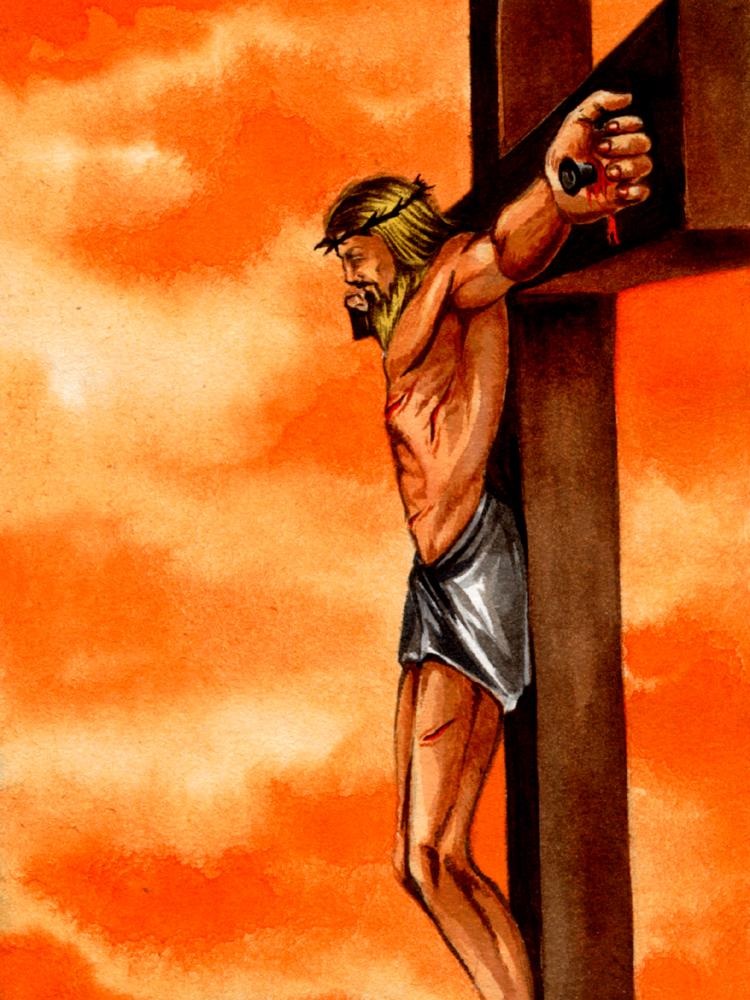
Luke 23:38, The King of the Jews. The placard that the Romans placed on the cross just above the head of Yeshua reflected the Jewish people’s prevailing politically correct view concerning their Messianic expectations. Their expectations of who they wanted the Messiah to be were not in accordance with heaven’s plan, which is why some denied him and others yelled, “Crucify him!”

The Tanakh (Old Testament) reveals that two Messiahs were to come: the Conquering King Messiah or Mashiach ben David and the Suffering Servant Messiah or Mashiach ben Yosef. Because the boot of Roman tyranny had been resting heavily on the neck of the Jewish people for some 150 years, the Jews were hoping for and, therefore, were placing their confidence in the Conquering King Messiah, who would, in their eyes, miraculously deliver them from Roman rule and oppression. This prevailing notion was even the mindset of Yeshua’s closest disciples. This is why when Yeshua predicted his death in Jerusalem at the hand of the Jews, Peter vehemently declared that this would not happen (Matt 16:21–23). Then when Yeshua failed to fulfill the people’s expectation of a Conquering King Messiah, this is when Judas betrayed his Master as a false messianic figure. This is probably why Peter denied Yeshua at the eleventh hour; because his deepest expectation of the Messiah’s mission as the Conquering King were not being met, and thus doubts about Yeshua’s Messianic claims rose to the surface in Peter’s mind at that critical hour and in confused discouragement he turned his back on the Messiah. This is why the Jewish people insisted that the Romans crucify Yeshua—he had failed to meet their expectations. 

The Roman placard that was nailed to the cross, therefore, was simply a Roman mockery of the Jewish people’s prevailing misguided messianic expectations. Their conquering king was being pitilessly crucified as Rome’s sovereignty over the Jewish people remained concretely intact.

Sadly, the Jews’ expectations were not lined up with heaven’s divine will. In reality, the Jews, and even to some degree, Yeshua’s disciples, had created a Messiah in their own image—a caricaturized or cartoon  Messiah that, to one degree or another, had become an idol in their minds replacing the true Messiah.

What are our hopes and expectations concerning Yeshua the Messiah? What cartoon view of the Messiah have we created in our minds? Were Yeshua to return today, would most Christians even recognize and accept him? The biblical reality of a first century, Torah-teaching and Torah-observant Jewish rabbi hardly fits with the stereotypical westernized, Greco-Roman caricature of the Christian Jesus. 

Moreover, when Yeshua, just before his return, sends his two witnesses to preach the gospel in Jerusalem (Rev 11:7–12), will people, including mainstream Christians, accept their message, likely a Hebraic one, if it does not line up exactly with traditional Greco-Roman Christian theology? How about when Yeshua shortly thereafter sends an angelic messenger to preach “the everlasting gospel” to those who dwell on the earth (Rev 14:6–7)? Will mainstream Christians accept this message—likely a Hebraic-centric one that will contain overtones of Torah in it? It is hard to say. Some will and some will probably not, since it may not line up with “the historic Christian faith,” as most Christians have been taught, which, to one degree or another, is ambivalent if not outright antagonistic toward YHVH’s Torah-law.

Whatever may be our views and expectations concerning the Messiah and his return, we would be wise to be certain that they are grounded in the full counsel of YHVH’s Word from Genesis to Revelation, which is intensely Hebraic in context. Moreover, it would also behoove us to hold in a loose grip our expectations on how we think end time events will roll out. If we are expecting one thing to happen and something else happens, we may find ourselves, at the very least confused and our faith shaken, or at the most, we may even deny Yeshua as Judas and Peter did. He who thinks that he stands, take heed lest he fall (1 Cor 10:12). 

To be sure, if one stays in a close, daily and intimate relationship with Yeshua the Hebraic Messiah, and follows the Lamb of Elohim wherever he leads day-by-day, one will have nothing to be concerned about.

Stay close to Yeshua!