The Aaronic Blessing

Numbers 6:22–27, The Aaronic Blessing is about the power of blessing and the power of our words. The Scriptures teach us that our words can heal, build up and encourage, or kill, tear down and curse, that the power of life and death is in the tongue. What kind of words come from your mouth—especially to your spouse and children? Charity begins at home. How often do you speak blessings over your children and spouse? Do you bless those who curse you?

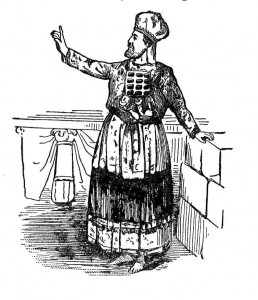
The Levitical priesthood was one of YHVH’s blessings or marriage gifts to his bride, Israel. It was given to her at the time of their marriage to him at Mount Sinai. The Aaronic or Priestly Blessings of Numbers 6:22–27 indicate that the priests were to be a conduit of YHVH’s blessings to his people. The ArtScroll Stone Edition Chumash correctly states it this way: “[The priests did not] have any independent power to confer or withhold blessings—only God can assure people of success, abundance, and happiness—but that part of their Temple service is to be the conduit through which God’s blessing would be pronounced on His people” (p. 762). Hirsch in his commentary on the priestly blessing states that it is Jewish tradition for the human instrument conveying the blessing to raise his hands (vertically and not horizontally) to heaven while reciting this blessing so as not to give the people the impression that the priest is conveying the blessing, but that it is coming from heaven (The Pentateuch Numbers, p. 99, Judaica Press). The Jewish sages further note that in Numbers 6:22–23, the Torah uses the word saying three times to emphasize the fact that the blessings flow from YHVH to the Israelites and are to be passed on to subsequent generations. We are YHVH’s priesthood now (“a chosen generation, a royal priesthood, a kadosh nation, a peculiar people,” 1 Peter 2:9). Are you an instrument of blessing everywhere you go? Do you ask YHVH to use you every day to spread the light of his truth and his love to others?

The Aaronic Blessing can be subdivided into three sections:
(a) The First Blessing: May YHVH bless you and safeguard you. The Jewish sages take this to refer to the material and physical blessings that Torah obedience brings as enumerated in Deuteronomy 28:1–14. This includes good health, wealth, divine protection and victory over enemies. YHVH’s blessing and his safeguarding of those blessings from those who would kill, steal and destroy them go hand-in-hand. The sages teach that “the best way for someone to preserve his wealth is to use it for charity and good deeds. That assures him of God’s continued blessing” (Ibid. p. 763).

(b) The Second Blessing: May YHVH illuminate his countenance for you and be gracious to you. The sages teach that this illumination refers to the light of the Torah and they cite Proverbs 6:23, “For the commandment is a lamp and the Torah is a light.” Compare this with what John said about Yeshua in John 1:1–14; 8:12; 9:5. YHVH’s grace involves him granting his people Torah knowledge, wisdom and understanding to utilize Torah properly and fully; to use the insights gained therefrom to comprehend his purposes (Ibid. p. 763).

(c) The Third Blessing: May YHVH lift his countenance and establish peace/shalom for you. In Hebraic thought, the idea of YHVH’s face or countenance shining toward his people is a metaphor of divine grace and favor. Contrariwise, when his face is turned against his people, this represents divine disapproval and shame upon his people (For examples of this in the Scriptures see Pss 4:6; 31:16; 67:1 cp. Lev 17:10; 20:5, 6, 17; Deut 31:17; 2 Chron 30:9; Ps 34:16 ; Jer 44:11; Ezek 7:22.). The sages note that peace is an essential component of the other blessings, for what good is physical blessings and spiritual insight if one’s life is devoid of peace? What is the Jewish concept of peace? It is balance, which is the absence of strife between the opposing forces in one’s life. Sin disrupts this balance and causes strife and warfare as well as creating a barrier between YHVH and his people (Read what Yeshua, the greatest Rabbi of all, taught about this in Matthew 5:23–24.). When such strife and barriers exist causing the negation of peace, what are some things one must do to restore the peace? After all, Yeshua said, “Blessed [Happy] are the peacemakers …” Does peace just happen or is it necessary to exert effort to create it? Can there be peace where there is sin (i.e., Torahlessness)? Does it logically follow that the more our ways line up with the Torah of YHVH, the more our ways are pleasing to him, the more peace we will experience in all our relationships? (Read Proverbs 16:7.)

Within this priestly blessing, is it possible to discern the voices of the Father, the Son and the Set-Apart Spirit? For example, in verses 22 and 23, the word “saying” occurs three times, and this blessing is divided into three parts.


 

The Old Vs. the New Covenants

According to Jeremiah 31, the new covenant will be made after YHVH has gathered (or redeemed, v. 11) all the families of Israel (v. 1; i.e., the houses Ephraim or Israel [i.e., Christians] and Judah [i.e., the Jews], vv. 9, 20, 27, 31) who will be returning from the north country, the coasts of the earth and the isles (vv. 8, 10) back to Zion with joy, singing and dancing (vv. 12–13, 24). This will occur after Ephraim repents (v. 20) of Torahlessness, and YHVH’s daughter turns away from her backsliding (vv. 21–22), and upon coming out her captivity in the end times (v. 23; in spiritual Egypt or Babylon the great).  At that time, YHVH will make a new covenant with the two houses of Israel (vv. 31–33), and all Israel will know Elohim from the least to the greatest. This prophecy has yet to be fulfilled.

The author of Hebrews quotes Jeremiah 31:31–33 (Heb 8:7–13) asserting that the new covenant is the same covenant about which Jeremiah prophesied. From that author’s perspective (Heb 8:13), the new covenant isn’t fully in place yet, and the first covenant is decaying (wearing out), growing old and vanishing away (disappearing). The implication is that the old covenant has not totally gone away yet (see also 2 Cor  3:11).

We know that Yeshua initiated the new covenant at his Passover seder called the last supper (Luke 22:20). This covenant has been given to believers in Yeshua, but it hasn’t been universally applied to all Israel yet. This will occur when the two houses of Israel will return to the Promised Land after they have been set free from spiritual Babylon at Yeshua’s second coming.

YHVH’s Word tells us that no man can add to or subtract from the terms of the old covenant (Gal 3:15). Although YHVH made this covenant with men, it is a divine covenant, and YHVH himself (not men) determines its terms and conditions! When Yeshua initiated the new covenant at his Passover, the old covenant and the Torah were still in force, and not one jot or tittle will be removed from the Torah until heaven and earth pass away (Matt 5:18). The Torah determines the terms of both the old and new covenants. Any traditions that have come into the Christian (Sunday, Christmas, etc.) or Jewish religious systems that are contrary to the Torah are men’s additions, and are therefore invalid and irrelevant.

Even as there was a gradual process of phasing into the first (or old) covenant, the same is true of the new covenant. With the former covenant, the Israelites put the blood of the lamb on their door posts at Passover, prepared themselves to meet YHVH at Mount Sinai (Exod 19), were then presented with the terms and conditions of the Sinai covenant at Shavuot (Exod 20–23), and then the covenant was ratified (Exod 24). After that, subsequent generations of Israelites automatically entered into that covenantal agreement as they were born (Deut 29:12–15) even as Americans, for example, are still bound to the U.S. Constitution many generations after its ratification.

Similarly, Yeshua initiated the new covenant with Israel in his day when his blood was put on the door posts (the cross) at Passover, then wrote his Torah (the terms and conditions of the new covenant) on their hearts by his Spirit on Pentecost. This began the process of regathering scattered and adulterous Israel back to YHVH through the blood of Yeshua the Lamb of Elohim.

When the process of regathering Israel is finally completed (during the Millennium). YHVH will finalize his new covenant agreements with them. It will be called the everlasting covenant (Jer 32:40; Ezek 37:26; Isa 55:3) or the covenant of peace (Isa 54:10; Ezek 34:25; see also 59:10; Hos 2:19–19).


Blog Scripture Readings for 4/29–5/5/12 Midrash

Aside

For the fourth week of seven weeks of the 50-day count of the omer.

Numbers 5–11; Jeremiah 29–42; and Psalms 31–37

Most of this week’s blog discussion points will be on these passages. The full year’s Bible Reading Schedule can be found on the right sidebar under “Helpful Links.”

If you have general comments or questions on the weekly Scripture readings not addressed in a blog post, here’s a place for you to post those. Just use the “leave a reply” link below.


What the Jewish Sages Say About the Second Exodus

The Jewish Sages Affirm That Ephraim Will Return to the Land of Israel (along with the Jews/Judah) in the End Times

The biblical prophets predicted that all the tribes of Israel (including the ten tribes of the northern kingdom or Ephraim) would be scattered to other lands outside of Israel, and that YHVH would regather them in the last days and return them to the land of Israel. This has also been the dominant belief of the Jewish sages as recorded in their writings and in their oral traditions including the Talmud. For example, the Scriptures tells us about the scattering of the twelve tribes,

And YHVH rooted them out of their land in anger, and in wrath, and in great indignation, and cast them into another land [eretz acheret], as it is this day.” (Deut 29:28)

The Babylonian Talmud, in Yevamot 17a (written ca. A.D. 500, The Soncino Talmud) confirms this when it states,

“[T]hey had declared them [i.e., the ten tribes of Israel, see rabbinic footnote below]19 to be perfect heathens [or gentiles]; as it is said in the Scriptures, ‘They have dealt treacherously against YHVH, for they have begotten strange children.’”
A rabbinic footnote on this passage states, (19) ‘The ten tribes; (20) Hos 5:7.’”

The ArtScroll Tanach Series Bereishis/Genesis (an Orthodox Jewish commentary on Genesis) states, regarding Genesis 48:19, quoting Orthodox Jewish sage of the Middle Ages, Ibn Ezra:

Many nations will descend from him [Ephraim]. That is, the word, fullness, melo, connotes ‘abundance,’ the phrase meaning: ‘and his seed will become the abundance of the nations’ (Neter; Karnei Or, p. 2121).

According to Radak’s (R. Dovid Kimchi, a Torah scholar in the Middle Ages) commentary on the same verse,

This refers to the Exile when the lands of others will be filled with his scattered descendants. See also Hosea 7:8:

Ephraim shall be mingled among the nations (Ibid.).

Pertaining to the end-time regathering of the twelve tribes, the late well-known orthodox Jewish rabbi, Menachem Schneerson stated that the future King Messiah (Messiah Ben [Son of] David) will not only redeem the Jews from exile, but will restore the observance of the Torah-commandments to its complete state, which will only be possible when the Israelites are living in the land of Israel. At this same time, Schneerson who is quoting the notable rabbinic sage of the Middle Ages, Moses Maimonides also known as the Rambam, says,  Continue reading →


The Second Exodus—And YOU!

Jeremiah 23:3, 7–8. The Second Exodus of the End Times. The Bible clearly teaches that the ten tribes of the ancient northern kingdom of Israel (known biblically by various names such as the house of Israel, Samaria or Ephraim) were exiled among the nations of the world because of sin. At the same time, the biblical prophets and Jewish sages over the past 2000 years have predicted that in the end times (at the coming of the Messiah), through a series of supernatural events, these tribes will be regathered and return to the land of Israel to be reunited with their Jewish brethren who are descended from the southern kingdom of Judah. Furthermore, there is clear biblical and historical evidence that the ten northern tribes of Israel collectively known as Ephraim are largely to be found among the Christian peoples scattered across the earth. I have attempted to prove this point from biblical, linguistic, archeological, historical and rabbinic Jewish sources in a previous work.

In these last days before Messiah’s second coming, more and more redeemed believers in Yeshua (the Hebrew name for Jesus) are discovering a new-found love for the Jewish people and the land of Israel. At the same time, they are awakening to the need to return to the Hebrew roots of the Christian faith by adhering to a more Torah-centered lifestyle and spiritual walk. It then follows that some are coming to the fundamental truth taught numerous places in the Testimony of Yeshua (the more biblically accurate name for the “New Testament”) that born-again believers are actually redeemed Israelites and are either the literal biological or are the “grafted in” descendants of Abraham. As such, many are beginning to see that the numerous promises YHVH (the LORD) made to Abraham and his descendants apply to them—especially the promises that the land of Israel is an important aspect of their promised future inheritance. With these revelations often comes a new-found zeal and enthusiasm about returning to the land of Israel. For many, it is a question of not if, but “when do we return?” Continue reading →


Inherited Lies From the Church

Jeremiah 16:19, The prophet Jeremiah speaking of end-times Israel (that’s you and me), who are being regathered out of the Gentile nations, declares,

Surely our fathers have inherited lies…

Lies? What lies (i.e., those things that are contrary to the clear Word of Elohim) were you taught in the church system before coming to an understanding of the biblical, Torah-based Hebraic roots of the Christian faith? Which of these lies that you believed in angered you the most once you found out the truth of the Scriptures?

Please share your thoughts even if your comments are brief.


Blog Scripture Readings for 4/22–4/28/12 Midrash

Aside

For the third week of seven weeks of the 50-day count of the omer.

Leviticus 25–27; Numbers 1–4; Jeremiah 15–28; and Psalms 24–30

Most of this week’s blog discussion points will be on these passages. The full year’s Bible Reading Schedule can be found on the right sidebar under “Helpful Links.”

If you have general comments or questions on the weekly Scripture readings not addressed in a blog post, here’s a place for you to post those. Just use the “leave a reply” link below.