Why and when did YHVH institute the Levitical priesthood and sacrificial systems and for how long? What was their purpose? Were they permanent or temporary? As time went on, did they accomplish what they were supposed to or did they fail? How did YHVH feel about this and what did he have to say about it? If they were for a temporary time and failed to achieve their intended purpose, then what replaced them? Like a road sign or a mileage marker, did they prophetically point to a spiritual destination that was further out and at a higher level? What of the Levitical priesthood and sacrificial systems today? Are they still in effect?
The answers to some of these questions may surprise you, and will definitely enlighten you as we cruise through more than 1,500 years of biblical history starting in Leviticus, then trek through the Psalms and Prophets and then end up in the Gospels.
In part two of this series, go through the Epistle to the Hebrews line-by-line and discuss why the Levitical priesthood and sacrificial systems failed to change the hearts of the people, atone for sin and ultimately reconcile man to Elohim, and why a new or renewed covenant was necessary, and how these two systems are, in reality, still in effect today but at a higher level through the Person of Yeshua the Messiah. This was YHVH’s Elohim’s plan all along.
We will also discuss that in Yeshua’s fulfillment of the Levitical priesthood and sacrificial systems and his instituting the (re)new(ed) covenant , that this in no way invalidated YHVH’s Torah-law/instructions in righteousness. The Book of Hebrews is clear on this, even though false teachers in the mainstream church, to their shame, teach otherwise as they twist Scripture to line up with the anti-Torah and anti-Semitic biases of the so called early church and proto-Roman Catholic church fathers. It is time that these lies be exposed and the light of truth shine forth out of the darkness of men’s false teachings and traditions that make of none effect the Word of Elohim as Yeshua warned us against in Matthew 15:6, 9 and Mark 7:9, 13.
Over the years, many people have asked me to give a teaching on this subject, and so here it finally is!
Although Jewish and Christian scholars disagree about whether the sacrifices were to cease after the coming of the Messiah, as Edersheim points out, all agree that the object of a sacrifice was substitution for the offender (The Temple—Its Ministry and Service, p. 90). He also notes that the Jewish fathers along with the Scriptures that all of these substitutionary sacrifices pointed to none other than the Messiah. This understanding is especially expressed in the proto-rabbinic biblical Aramaic commentaries or Targumim (e.g., Targum Jonathan and the Jerusalem Targum; ibid., p. 92). Later rabbinic sages, in light of the rise of Christianity, were loath to accept this interpretation and, to this day, pretend it was never the belief of their ancient predecessors.
As the Tanakh progresses, the concept of the substitutionary sacrifice as it relates to the sinner and to the Messiah expands and unfolds. The unity of the Tanakh in this regard and its progression of revelation on this subject must be taken into consideration when studying the sacrifices listed in Leviticus and the rest of the Torah if we are to understand completely the biblical concept of substitutionary sacrifice as well as the Messianic prophecies. The concept of sacrifice in the Tanakh point us prophetically in progressive stages to the sin-atoning death of the Messiah on behalf of sinners. Such passages in the Tanakh as Psalms chapters 2, 22, 35, 69, 72, 89, 110, 118 along with Isaiah 52:13–53:12 (many other scriptural passages could be cited here as well) point undeniably to the Person and work of Yeshua the Messiah including his suffering and glorification. The apostolic writers understood these prophecies and how Yeshua fulfilled them perfectly (e.g., Isa 52:13–53:12 cp. Heb 9:11–15; 10:4–7, 1; etc.), and this understanding forms the basis for the New Testament, which the authors thereof refer to as The Testimony of Yeshua (Rev 1:9; 6:2; etc.).
All the animals slaughtered in the sacrificial system were similar, in modern terms, to the minimum amount due on a credit card statement of a bill so huge one cannot possible pay the balance; therefore, one is able only to afford to pay the minimum amount due until somehow, miraculously, someone will step in to pay the full amount. Yeshua paid that monstrously huge sin debt for each of us at the cross. All of the sacrifices in the Tabernacle of Moses were merely tiny down payments on the vast sin bill that each sinner owed for his sins and which would ultimately be paid by Yeshua’s death on the cross. The penalty for sin is death, and this debt can only be paid by the death of the sinner. Once he is dead, then what? No more life. This is why Yeshua had to pay the price for man, so that we might live forever and not die forever. How could Yeshya’s death pay for all of humanity? After all he was only one man. This is possible only because the Bible reveals in numerous places that Yeshua was the Creator of man (John 1:3, 10; Heb 1:2, 10; Col 1:16) thus making his death life more valuable than all that he ever created, even as the builder of the house is more valuable than the house he builds (Heb 3:6).
Six Types of Offerings (Heb. korban) Offered on the Altar (Lev 1-7)
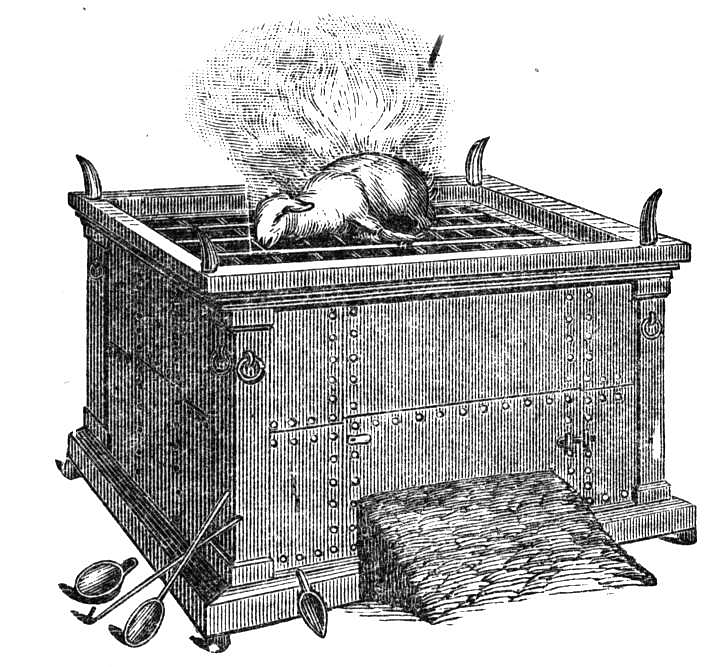
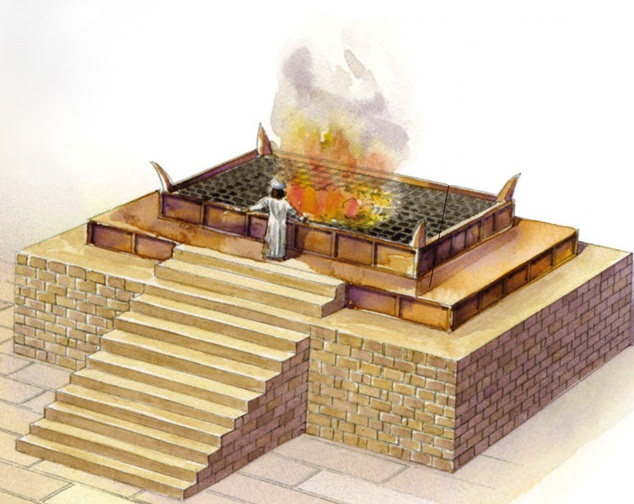
Burnt or Elevation (Heb. Olah) Offering(Lev 1:3–17)
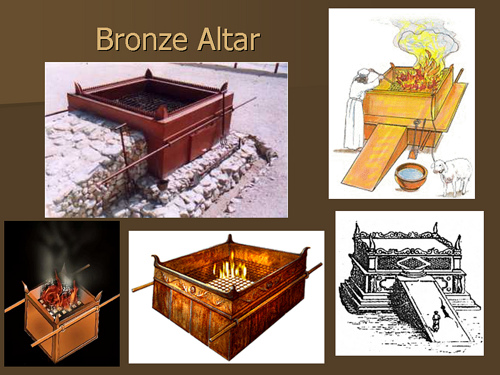
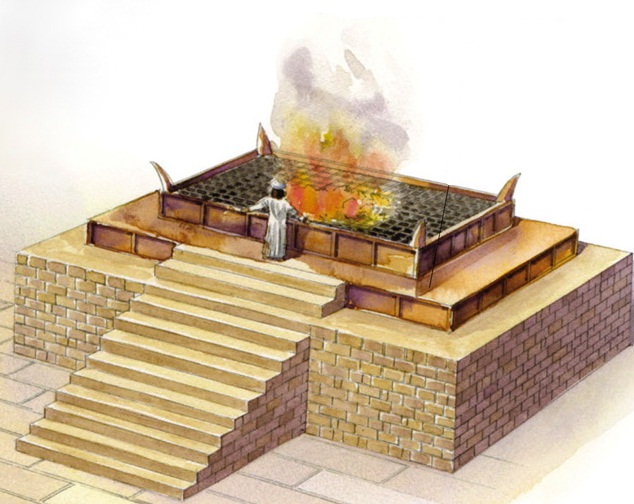
The olah or ascending offering signified the offerer giving himself up totally, wholly ascending or complete surrender to Elohim. The priests offered up this sacrifice twice daily—the morning and evening (Exod 29:38–42; Num 28:1–8). This offering was always a male animal whose blood was to be sprinkled around the altar. The offerer was to lay his hands on the head of the animal before it was slaughtered symbolizing substitutionary atonement for sins. The offering would be accepted as a sweet aroma by Elohim.
The daily burnt offering was made in conjunction with a meal or grain offering and a wine libation (Exod 29:38–42; Num 28:1–8). Burnt offerings (along with the grain offering and wine offering or libation) were also made on the weekly Sabbath, at the new moon, on the all of the biblical feasts. These burnt offerings (including the one offered on Passover day) were in addition to the twice daily burnt offerings. This was a perfect prophetic picture of Yeshua’s death on the cross and of the communion cup, which memorializes our Savior’s death.
Meal, Grain or Meat, (Heb. Minchah) Offering(Lev 2:1–16; 6:14-23)
This offering was brought in conjunction with the burnt and peace offerings or by itself. The name minchah implies a gift, present or a tribute to a superior and proclaimed the offerer’s acknowledgement that his life is in Elohim’s hands. This offering was made of finely ground flour mixed with oil, salt and frankincense (and water) and could contain no leavening or honey. When part of the burnt offering, it was combined with the drink offering or wine libation, which was poured out on the altar (Exod 29:38; Num 28:5–7).
It was brought by people too poor to afford anything else as a trespass offering (Lev 5:11).
Fine flour represents Yeshua and oil symbolizes both the Set-Apart Spirit of Elohim and the Torah (i.e., Spirit and Truth). This offering could be baked or fried. If fried it was done so in oil and broken into three pieces with oil poured over it. This offering speaks of Yeshua’s death, burial and resurrection with which the believer must identify when he eats the elements of communion.
Sin (Chatat) Offering (Lev 4:1–35; 6:24–30)
This offering was made for general sin (violation of any of YHVH’s commandments), and not specific or special offences (as was the case with the trespass offering). The sin offering symbolized general redemption or atonement for the individual offender (including rulers, priests or common people) or for the whole congregation of Israel, and like the trespass offering, was for only for sins committed in ignorance, unintentionally or because of weakness as opposed to wilful sin or presumptuous sin In all cases, the offender would lay his hands on the head of the animal victim before it was slaughtered as a symbolic act of transferring the person’s sin guilt to the animal.
This offering involved a bull or a lamb offered on the altar and was eaten by the priests. Sin speaks of man’s sinful nature leading to sinful (unintentional) deeds for which man (including believers) needs atoning on an ongoing basis (1 John 1:9).
Trespass or Guilt (Asham) Offering(Lev 5:14–19; 6:5–7; 7:1–7)
This offering was made for specific transgressions committed in ignorance, weakness or unintentionally as a result of one voluntarily confessing his guilt. If one were too poor to bring a lamb, he could bring two turtle doves or pigeons, or on minchah or meal offering.
Peace or Fellowship (Shelam) Offering(Lev 3:1–7; 7:1–36)
This was a joyous sacrifice intended to celebrate one’s happy fellowship with Elohim through covenantal relationship. It’s as if YHVH is the guest of honor at the meal. It was offered voluntarily out of thanksgiving or in honor of a vow made to Elohim (Lev 7:12, 16). The peace offering may be what the psalmist had in view when he speaks of a sacrifice given in grateful fellowship with Elohim (Pss 54:6; 116:12).
This was a voluntary offering expressing the offerer’s desire to express thanks to Elohim and to seek friendship or communion with him. The priests and the offerer consumed the flesh of this offering in a meal that also included unleavened bread with oil and fine flour. This offering was a sign of a healthy and loving relationship between the offerer, the priests and Elohim.
Drink Offering(Gen 35:14; Exod 29:40–41; Num 28:7–10, 14–15, 24, 31)
This offering was poured out upon an existing offering such as the twice daily burnt offering. This offering can signify consecrating to Elohim or pouring one’s life out for his service (Phil 2:17).
Leviticus 1
Leviticus 1:1, Moses ends the word vayikra with a small aleph out of humility before YHVH (Tikkun, p. 225).
Herd…flock.The Hebrew means a herd of cattle (defined in v. 3, 5) or a flock of sheep or goats (defined in v. 10).
Leviticus 1:3,Of his own free will. Acknowledgement of sin, repentance and acceptance of Yeshua the Messiah’s atoning death on the cross, which the burnt offering symbolically represented, is an act of a person’s free will. No one, including YHVH, compels a person to choose the path of redemption, salvation and life that YHVH has offered to humans. Each person has to make that spiritual transaction himself of his own volition, even though YHVH loves the whole world (John 3:16) and desires all to be saved (2 Pet 3:9).
The door of the tabernacle. This is a symbolic and prophetic metaphor for Yeshua the Messiah, who is the door to salvation (John 10:7–10).
Leviticus 1:4,Put his hand on. Acknowledgment and confession of sins is an individual matter.
To make atonement for him. Atonement and salvation is an individual matter.
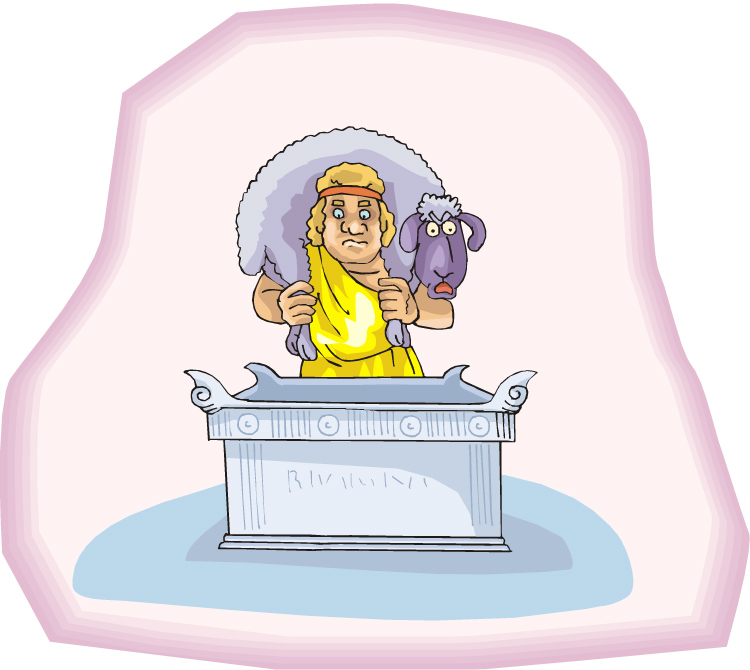
Leviticus 1:5,He shall kill. In ancient Israel, a sinner was kill the animal to be sacrificed as an atonement for his sin. This act reinforced upon the individual’s heart and mind the gravity of his sin and the consequences there of upon an innocent animal, which symbolically pointed to the death of Yeshua, the Lamb of Elohim, upon the cross, who had to die for each person’s sins. If killing an innocent animal brings grief to a person’s heart, then how much more the death of Yeshua, the Son of Elohim?
Sprinkle. Heb. word zaraq means “to scatter, sprinkle, toss, throw, scatter abundantly, strew.” The sprinkling of the blood of the sacrificed animal on and around the altar of sacrifice (and elsewhere in the tabernacle as well) is mentioned numerous times in the Torah (e.g. Exod 24:6; 29:16; Lev 1:11; 3:2, 8, 13; 4:6,17; 5:9; 7:2). The blood was even sprinkled on the people (Exod 24:8), and on Aaron and his sons (Exod 29:20–21). This is a prophetic picture of Yeshua bleeding, while dying on the cross and shedding his blood as an atonement for our sins. Yeshua’s sprinkling his blood on the cross fulfilled the sprinkling of blood under the sacrificial system in the following ways:
The concept of animal sacrifices may be a hard for modern people to comprehend—especially for those who are squeamish when it comes to death and blood. This ancient ritual, rooted in the nomadic lifestyles of the inhabitants of the Middle East, carried more symbolic significance for a people whose daily existence was tied to the earth and who were dependent on domestic animals for their survival. It is out of this cultural background that the biblical narrative springs and with it the ritual symbols with which the ancient people described therein could relate. With these things in mind, the following is a list showing the main reasons for YHVH’s establishment of an animal sacrificial system as a means to help man to understand spiritual lessons far beyond the actual sacrifice itself.
The laws pertaining to the sacrificial system were added to the rest of the Torah because of sin, and were in force until the time of Yeshua the promised Seed (Gal 3:19). When and why did YHVH add them making this system incumbent upon the Israelites? This occurred after and because of the sin of the golden calf. It was then that YHVH established the Levitical priesthood and subsequently gave Israel the sacrificial system to not only show them the seriousness and grave consequences of sins, but to guide them forward on the path toward redemption and salvation.
The Levitical system foreshadowed and pointed to the Messiah’s ultimate sacrifice (Heb 9:11–12).
The tabernacle offerings were specifically designed to spiritually draw the offerer near to Elohim through the sacrifice of a prescribed animal (Ps 51:16–17; 50:12–15 cp. 1 Pet 2:21).
Elohim commanded offerings to assist the offerer to better understand himself; his attitude, and his personal relationship with Elohim (e.g. Gen 3:21; 4:3–5; 8:20; 22:1–2 cp. 1 Cor 11:28).
Altars were erected by the patriarchs in order to honor Elohim through sacrifice after having had direct contact with him (Gen 12:6–8; 13:18; 26:24–25; 35:1; 35:2–4; Exod 17:13–16; cp. Exod 20:12).
Proper and regular sacrificial offerings kept the children of Israel in direct contact with the Elohim of the patriarchs (Exod 5:3; 10:25; cp. 1 Tim 2:5).
To make the offerer holy (set-apart) so that he would be allowed to approach and commune with the Set-Apart Elohim of Israel (Isa 43:15; 57:15; Lev 19:2 cp. 2 Cor 6:16–18).
Under certain circumstances, blood, as used in the Levitical system, could serve as a purification agent for both people and objects (Heb 9:18–23 cp. Luke 2:22–24).
The blood of the animal sacrifices served to cover the offerer’s sins, thereby allowing him to draw near to the Set-Apart Elohim of Israel. However, the offerer could only be forgiven for specific sins through full repentance and by returning to Elohim’s way of life as outlined in the Torah (Lev 1:4; 4:35; 23:27–28; Heb 10:3–4; cp. Rom 4:7–8).
The purpose of the animals offered by the Levitical priesthood served as a shadow of the blood of Messiah, which does not merely cover our sins, but removes all of the sins of the person who accepts Yeshua’s offering of himself for that sinner (Heb 9:11–12, 24–28; 1 Pet 1:18–19; Eph 5:25–27; Lev 25:47–49; Rom 5:11; John 1:29 cp. Heb 13:10–13).
Words and Definitions
(These words are the Hebrew words behind the English words offering and sacrifice as translated in the KJV):
Asham: (Strong’s H817/TWOT 180b) meaning “guilt, offense, sin, guiltiness, trespass, fault, compensation (for offense), trespass or sin offering.”
Chag: (Strong’s H2282/TWOT 602a) meaning “festival, feast, pilgrim-feast, festival-gathering, festival sacrifice.”
Chatah: (Strong’s H2403/TWOT 638e) meaning “sin, sinful, sin offering, condition of sin, guilt of sin, punishment for sin, purification from sins of ceremonial uncleanness, sinner.”
Ishshah: (Strong’s H801/TWOT 172a) meaning “burnt offering, offering made by fire, fire offering.”
Korbawn: (Strong’s H7133/TWOT 2065e) meaning “offering, oblation, sacrifice.”
Minchah: (Strong’s H4503/TWOT 1214a) meaning “to apportion, to bestow, gift, tribute, offering, present, oblation, sacrifice, meat or grain offering (Gen 4:3–5).”
Necek: (Strong’s H5262/TWOT 1375a) meaning “drink offering, libation, molten image, something poured out (Gen 35:14).”
Nedabah: (Strong’s H5071/TWOT 1299a) meaning “voluntary, free-will offering.”
Olah: (Strong’s H5930/TWOT 1624c,d) meaning “whole burnt offering/sacrifice, ascent, stairway, steps, to go up (Gen 8:20; 22:2,3,6,7,8,13).”
Qatar: (Strong’s H6999/TWOT 2011,2011e,g) meaning “to sacrifice, burn incense, burn sacrifices, make sacrifices smoke, incense, incense altar.”
Shelem: (Strong’s H8002/TWOT 2401b) meaning “peace offering, requital, sacrifice of alliance or friendship, voluntary sacrifice of thanks.”
Tenuwphah🙁Strong’s H8573/TWOT 1330b) meaning “swinging, waving, wave offering, shaking.”
Terumah,: (Strong’s H8641/TWOT 2131i) meaning “a heave offering, any offering; an offering of grain or money, etc.; contribution, oblation.”
Zebach: (Strong’s H2077/TWOT 525a) meaning “sacrifices of righteousness, sacrifices of strife, sacrifices of dead things, the covenant sacrifice, the Passover, annual sacrifice, thank offering.”
Zabach: (Strong’s H2076/TWOT 525) meaning “to slaughter, kill sacrifice, slaughter for sacrifice”(Gen. 31:54; 46:1).
YHVH instituted the basic sacrificial system after the fall of man, and it served to point the way to the coming of Yeshua the Messiah, the eventual Redeemer and Savior of mankind. Later on, YHVH established a more elaborate sacrificial system and appointed the Levites to administer it. This occurred after the golden calf incident in Exodus 32 and in conjunction with the establishment of the Tabernacle of Moses. Paul makes reference to this “added law” in Galatians 3:19.
Depending on how one understands the scripture passages recording the vision of Ezekiel’s Temple (Ezek 40–48), there may or may not be a reinstitution of part of or the whole sacrificial system during the millennium. Some believe that Ezekiel’s Temple is only an allegorical picture of Yeshua’s atoning death on the cross and speaks to YHVH’s plan of salvation and therefore will never be built. Others feel that it is yet to be built.
After the fall of man, YHVH made Adam and Eve coats or garments of skins or leather (Gen 3:21). Though the Scriptures don’t tell us, we can guess these were made of leather from a kosher animal such as a cow, sheep or goat. In other words, YHVH probably sacrificed a kosher animal like a lamb to cover their physical and spiritual nakedness. This would have marked the beginning of the sacrificial system and thus pointed to Yeshua’s atoning death on the cross through his shed blood — the Lamb slain from the foundation of the world.
The next occurrence of a sacrifice was that of righteous Abel in Genesis chapter four. After that, animal sacrifices become a common occurrence with the male head of each family acting as the officiant or priest for his family. It was not until the golden calf incident (Exod 32) that the responsibility of the male head of the family to perform sacrifices passed to the Levites, thus, initiating the Levitical priesthood with its sacrificial system.
Sacrifices are no longer necessary, since Yeshua our Messiah offered his body as the ultimate sacrifice for our sins, once and for all, forever (Heb 10:10–21).
Acts 21:23–27, Vow. When Paul offered a sacrifice, is this proof that the sacrificial system is still in force today, even after the death of Yeshua the Messiah on the cross? Some people say yes despite what the writer of Hebrew’s lengthy discussion about how Yeshua’s death replaced the sacrificial and Levitical systems (Heb chapters 8–11; 10:10).
The rituals that Paul and his fellow Israelites did in Acts 21 actually fits the description of one who is coming out of a Nazirite vow (see Num 6:1–21). This was a sin offering and was the only way that the Torah allows one who has taken a Nazirite vow legally to terminate his vow to Elohim. A sacrifice was to be made at the door of the tabernacle (later the temple) by a priest.
Today, one can’t technically do a Nazarite vow, since there is no way legally to come out of it unless, of course, one stays a Nazirite until he dies. This is because there is no tabernacle or temple, and there is no Aaronic priest who is available to make the sacrifice. However, in Paul’s day, the priesthood still existed, and the temple still stood.
The sacrifice for coming out of a Nazarite vow is the only example of a disciple of Yeshua performing any sacrifice after Yeshua’s resurrection. Therefore, this sacrifice was a special exception for believers doing a sacrifice, else how could one legally come out of a Nazarite vow?
Why would Paul involve himself in a sin-sacrifice in Acts 21:24 after the death of Yeshua? We mustn’t read too much into the text. It is true that coming out of a Nazarite vow involved a sin offering. However, Acts doesn’t say that Paul was coming out of his own Nazarite vow. What the text says is that he was acting as a wealthy patron—an act of charity—for four individuals who, presumably were unable to afford the costs of paying for the necessary sacrifices to exit a Nazarite vow.
Admittedly, this is a perplexing passage. None of the Bible commentaries I examined on this text could give an adequate explanation as to why Paul would involve himself in this particular ceremony to prove to the Jerusalem mob that he was Torah-observant. The Acts text just doesn’t give us enough background information on the subject. One thing seems certain though. Paul was not making a sin offering for himself. His paying for the sacrifices of the Nazarites seems to have been a public relations gesture to appease those in the Jewish mob who were slandering him. It is a logical overreach and reading into the text to take Paul’s act of charity as him making a doctrinal statement favoring the continued validity of the sacrificial system after the death Yeshua, especially in light of what the other apostolic writers had to say about Yeshua’s fulfilling that system by his death. Certainly, the writer of Hebrews makes this point abundantly clear.
Acts 21:25, Observe no such thing. The phrase “that they should observe no such thing, except” is a dubious one and is not found in all the oldest and reliable Greek NT manuscripts. I suspect this is an example where the KJV got it wrong. My NKJV has a footnote attached to this phrase saying that it’s not found in the Alexandrian family of NT texts. Furthermore, it’s not in the Aramaic Peshitta. Therefore, I suspect that this phrase was a scribal addition and was not in the original autographs, especially since it is inconsistent with the rest of the Scriptures including the writings of Paul.
Although Jewish and Christian scholars disagree about whether the sacrifices were to cease after the coming of the Messiah, as Edersheim points out, all agree that the object of a sacrifice was substitution for the offender (The Temple – Its Ministry and Service, p. 90). He also notes that the Jewish fathers along with the Scriptures that all these substitutionary sacrifices pointed to none other than the Messiah. This understanding is especially expressed in the proto-rabbinic biblical Aramaic commentaries or Targumim (e.g. Tarum Jonathan and the Jerusalem Targum; ibid., p. 92). Later rabbinic sages, in light of the rise of Christianity, were loath to accept this interpretation and, to this day, pretend it was never the belief of their ancient predecessors.
As the Tanakh progresses, the concept of the substitutionary sacrifice as it relates to the sinner and to the Messiah expands and unfolds. The unity of the Tanakh in this regard and its progression of revelation on this subject must be taken into consideration when studying the sacrifices listed in Leviticus and the rest of the Torah if we are to understand completely the biblical concept of substitutionary sacrifice as well as the Messianic prophecies. The concept of sacrifice in the Tanakh point us prophetically in progressive stages to the sin atoning death of the Messiah on behalf of sinners. Such passages in the Tanakh as Pss 2, 22, 35, 69, 72, 89, 110, 118 along with Isa 52:13–53:12 (many other scriptural passages could be cited here as well) point undeniably to the Person and work of Yeshua the Messiah including his suffering and glorification. The apostolic writers understood these prophecies and how Yeshua fulfilled them perfectly (e.g. Isa 52:13–53:12 cp. Heb 9:11–15; 10:4–7, 1; etc.), and this understanding forms the basis for the New Testament, which the authors thereof refer to as The Testimony of Yeshua (Rev 1:9; 6:2; etc.).
Brief Overview: Six Types of Offerings (Heb. korban) Offered on the Altar (Lev 1-7)
Burnt or Elevation (Heb. Olah) Offering(Lev 1:3–17)
The olah or ascending offering signified the offerer giving himself up totally, wholly ascending or complete surrender to Elohim. The priests offered up this sacrifice up twice daily—the morning and evening (Exod 29:38–42; Num 28:1–8). This offering was always a male animal whose blood was to be sprinkled around the altar. The offerer was to lay his hands on the head of the animal before it was slaughtered symbolizing substitutionary atonement for sins. The offering would be accepted as a sweet aroma by Elohim.
There’s so much in the first few chapters of Leviticus, that I hardly know where to start. Here are a few of my notes on this wonderful section of Scripture. —Natan
Leviticus 1:5,He shall kill. The sinner must kill the animal to be sacrificed as an atonement for his sin. The reinforces upon the individual’s heart and mind the gravity of his sin and the consequences there of upon an innocent animal, which symbolically pointed to the death of Yeshua, the Lamb of Elohim, upon the cross, who had to die for each person’s sins. If killing an innocent animal brings grief to a person’s heart, then how much more the death of Yeshua, the Son of Elohim?
Sprinkle.Heb. word zaraq means “to scatter, sprinkle, toss, throw, scatter abundantly, strew.” The sprinkling of the blood of the sacrificed animal on and around the altar of sacrifice (and elsewhere in the tabernacle as well) is mentioned numerous times in the Torah (e.g. Exod 24:6; 29:16; Lev 1:11; 3:2, 8, 13; 4:6,17; 5:9; 7:2). The blood was even sprinkled on the people (Exod 24:8), and on Aaron and his sons (Exod 29:20–21). This is a prophetic picture of Yeshua bleeding, Continue reading →