Why Study and Celebrate YHVH’s Feasts?

Here are seven biblical reasons to celebrate the feasts of YHVH Elohim:

  1. The biblical feasts are a prophetic shadow-picture of things to come (Col 2:16-17; Heb 10:1). When they were given to ancient Israel they pointed forward to future events that would occur to the nation of Israel. The spring feast days, for example, pointed to Messiah’s first coming while the fall feast days point to his second coming leading into the Messianic Age (Millennium) and into eternity beyond.
  2. All the biblical feasts point to Yeshua. The name Yeshua means “salvation” and these days all point to the various steps of the path of salvation that believers find themselves on.
  3. Many of the feasts point back to historical events that occurred in Israel’s history from which we can learn lessons and that are representative of our own spiritual journey (1 Cor 10:1–6, 11).
  4. The people of YHVH are commanded to keep what the Scriptures call the appointed times. They are times when he makes an appointment that he will meet with his people (Lev 23:1–2, 4). It is at these festivals or commanded assemblies that YHVH teaches his people about his wonderful plan of salvation or redemption of the world through Yeshua the ­Messiah.
  5. The feasts are in the Bible and the whole Bible is the inspired word of Elohim (2 Tim 3:16). Yeshua commands us to live by every word that comes out of the mouth of Elohim (Matt 4:4).
  6. The feasts set forth the pattern of heavenly things on earth (Heb 8:1–2, 5; 9:8–9, 23; Exod 25:8–9, 40; 26:30; Num 8:4; Ezek 43:1–6, 10–12).
  7. We as physical beings need physical means and methods to help us understand spiritual mysteries. YHVH gives us the natural to help us to understand the supernatural (spiritual) (1 Cor 2:9–13).
 

The Torah on Abortion/Infanticide

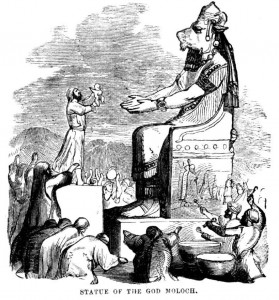
Leviticus 18:21, Pass through the fire. In the juxtapositioning of this passage directly after the Torah’s prohibition of illicit sex, it would appear that YHVH is broadcasting a clear message to his people. Extra-marital sex often results in unwanted babies. In our day, many choose to murder their undesired offspring through abortion. In ancient times, some of these unwanted children were likely sacrificed to the pagan Canaanite god Moloch by being burned alive. That is certainly the implication in this passage. Whatever the case, YHVH hates the murder of children for any reason!

This passage (along with Exod 21:22) is one of the strongest pro-life, anti-infanticide verses in the Scriptures. The penalty for those who sacrificed their children to Moloch was that the land would vomit the people out of it (vv. 25 and 28.) Could any clearer statement be made about how the Creator feels about the sanctity of life?

Statue of Moloch

The murder of the innocent children is perhaps the greatest sin that a nation can commit. Abortion is a form of child sacrifice, which is something many ancient cultures practiced (the Aztecs, Incas, Phoenicians, pre-Islamic Arabs, and the biblical Canaanites). In the Bible, YHVH condemns the practice of heathens and apostate Israelites who made their children pass through the fire in worship of the demon-god Moloch (See Lev 18:21; 20:2–5; Deut 12:30–31; 18:10.) What judgment did YHVH place on the Jewish nation for sacrificing its children to Moloch? (See Jer 7:30–34; 32:35–36.)

By the way, here are some statistics about abortion:

  • 42 million abortions occur worldwide each year (that’s 115,000 per day).
  • In 2008, 1.21 million abortions occurred in the U.S.
  • From 1973 to 2008, 50 million legal abortions occurred in the U.S.
  • 22 percent  of all U.S. pregnancies end in abortion.
  • In 2007, 84% of all abortions were performed on unmarried women.
  • At current rates, nearly one-third of American women will have an abortion.

(Sources of information: abortionno.org/Resources/fastfacts.html; guttmacher.org/pubs/fb_induced_abortion.html; abort73.com/abortion_facts/us_abortion_statistics/)


If It Looks Like a Duck… It Must Be Xmas!

Jeremiah 10:1, Do not learn the way of the nations. This passage is familiar to a few people, but unfamiliar to the majority. After YHVH’s admonition to his people to not follow the idolatrous customs of the heathen nations, Jeremiah describes one of their “futile” or “vain” (literally, empty or meaningless) customs—one with which we are all familiar! What follows is a perfect description of a Christmas tree minus the star on top, twinkle lights and a few other garish ornamentations. Some ardent devotes of Christmas aver that Jeremiah’s tree is not a Christmas tree, since this passage was penned long before the birth of Christ. This is true. However, much later (in about the fifth century AD) the church simply added “Christ” to a pagan custom that long pre-existed the birth of the Messiah. Therefore, as the expression goes: If it looks, acts and sounds like a duck, it must be one!

But what is the greater message of this passage in the larger context of the surrounding scripture verses? This is often overlooked. Understanding context is perhaps the greatest key to understanding the truths of the Bible!

Before and after Jeremiah’s description of the modern Christmas tree, are numerous lamentations about YHVH’s people abandoning his Torah-laws for heathen and carnal practices (e.g., 8:9; 9:13–14). They have backslid spiritually (e.g., 8:5–6) by turning to the idolatrous practices of the surrounding pagan nations (e.g., 8:19; 10:8–9, 14–15). Even their shepherds (spiritual leaders such as pastors have become brutish or dull-hearted in this regard and have turned away from YHVH (e.g. 10:21).

In the midst of Jeremiah’s woeful lament over Israel’s spiritual declension are warnings from the Almighty about the judgments that will come upon Israel if it fails to repent and turn from its heathen ways (e.g. 8:13, 15–19; 9:7–12, 15–22, 25–26; 10:10–11; 17–25).

Perhaps YHVH’s greatest accusation against his people comes in the last verse of chapter 9, just before the description of the Christmas tree. YHVH accuses the people of Israel of being “uncircumcised in heart.” This is a biblical expression that means that a person’s heart is hardened or calloused to the truth of YHVH as revealed in his Word. Such a person is more inclined to follow the ways of the world, the flesh and the devil than to love YHVH Elohim by obeying his commandments (see John 14:15) whether it’s convenient, expedient or popular or not (note what Yeshua says in John 12:43).

We’ve all heard the excuses… “I can’t give up Christmas because…. Our family… My mother-in-law… My kids… What will people think if…” You fill in the blanks. More Importantly, what does YHVH Elohim say about this? Well, he tells us quite clearly and unmistakably in Jeremiah 10 and the surrounding chapters!


Parallels Between Jeremiah’s Day and Ours

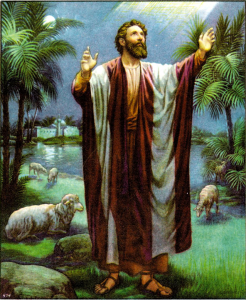
Jeremiah chapters 1—8. As you all know, Jeremiah prophesied to ancient Israel some 2800 years ago. What relevance could a bearded and robed prophet from the Middle East have to us living in the 21st century? The answer is simple: People are people! Only the actors, costumes, sets and venues change.

So what social and spiritual issues burdened the old prophet’s heart?

  • Israel worshipped other gods besides YHVH Elohim (Jer 2:5).
  • Their religious leaders didn’t know Elohim (Jer 2:8).
  • False prophets filled the land (Jer 2:8) who predict only ear-ticklying nicety things (Jer 6:11).
  • Religious people relied on their own efforts—programs, man-made religious systems—instead of relying on the Spirit of Elohim to lead them (Jer 2:13).
  • The fear of YHVH Elohim was gone from the land (Jer 2:19; 5:24).
  • Israel had turned to false eastern religious systems (e.g. pantheism and earth worship, Jer 2:27).
  • The abominable practice of abortion/infanticide was socially acceptable (Jer 2:34).
  • The fatherless and needy were not being defended (Jer 5:28).
  • The religious system was full of self-appointed leaders who were con artists who lacked spiritual power (Jer 5:31).
  • False spiritual leaders were popular among the people (Jer 5:31)
  • The people and spiritual leaders were given over to greed and covetousness—i.e., the love of money (Jer 6:13; 8:10).
  • Everyone had rejected the Torah (Jer 6:19).
  • People refused to repent of their wicked sins (Jer 8:6).
  • The land was full of false spiritual teachers who didn’t know the Torah, and who spoke falsely (Jer 8:8–9).

From Jeremiah’s day until now, are things really different in our society or even in the church world?

What are the national sins of our day that you believe are the most wicked and are deserving of YHVH’s judgments?


The Death Penalty

Leviticus 20 (entire chapter), The death penalty. In this chapter, YHVH lists the penalty for the sins that he considers to be the most abominable, grievous and ruinous to a society. He then prescribes the punishment for these sins—usually the death penalty.

As you read through this chapter, consider the penalties for these sins in the U.S. That’s right… there are none (with the exception of incest with one’s minor children)! Not only that, most of these sins are tolerated (bestiality, incest, adultery, sex during menstruation), but many of these abominable practices are promoted and even celebrated (e.g., homosexuality, abortion, witchcraft, necromancy).

In our society, there is punishment for animal neglect, failing to pay taxes, or violating a building code, while there is no penalty for the sins of abortion, witchcraft, homosexuality, etc. What’s wrong here?

Notice that the punishments that YHVH prescribes for these crimes would, in most cases, in our society be considered uncivil, barbaric, or cruel and unusual (e.g., banishment, stoning, burning by fire).

The question must be asked, if we accept the Bible as the revealed truth of Elohim, then who knows best what punishment fits a crime—man or the Creator?

Interestingly, the U.S. has the highest criminal incarceration rate of any nation in the world (743 adults per 100,000 people). By year end 2010, the U.S. had 2,266,800 people incarcerated in its prisons and jails (http://en.wikipedia.org/wiki/Incarceration_in_the_United_States). Yet ancient Israel had no prison system whatsoever. Criminals were either banished from society, killed, or had to pay the victim restitution for their crimes.

From this brief discussion, several realizations should come to light:

  • What YHVH considers to be sin, man often either tolerates or celebrates.
  • Men’s order of priorities when it comes to the level of sin and the penalties that meet those crimes is different from that of YHVH.
  • Men’s justice systems deal with criminals very differently than did YHVH.
  • What divine judgments must be meted out on a society that tolerates or revels in the sins that YHVH calls abominable, unclean, abhorrent, and perverse?

In this context, the following scripture passage comes to my mind:

For my thoughts are not your thoughts, neither are your ways my ways, saith YHVH. For as the heavens are higher than the earth, so are my ways higher than your ways, and my thoughts than your thoughts. (Isa 55:8–9)


Blog Scripture Readings for 4/15–4/21/12 Midrash

Aside

For the second week of seven weeks of the 50-day count of the omer.

Leviticus 18–24; Jeremiah 1–14; and Psalms 17–23

Most of this week’s blog discussion points will be on these passages. The full year’s Bible Reading Schedule can be found on the right sidebar under “Helpful Links.”

If you have general comments or questions on the weekly Scripture readings not addressed in a blog post, here’s a place for you to post those. Just use the “leave a reply” link below.


The Ancient Ritual of Two Doves … and Yeshua??

Leviticus 14:4–32, Read this scripture passage and see how many clues you can find that point to Yeshua. We’ll give you hints along the way by providing you with the scripture verses to look up that will give you the answers. The purpose of this exercise is to show you that all the ceremonies and rituals that were part of the sacrificial system all prophetically pointed to Yeshua the Messiah, who fulfilled them all. This means that if we place our trusting faith in him, we no longer have to do the laborious and involved rituals that our ancient forefathers had to do in order to atone for their sins—we simply have to repent and believe in, love, follow and obey Yeshua and his word.

Now let’s look at the ritual for cleansing a metzora (one with a skin disease—a picture of our sinfulness) who had tzaraas (an infectious skin disease caused by sin).

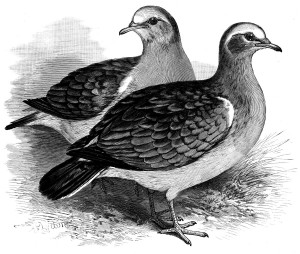
Verses 4–7, two birds: One bird (likely a dove or pigeon) was killed in a clay pot over running water. The other bird along with the cedar wood, scarlet cloth and hyssop were dipped into the clay pot containing the blood from the killed bird and the running water. The water-blood mixture was then sprinkled on the diseased person (metzora) who was being purified, and the living bird was let loose and allowed to fly away. There is a lot going on here, but it all prophetically pointed to Yeshua’s death, burial and resurrection. Before deciphering this ritual out, perhaps it would help to understand the spiritual meaning of the wood, scarlet and hyssop, which we will explain next.
Continue reading →