The Outpouring of the Holy Spirit in Orlando

For your spiritual edification, here is a quick overview of the recent Messianic Israel Alliance a.k.a. the Alliance of Redeemed Israel (the new name of reborn and matured MIA!) from another person’s perspective.

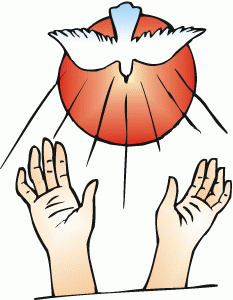
Please take time to read and enjoy this posting by Kelly Ferrari of Door Keeper Ministries from Eaton, CO entitled, “Take Not Your Holy Spirit From Me.” She wonderfully describes the outpouring of the Holy Spirit (Ruach HaKodesh) that occurred in Orlando, FL this past Labor Day weekend and the lives that were genuinely touched and transformed by the power of Elohim.

My family and I were there, and we can attest to the veracity of her testimony.

Enjoy and be encouraged, for YHVH is alive and moving in the midsts of his people! http://www.doorkeeperministries.blogspot.com


The Torah—The Elephant in the Room of the NT

The Torah in the Testimony of Yeshua (New Testament)

Though the primary theme of the Testimony of Yeshua (the name John gives to the New Testament in the Book of Revelation—e.g. Rev 1:2; 6:9; 12:17; 20:4) is the testimony of Yeshua the Messiah, the Torah is, nevertheless, the elephant in the room.

Though not mentioned outrightly as often as one would think in the Testimony of Yeshua, the Torah is implied, assumed, or referred to in on countless occasions using coded Hebraisms. Why, one might ask, is this the case with the apostolic writers? The answer is simple: They were writing to Jews as well as to non-Jewish people who either already operated within a Torah-centric religious paradigm or were being brought into it. The obvious didn’t have to be mentioned over and over again, for Torah was not a strange or foreign thing to the first century believers as it is to most in the church today. The Torah was their way of life and frame of reference for all that they thought and did!

The word law as used in the Testimony of Yeshua is the first aspect of this “elephant” we need to examine. It is the Greek word nomos which in the Septuagint (the third century B.C. Greek translation of the Tanakh [Old Testament Scriptures]) is used in place of the Hebrew word Torah. Therefore, we know that the Jewish scholars who translated the Tanakh into the Greek language considered the words Nomos and Torah to be equivalent. Also, contextually, in the Testimony of Yeshua, we can see that the word law means Torah. To the Messianic Jews who wrote the entire Testimony of Yeshua, when the Greek word nomos is used this is not a reference to Roman, Greek or Babylonian law, but to the biblical Hebrew law or the Torah, or Torah-law of Moses.

Let us not forget that the Bible was written, for the most part, if not totally, in the Hebrew (or Aramaic) language by Hebrew people who spoke Hebrew, lived in a Hebrew culture, practiced the Hebrew religion and worshipped and served YHVH Elohim, the God of the Hebrews. What defined the Israelites’ spiritual relationship to their God – YHVH Elohim? It was the Torah, which by definition and to the Hebrew mindset of the first-century referred specifically to the instructions in righteousness of Elohim as delivered through his servant and prophet Moses to his people, the children of Abraham, Isaac and Jacob (Israel), known as Israelites. As noted above, the Torah is recorded in what is commonly called the Books of the Law, the Books of Moses, the Pentateuch or the Chumash, or what we would call the first five books of the Hebrew Bible: Genesis, Exodus, Leviticus, Numbers and Deuteronomy. These books contain YHVH’s instructions in righteousness, which were delivered letter-for-letter and word-for-word from the very mouth of Elohim to Moses and the Hebrew children of Israel and forms the foundation for the entire Bible: both sections which Christians commonly call the Tanakh and the Testimony of Yeshua.

For the people of Israel in Yeshua’s day, including the apostles who, under the inspiration of the Ruach HaKodesh (the Spirit of Elohim), the Torah of Elohim, given through Elohim’s servant Moses, formed the central teaching document that regulated and governed every aspect of life, culture, family relationship, marriage, society, religion and relationship with surrounding nations. Therefore, law for them was Torah. Nothing more nor less.

Keep in mind that the concept of Torah, to the Hebrew mind, did not have the pejorative connotation that the term law has to the traditional Christian mindset which tends to read a legalistic bias into the word law when reading the Testimony of Yeshua.

Although Yeshua, the Living Torah, and not the Law of Moses or the Written Torah, is the main theme of the Testimony of Yeshua, it can’t be denied that the Written Torah is woven throughout the fabric of the Testimony of Yeshua. In fact, it would be negligent of me to pass over the pro-Torah themes and statements found throughout the apostolic writings.

Examples of References to the Torah in the Testimony of Yeshua

Continue reading →

 

Uzza and the Christmas Tree

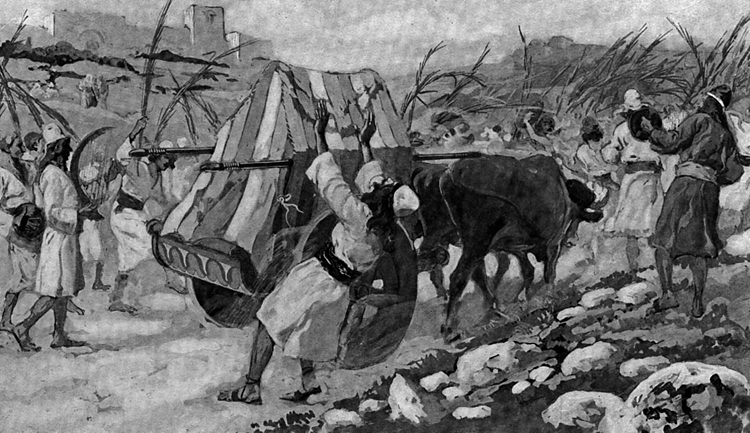
1 Chronicles 13:7, They carried the ark on a new cart. 

The Israelites in their zeal at having the ark (a symbol of the presence of YHVH) returned to Israel, they failed to inquire of YHVH as to how to properly transport the ark, and they unwittingly repeated the sin of the Philistines by transporting it on an ox-drawn cart instead of the prescribed manner (carried with poles by the Levites, Num 4:2–15). As a result, YHVH brought judgment against Uzzah who, though well-intentioned, but not being a Levite, illegally touched the ark.

There is a lesson for us in this. YHVH has prescribed manners in which he is to be approached, ministered to and “touched.” If we dare to approach him in a non-prescribed (or illegal) manner, though he is gracious, we may also suffer his angry judgments because we have failed to respect or fear his presence properly. Often, we, just like the Israelites, though unwittingly adopt pagan practices in our worship of him. We fail to consult the Word of Elohim as to how he desires to be approached or worshipped. For example, we assemble on days that he has not sanctified (Sunday and Christian holidays), and fail to meet with him on the days that he has sanctified (the Sabbath and biblical feasts), eat abominable foods (pork) before him, and put Christmas trees (a pagan sex symbol) in our church sanctuaries. We also bring in secular forms of worship into our services, fail to attire ourselves properly for such occasions, and do not prepare our hearts in humility and fear before approaching him. What’s more, we are often given to gluttony and misuse of the tongue against our brother thus not discerning the Lord’s body resulting in the judgments of sickness and premature death (1 Cor 11:29–32).

Perhaps this is why we fail to experience his anointed presence and blessings individually and collectively more than we do.


Yeshua— The Pre-eminent Theme of the NT

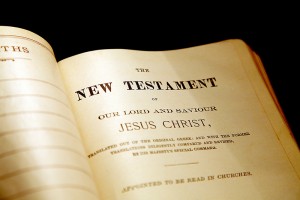
Have you ever wondered what the apostolic writers themselves called that part of the Bible the Christian church refers to as “The New Testament”? Assuredly the apostles didn’t call it “The New Testament” — a term that originated much later! John the apostle and the final canonizer of the Apostolic Scriptures (sorry folk, the early church fathers and the Catholic Church didn’t canonize the apostolic writings) in five places in the Book of Revelation refers to the “Old Testament” as the “Word of God [Elohim]” and the “New Testament” as the “Testimony of Yeshua” (Rev 1:2,9; 6:9; 12:17; 20:4). Since “The Testimony of Yeshua” was the title John the apostle under the inspiration of the Set-Apart Spirit of Elohim applied to this portion of the Scriptures, just perhaps the work and Person of Yeshua was its most important theme!

 For example, the proper name “Yeshua” [Hebrew for “Jesus”] is found 943 times in the Testimony of Yeshua (the New Testament). This number doesn’t include the use of personal pronouns (e.g., he, him, his) or any indirect references to, or other names that the Testimony apply to him (e.g., the Lamb, the Alpha and Omega, Chief Cornerstone, King of kings, Rabbi, Master, etc.). The title “Christ” (in Hebrew Maschiach or “Messiah” in English) is used 533 times. The title “Lord” is found 670 times in the Testimony of Yeshua and usually is a direct reference to Yeshua. In the Testimony of Yeshua (NT) there are 260 chapters and 7,958 verses. According to these statistics, the names Yeshua, Messiah, or Lord are found in more than one-quarter of the verses of the Testimony of Yeshua. This number doesn’t include the use of pronouns (who knows how many such references there are), or other descriptive titles (some 326 references!) and other names that the apostolic writers use for Yeshua. If it did, the references to Yeshua in relationship to the number of verses in the Testimony of Yeshua would be much higher! By comparison, direct references to the Torah (i.e., law, laws, commandment, commandments) occur only about 260 times in the Testimony of Yeshua, or on average, one time per chapter. God forbid that I should in any way demean the importance or centrality of the Torah in the redeemed believer’s life, but the statistics speak for themselves: the subject of Yeshua was front and center in the Testimony of Yeshua. His supernatural power in us enables us to live the Torah properly — in truth or letter and in spirit, and his life was a living testimony and example of how to walk out the Torah. John and Paul the apostles sum it up this way:

And hereby we do know that we know him, if we keep his commandments. He that says, I know him, and keeps not his [Torah] commandments, is a liar, and the truth is not in him. But whoso keeps his word, in him verily is the love of Elohim perfected: hereby know we that we are in him. He that says he abides in him ought himself also so to walk, even as he walked. (1 John 2:3–6)

Elohim sent his only begotten Son into the world, that we might live through him. (1 John 4:9)

And this is the record, that Elohim has given to us eternal life, and this life is in his Son.

(1 John 5:11)

He that has the Son has life; and he that has not the Son of Elohim has not life.… And we know that the Son of Elohim is come, and has given us an understanding, that we may know him that is true, and we are in him that is true, even in his Son Yeshua the Messiah. This is the true Eternal, and eternal life. (1 John 5:11–12,20)

I am crucified with the Messiah: nevertheless I live; yet not I, but the Messiah lives in me: and the life which I now live in the flesh I live by the faith of the Son of Elohim, who loved me, and gave himself for me. (Gal 2:20)

The subject of the Person and work of Yeshua was so important that YHVH Elohim through his Set-Apart Spirit inspired four books of the Bible (i.e., the four Gospels) to be written all testifying to the life of Yeshua on earth based on eye witness accounts.

During his ministry on this earth, Yeshua spoke and taught about many subjects (136 to be exact) as recorded in the Gospels. What were the subjects he talked most about? The number one subject was himself! In Matthew’s and John’s Gospel accounts, there are 316 references to Yeshua speaking about himself as the way to the Father, the light of the world, the bread of life, the door to the sheepfold, the truth, the good shepherd, the one who would die to redeem man, and so on. Next, Yeshua talked about his Father (184 times). The Torah comes in seventh place with 44 direct or indirect references! Now I love the Torah and have devoted much of my life to teaching and writing about the Torah, but this subject was not number one on the list of important topics Yeshua or the apostles wrote or talked about. To be sure, they lived the Torah all the time although they weren’t always talking about it, unlike many in our day who talk about it all the time, but don’t live it! Obedience to the Torah is the result of coming into a loving relationship with Yeshua, and not the starting place according to the apostolic writers.


A Fresh Prophetic Vision for the Hebrew Roots Movement


A Spiritual Vision for the 2012 Messianic Israel Alliance Gathering in Orlando, Florida  (Aug 30 – Sept 2)

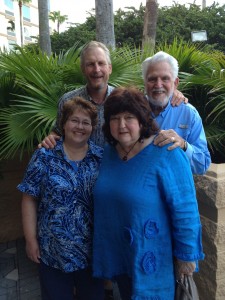
Natan and Sandi Lawrence with Angus and Batya Wootten, the co-founders of the Messianic Israel Alliance in Orlando, FL at the thirteenth annual MIA Gathering.

I read the following message on the opening evening of the gathering on Friday, August 31, 2012 to those gathered at the Rosen Plaza Hotel in Orlando, Florida. 

Where there is no spiritual/prophetic vision, the people perish: but he that keeps the Torah, happy is he. (Prov 29:18)

The Context

During this very week and at this time, Hurricane Isaac was taking aim at the west coast of Florida, then veered westward into the Gulf of Mexico and made landfall at and stalled over New Orleans before moving north and east over the midsection of the U.S. All this occurred prior to and during the Republican Convention to nominate a presidential candidate for the fall elections. At the same time, another convention was convening at the Rosen Plaza Hotel in Orlando, Florida—the Messianic Israel Alliance’s thirteenth annual international gathering.

Word Definitions

  • Orlando means “famed or renowned land or land of the famous or renowned.”
  • Rosen means “rose (of European Jewish origins).” Perhaps the most notable usage of rose in the Bible is the famous rose of sharon passage in the Song of Solomon, which is a taken by many to be a prophetic reference to Yeshua.
  • Plaza means “place where people gather.”
  • Tampa means “sticks of fire or place to gather sticks (that will be struck by lightening).” Interestingly, the Spaniards originally called Tampa Bay the Bay of the Holy Spirit. This name was dropped when the US acquired Florida from Spain in 1819.
  • Isaac means “laughter or he laughs (see Ps 2:2-4).”

Why do the heathen rage, and the people imagine a vain thing? The kings of the earth set themselves, and the rulers take counsel together, against the LORD, and against his anointed, saying, Let us break their bands asunder, and cast away their cords from us. He that sitteth in the heavens shall laugh: the Lord shall have them in derision. Then shall he speak unto them in his wrath, and vex them in his sore displeasure. Yet have I set my king upon my holy hill of Zion.(emphasis added)

Analysis

YHVH seems to be laughing (through Hurricane Isaac) at men (the Republicans at their Tampa convention) as they are plotting and planning their strategies for national revival without taking him into consideration. This occurred as Tropical Storm/Hurricane Isaac brushed the Republican Convention in Tampa causing the convention to delay one day and casting a somber tone over the proceedings, and which should have caused them to pause and to reflect on higher spiritual matters. At the Republican convention, men are gathering their ideological sticks (a reference to the meaning of the name Tampa) as they establish their party’s planks to build their political platform, which YHVH laughs at (through Hurricane Isaac) and threatens to strike with the lightening of his judgment because this nation and its leaders are failing to make proper, true biblical teshuvah by returning to the Messiah, the roots and branches of our faith that are grounded in the Torah.

Continue reading →


Weekly Blog Scripture Readings for 9/2 through 9/8/2012

Aside

Exodus 14–20; 1 Chronicles 5–18; Psalms 150; and Matthew 1–6

Most of this week’s blog discussion points will be on these passages. The full year’s Bible Reading Schedule can be found on the right sidebar under “Helpful Links.”

If you have general comments or questions on the weekly Scripture readings not addressed in a blog post, here’s a place for you to post those. Just use the “leave a reply” link below.

Weekly Blog Scripture Readings for 9/2 through 9/8/2012


Of Gods Then and Now

Exodus 7:14, The ten plagues. The ten plagues were Elohim’s judgment against the gods and idols of Egypt (Exod 12:12; 33:4; Num 33:4). Here are the list of plagues and possible suggestions as to which gods of Egypt YHVH was judging.

The first plague: water turns to blood—a judgment against abortion (the Egyptians threw their babies into the Nile for sacrificial purposes) and against materialism (since fewer children mean fewer expenses for a family, and the Nile River was the source of Egypt’s prosperity).

The second plague: frogs — a judgment against pride (frogs puff themselves before they croak) and environmentalism or animal worship. In America, fore example, after 9/11, how many bumperstickers did we see that had the words “pride” on them, and “God bless America” as if YHVH is duty-bound to bless America? How can YHVH bless a nation that refuse to repent and turn from its wicked ways?

The third plague: lice—a judgment against pride and narcissism (self worship), since the Egyptians were highly focused on their personal appearance and hygiene, their appearance and in shaving of body hair.

The fourth plague: flies—a judgment against devil worship, occultism and witchcraft (i.e., the whole religious system of Egypt). A biblical name for Satan was Beelzebub, or lord of the flies (Matt 2:25–27; Luke 11:15–19).

The fifth plague: Livestock died—a judgment against transportation and commerce.

The sixth plague: boils—a judgment against the Egyptians obsession with their bodies and faith in medical science.

The seventh plague: hail—a judgment against their agriculture industry and earth worship.

The eighth plague: locusts—a judgment against Egypt’s food production. The Nile River and its delta was one of the bread baskets of the ancient world and a source of great wealth to Egypt.

The ninth plague: darkness—a judgment against Egypt’s intelligentsia and religious system, which was spiritually devoid of the light of truth.

The tenth plague: the death of the firstborn—a judgment against Egypt’s future and posterity.

The destruction of Pharaoh and his armies in the Red Sea—a judgment against Egypt’s political and military might.

Is YHVH Elohim bringing America and other “Christian” nations into judgment for the sins they have committed against him even has he brought judgment against the gods of Egypt? What are the similarities between gods of ancient Egypt and those of western and Christian culture? In America, for example, in recent years, there has been a marked increase in adverse weather conditions, natural catastrophes, terrorism, bank and financial failures, personal and corporate bankruptcies, high unemployment and inflation rates, and high foreclosure rates on homes to name a few possible judgments against a nation that has turned its back on Elohim and the Bible.

If my people, which are called by my name, shall humble themselves, and pray, and seek my face, and turn from their wicked ways; then will I hear from heaven, and will forgive their sin, and will heal their land. Now mine eyes shall be open, and mine ears attent unto the prayer that is made in this place. For now have I chosen and sanctified this house, that my name may be there for ever: and mine eyes and mine heart shall be there perpetually. And as for thee, if thou wilt walk before me, as David thy father walked, and do according to all that I have commanded thee, and shalt observe my statutes and my judgments; then will I stablish the throne of thy kingdom, according as I have covenanted with David thy father, saying, There shall not fail thee a man to be ruler in Israel. But if ye turn away, and forsake my statutes and my commandments, which I have set before you, and shall go and serve other gods, and worship them; then will I pluck them up by the roots out of my land which I have given them; and this house, which I have sanctified for my name, will I cast out of my sight, and will make it to be a proverb and a byword among all nations. (2 Chron 7:14–20)