Joyous Yom Teruah!

Yom Teruah—The Beginning of the Fall (End-Time) Harvest

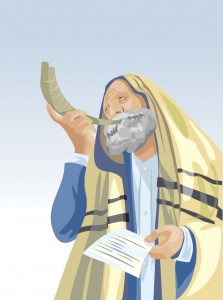
Yom Teruah or the Day of Shouting; the Shofar Blasts or the Awakening Blast (commonly called “Rosh Hashana”) occurs at the end of the summer months and marked the beginning of the fall harvest or festival season for the ancient Hebrews. Prophetically, the summer months between the spring feast of Shavuot/Weeks (Pentecost) and the fall feast of Yom Teruah is a spiritual picture of what is often called the “Church Age,” which is the period of time from the Feast of Pentecost in Acts 2 until the return of Yeshua the Messiah at the end of the age and lasting for approximately 2000 years. For many, especially those living in hotter climes, summer is a time of leisure, vacation, weariness and fatigue due to the excessive heat. Likewise, many Bible believers have fallen asleep growing spiritually weary while waiting for the return of the Messiah. Yeshua discusses this issue in the Parable of the Ten Virgins (Matt 25) who all grew weary and fell asleep awaiting the coming of the Bridegroom (Yeshua).
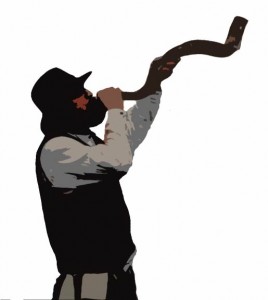
This all changes on the first day of the seventh month of the biblical Hebrew calendar when off in the distance the sound of a shofar blast suddenly pierces the atmosphere and registers in the eardrums of those who have fallen asleep. Not only does this shofar blast signal the beginning of the seventh month when the new crescent moon is sighted, but it announces the return of the Bridegroom (Yeshua) coming for his bride (the virgin saints). As in the Parable of the Ten Virgins, the cry went forth that the bridegroom was coming and all awoke from their slumber to prepare for his arrival. In these end days, that cry is going forth even now for all to hear, to awake and to prepare for the arrival of Yeshua the Messiah.

In the biblical calendar, the visible sighting of the crescent new moon always marks the beginning of the month and is announced by the shofar blast (Ps 81:3). Likewise, on the first day of the seventh month of the biblical calendar, the arrival of the new moon (called Rosh Chodesh) when the shofar sounds marks the beginning of Yom Teruah. This is the first day of the fall (festival) harvest season and is the time when the call goes out for the spiritual drowsy to awake, and to hear the voice of YHVH, to be invigorated by the breath or voice of the shofar, which is symbolic of YHVH’s prophetic word or oracle going forth across the earth in the last days.

Furthermore, the ram’s horn shofar is bent into a curved shape to represent the contrite heart of both the blower and the hearer. This is the season for the righteous to bend their hearts in humility and contrition before YHVH and repent of spiritual lassitude and lukewarmness and to awake to spiritual action and preparation, for the fall feasts point to awesome end time events that will occur at some point in time in the near future. It is a time to be refreshed by the breath of YHVH, and a time of new beginnings. Let YHVH breathe on you, revive you and empower you as you enter into the fall biblical festival season, and as you prepare to meet your King and Redeemer, Yeshua, in the air.

Yom Teruah also begins a season that prophetically speaks of war and battle, for in ancient times the shofar was a weapon of warfare in Israel, and it will be used again as such in the end times. It was used to call Israel to battle, to defeat her enemies with the help of YHVH. The shofar was then used to proclaim victory after the battle was won and to worship YHVH who had given them the victory. The battle against Israel’s enemies still rages on—even in the end times. Today, the enemies of the redeemed Israelites are mostly spiritual. They are the world, the flesh and the devil (Jas 3:15; Eph 2:2–3). Through faith in Yeshua the Messiah who defeated death, hell and the grave, we can have victory over mortality, sin, the devil and this world (1 Cor 15:51–57; Rom 8:27; 1 John 4:4; 5:4; Rev 12:11). As we hear the sound of the shofar calling us to arise from spiritual slumber, YHVH is telling his people to become overcomers so that they may be worthy to partake of the glories of his eternal kingdom (Rev 2:7,11,17,26; 3:5,12,21).

Yom Teruah is also the time of the reaping of the summer harvest. Spiritually speaking, this period will be the time of the reaping of the righteous to their reward (Rev 14:4) and the harvest of the wicked to the great winepress of Elohim’s wrath (Rev 14:14-20). It is the time of the resurrection of the dead in Messiah Yeshua at the end of the tribulation (Matt 24:29) and the beginning of Elohim’s wrath being poured out upon the nations (see Joel 3:11-13). This begins the Wrath of Elohim time pictured by Yom Kippur (the Day of Atonement, which occurs ten days after Yom Teruah) before which time the dead saints will have been resurrected and given their spiritual, glorified, second Adam bodies.

To learn more about Yom Teruah (the Day of Shofar Blowing/Shouting), which is the fifth of YHVH’s seven biblical feasts, go to http://www.hoshanarabbah.org/pdfs/yom_teruah.pdf. Enjoy!


The Righteous Will Shine Like the Sun

Matthew 13:43, Shine forth as the sun. The reward of the resurrected righteous will cause them to shine forth like the sun or stars (Dan 12:3), and like Yeshua (1 John 3:2), whose face shines like the sun (Rev 1:16), for he is the Sun of Righteousness (Mal 4:2), who will be the light of the New Jerusalem shining in place of the physical sun (Rev 21:23; 22:5; Isa 60:20).

Paul speaks of the resurrection of the saints or their glorification that will occur at that time, and he also likens the saints’ appearance to the stars. As stars have different levels of brightness, so to will the saints (1 Cor 15:41–43) in accordance with their levels of rewards based on their level of obedience to the Torah (Matt 5:19; 16:27; Rom 2:6–11; 2 Cor 5:10; Eph 6:8; 1 Pet 1:17; Rev 19:8; 22:12–15).


Weekly Blog Scripture Readings for 9/16 through 9/22/2012

Aside

Exodus 28–34; 2 Chronicles 5–18; and Matthew 14–20

Most of this week’s blog discussion points will be on these passages. The full year’s Bible Reading Schedule can be found on the right sidebar under “Helpful Links.”

If you have general comments or questions on the weekly Scripture readings not addressed in a blog post, here’s a place for you to post those. Just use the “leave a reply” link below.

Weekly Blog Scripture Readings for 9/16 through 9/22/2012


What Is Yom Teruah?

To learn more, read my teaching article on Yom Teruah (aka Rosh Hashana) to learn what the end-time prophetic implications of this upcoming biblical feast are. Go to http://www.hoshanarabbah.org/pdfs/yom_teruah.pdf.


Did Yeshua Die on a Cross or a Stake?

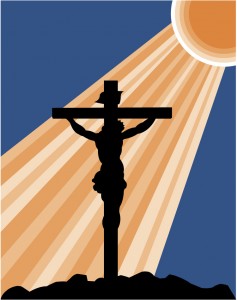
Matthew 10:38, Cross. This is the first place in the Scriptures where the word cross is mentioned. There is often a spirited debate among those returning to the Hebrew roots of the Christian faith as to whether Yeshua was crucified on a cross, a stake, tree or gallows. For the reason that the cross is a symbol that has been tainted by ancient pagan connotations, many Hebraic believers have an aversion to seeing it as the instrument upon which Messiah Yeshua was crucified. This being the case, we must ask the obvious question: which came first? Was the cross first a pagan symbol or was it a God-ordained symbol that was later corrupted by apostate men?

We may never, with certainty, know the answer to this question. But one thing is certain, the origins of the cross as a redemptive symbol are ancient—perhaps as ancient, if not more so, then its uses as a pagan religious symbol. This is proven in the ancient Paleo-Hebrew script, which predates the current square-lettered Hebrew script, where the final letter in the Hebrew alphabet is the letter tav, which looks like our letter “t,” and is shaped like a cross. Because the letters in this ancient Hebrew script were actually pictorial symbols, they were thus descriptive in nature (much like Egyptian hieroglyphics), so the letter tav literally means “ownership, to make a sign, to seal, to make a covenant.”

In the Scriptures we see the symbol of the cross reoccurring numerous times. For example, when Jacob on his deathbed blessed Joseph’s sons, Ephraim and Manasseh, he crossed his arms (making the cross symbol) as he laid his hands on their heads to bless them (Gen 48:14). He then made mention of the Angel or Messenger of Elohim (the pre-incarnate Yeshua) redeeming him from evil (v. 16). This is an obvious reference to YHVH saving Jacob from Esau and Laban (Gen 31 and 32), but is also a future prophetic allusion to the redemptive work of the Messiah at his crucifixion, since Jacob calls on the Redeemer Messenger of Elohim (or the Messiah) to bless his grandsons and their future offspring (v. 16). We know that in Yeshua, the Seed of Abraham, all the nations of the earth were to be blessed (Gal 3:16 cp. Gen 22:18). Certainly, Jacob must have had at least a vague awareness of the future implications of this promise that YHVH had made to Abraham and the redemptive work of the coming Messiah.

Another reference to the cross can found in Exodus 12:7 where YHVH commands the Israelites to kill the Passover lamb and smear the blood therefrom on the side posts and top of their door frames. This is a perfect picture of the cross outlined in blood that flowed from the seven places in Yeshua’s body while he hung on the cross.

We see another outline of the cross in Numbers chapter two in how YHVH instructed the tribes of Israel to be configured around the mishkan (Tabernacle of Moses). If one were to view the encampment from the air as is described in this chapter, we see the outline of a perfect cross. Furthermore, within the tabernacle itself, the furnishings were laid out in the shape of a cross. In essence we see a cross on a cross! Since the tabernacle and all therein was a prophetic shadow-picture of Yeshua himself, we see not so much a cross on a cross, but a picture Yeshua on the cross.

Many more examples could be given, but one will suffice to make the point. In Ezekiel chapter eight, we see YHVH instructing one of his angels to write in ink a mark (literally, a tav or cross) on the heads of his righteous saints in Jerusalem. This tav would preserve them from the destruction that was about to fall on that city (Ezek 9:4). Similarly, in the Book of Revelation in the end times, YHVH will place a seal or mark upon the foreheads of his saints to preserve from his judgments of wrath that will fall upon the earth prior to Yeshua’s second coming (Rev 7:3–4; 14:1). These same end-time saints are those who obey the Torah and who have the testimony or faith of Yeshua who died on a cross to redeem us (Rev 12:17; 14:12). Is this seal a cross? Only time will tell.

In John 20:25 we find another proof that the stake upon which Yeshua was crucified had a horizontal cross beam. There Thomas declares, “Except I shall see in his hands the print of the nails, and put my finger into the print of the nails, and thrust my hand into his side, I will not believe.” The word nails being in the plural in all major English Bible translations indicate that more than one nail was used to secure Yeshua’s hands to the “crucifixion stake.” Had Yeshua been crucified on a stake minus a cross beam, then his hands would have been over his head and nailed to the post with one nail only. The fact that Thomas mentions nails (plural) indicates that Yeshua’s arms were outstretched when attached to the stake requiring a nail in each wrist. This fact seems to favor the idea that Yeshua was crucified on a traditional rather than a simple upright post.

In reality, whether Messiah died on a cross, stake or some other contraption is irrelevant. The fact is that he died for our sins and we must place our trusting faith in him if we are to have eternal life. That is the bottom line! But for those who are adamant that he was not crucified on a cross, they have some ­cross­ reference Scriptures to explain.


New Wine… New Wineskins

Matthew 9:17, New wine… new wineskins. Sadly, the translation as found in most of our English Bibles —“New wine into old wineskins… new wine into new wineskins”— is a muddy translation from the Koine Greek, and therefore doesn’t give us the proper understanding of Yeshua’s words. Here is the verse from Matthew 9:17 with the Greek words following in parenthesis:

Neither do men put new (neos) wine into old bottles: else the bottles break, and the wine runneth out, and the bottles perish: but they put new (neos) wine into new (kainos) bottles, and both are preserved. (KJV)

In English, the word “new” can mean “brand new, never been used before” or it can mean “new to you, although it may have been used by someone else.” It can also mean “renewed, reconditioned new.” In Koine Greek, there are two words for our one word “new”. They are neos and kainos.

The Greek word neos means new as in brand new. The Greek word kainos means new in the sense that something is “renewed or reconditioned,” so it‘s not brand new.

Both Mark and Luke in their accounts use kainos in the same way Matthew does in his account (Mark 2:22; Luke 5:38).

This verse would have been better translated as:

Neither do men put new (neos) wine into old bottles: else the bottles break, and the wine runneth out, and the bottles perish: but they put new (neos) wine into reconditioned (kainos) bottles, and both are preserved.

Stern captures this meaning in his Complete Jewish Bible where he translates kainos as “freshly prepared wineskins.” J. P. Green in his Bible translates kainos as “fresh.”

Interestingly, Luke adds a statement that the other two Gospel writers (see Matt 9:17 and Mark 2:22) omit:

And no one, having drunk the old wine, immediately desires new; for he says, “The old is better.” (Luke 5:39)

What is the meaning of this? One commentator states that in ancient times, aged wine (i.e., being fully fermented, and thus having a higher alcohol content) was generally preferred over new wine (not fully fermented, thus having a lower alcohol content). He suggests that Yeshua is probably indicating why the religious people were objecting to the joy of Yeshua’s disciples (verse 33): because it was something new (The IVP Bible Background Commentary, p. 203, by Craig Keener). So depending on the context of Yeshua’s usage of the new/old wine analogy, sometimes the new is better, sometimes the old is better.


Weekly Blog Scripture Readings for 9/9 through 9/15/12

Aside

Exodus 21–27; 1 Chronicles 19–29; 2 Chronicles 1–4; and Matthew 7–13

Most of this week’s blog discussion points will be on these passages. The full year’s Bible Reading Schedule can be found on the right sidebar under “Helpful Links.”

If you have general comments or questions on the weekly Scripture readings not addressed in a blog post, here’s a place for you to post those. Just use the “leave a reply” link below.

Weekly Blog Scripture Readings for 9/9 through 9/15/2012