
Are You an Obstacle Overcomer Like Nehemiah?

Nehemiah 2, In many of our spiritual endeavors, we are not unlike Nehemiah whom YHVH tasked with rebuilding the broken down and burned walls of Jerusalem to protect the house of YHVH (i.e., the temple) from the enemies of Israel.
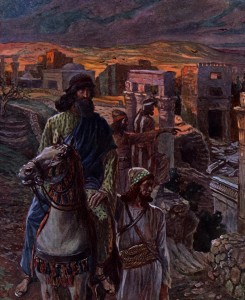
Like Ezra, Nehemiah’s predecessor, he faced and had to overcome many physical and spiritual obstacles to complete his divine mission. His initial walk around Jerusalem to survey conditions was prophetic of the battles he’d soon be facing to rebuild the wall.

Before he could celebrate the victory of a completed wall, he’d have stare down the enemies of YHVH face to face.

First he passed through the Valley Gate, which is a prophetic picture of the valley of the shadow of death of David’s famous twenty-third psalm. This death may even include the death of our vision (i.e., the death to our own personal plans and wishes as opposed to those of YHVH).

Next he came to the Serpent Gate, which is a picture of everything Satan, the Adversary and Accuser of the brethren, will throw at you to hinder you from completing the task YHVH has given you.

Then he encountered the Dung (or Refuse) Gate. This is a spiritual picture of  all the garbage the enemy throws at us to keep us from fulfilling our divine mission. This could include things such as physical distractions, false accusations, false brethren, the heathen around us, hindering demonic spirits, physical sickness, lack of finances, doubt, fear, discouragement and unbelief.

Next Nehemiah came to the broken down and burned gates of Jerusalem representing all the broken and failed dreams and attempts of our past to accomplish YHVH’s purposes in our lives including past personal failures and defeats at the hands of our physical and spiritual enemies.

It was necessary for Nehemiah to encounter and to overcome all these obstacles, which, in reality, he used as stepping stones to his success.  These passage points served to bring him to the place of victory resulting in the spiritual outpouring represented by the Fountain Gate and the King’s Pool, which he arrived at next. These last two spots in the ancient city of Jerusalem that are references to water are clear spiritual allusions to and are biblical Hebraisms representing the waters of YHVH’s Word or truth (i.e.,the Torah), as well as to the outpouring of the Spirit of Elohim. Spirit and truth combined are what all  true worshipers of YHVH need in order to lead them into the deeper waters of a spiritual relationship with the Father as Yeshua indicates in John 4.

In these times of trials and pressure from all sides, may YHVH grant you, as he did to  Nehemiah, the strength of vision and faith to overcome the obstacles in your life. May they become mere stepping stones to victory for the glory of Elohim and the advancement of his spiritual kingdom.


 

YHVH: Elohim’s Memorial Name

Exodus 3:14–15, I AM THAT I AM. The name YHVH is Elohim’s memorial name forever. It reflects that fact that he is; that he is undefinable in human terms, and that he has always existed. This is the name by which he is to be remembered (not forgotten as is the case with the ineffable name concept of the rabbinic Jews whereby the names of deity or forbidden to be used).

14 And Elohim said unto Moses, I AM THAT I AM (EHYEH ASHER EHYEH YHVH RAT YHVH): and he said, Thus shalt thou say unto the children of Israel, I AM (EHYEH YHVH) hath sent me unto you. 15 And Elohim said moreover unto Moses, Thus shalt thou say unto the children of Israel, YHVH (YHVH) the Elohim of your fathers, the Elohim of Abraham, the Elohim of Isaac, and the Elohim of Jacob, hath sent me unto you: this is my name (shem) for ever, and this is my memorial (zeker) unto all generations.

Here are some examples of how other translations translate the name of YHVH:

  • I Am That I Am (KJV)
  • I Am Who I Am (NAS, NIV, NKJV
  • I Am That Which I Am (YLT)
  • I Shall Be As I Shall Be (The ArtScroll Stone Edition Tanach)
  • I Will Be What I Will Be (The Gutnick Edition Chumash, JPS)
  • I Will Be There Howsoever I Will Be There (The Schocken Bible)
  • I Am the Being (LXX, Brenton)

Verse 15 states that YHVH is the Moses was to use when referring to I AM THAT I AM. Both the former and latter are forms of the Hebrew verb hayah meaning “to be.” YHVH instructed that YHVH was to be his memorial name forever. In other words, humans were to use YHVH to remember him by. There is no indication here that it was YHVH’s intention that his name was to be forgotten or hidden through euphemisation. The word memorial is defined as follows:

Strong’s H2143 zeker; from 02142; TWOT – 551a; n m; KJV – remembrance 11, memorial 5, memory 5, remembered 1, scent 1; 23; memorial, remembrance, memory


Weekly Blog Scripture Readings for 8/26 through 9/1/2012

Aside

Exodus 6–13; Nehemiah 3–13; 1 Chronicles 1–4; and Psalms 143–149

Most of this week’s blog discussion points will be on these passages. The full year’s Bible Reading Schedule can be found on the right sidebar under “Helpful Links.”

If you have general comments or questions on the weekly Scripture readings not addressed in a blog post, here’s a place for you to post those. Just use the “leave a reply” link below.

Weekly Blog Scripture Readings for 8/26 through 9/1/2012


The Timing and Purpose of Israel’s Exile in Egypt

What Is the Timing of the Exile?

Christian teaching says that Israel was in exile in Egypt for 400 years (Gen 15:13; Acts 7:6) or for 430 years (Gal 3:17). Some see a contradiction in these two numbers, which to nonbelievers “proves” that Scripture is not inspired by Elohim, but rather is the work of men.

The Jewish Sages, on the contrary, say that the 430-year count started when Abraham left Ur, and that the 400-year count started when Isaac was born and that the Egyptian exile lasted for four generations only, or about one-third of the 400 years. The accounting of this is found in Genesis 15:13–16,

And [YHVH] said unto Abram, “Know of a surety that your seed shall be a stranger in a land [eretz] that is not theirs [the land of Canaan and Egypt], and shall serve them [the last half of their bondage in Egypt]; and they shall afflict them four hundred years; and also that nation [goy], whom they shall serve, will I judge, and afterward shall they come out with great substance. And you shalt go to your fathers in peace; you shalt be buried in a good old age. But in the fourth generation [after having been exiled into Egypt] they shall return again [return to the land of Canaan], for the iniquity of the Amorites is not yet full.”

Another point of interest in this regard is Jochebed, the mother of Moses. She was the daughter of Levi (Exod 2:1; Num 26:59) and was married to Amram the father of Moses and the grandson of Levi. Jochebed was the aunt of Amram (Exod 6:16–20). If the Egyptian exile were 400 years, as many believe, then Jochebed would have been around 320-340 years of age at the birth of Moses. This is an unlikely scenario since the biblical record shows us that the lifespan of humans was between about 110 to 150 years at this time. However, if the time of the exile were four generation as noted above (Gen 15:16) then she could have been between 80 to 120 years of age at Moses’ birth, which is in the more likely realm of possibility. The ArtScroll Stone Edition Chumash confirms this math. It says Jochebed was 130 when Moses was born (p. 297) and that at the time Moses returned to Egypt Israel had been living there for 210 years, 116 since the servitude began and 86 since the beginning of the backbreaking oppression (p. 300).

Why the Exile?

The purpose of the exile was to prepare Israel for its inheritance. Egypt was the “boot camp” to prepare them for the rigors of the wilderness journey so that they could then take the land of Canaan. Egypt was an incubator where Israel grew from 70 to more than two to four million people. Israel literally became a hardened army ready to go in and dispossess the Canaanites of their land and in turn repossess it.

Furthermore, YHVH could not allow Israel to dispossess the inhabitants of the Promised Land until the time was right. Scriptures says that the sins of the Amorites had to come to the full (Gen 15:16). YHVH is just and gives nations ample time to repent before judging them.


Overview of the Books of the Torah (Main Themes)

Genesis (Beresheit) is the book dealing with beginnings and eventually its overarching theme is divine election. YHVH is choosing certain people (according to his divine will and sovereignty) to accomplish his purposes.

Exodus (Shemot) is the book whose principle theme is redemption—Israel’s deliverance from Egypt (Mitzraim). Here we learn how YHVH saves his people and we are shown that his people are redeemed in order to worship him.

Redemption is perhaps the main theme in Exodus. It is best delineated in the following passage,

Say, therefore, to the sons of Israel, “I am YHVH, and I will bring you out from under the burdens of the Egyptians, and I will deliver you from their bondage. I will also redeem you with an outstretched arm and with great judgments. Then I will take you for My people, and I will be your Elohim; and you shall know that I am YHVH your Elohim, who brought you out from under the burdens of the Egyptians. I will bring you to the land which I swore to give to Abraham, Isaac, and Jacob, and I will give it to you for a possession; I am YHVH.” (Exod 6:6-8, emphasis added)

Obedience to and worship of YHVH is another major theme in Exodus.

And he said, “Certainly I will be with you, and this shall be a token unto you, that I have sent you, when you have brought forth the people out of Egypt, you shall serve Elohim upon this mountain.” (Exod 3:12, emphasis added)

And I say unto you, “Let my son go, that he may serve [Hebr. awvawd, Strong’s H5647] me, and if you refuse to let him go, behold, I will slay your son, even your firstborn.” (Exod 4:23, emphasis added)

And you shall say unto him, “YHVH Elohim of the Hebrews has sent me to you, saying, ‘Let my people go, that they may serve [Hebr. awvawd, Strong’s H5647] me in the wilderness, and, behold, until now you would not hear.’” (Exod 7:16, emphasis added)

The Basic Outline of Exodus

  • Chapters 1–6 show us the need for redemption.
  • Chapters 7–11 show us the power or might of the Redeemer as the ten plagues are poured out upon Egypt.
  • Chapters 12–18 show us the character of redemption; purchased by blood and emancipated by power.
  • Chapters 19–24 we are taught the duty of the redeemed.
  • Chapters 25–40 we see the restoration of the redeemed—provisions are made for the failures of the redeemed.

Leviticus (Vayikra) gives instructions on how to worship YHVH.

Numbers (B’midbar) gives us instructions pertaining to our spiritual walk and warfare in the “wilderness” of life.

Deuteronomy (D’varim) gives instructions to the younger generation preparing them to enter the Promised Land. Contained within is a recapitulation of the main tenets of the Torah, as well as the addition of some new laws, heart and prophetic issues pertaining to Torah obedience.


Happy 1st Day of the 6th Month! “Say what?”

It’s time to get ready for the coming of the Lord! 

The new moon was sighted in Jerusalem last night marking the first day of the sixth month on the biblical calendar. Why is this important to know? Paul the apostle gives us a hint in the following Bible passage:

But of the times and the seasons, brethren, ye have no need that I write unto you. For yourselves know perfectly that the day of the Lord so cometh as a thief in the night. For when they shall say, Peace and safety; then sudden destruction cometh upon them, as travail upon a woman with child; and they shall not escape. But ye, brethren, are not in darkness, that that day should overtake you as a thief. Ye are all the children of light, and the children of the day: we are not of the night, nor of darkness. (1 Thess 5:1–5)

The times and seasons to which Paul makes reference can refer to the biblical festivals—especially the fall feasts, which relate to the second coming of our Master, Yeshua the Messiah, also known as the day of the Lord.

While the fall feasts of Yom Teruah (the Day of Shofar Blowing), Yom Kippur (the Day of Atonement), Chag Sukkot (the Feast of Tabernacles), and Shemeni Atzeret (the Eighth Day) commence in the seventh month of the biblical calendar (in our Sept-Oct), the first day of the sixth month is significant as well. Why? It marks the time when YHVH’s people begin to prepare their hearts and minds spiritually for these fall festivals that prefigure the second coming of the Messiah. One of these days, the Messiah will come. Will you be ready? If not now, then when?

Continue reading →


Weekly Blog Scripture Readings for 8/19 through 8/25/2012

Aside

Genesis 49–50; Exodus 1–5; Daniel 11–12; Ezra 1–10; Nehemiah 1–2 and Psalms 130–142

Most of this week’s blog discussion points will be on these passages. The full year’s Bible Reading Schedule can be found on the right sidebar under “Helpful Links.”

If you have general comments or questions on the weekly Scripture readings not addressed in a blog post, here’s a place for you to post those. Just use the “leave a reply” link below.

Weekly Blog Scripture Readings for 8/19 through 8/25/2012