Welcome to the Book of Exodus With Its Themes and Metaphors

For starters, you might want to review a previous post where I discuss the overall themes of each of the five books of the Torah: http://hoshanarabbah.org/blog/2012/08/23/overview-of-the-books-of-the-torah-main-themes/.
36964130

For today, let’s give you an introduction to the Book of Exodus, the second book of the Torah. I hope you enjoy this.

Overview of the Books of the Torah (Main Themes)

Exodus (Shemot) is the book whose principle theme is redemption—Israel’s deliverance from Egypt (Mitzraim). Here we learn how YHVH saves his people and we are shown that his people are redeemed in order to worship him.

The Theme of Redemption

Say, therefore, to the sons of Israel, “I am YHVH, and I will bring you out from under the burdens of the Egyptians, and I will deliver you from their bondage. I will also redeem you with an outstretched arm and with great judgments. Then I will take you for My people, and I will be your Elohim; and you shall know that I am YHVH your Elohim, who brought you out from under the burdens of the Egyptians. I will bring you to the land which I swore to give to Abraham, Isaac, and Jacob, and I will give it to you for a possession; I am YHVH.” (Exod 6:6-8, emphasis added)

Worship

And he said, “Certainly I will be with you, and this shall be a token unto you, that I have sent you, when you have brought forth the people out of Egypt, you shall serve Elohim upon this mountain.” (Exod 3:12, emphasis added)

And I say unto you, “Let my son go, that he may serve [Hebr. awvawd, Strong’s H5647] me, and if you refuse to let him go, behold, I will slay your son, even your firstborn.” (Exod 4:23, emphasis added)

And you shall say unto him, “YHVH Elohim of the Hebrews has sent me to you, saying, ‘Let my people go, that they may serve [Hebr. awvawd, Strong’s H5647] me in the wilderness, and, behold, until now you would not hear.’” (Exod 7:16, emphasis added)

The Basic Outline of Exodus

  • Chapters 1–6 show us the need for redemption.
  • Chapters 7–11 show us the power or might of the Redeemer as the ten plagues are poured out upon Egypt.
  • Chapters 12–18 show us the character of redemption; purchased by blood and emancipated by power.
  • Chapters 19–24 we are taught the duty of the redeemed.
  • Chapters 25–40 we see the restoration of the redeemed—provisions are made for the failures of the redeemed.

The Metaphors in Exodus

Egypt is a metaphor for the world, the place of sin and bondage where one is held captive before being delivered or redeemed by the power of YHVH and the blood of Yeshua, the Lamb of Elohim. It is interesting to note that ­although Egypt was the land of science and art, it was similarly the land of death. Their religion was fixated with death.

Pharaoh is a metaphor for Satan, a merciless taskmaster who opposes the people of YHVH every step of the way.

Pharaoh’s magicians is a metaphor for demonic spirits, doing Pharaoh’s bidding in opposing Israel.

Moses is a prophetic metaphor for Yeshua (his first coming), the Deliverer of his people from the bondage and power of sin, death and hell, which is the power of the enemy, Satan.

The blood of the lamb on the door posts is a metaphor for Yeshua, the Redeemer, whose death on the cross atoned for man’s sins causing YHVH’s judgment against sin to passover us.

The crossing of the Red Sea is a metaphor for our union with Messiah Yeshua in his death and resurrection via the ritual of tevilah (immersion or baptism) at a mikvah (a gathering of waters).

The journey through the wilderness is a metaphor for the trials and testing that occur during the redeemed believer’s spiritual walk through this life with YHVH’s provision to meet every need and his protection from every attack of the adversary.

The giving of the Torah is a metaphor for the obedience and submission that we owe to YHVH, our new Master.

The Tabernacle of Moses with its furnishings is a metaphor for YHVH’s plan of redemption (salvation) for mankind and the steps in man’s spiritual maturation into intimacy with the Father through Yeshua the Messiah.



Blog Scripture Readings for 12/30/12 through 1/5/13

Aside

Parashat Shemot — Exodus 1:1 – 6:1
Haftarah — Isaiah 27:6 – 28:13; 29:22 – 23
Prophets — 2 Samuel 21:1 – 24:25; 1 Kings 1:1 – 4:34
Writings — Psalms 85:1 – 91:16
Testimony — Luke 5:1 – 8:25

Most of this week’s blog discussion points will be on these passages. If you have general comments or questions on the weekly Scripture readings not addressed in a blog post, here’s a place for you to post those. Just use the “leave a reply” link below.

The full “Read Through The Scriptures In A Year” schedule, broken down by each day, can be found on the right sidebar under “Helpful Links.” There are 4 sections of scripture to read each day. One each from the Torah, the Prophets, the Writings, and from the Testimony of Yeshua. Each week, the Torah and haftarah readings will follow the traditional one-year reading cycle.

Weekly Blog Scripture Readings for 12/30/12 through 1/5/13.


Cut the Religiosity. Just Be Nice!

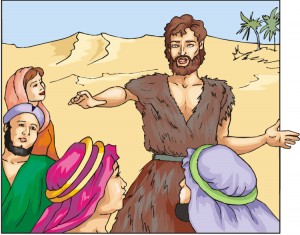
Luke 3:7–17, Then he said to the multitudes. What’s really going on in this exchange between John and the religious folks of his day? Let’s step back and look at the bigger picture.

John Baptist preaching 20283162

Multitudes had made the long, hot and arduous journey down through the Judean mountains to the Jordan River, which was the lowest spot on earth, to hear John the Baptist who was the latest fad preacher to come on the scene. However, when they arrived at his lonely wilderness pulpit, instead of stroking their egos by complimenting them for their religious zeal, he excoriates them and calls them a brood of vipers and tells them if they don’t repent, the fires of YHVH’s judgment will consume them (John 3:7–9). John’s preaching pierces their hearts, and now laid low spiritually, they ask him what he expects them to do (John 3:10). John then preaches a message of social justice—give to the poor, be fair and honest in your business dealings, and if you’re a government worker, treat the citizens you serve with respect (John 3:11–14).

Interestingly, he doesn’t instruct these religious Jews in what many might consider to be the more weightier matters of the Torah-law.  He doesn’t tell them to punctiliously start observing the 613 commandments of the Torah, and, by the way, to stop working on the Sabbath, stop eating pork, to toss their Christmas tree in the dumpster, grow a beard, put on a tassel and head-covering, and to say “Yeshua” instead of “Jesus.” He’s basically telling them to go back to the basics—something they either never learned to do or they forgot along the way. He’s really saying,  “Just be nice to your neighbor.” Be fair, honest, loving and caring in your dealings with their fellow man. And then John points them to Yeshua the Messiah who is soon to become the new star on the Judean preaching scene (Luke 3:16–17). So be nice and follow Yeshua—the most loving Person of all.

When witnessing to people, what is our approach? Do we bang them over the head with the Torah scroll and tell them all the religious things that they need to start doing, or do we tell them simply to love one another and to follow Yeshua?

But there’s more. Continue reading →


Which Bible Translation Do I Use?

Which is the best Bible translation to use? Though I’ve been asked this question many times over the years, I still don’t have a good answer. Let me explain why, and what my best recommendations are about which Bible translation to use.

Bible, studying the

The Word of Elohim is something I take very seriously. It is something to be trembled before with a contrite heart (Isa 66:2). Sadly, there are numerous designer Bible translations out there that claim to cater to the needs of the Messianic or Hebrew roots community. Often these Bible translations are being peddled by money-grubbing charlatans who are duping many who are unsuspecting and naive. Most of these “translators” have little or no academic training in the ancient biblical languages, yet this doesn’t stop them from peddling their wares. I have some academic background in foreign and biblical languages, so the subject is dear to my heart, although I’m no expert.

There is not a single Bible I can unreservedly recommend. David Stern’s Complete Jewish Bible is probably the best, since he’s forthright about his academic background—and he has an earned degree in Koine Greek from a recognized academic institution (he discloses this information in the introduction to his Bible translation). Furthermore, he has been living in Israel for a long time, and so has a good knowledge of, at least, modern Hebrew, which is, basically, an expanded version of biblical Hebrew. His New Testament translation takes some liberties with the Greek, but in his New Testament commentary (The Jewish New Testament Commentary), he explains why he translates things as he does. I usually agree with his interpretations, but how he translates the Greek at times is a bit libertine—some might even say, unscholarly. That’s a matter of opinion.

Beyond that, there is no translation I can recommend with the possible exception of Jay P. Green’s The Interlinear Bible, but you’ll need your reading glasses when viewing this Bible, since the print is so small. Some of the more popular designer Hebrew roots Bibles have been translated by questionable individuals who have little or no academic training, and they refuse to tell you what their qualifications are for translating the Bible. I find this to be a huge red flag. If you have qualifications, why not state them? If you don’t, then it’s probably because you have none. I suspect that most of the translators of these fad-Bibles sat down with a copyright-free English version of the Bible (e.g., the KJV) and along with the help of a concordance and a few other lexical aids, came up with a new translation by making a few changes to the copyright-free translation. Voila, they have their own “Bible translation,” which they now peddle for big bucks. To me this is unrighteousness, and total dishonesty. It certainly will not pass muster in the linguistic and academic community! One of the more absurd examples of this is one author (who has little or no linguistic background) who apparently sat down with the English Bible and prayed over each verse and claims the Holy Spirit gave him the translation. He translated each verse how he “felt led” to do so by the Holy Spirit. He’s probably sold thousands of his “Bible translation” by now. Now the Holy Spirit is to blame for his faulty translation. This is totally disgusting unacceptable, to say the least!

Which Bible version do I personally use, one may ask? Honestly I still use the King James Version and New King James Version, since at least they were translated by competent linguists. Because I’ve been studying Greek and Hebrew for  more than 40 years, I know where a lot of the poor translations are, and I know the Greek and Hebrew words behind many of the English words. For example, as I’m reading from the KJV (when teaching publicly) or quoting it (in the articles I write), I correct the faulty translations (based on what expert linguists have to say about it) by inserting Hebrew words in place of some of the English ones. It takes some practice, but it can be done. For example, in the Old Testament (or Tanakh),  the word law becomes Torah, God become Elohim or El, and LORD becomes Yehovah or Yehowah. Likewise in the New Testament (or the Testimony of Yeshua), Jesus becomes Yeshua, Christ becomes Messiah, and so on.

Obviously, much more could be said on this subject, but I’ll leave you with this. Stick to a major Bible version that was translated by a team of linguistic experts (this helps to avoid translation bias, more or less), and that is not promoted by a publishing house that has tampered with the text for profit motive purposes (this is another discussion in itself!).

Again, consider Isaiah 66:2 when choosing a Bible translation.

For all those things hath mine hand made, and all those things have been, saith YHVH: but to this man will I look, even to him that is poor and of a contrite spirit, and trembleth at my word. (emphasis added)


Let’s Go to the Movies Again

I’ve got another movie for you! It’s entitled, “The Deity of Yeshua and the Spirit of Antichrist.” In this hour-long video, I address issues pertaining to the deity of Yeshua and how those who are rejecting his deity status are of the spirit of antichrist—not because I say so, but because John the apostle says so.

71728866

Sadly, too many people are questioning or outrightly rejecting Yeshua’s deity, his Messiahship and incarnation. Unless they repent, my Bible says that they have no hope of eternal life.

As you watch these videos, you will have your own faith strengthened, and you will be able to help others who may be faltering in their own faith.

I shot this video from inside my office turned movie studio, which used to be chicken coop. Talk about humble beginnings!

Enjoy and be blessed!


Shepherds Outstanding in Their Field

Luke 2:8, Shepherds living out in the fields. According to the Mishnah (a rabbinic Jewish legal-historical document from the end of the second century AD), these were no ordinary sheep or shepherds, but were shepherds who watched over sheep that were destined to become burnt offerings, peace offerings and the Passover offering for the temple service in Jerusalem (Mishnah Sheq 7:4; The Life and Times of Jesus the Messiah, by Alfred Edersheim, pp. 132–133).

25478487

Such sheep were kept in the environs of Jerusalem including Bethlehem, which lies just five miles south of that city. These sheep were apparently kept outdoors all year round.

Presumably they were carefully watched over to keep them safe from incurring any blemish that might render them unusable for the temple service.

Imagine the spiritual and prophetic significance of heaven’s angelic messenger revealing to these shepherds the birth in Bethlehem of the spotless and sin-free Lamb of Elohim who was destined to be sacrificed from the beginning of the world (Rev 13:8; John 1:29; 2 Cor 5:21; 1 Pet 2:22; 1 John 3:5). The angel announced that he was YHVH the Messiah (Isa 53:1; Christ the Lord)—the Savior (Luke 2:8 cp. Isa 53:6, 10–11).  He once and for all would take away the sins of the world (Heb 10:10, 12), thus rendering their jobs as temple shepherds unnecessary.


What Is the Purpose of the Torah?

Actually, the Torah has many purposes—blessings! The Scriptures reveal that the Torah is much more than a list of dos and don’ts as many people have been led to believe it to be.

  • The Torah defines what sin (1 John 3:4) and righteousness are (Ps 119:172).Torah scroll open 2
  • The Torah shows us what YHVH expects from man (Deut 10:12–13).
  • The Torah convicts man of sin or lawlessness and brings us to Yeshua by way of the cross (Gal 3:24).
  • The Torah brings temporal and spiritual rewards; life and blessing when followed; curses when disobeyed (Deut 28; Matt 5:19).
  • Obeying the Torah helps deepen a loving and intimate relationship with YHVH-Yeshua and helps us to abide in Yeshua (John 14:15; 1 John 2:3-6).
  • Obeying the Torah helps us to stay spiritually pure (1 John 3:3-6).
  • Obeying the Torah protects us from the influence of the devil (1 John 3:8).
  • The Torah provides a framework for divine justice or judgment (Deut 17:11; John 12:48; Heb 4:12 cp. Rev 1:16; 2:16; 18:15, 21).
  • The Torah forms the basis for the jurisprudence system of civil government (Deut 17:11).
  • The Torah is heaven’s revelation of divine grace. It reveals how sinful man can be reconciled to a righteous Elohim; it reveals the path of redemption or salvation from slavery to sin through the idea of substitutionary sacrifice. This all points to Yeshua the Messiah, the Redeemer or Savior of the world.
  • The Torah reveals the concept of covenant between YHVH and man involving YHVH’s chosen people—the nation of Israel.
  • The Torah will guide and keep us on the path of righteousness and lead us into YHVH’s everlasting kingdom and spiritual divine family. It acts as a protective guardrail to keep us on the road leading to eternal life. It keeps man from falling into the spiritual ditches or off the spiritual cliff along the side of the road of life.
  • The Torah is our light in a dark world; the answer to life’s questions and dilemmas (Ps 119:99, 105; Prov 6:23).
  • Through Yeshua the Living Torah, the Torah helps us to become the person that YHVH wants to live with forever. It prepares us to be the spiritual bride of Yeshua (Rev 19:7–8).