Blog Scripture Readings for 3/10 through 3/16/13

Aside

Parashat Vayikra — Leviticus 1:1 – 5:26 (6:7 in Christian Bibles)
Haftarah — Isaiah 43:21– 44:23
Prophets — Isaiah 30:1 – 37:38
Writings — Proverbs 5:1 – 11:31
Testimony — John 19:1 – 21:25; Acts 1:1 – 2:38

Most of this week’s blog discussion points will be on these passages. If you have general comments or questions on the weekly Scripture readings not addressed in a blog post, here’s a place for you to post those. Just use the “leave a reply” link below.

The full “Read Through The Scriptures In A Year” schedule, broken down by each day, can be found on the right sidebar under “Helpful Links.” There are 4 sections of scripture to read each day. One each from the Torah, the Prophets, the Writings, and from the Testimony of Yeshua. Each week, the Torah and haftarah readings will follow the traditional one-year reading cycle.

Weekly Blog Scripture Readings for 3/10 through 3/16/13.


The Cross and the Triangle in the Tabernacle

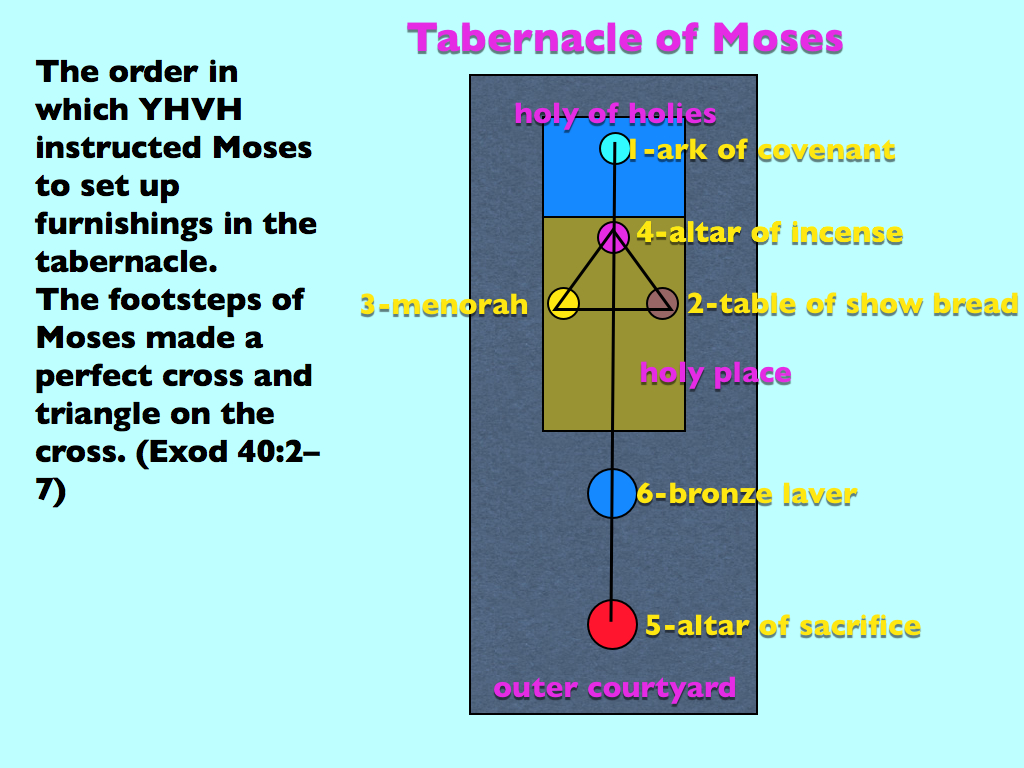
Exodus 40:2–7, Set up the tabernacle. YHVH’s instructions to Moses to set up the furnishings in the tabernacle followed a particular order. Moses first started in the holy of holies, then proceeded to the table of show bread, then moved across to the menorah, then over to the altar of incense, and then down to the altar of sacrifice within the tabernacle’s courtyard, and then up to the bronze laver. The outline of Moses’ movements make a triangle on a cross with the base of the triangle forming the cross arm of the cross. The base of cross corresponds to the altar of sacrifice, while apex of the triangle corresponds to the altar of incense and the top of the cross, which extends past the apex of the triangle is where the testimony in the holy of holies is.

Tabernacle Set-Up Order

Would anyone care to posit their opinion on the spiritual significance of this geometric pattern?


Shabbat Shalom!

Shabbat Shalom Flower


It’s Time to Turn the Church Inside Out

Want to get radical? Most church congregations hold their meetings indoors where no one on the outside can see or hear them. How about turning the church inside out? Instead, hold services outside in the parking lot for the whole world to see? Take the light of the saints out of the bushel basket called a church building and put it outside!

20327564

This Sabbath (Shabbat) afternoon, our congregation will be holding an outreach Shabbat services in the parking lot (along a busy boulevard) of the church building we rent. We’re going to have live music, worship dance, worship flag ministry, preaching, passing out food to the hungry, passing out Bibles and tracts to the spiritually hungry, and praying for those with needs. Below is what will be on a flyer we’ll be passing out to those who drop in to  visit us.

To help you on your spiritual journey, here are a number of free resources our ministry makes available:

Continue reading →


What Is Truth?

John 17:17, Truth. Yeshua, the One sent to this earth from Elohim in heaven, says here, “Thy [Elohim’s] Word is truth.” In Matthew 4:4, Yeshua said, “Man shall not live by bread alone, but by every word that proceeds out of the mouth of Elohim.”

32351753

So what is truth? The word in Hebrew for truth is emet (spelled aleph, mem, tav), which is comprised of the first, middle and last letters of the Hebrew alphabet. Truth embodies everything from the beginning to the very end of YHVH’s Word (literally, his Torah or the first five books of the Bible, and secondarily, the whole Bible from Genesis to Revelation).

Interestingly, the Scriptures call Yeshua “the beginning and the end of our faith” (Heb 12:2), and likens him metaphorically to alpha and omega (Rev 1:8, 11; 21:6; 22:13), which are the first and last letters of the Greek alphabet. These letters corresponds in symbolic meaning to the aleph and tav, which are the first and last letters of the Hebrew alphabet.

Continue reading →


Holiness Is Like a Crown of Pure Gold

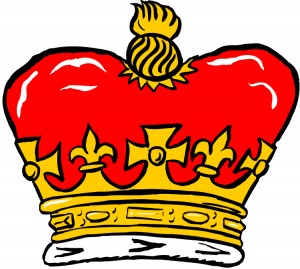
Exodus 39:30, A crown of pure gold. What words were written on this golden crown that the high priest wore? Why did YHVH command that these words be written on the crown? To answer that question, think of this: What one word best describe who YHVH is? Most Christians would say that love is YHVH’s chief attribute. But is this what the Scriptures teach? Is there something higher? What are the six-winged seraphim declaring about YHVH Elohim day and night before his throne? (See Isa 6:5; Rev 4:8.)
20731763 Now consider this. YHVH made man in his own image (Gen 1:26), and wants man to become like him in character (note Lev 11:44,45; 19:2; 20:7). Now read Revelation 14:1 and compare with Revelation 7:3. What does YHVH put on the heads of his end-times servants? What are the two noteworthy characteristics of YHVH’s end-times saints? (Note Rev 12:17; 14:12.) Holiness, Torah-obedience and a faith in Yeshua all go hand-in-hand.

Now let’s bring this brief discussion full circle. As the high priest of old wore a gold crown inscribed with the words “Holiness to YHVH,” what does YHVH expect of his end-times saints? (See Heb 12:14; 1 Pet 1:15.) What does Peter call the saints of the Holy One of Israel? (See 1 Pet 2:9.) What will YHVH’s saints become in Yeshua’s Millennial kingdom? (Read Rev 1:6; 5:10; 20:6.)

The word holiness (Heb. kadosh) as used in the Scriptures simply means “set-apart or the state of that which belongs to the sphere of the sacred, and which is distinct from the common or profane.” Elohim as the Creator is transcendent above his creation or that which is profane, earthly or worldly.

Being kadosh isn’t only a positional consideration, but an ethical one as well. The Torah is a reflection of the ethical qualities of Elohim, and is man’s ethical code book showing him how to be holy, set-apart or kadosh as Elohim is. Holiness in the Torah involves what we think, what we say, and what we do.

This code of holiness which is a pathway to a relationship with our Father in heaven teaches us how to worship (or love) Elohim, and how to treat (or love) our fellow man. Yeshua, the Living Word or Torah of Elohim (John 1:1, 14) showed us how to walk out the Torah perfectly, and he then empowers us through his Spirit to live out the Torah’s holiness code, but this is another discussion.

 

Where Are You in the Tabernacle of Moses?

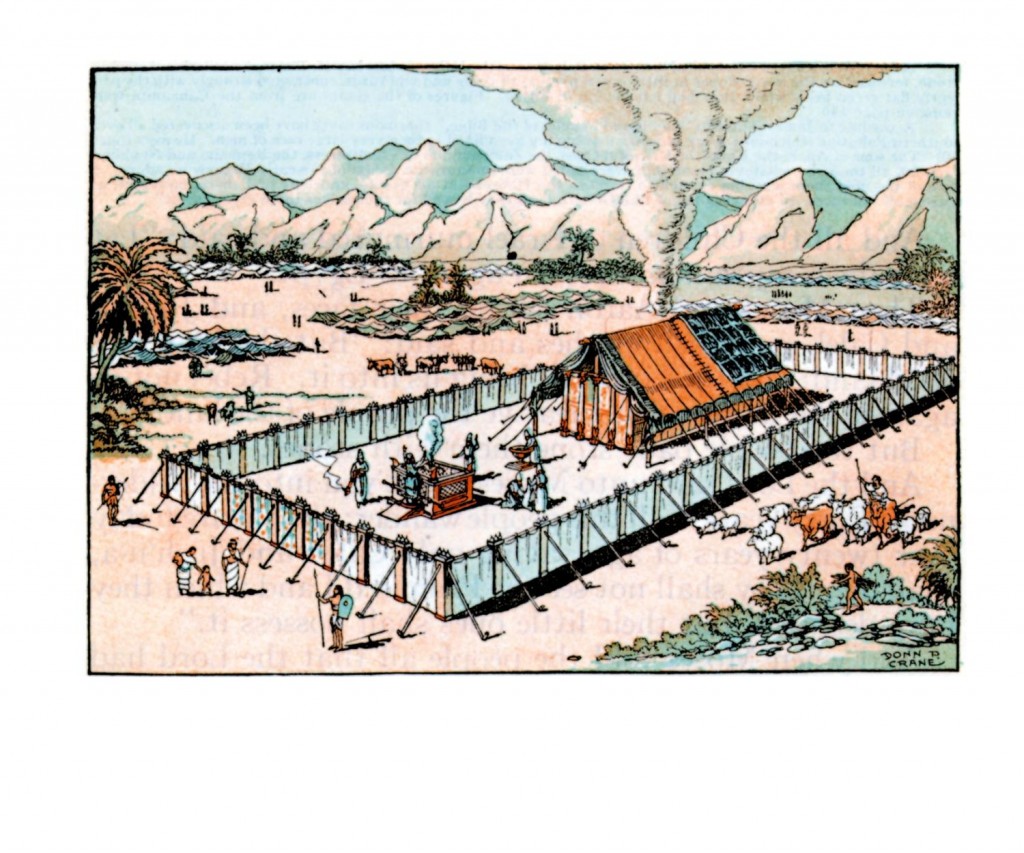
The Tabernacle of Moses—A Picture of One’s Spiritual Journey. The Tabernacle of Moses from its from to back represents one’s progression in one’s spiritual journey starting with initial salvation leading to eternal life in YHVH’s eternal spiritual kingdom. Where would you place yourself in the tabernacle with regard to your spiritual walk?

Taberncale-a 257142

In the outer court of the tabernacle, all the rituals and furnishings pointed to death, judgment, washing or cleansing. These prophetically foreshadowed salvation through Yeshua’s atoning death on the cross, Yeshua being the door to salvation, and baptism for the remission of sins. In the set-apart (kadosh or holy) place inside the tabernacle, everything there pointed to life, light, food, fragrant incense, the fruits and gifts of the Set-Apart Spirit. The outer court speaks of basic salvation for the redeemed believer in Yeshua, while the set-apart place speaks of spiritual growth and maturity, of moving from spiritual babyhood into spiritual adulthood or maturity.

Paul speaks of man being subdivided into body, soul and spirit (1 Thess 5:23). The tabernacle’s outer court seems to relates to the physical realm, while the Set-Apart Place speaks more of the psychological, volitional and emotional aspects of man’s inner realm or psychological realm (i.e., his soul), and the most set-apart place (kadosh hakadoshim or the holy of holies) portrays man approaching YHVH through the realm of his spirit man.

As one progresses into the tabernacle, it is as if YHVH is drawing man into an ever deeper Continue reading →