Blog Scripture Readings for 3/17 through 3/23/13

Aside

Parashat Tzav — Leviticus 6:1 (6:8 in Christian Bibles) – 8:36
Haftarah — Malachi 3:4–24
(4:6 in Christian Bibles)  **
Prophets — Isaiah 38:1 – 45:25
Writings — Proverbs 12:1 – 18:24
Testimony — Acts 2:39 – 7:37

Most of this week’s blog discussion points will be on these passages. If you have general comments or questions on the weekly Scripture readings not addressed in a blog post, here’s a place for you to post those. Just use the “leave a reply” link below.

The full “Read Through The Scriptures In A Year” schedule, broken down by each day, can be found on the right sidebar under “Helpful Links.” There are 4 sections of scripture to read each day. One each from the Torah, the Prophets, the Writings, and from the Testimony of Yeshua. Each week, the Torah and haftarah readings will follow the traditional one-year reading cycle.

Weekly Blog Scripture Readings for 3/17 through 3/23/13.

** A different Haftarah is read when it is a special sabbath in Jewish tradition. On 3/23 is the traditional “Shabbat HaGadol” (The Great Shabbat), which is the Sabbath that precedes Passover. Malachi 3:23 (or 4:5 in Christian Bibles) reads:

“Behold, I am going to send you Elijah the prophet before the coming of the great (haGadol) and terrible day [of YHVH].”


 

Got the Baptism of the Spirit?

It’s  All About Spiritual Activation

To enter into a relationship with YHVH Elohim, our Creator and Father in heaven, and to become his sons and daughters, we must be spiritually activated.

Holy Spirit fire 15205497

Man is comprised of body, soul and spirit (1 Thess 5:23). Before being spiritually regenerated or born again, our soul (our mind, will and emotions) controls what we think, say and do. The Scriptures talk say this about the spirit in man.

But there is a spirit in man: and the inspiration of the Almighty giveth them understanding. (Job 32:8)

Who knoweth the spirit of man that goeth upward, and the spirit of the beast that goeth downward to the earth? (Eccl 3:21)

The burden of the word of YHVH for Israel, saith YHVH, which stretcheth forth the heavens, and layeth the foundation of the earth, and formeth the spirit of man within him. (Zech 12:1)

For what man knoweth the things of a man, save the spirit of man which is in him? even so the things of Elohim knoweth no man, but the Spirit of Elohim. (1 Cor 2:11)

Man can’t enter into a relationship with a YHVH who is a spirit through his soul. Elohim is a Spirit, and we must relate to  him through the Spirit.

But the natural man does not receive the things of the Spirit of God, for they are foolishness to him; nor can he know them, because they are spiritually discerned. (1 Cor 2:14)

But the hour cometh, and now is, when the true worshippers shall worship the Father in spirit and in truth: for the Father seeketh such to worship him. Elohim is a Spirit: and they that worship him must worship him in spirit and in truth. (John 4:23–24)

For man to relate to Elohim, he must do so through his spirit. This means man’s spirit must be activated at the time of his new spiritual birth. When this occurs, Continue reading →


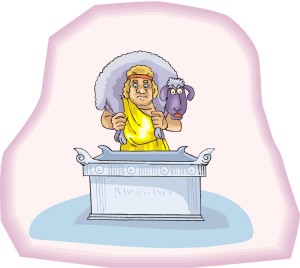
Why the Biblical Sacrificial System?

A Brief Study of the Sacrificial System—The Purpose of Sacrifice

Lamb sacrifice

  • The Levitical system foreshadowed and pointed to the Messiah’s ultimate sacrifice (Heb 9:11–12).
  • The tabernacle offerings were specifically designed to spiritually draw the offerer near to Elohim through the  sacrifice of a prescribed animal (Ps 51:16–17; 50:12–15 cp. 1 Pet 2:21).
  • Elohim commanded offerings to assist the offerer to better understand himself; his attitude, and his personal relationship with Elohim (e.g., Gen 3:21; 4:3–5; 8:20; 22:1–2 cp. 1 Cor 11:28).
  • Altars were erected by the patriarchs in order to honor Elohim through sacrifice after having had direct contact with him (Gen 12:6–8; 13:18; 26:24–25; 35:1; 35:2–4; Exod 17:13–16; cp. Exod 20:12).
  • Proper and regular sacrificial offerings kept the children of Israel in direct contact with the Elohim of the patriarchs (Exod 5:3; 10:25; cp. 1 Tim 2:5).
  • To make the offerer holy (set-apart) so that he would be allowed to approach and commune with the Set-Apart Elohim of Israel (Isa 43:15; 57:15; Lev 19:2 cp. 2 Cor 6:16–18).
  • Under certain circumstances, blood, as used in the Levitical system, could serve as a purification agent for both people and objects (Heb 9:18–23 cp. Luke 2:22–24).
  • The blood of the animal sacrifices served to cover the offerer’s sins, thereby allowing him to draw near to the Set-Apart Elohim of Israel. However, the offerer could only be forgiven for specific sins through full repentance and by returning to Elohim’s way of life as outlined in the Torah (Lev 1:4; 4:35; 23:27–28; Heb 10:3–4; cp. Rom 4:7–8).
  • The purpose of the animals offered by the Levitical priesthood served as a shadow of the blood of Messiah, which does not merely cover our sins, but removes all of the sins of the person who accepts Yeshua’s offering of himself for that sinner (Heb 9:11–12, 24–28; 1 Pet 1:18–19; Eph 5:25–27; Lev 25:47–49; Rom 5:11; John 1:29 cp. Heb 13:10–13).

YHVH instituted the biblical sacrificial system at the fall of man, and it pointed to the coming of Yeshua the Messiah, the Redeemer and Savior of mankind. Depending on how one understands the passages recording the vision of Ezekiel’s Temple (Ezek 40–48), there may or may not be a reinstitution of part of or the whole sacrificial system during the millennium. Some believe that Ezekiel’s Temple is only an allegorical picture of Yeshua on the cross and speaks to YHVH’s plan of salvation and therefore will never be built. Others feel that it is yet to be built. This author favors the former thesis.

After the fall of man, YHVH made Adam and Eve coats or garments of skins or leather (Gen 3:21). Though the Scriptures don’t tell us, we can guess these were made of leather from a kosher animal such as a cow, sheep or goat. In other words, YHVH probably sacrificed an animal to cover their physical and spiritual nakedness. This would have marked the beginning of the sacrificial system and thus pointed to Yeshua’s atoning death on the cross through his shed blood—the Lamb slain from the foundation of the world.

The next occurrence of a sacrifice was that of righteous Abel in Genesis chapter four. After that, animal sacrifices become a common occurrence with the male head of each family acting as the officiant or priest for his family. It was not until the golden calf incident (Exod 32) that the responsibility of the male head of the family to perform sacrifices passed to the Levites, thus, initiating the Levitical priesthood with its sacrificial system.

Sacrifices are no longer necessary, since Yeshua our Messiah offered his body as the penultimate sacrifice for our sins, once and for all, forever (Heb 10:10–21). HalleluYAH!!!


Happy Biblical New Year!

Have a blessed and fruitful new year abiding in Yeshua the Messiah our Vine and our Doorway to life. May you remain steadfastly and passionately in the River of Life of His Word and Spirit under the covering of His blood and under the shelter of His wings!

New Year, Happy

By the way, for fun, go to Google and in the search window, type in “Rosh Chodesh” and then click on Google images. The photo on the left will pop up near the top of the page. This image has been “borrowed” by many people, and we have seen it appear on other people’s websites and in at least one book.

Want to know the truth about it? That’s a picture my wife took of me blowing my shofar about three years ago on the Oregon coast in the town of Canon Beach. We were staying in a hotel overlooking the Pacific Ocean, and it happened to be Rosh Chodesh (the beginning of the month). From the motel room window I could see the sliver of the new moon, so I grabbed my shofar and went outside to blow it to signal the new month’s arrival as per Psalm 81:3. She snapped this photo and added the wording. This graphic now permanently resides on the home page of our website (http://www.hoshanarabbah.org).

As Paul Harvey used to say, “And now you know the rest of the story.”


The Passover and the Seder Demystified

This is a long teaching (a little over 6 standard pages), but it will help you to understand the Passover holiday, how it relates to you as a redeemed believer in Yeshua, and the importance, relevance and blessing of celebrating it. 

Personally, I’ve been celebrating the Passover for almost 50 years. It is my privilege to share with you a few things I’ve learned along the way about the biblical festival.

I hope you enjoy the following teaching. It covers a lot of ground in a short space, so buckle your seat belts and hold on!

Passover

Isn’t your life already busy enough? Who has time for a six-hour Passover Seder commemorating something that happened thousands of years ago? What could this possibly have to do with my life here and now, you may ask? How can a 3500-year-old Biblical ritual in any way relate to those living in the age of the laser, satellites, the worldwide web and computers? Well, let’s see!

The Preacher said in Ecclesiastes 3:15, “That which is has been already and that which will be has already been.…” Life is full of paradoxes. Do advancements in technology, science, economics, medicine, religion, and world government really promise to give men the rest for their weary souls for which they long?

How about a different approach to the questions and problems facing modern man? Is it possible to go forward by going backwards? This is a thesis that the ancient prophet Yermeyahu (Jeremiah) proffered to those who had ears to hear. He said, “Thus says YHVH, ‘Stand by the ways and see and ask for the ancient paths, where the good way is, and walk in it; and you will find rest for your souls. But they said, we will not walk in it’” (Jer 6:16). What were those ancient paths to which this white-haired Jewish prophet referred? This question is answered three verses later: “Because they have not listened to My words, and as for My Torah, they have rejected it also” (verse 19). YHVH through his prophets has been showing men the way of rest for their souls for thousands of years, yet men consistently refuse to listen. They always have a better way, so it seems!
The festival of Passover is one of the most ancient paths to be found in all of the Scriptures. In it are contained clues that will help the partakers of it to understand the past, present and the future. Continue reading →


New Video: Why Celebrate Passover? The Seder Explained

This video explains the relevance of the ancient Passover ritual to the redeemed believer in Yeshua of the 21st century, and why celebrating Passover brings a special blessing.

To watch this video go to:


The Church Turned Inside Out—Parking Lot Outreach

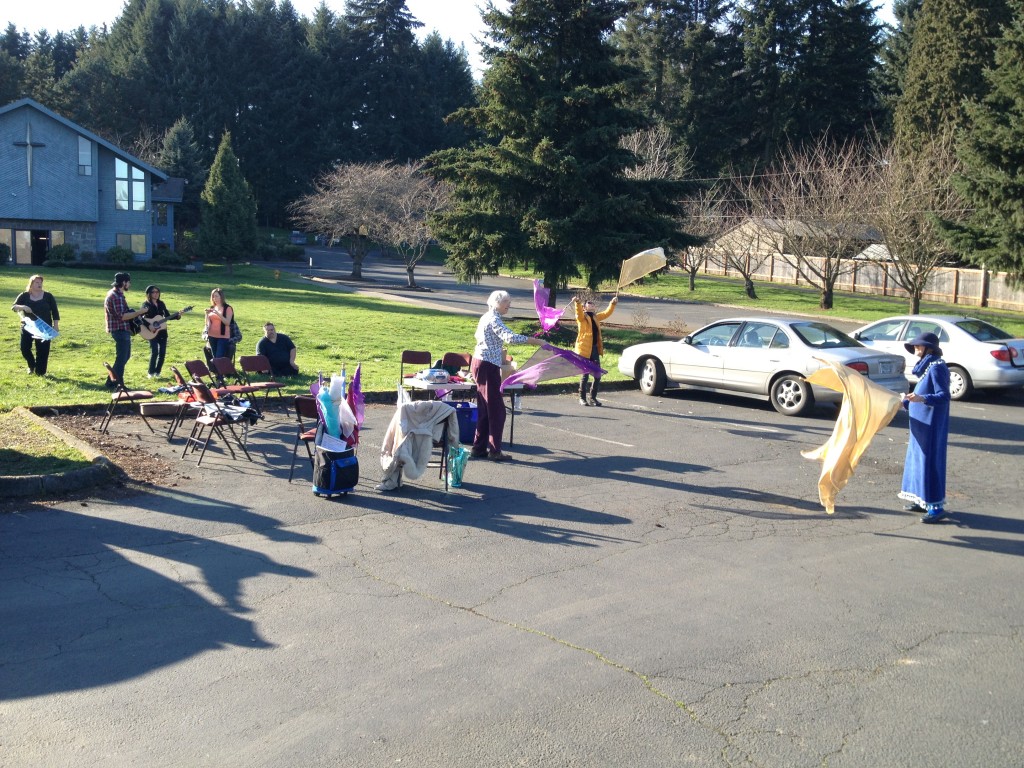
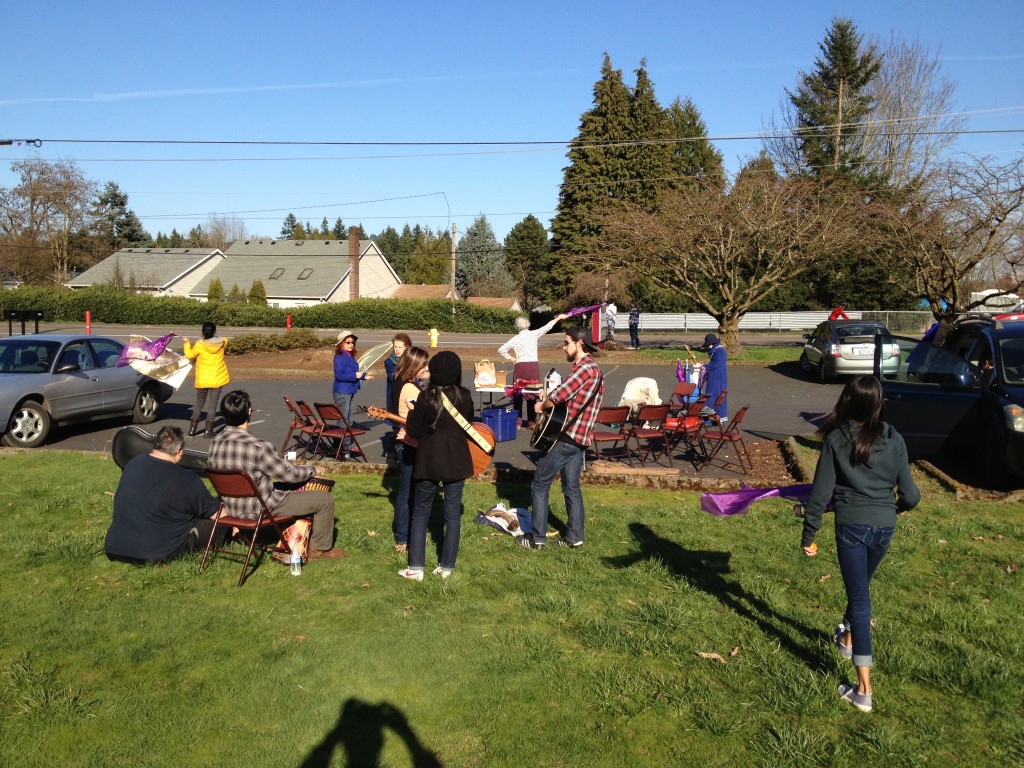
As mentioned in an earlier post, yesterday on the Sabbath our small congregation rather than meeting in our church building, gathered instead  in the church’s parking lot along a busy boulevard.

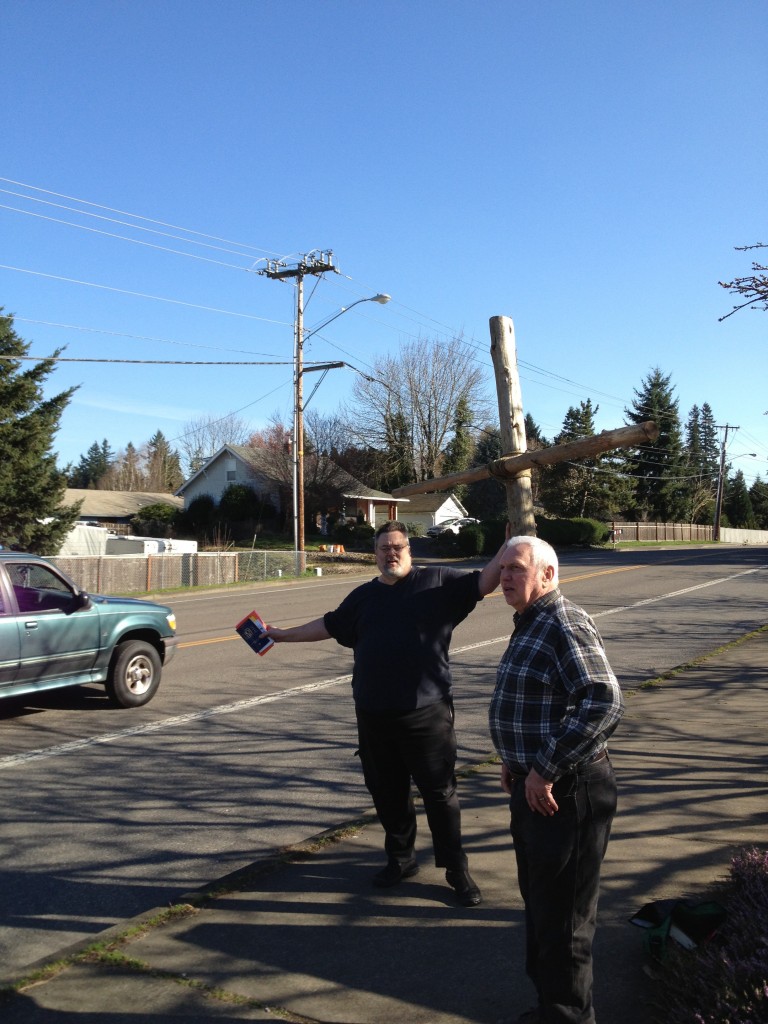
We had music, prayer, worship flags, a little teaching and the kids played in the field in front of the church. Several people passed out tracts and Bibles to pedestrians, and a man and one of our teens held up a nine-foot log cross on the sidewalk in view of passing cars.

Although YHVH blessed us with an exquisitely beautiful spring day, there weren’t very many pedestrians. Only a few tracts were passed out.

Notwithstanding, our folks learned what it was like to display their faith in public and to become a “fool” for Yeshua. This is an excellent exercise for our spiritual character development.

We will pray and seek YHVH as to what type of outreach he wants us to do next for him in the public arena. We’re already kicking around some ideas. We’ll probably do the parking lot outreach again, but with some additions using a different approach.

Stay tuned to this blog. I’ll soon be uploading a pdf, printable version of the gospel tract I wrote and that you can use as your own personal evangelistic tool. The tract has room for you to write your own name and phone number on it.

Here are some photos I took of our outreach.

Singing and worshiping in the church parking lot.

Singing and worshiping in the church parking lot.

The church turned inside out for Yeshua and the advancement of the kingdom of Elohim.

The church turned inside out for Yeshua and the advancement of the kingdom of Elohim.

Steve and Dennis standing on the sidewalk along Hall Blvd. with the cross and  Bibles and tracts.

Steve and Dennis standing on the sidewalk along Hall Blvd. with the cross and Bibles and tracts.