Matthew 24 and Revelation Synced

Integrating the End-Times Scenarios of the Olivet Prophecy and the Book of Revelation

The General Tribulation Period

Certain aspects of the prophetic scenario that Yeshua lays out in Matthew 24 were fulfilled in A.D. 70 with Jerusalem’s destruction. Discussing the events around A.D. 70 is beyond the scope of this work, so I’ll pass over this subject and focus on those prophecies that are clearly eschatological (i.e., those that deal with end-times events) in nature.
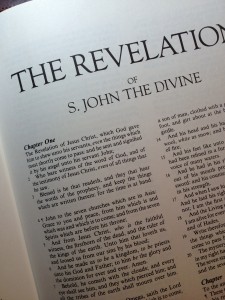
Revelation 1

The time period of the Olivet Prophecy started in the first century A.D. and continues until the second coming.

Matthew 24:4–8 describes conditions that existed on earth at A.D. 70, and that would continue and intensify up until the second coming. These include:

  • Religious deception — the spirit of Antimessiah. (John talks about this spirit in his first epistle, and says that it was active in his day, 1 John 2:18–19.)
  • Wars and rumors of wars.
  • Famines.
  • Pestilence.

These four conditions answer the disciples’ question about what would be the signs of the end times (Matt 24:3), and they also correlate one-to-one with the first four seals (commonly known as the four horsemen of the apocalypse) of Revelation 6.

Religious deception corresponds to the first horse (Rev 6:2).

Wars and rumors of wars corresponds to the second horse (Rev 6:3).

Famines corresponds to the third horse (Rev 6:5).

Pestilence corresponds to the fourth horse (Rev 6:7).

Next in Matthew 24 comes the martyrdom of the saints — something that has been happening since the death of Stephen in the Book of Acts to this present day (Matt 24:9–14). This martyrdom corresponds with the fifth seal of Revelation 6:9–11.

There are two groups of martyred saints: those who are killed before the end of the tribulation period and just before the beginning of the great tribulation, and those who are martyred afterwards. This second martyrdom completes the martyrdom of saints that has been going on over the ages (Rev 6:11lp).

The great end-times martyrdom of saints corresponds with the worldwide preaching of the gospel (Matt 24:14). This prophecy of Yeshua about the gospel being preached to all the world has only been fulfilled recently. Continue reading →


Blog Scripture Readings for 9/1 through 9/7/13

Aside

Parashat Ha’azinu — Deuteronomy 32:1 – 32:52
Haftarah — 2 Samuel 22:1 – 22:51 | Hosea 14:2-10; Micah 7:18-20; Joel 2:15-27**
Prophets — Habakkuk 3:1-19; Zephaniah 1:1 – 3:20; Haggai 1:1 – 2:23; Zechariah 1:1 – 1:21
Writings — 2 Chronicles 14:1 – 23:21
Testimony — Revelation 2:1 – 8:13

Most of this week’s blog discussion points will be on these passages. If you have general comments or questions on the weekly Scripture readings not addressed in a blog post, here’s a place for you to post those. Just use the “leave a reply” link below.

The full “Read Through The Scriptures In A Year” schedule, broken down by each day, can be found on the right sidebar under “Helpful Links.” There are 4 sections of scripture to read each day. One each from the Torah, the Prophets, the Writings, and from the Testimony of Yeshua. Each week, the Torah and haftarah readings will follow the traditional one-year reading cycle.

Weekly Blog Scripture Readings for 9/1 through 9/7/13.

** A different Haftarah is read when it is a special sabbath in Jewish tradition. The Shabbat that falls between Yom Teruah and Yom Kippur is called “Shabbat Shuvah” or “Sabbath of Return/Repentance” and this special Haftarah is read on that day. On the calendar that begins the new year with the aviv barley and the sighting of the first sliver of the new moon, Shabbat Shuva would fall a week later on 9/14 and 2 Samuel 22 would be read for this week’s Haftarah.


Here Comes the Book of Revelation!

In light of events happening in the Middle East, let’s review the Book of Revelation. 

Introduction to the Book of Revelation

The Koine Greek name for the Book of Revelation is Apokalupsis from which our English word apocalypse derives, is a word that in the minds of most people conjures up visions of horrific and cataclysmic events in which there is war, political and environmental upheaval involving mass death and destruction. This idea is a misnomer however. Although the Book of Revelation indeed foretells of a cataclysmic end-times scenario, the Greek word apokalupsis literally means “laying bare, making naked; a disclosure of truth, instruction concerning things before unknown, manifestation, appearance,” and hence our English name for this book: Revelation. This meaning is made clear in the first verse of this same book.

36923597

The Revelation of Yeshua the Messiah, which Elohim gave unto him, to shew unto his servants things which must shortly come to pass; and he sent and signified it by his angel unto his servant John.

The Book of Revelation is just that — a revelation of things to come to pass, which Yeshua is making known to his servants (plural). This includes you and me.  Continue reading →


Christian Confusion Over the Torah

Deuteronomy 31:10–13, You shall read this Torah before all Israel. 

Verses like this tend to expose the theological confusion that occurs in the minds of many Christian Bible teachers. For example, Christian commentator Matthew Henry on this verse writes about the need to read the Word of Elohim and that doing so will “help us to keep his commandments.” Yet elsewhere he says in the same commentary about the same laws that the commandments or laws of YHVH “are done away with.”

Christian confusion about the Torah

Christian confusion about the Torah

Statements like this are representative of a split and incongruous, double-speak thinking on the part of many Christian Bible teachers and people when it comes to the commandments or laws of Elohim. Some laws, they say, we are to keep (e.g., thou shalt not murder, lie, commit adultery, etc.), but other laws we can disobey (e.g., the Sabbath, dietary laws, and biblical feasts).

Is it possible to have it both ways: to believe that we need to keep his commandments, yet teach they are done away with? If so, then what is the meaning of such biblical phrases pertaining to YHVH’s Torah or Word as “forever,” “for a thousand generations,” “the same yesterday today and forever,” “till heaven and earth pass away,” “I change not,” and “think not that I came to destroy the Torah-law?” Is ­YHVH’s Word inconsistent and contradictory, or is this, instead, the case with the thinking of men? Is YHVH’s immutable character flawed with regard to keeping his Word, promises and standards or is man the one at fault?

Do we have a high enough view of YHVH Elohim and fear him and tremble at his Word (Isa  66:2), or have we tried to demote him and the veracity of his Word by contorting YHVH and his Word to fit the mindset of changeable and inconsistent man (which the Scriptures define as idolatry)? Have we bought into the lie that the serpent proffered at the Tree of Knowledge in the Garden of Eden when he told the man and the woman that YHVH really did not mean what he said and that humans can take the “have it your own way” and “pick and choose” approach when it comes to obeying the Word of YHVH (a philosophy that forms the basis for the religious movement called secular humanism, which is at the heart of all the religions of the world—including much of Christianity—except the true religion of the Bible)?

How many aspects of Christian theology are no more than a thinly veiled version of the religion of humanism in disguise? These are tough questions that we as redeemed Israelites need to ponder seriously. Remember the words of Yeshua in John 14:15, “If you love me, keep my [Torah] commandments” and the words of the apostle in 1 John 2:5–5, “He that says, ‘I know him,’ and does not keep his [Torah] commandments is a liar and the truth is not in him. But whosoever keeps his Word in him truly is the love of Elohim perfected: hereby know we that we are in him.”


Paul Says Keeping Torah Is Just as Easy as Following Yeshua!

Deuteronomy 30:11–14, Does YHVH’s Torah set an impossible standard by which we are to live? If so, we are logically compelled to ask ourselves this question: Would a righteous and just Creator who is a loving Heavenly Father give to his chosen people and children a set of standards that were humanly impossible to perform, then curse them for their inability to meet these standards? If so, then we must face the fact that Elohim is an unjust and a wicked tyrant! This simply is not true!

The Torah-Word of Elohim

The Torah-Word of Elohim

If Torah isn’t an impossible standard to follow, then what is the Torah’s purpose in our lives, and why does the Creator impose the Torah upon his people? We believe that the Torah sets a standard of faith, trusting in Elohim, and that if followed it provides a system of repentance and sacrifice for obtaining forgiveness from Elohim and restoring a condition of being considered righteous in his sight. The Torah also teaches man how to achieve peace on earth and good will toward men by showing humans how to love Elohim with all their heart, soul, mind and strength and their neighbor as themselves.

Paul quotes this same Deuteronomy passage in Romans 10:6–8 where he relates the Written Torah to Yeshua, the Living Torah or Word of Elohim incarnate (in the flesh). (Compare with John 1:1, 14.) He shows that they are one in the same and that Messiah Yeshua, through his life, came to reveal to man the righteousness of the Torah-law. This righteousness is available to us if we will but have a heartfelt faith in him (Rom 10:4, 9–10) and allow him to live out his righteousness in us through the empowering work of the Spirit of Elohim. In verses 11 through 21, Paul goes on to relate this very truth to being the central message of the gospel that Isaiah prophesied would be preached to redeem both houses of Israel to Yeshua their Messiah (Isa 52:7). Furthermore, in Romans 10:4 Paul reveals that Yeshua is the end goal, target of or the full flowering or embodiment of the Written Torah in human form.


Why Go to Church?

Hebrews 10:25, Not forsaking the assembling. The following is a brief study on the importance of being in spiritual fellowship with other redeemed believers.

Church congregation 16958344

What do the Scriptures say about the necessity of believers assembling together?

Torah commands Israelites to assemble weekly on the Sabbath (Heb. Shabbat) and at the seven annual feasts, which are set-apart convocations (Heb. miqrai kodesh) and appointed times (Heb. moedim) (Lev 23:2).

Consider this: How can one properly obey the Torah without assembling weekly on Shabbat and the biblical feasts? To not be part of a congregation (a community of redeemed Israelite believers in Yeshua) and to not assemble on YHVH’s regular appointed times is to disobey the very heart and core of the Torah!

Keeping Torah is a community affair. Those who are independent and act like Robinson Crusoes and Lone Rangers are not fulfilling the requirements of the Torah. Torah was for the nation of Israel, and Israel was meant to be a united community, not a bunch of scattered, selfish, and narcissistic individuals each looking out for himself and doing what was right in his own eyes irrespective of other members of the community.

The Testimony of Yeshua (the New Testament) record shows us that the first century kahal (church) was a community. The apostles expected that redeemed believers would be attending a congregation each Shabbat (Acts 15:21).

The kahal is like a human body; in fact, it’s the spiritual body of Yeshua (Rom 12:4–5; 1 Cor 12:12–30). All the parts cannot function properly unless they come together. Shabbat and the feasts are YHVH’s appointed times when this occurs.

In Acts 2:42, we find listed the main purposes of the spiritual community of the redeemed.

The local congregation is Continue reading →


Preparing for Yom Teruah

This video shows you how to prepare spiritually for the fall biblical festivals, and for the second coming of Yeshua (Jesus) to which they prophetically point.