
How to Have Life Abundantly Without Materialism
2

The Bible reveals that Satan the devil is the great counterfeiter, who comes as an angel of light to deceive everyone including Christians. How do we know whether the gifts of the Holy Spirit are real or are just a demonic counterfeit? After all, many of the pagan (demonic) religions of the world have similar manifestations going on in them including healings, tongues, prophetic words, and so on. How do we know if what we see going on in many charismatic and Pentecostal churches is from Elohim, the devil or some other source? This video answers these questions.
The Word of Faith Movement (also known as the Prosperity Gospel or Name and Claim It), like many aspects of mainstream Christianity, contains both biblical and unbiblical teachings. In this video, I reveal how teachers like the late Kenneth Hagin borrowed from new age and science of the mind teachings and twisted Yeshua’s words in Mark 11:22–24 turning it into a gravy train benefiting them financially. We will also reveal what Yeshua really meant by, “For verily I say unto you, that whosoever shall say unto this mountain, be thou removed, and be thou cast into the sea; and shall not doubt in his heart, but shall believe that those things which he saith shall come to pass; he shall have whatsoever he saith. Therefore I say unto you, what things soever ye desire, when ye pray, believe that ye receive them, and ye shall have them.”

Nathan Lawrence, along with co-leader Donna Nash (from North Carolina), is hosting a regular online Shabbat gathering via Zoom. If you are interested in joining the group, please send me a request at natanl@earthlink.net. To date, we have been meeting continuously since November 2021.
This online gathering is only open to those who are serious about living in accordance with YHVH’s written Torah, and who are believers in and lovers of Yeshua the Messiah, the Living Torah.
If you make a request to join the group, please share with Nathan your personal testimony of your salvation (how you came to faith in Yeshua the Messiah) and a statement about your basic biblically-based beliefs. Nathan may then ask you a few follow-up questions via email or by phone if clarifications are necessary.
To date, we have a wonderfully geographically eclectic group of polite and respectful folks from all over the U.S. and several foreign countries as well. Nathan (and sometimes Donna and others) gives a Bible teaching, and there is plenty of questions and answers as well as discussions where folks share their edifying insights on various biblical topics as led by the Spirit of Elohim. We also pray for one another and sometimes even have a little praise and worship.
Also, most my recent YouTube (and Rumble) videos are messages that I have given to this fellowship and then recorded and uploaded to my channel. If you not only want to hear the message live, and but then afterwards discuss the message, ask questions or interact with Donna or me, we welcome you to join us. Our meetings typically last around three hours (the time literally flies by!), but no one is obligated to stay for the whole time. Participants come and go as they wish.
This fellowship does not take the place of a local fellowship of which you may be apart. Rather, it is complimentary to that, and is ideal for people who have no local fellowship to attend—which is many of us.
Hope to see you!
Shalom.
Nathan and Donna

David, the author of the majority of the psalms in the Bible, along with several other psalmists, were men who followed hard after Elohim. No less than Elohim himself called David a man after his own heart (1 Sam 13:14–16). The spiritual cup of David’s heart as well as the hearts of other psalmists were full and overflowing with passion for Elohim, which expressed itself in quantifiable, extreme and radical ways by today’s Western standards. What can we learn from such individuals, and how can we come to this same place of passionate and enthusiastic (meaning “inspired or possessed by God”) devotion to YHVH Elohim?
David did not merely express his passion for Elohim intellectually in the psalms through music and poetry, for Scripture records that in one case he actually removed his kingly robes that hindered the movement of his arms and legs, and danced leaping and whirling, almost naked, with all of his might in the streets of Jerusalem praising and worshipping YHVH to the disdaining scorn of his less than passionate wife. Needless to say, after that incident, David refused to have intimate relations with his wife ever again to the day of her death (2 Sam 6:23). This was likely because her heart was in a very different place than that of her husband, and he could never get close to her again. This incident demonstrates the seriousness with which David took his passion for YHVH and how he viewed those close to him who were of a dissimilar or antithetical passionate disposition.
To be sure, David was not the only Hebrew given to outward displays of passion. The Hebrews, in general, like many inhabitants of the Near East to this day, were a dynamic and emotionally passionate people, whose lives were a river that customarily overflowed its banks with a emotionally enthusiasm for their Creator. David was a quintessential stereotype of this cultural norm. But many of the Hebrew prophets demonstrated a similar emotional exuberance when urging the Israelites to return to YHVH and to worship and obey him only. This passion worked itself out in many seeming bizarre stunts in their attempts to capture the attention of a people who had lost their passion for Elohim. For example, on one occasion, Isaiah prophesied virtually naked through the streets of his city for three years warning Israel of its impending doom (Isa 20:3). One prophet even adorned himself with iron horns and then prophesied to the kings of Israel and Judah (1 Kgs 22:11). Once Jeremiah prophesied with a wooden yoke wrapped around his neck (Jer 22:11). Another time, YHVH instructed Ezekiel to build a model city of Jerusalem and to construct siege walls and battering rams to symbolize the fall of Jerusalem at the hands of the Babylonians (Ezek 4:1–4). After that, YHVH commanded Ezekiel to lay on his left side for 390 days and then on his right side for another 40 days to symbolize YHVH’s judgment against Israel (Ezek 4:4–6). If that was not enough, during this time, YHVH instructed Ezekiel to eat only beans, lentils, millet and spelt baked on a fire fueled by human excrement (Ezek 4:9–12). These are just several example of the extreme passion with which the biblical people of Elohim were willing to serve and obey their Creator.
Admittedly, in our day, YHVH is seldom asking his people to engage in such extreme practices as the ancient biblical prophets did in service to him. But sadly, most people are not even passionate enough to do the minimum that YHVH expects. For example, how many people are willing to put aside their electronic devices to which they are addicted along with their other secular activities long enough to pray for an hour a day as Yeshua instructed (Matt 26:40–41)?
Make no mistake, we are capable of becoming passionate about many things that are of interest to us—things that we really want to do, and we definitely make time in our busy schedules for these things. We can spend hours glued to our television and computers screens watching movies, engaged in social media on our electronic devices, listening to podcasts, watching sports events, playing video games and the like. In fact, today how many people hoot and holler acting crazy cheering their favorite sports team, but when it comes to being fanatical for YHVH, well, “that’s emotionalism” and “I’m not that kind of person,” we tell ourselves. “What will people think of me?”
There is no lack of distractions out there whose octopus-like arms laden with suction cups will grab us and suck us in to its jaws, while drawing us away from seeking YHVH. Why is this? Its is because too many of us have let our hearts become hard and cold for Elohim and as a result of this we have fallen into a state of lukewarmness, lost our first love for Yeshua along with the joy of our salvation.
So what is the aim and goal of this brief written homily? It is to hold up in front of each of us a mirror in which to see ourselves, and then to compare what we see with what pleases YHVH Elohim as recorded in Scripture, and thus hopefully to challenge each us to repent of our lassitude and incite us to “break up your fallow ground: for it is time to seek YHVH, till he come and rain righteousness upon you,” (Hos 10:12). Our as Jeremiah chides us to do, “For thus saith YHVH…Break up your fallow ground, and sow not among thorns. Circumcise yourselves to YHVH, and take away the foreskins of your heart, ye men of Judah and inhabitants of Jerusalem: lest my fury come forth like fire, and burn that none can quench it, because of the evil of your doings,” (Jer 4:3–4). Or as Yeshua warns us, “Nevertheless I have somewhat against thee, because thou hast left thy first love. Remember therefore from whence thou art fallen, and repent, and do the first works; or else I will come unto thee quickly, and will remove thy candlestick out of his place, except thou repent,” (Rev 2:4–5). These are sober and challenging warning words from our Messiah!
Perhaps, just perhaps, the citations below quoted verbatim from the psalms will not only reveal something about the inner hearts of righteous people who sought YHVH passionately, but will show us what they actually did to obtain and to keep their passionate hearts alive and burning with zeal. Read, mediate and pray as you allow the words of Scripture to spur you to action and to fan the flames of your love for and faith in YHVH Elohim—Yeshua the Messiah. Selah and amein.
Do you long to see and experience spiritual revival in these days of overwhelming darkness and evil? Well, revival starts in the heart of each individual as each of makes the conscious and determinate decision to seek YHVH and to allow him to revive us. Revival starts with YOU! Selah and amein.
How intense is YOUR worship of YHVH Elohim?
Shout joyfully to YHVH, all the earth; break forth in song, rejoice, and sing praises.…Shout joyfully before YHVH, the King. (Ps 98:4, 6)
Seven times a day I praise You, because of Your righteous judgments. (Ps 119:164)
Oh come, let us sing to YHVH! Let us shout joyfully to the Rock of our salvation.… Let us shout joyfully to Him with psalms.…Oh come, let us worship and bow down; let us kneel before YHVH our Maker. (Ps 95:1–2, 6)
And her saints shall shout aloud for joy. (Ps 132:16)
Lift up your hands in the sanctuary, and bless YHVH. (Ps 134:2)
I will praise You with my whole heart; before the gods [or mighty ones] I will sing praises to You. (Ps 138:1)
Let them praise His name with the dance. (Ps 149:3)
Let the high praises of Elohim be in their mouth, and a two-edged sword in their hand… (Ps 149:6)
Praise Him with the timbrel and dance… (Ps 150:4)
How intensely passionate are YOU in seeking YHVH Elohim?
My heart pants, my strength fails me; as for the light of my eyes, it also has gone from me. (Ps 38:10)
Ps 42:1 As the deer pants for the water brooks, so pants my soul for You, O Elohim.
O Elohim, You are my Elohim; early will I seek You; my soul thirsts for You; my flesh longs for You in a dry and thirsty land where there is no water.…When I remember You on my bed, I meditate on You in the night watches. (Ps 63:1, 6)
My soul longs, yes, even faints for the courts of YHVH; my heart and my flesh cry out for the living Elohim. (Ps 84:2)
My knees are weak through fasting, and my flesh is feeble from lack of fatness. (Ps 109:24)
I spread out my hands to You; my soul longs for You like a thirsty land. (Ps 143:6)
How much do YOU love Elohim’s Torah-Word?
I opened my mouth and panted, for I longed for Your commandments. (Ps 119:131)
My soul breaks [or is crushed] with longing for Your judgments at all times. (Ps 119:20)
I hate the double-minded, but I love Your law. (Ps 119:113)
Therefore I love Your commandments more than gold, yes, than fine gold! (Ps 119:127)
My eyes are awake through the night watches, that I may meditate on Your word. (Ps 119:148)
How passionate are YOU about being in the presence of YHVH?
For a day in Your courts is better than a thousand. I would rather be a doorkeeper in the house of my Elohim than dwell in the tents of wickedness. (Ps 84:10)
O YHVH, Elohim of my salvation, I have cried out day and night before You. (Ps 88:1)
When I awake, I am still with You. (Ps 139:18)
How long do YOU spend in the Word of Elohim each day?
Oh, how I love Your law! It is my meditation all the day. (Ps 119:97)
I rise before the dawning of the morning, and cry for help; I hope in Your word. (Ps 119:147)
How passionate are YOU in seeking YHVH through prayer?
Evening and morning and at noon I will pray, and cry aloud, and He shall hear my voice. (Ps 55:17)
In the day of my trouble I sought YHVH; my hand was stretched out in the night without ceasing; my soul refused to be comforted. (Ps 77:2)
I rise before the dawning of the morning, and cry for help; I hope in Your word. (Ps 119:147)
How much do YOU long for Elohim’s salvation (i.e., for Yeshua)?
My soul faints for Your salvation [i.e. Yeshua], but I hope in Your word. (Ps 119:81)
My eyes fail [cease working] from seeking Your salvation [Heb. Yeshua] and Your righteous word. (Ps 119:123)
I will also clothe her priests with salvation, and her saints shall shout aloud for joy. (Ps 132:16)
How much does the thought of sin distress YOU?
My soul melts from heaviness; strengthen me according to Your word. (Ps 119:28)
How much are YOU troubled by YOUR enemies?
I am weary with my groaning; all night I make my bed swim; I drench my couch with my tears. My eye wastes away because of grief; it grows old because of all my enemies. (Ps 6:6–7)
My tears have been my food day and night, while they continually say to me, “Where is your Elohim?” (Ps 42:3)
Let the high praises of Elohim be in their mouth, and a two-edged sword in their hand, to execute vengeance on the nations, and punishments on the peoples; to bind their kings with chains, and their nobles with fetters of iron; to execute on them the written judgment—this honor have all His saints. Praise YHVH! (Ps 149:6–9)
How much to do YOU loath evil and evil-doers who are the enemies of YHVH?
Early I will destroy all the wicked of the land, that I may cut off all the evildoers from the city of YHVH. (Ps 101:8)
I hate the double-minded, but I love Your law. (Ps 119:113)
Do I not hate them, O YHVH, who hate You? And do I not loathe those who rise up against You? I hate them with perfect hatred; I count them my enemies. (Ps 139:21–22)
Let the high praises of Elohim be in their mouth, and a two-edged sword in their hand, to execute vengeance on the nations, and punishments on the peoples; to bind their kings with chains, and their nobles with fetters of iron; to execute on them the written judgment—this honor have all His saints. Praise YHVH! (Ps 149:6–9)
How consumed with passion are YOU for the lost who do not know the Truth of YHVH’s Word?
Rivers of water run down from my eyes, because men do not keep Your law. (Ps 119:136)
My zeal has consumed me, because my enemies have forgotten Your words. (Ps 119:139)
How obedient and passionate are YOU about sharing YHVH’s with others?
Declare His glory among the nations, His wonders among all peoples. (Ps 96:3)
How much do YOU fear YHVH Elohim?
Oh, worship YHVH in the beauty of holiness! Tremble before Him, all the earth. (Ps 96:9)
How much do YOU tremble before Elohim?
My flesh trembles for fear of You, and I am afraid of Your judgments. (Ps 119:120)
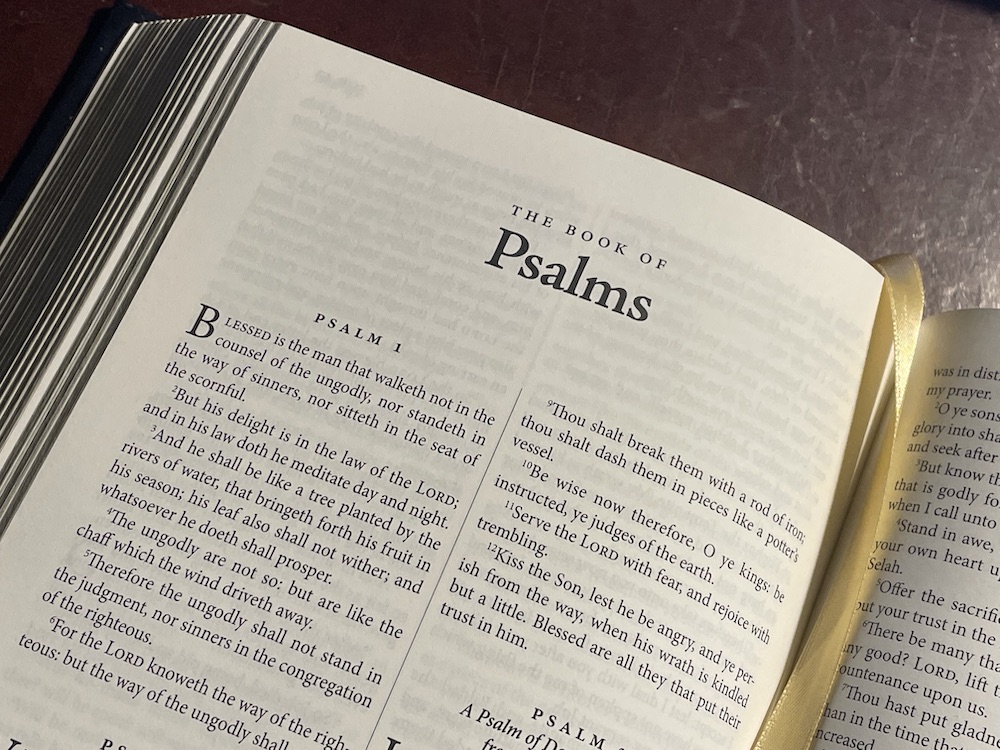
Introduction to the Psalms
Name of the Book
The Hebrew name for Psalms is Sepher Tehillim meaning “Book of Praises.” The word psalm is the Hebrew word mizmor meaning “melody” and derives from a word to mean “to sing, sing praise, make music.” The English word psalm derives from the Greek word psalmos meaning “a song sung to harp music.”
The Nature of the Book
The Book of Psalms is a collection of devotional materials including prayers, poems, and hymns some of which were set to music. Worship and praise of Elohim through music is a unifying aspect of this book. The psalms include songs of thanksgiving, hymns of praise, psalms of repentance and confession, psalms which invoke curses upon one’s enemies, psalms sung by pilgrims en route to Jerusalem, and messianic psalms.
Authors of the Psalms
This book contains psalms by at least six authors. David wrote 73 psalms (according to the titles of the psalms) and two others are ascribed to him in the Testimony of Yeshua (Ps 2, see Acts 4:25 and Ps 95, see Heb 4:7). Asaph either wrote or was responsible for preserving 12 psalms (Pss 50 and 73 through 83). The sons of Korah wrote 11 psalms (Pss 42, 44 through 49). Solomon composed two psalms (Pss72 and 127), while Etham wrote Psalm 89, Moses authored Psalm 90 (and possibly Ps 91), and Heman (Ps 88). Several Psalms have no designated author.
Categories of Psalms
The Five Books Within the Psalms
According to Jewish tradition, the Book of Psalms can be divided into five smaller books or sections. They are,
Scholars aren’t sure why Psalms is so sub-divided. One theory is that the five sections correspond to the five books of the Torah (or Pentateuch). Or they may simply be individual collections of psalms that were eventually combined to form the larger book we now have.
The first three books end with the word, “Amein and amein” (the only places in the Scriptures where this double-amein phrase occurs. The last two books end with the phrase, “Praise YHVH.”
A Topical Index to Key Subjects in the Psalms (and elsewhere)
Hebrew Words of Praise Found in the Psalms