The Bible Is the Story of Reconciliation Between Two Lovers —The Tabernacle Contains the Outline of that Love Story
Love and romance has captured the imagination of man since time immemorial. Today we see this fascination evidenced in music, movies, literature and numerous other ways including modern man’s obsession with sexuality and even, sadly, in rise of pornography and the societal acceptance of sexually perverse lifestyles.
The Creator of the universe, the Set Apart One of Israel, the Author of the Scriptures, is captivated by the concept of love and romance as well. He is the Creator of marriage and sex. In fact, his first command to man was to be fruitful and to multiply and to fill the earth with humans (Gen 1:28). To accomplish this involves sexual relations in marriage. The writer of Hebrews declares that marriage is honorable and the marriage bed is not to be defiled (Heb 13:4). Much of the Bible is devoted to the subject of love and marriage. Love and marriage at a human level is merely a shadow of something much deeper: love and marriage at a spiritual level. John 3:16, the most popular verse in the Bible, talks about Elohim’s quintessential love for mankind and alludes to this higher spiritual level.
Most people understand that poetry and poetic prose is the language of love, yet few realize that much of the Scripture is poetry (or poetic prose) in Hebraic style. Much of this poetic style is lost in the translation from Hebrew into other languages like English. For example, all the books of Psalms, Proverbs, Job, Song of Solomon, Ecclesiastes and most of the writings of the Hebrew prophets are written in a poetic style. Moreover, a Hebrew poetic style known as aggadic literature is also found in the Testimony of Yeshua (New Testament) in the parables of Yeshua.
Perhaps the greatest love song ever written by man is found in the Scriptures in the Song of Solomon. This poem is a tender and romantic story about the great love between a man and his bride. Many believe this is an allegory about YHVH-Yeshua and his bride, Israel, the body of believers called the saints. In Ephesians 5:21–33, Paul carries this marriage theme to the next level where he writes about the marriage relationship between a husband and wife and how that is a picture of Yeshua and the body of believers (the saints). He then goes on to say in verse 32 that, “This is a great mystery: but I speak concerning Messiah and the church.” The word mystery here in the Greek refers to “secret or hidden things relating to the deep and wise counsel of YHVH which is hidden to ordinary individuals and revealed only to a select or special group of people, in this case, the saints.”
Taking the idea of Yeshua and his bride, the saints to its highest level, John in Revelation 19:9 talks prophetically about the marriage supper of the Lamb and says in verses 7 and 8 that this marriage has come and his wife, the saints who have the testimony of Yeshua and keep his commandments has made herself ready by putting on the clean and white wedding garments which is the righteousness of the saints. These saints will rule and reign with Yeshua the Messiah forever and ever in his kingdom after his return to this earth.
In the Gospels on several occasions, Yeshua alludes to his upcoming marriage to his spiritual bride in typical poetic Hebraic fashion known as aggadic literature. We see this, for example, in the Parable of the Ten Virgins (Matt 25:1–13) and the Parable of the Wedding Banquet (Matt 22:1–14), not to mention the prophetic and allegorical implications found in his first recorded miracle — the changing of the water into wine at the marriage feast in Cana of Galilee. This upcoming marriage forms an essential aspect of the good news or gospel of the kingdom message that Yeshua preached. He came to prepare his bride for this wedding by urging her to “repent [of sin] for the kingdom of Elohim is at hand.” His kingdom on this earth will be fully and universally established when, at his second coming, he marries his bride, the spiritual body of believers (called the “one new man” in Eph 2:11–16), who he has redeemed with his blood, and who keep his commandments (Rev 12:17 and 14:12). At this marriage to redeemed Israel, there will be an exchange of vows (in Heb. ketubah), which Scripture refers to as the Renewed (or New) Covenant, which will be a fulfillment of Jeremiah’s prophecy (Jer 31:31 cp. Heb 8:8–13). This will cement a spiritual love relationship between YHVH and his people that will last for eternity as they together dwell in the New Jerusalem, which will be heaven on earth!
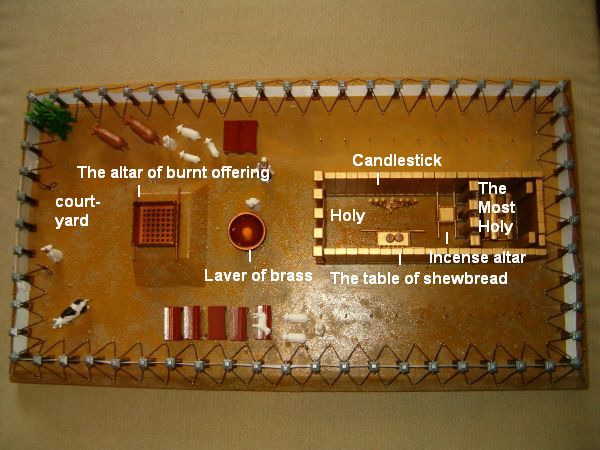
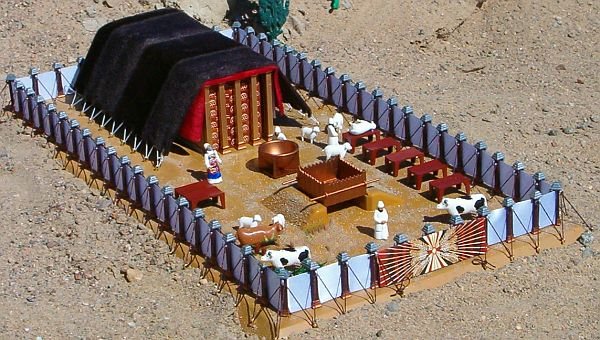
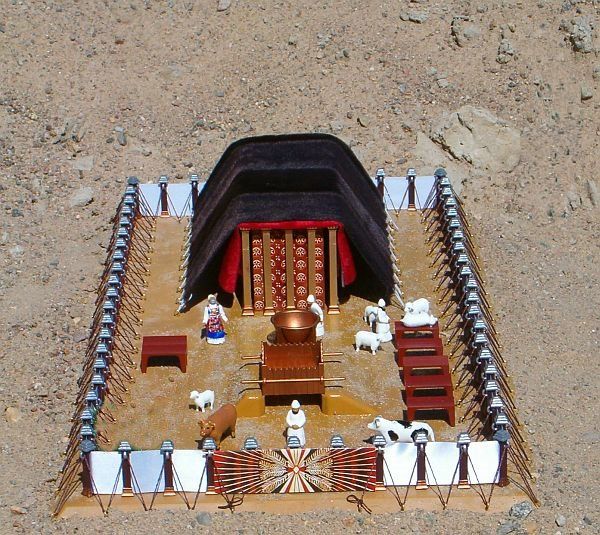
The Bible, from Genesis chapter one to the final chapter in the Book of Revelation is a love story that starts in a garden paradise with the Creator and a man and woman and ends in a city-garden and involves an eternal marital relationship between YHVH and his people. The Tabernacle of Moses outlines this story from beginning to end.
The Tabernacle, the Saint, and the Seven Stages of the Biblical Wedding
What follows is our attempt to integrate the seven stages of the biblical wedding with the seven stations in the Tabernacle of Moses in an attempt to show how YHVH’s plan of salvation as revealed in the tabernacle also relates to his plan to marry redeemed Israel (the saints) at his second coming. This is but one possible way to understand this complex subject. As we shall see, the numbers seven and eight figure prominently into this scenario. Seven is the biblical number for perfect completion, while eight is the number for new beginnings or infinity.