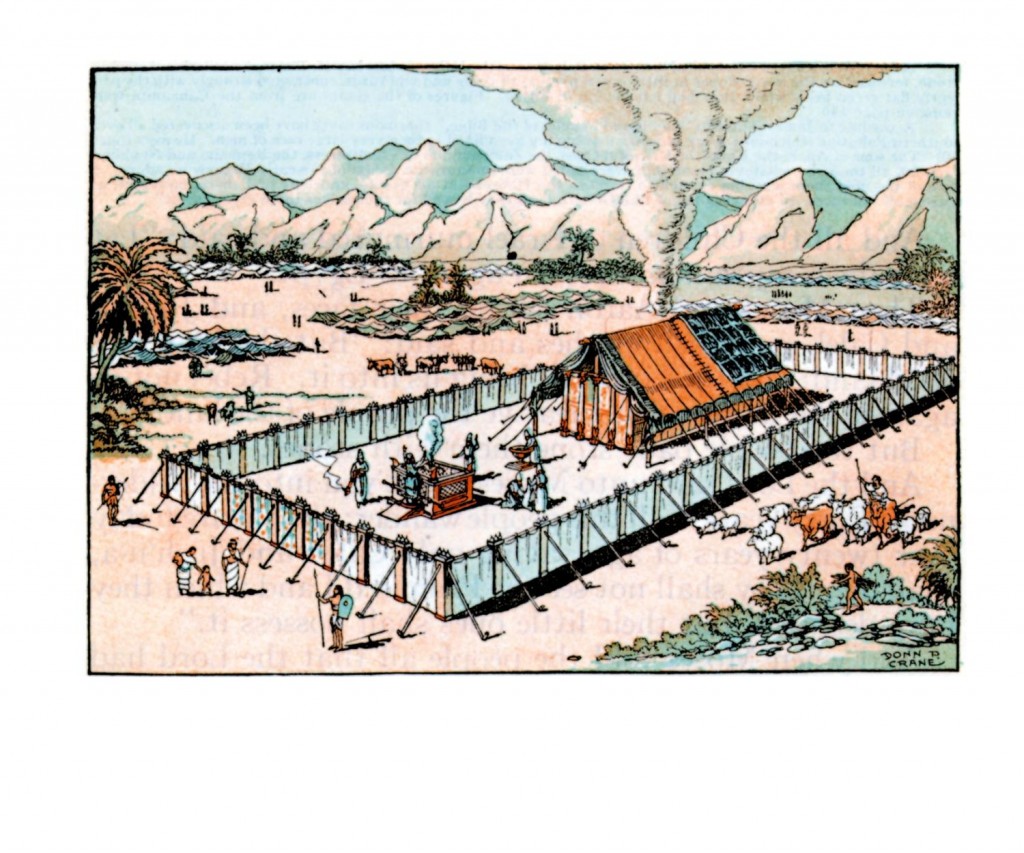
There are more reasons to learn about the Tabernacle of Moses than you realize

Why Study the Tabernacle (or Temple)?

  • Elohim commanded his people to study it. In Ezekiel 43:10–11, YHVH tells Ezekiel to explain to his people the layout of the temple “that they may be ashamed of their iniquities [Torahlessness]” and presumably repent or return to a spiritual relationship with him.
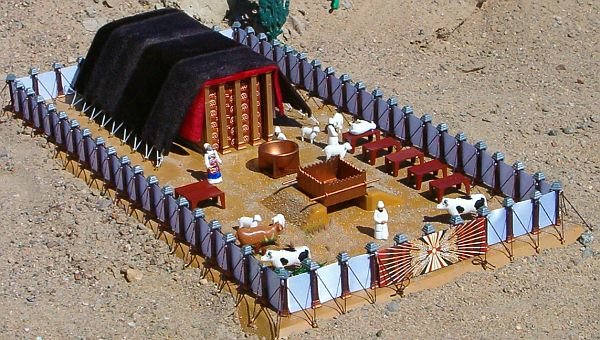
tabernaclekit4


  • Elohim commanded his people to build the tabernacle (and latter the temples, see Exod 25:8; 29:43; 1 Chron 17:11–15); therefore, it must be important, and we should study it to understand its significance. After all, one-half of the Torah and one-third of the 613 Torah commandments deal with the temple, so it behooves us to understand it’s spiritual significance.
  • Elohim’s name resided in the tabernacle (and temple, Deut 12:5–6), and it’s where his place of abiding on the earth (Exod 25:8).
  • Both the tabernacle and first and second temples in Jerusalem were the spiritual centers for the nation of Israel. Elohim’s manifest presence was found within these physical structures, and this phenomenon powerfully unified the 12 tribes of Israel making them feel as though they were one nation under YHVH’s divine protection and guidance (Exod 40:34–38). The temple became the focal point for all worship for the entire nation (Ps 5:7). For example, it was the place where YHVH chose to place Continue reading →
 

Welcome to the world of the Tabernacle of Moses

Exodus 25:8–9, A sanctuary … tabernacle. 

If you were the Creator of the universe, what means would you use to communicate with those that you had created through love in your likeness and image? In a remote way, it’s like a human standing over an anthill trying to communicate with the ants. How do you do it? Similarly, how does an all powerful, Spirit Being, loving Father in heaven relate to his mortal children who are but mere specks of dust without vaporizing them with his raw power? The difficulty is compounded when fearful humans don’t want to hear the voice of Elohim, which is what happened when YHVH Elohim’s voice thundered from Mount Sinai. The children of Israel begged him not to talk to them, lest they die. They asked the Almighty One to speak to them instead through Moses (Exod 20:19).

Taberncale-a 257142

When man sinned at the tree of knowledge, and YHVH kicked them out of the Garden of Eden, direct communications between man and his Maker were hampered, if not all but cut off. However, Elohim had a plan to restore the loving relationship he had with man before the rebellion. But if men refuse to hear you when you speak, what are you do?

To be certain, the Almighty doesn’t lack for ways to communicate with men. Man is without excuse when it comes to hearing Elohim, for even the heaven’s declare the glory of the Creator and the plans he has for mankind. The visible things of this creation shout loudly about the spiritual mysteries heaven desires to reveal to its earthly subjects. Furthermore, from time to time over the millennia, Elohim has chosen to speak directly to some select servants through dreams, visions, signs, wonders, angels, and even once through a donkey! But how does he speak to a whole nation, if that nation is plugging its ears and refusing to hear its Master’s voice?

Enter into the picture the Tabernacle of Moses, which was literally a three-dimensional gospel message tract. It is the visual demonstration of the whole message of the Bible in a building — the blueprint of the plan of redemption of wayward man. Continue reading →


Blog Scripture Readings for 1/26 through 2/1/14

Aside

THIS WEEK’S SCRIPTURE READINGS FOR STUDY AND DISCUSSION:

Parashat Terumah — Exodus 25:1 – 27:19
Haftarah — Numbers 28:9-15; Isaiah 66:1-24 **
Prophets — 2 Kings 3:1 – 9:37
Writings — Psalms 119:17 – 119:128
Testimony — Luke 20:1 – 22:53

Most of this week’s blog discussion points will be on these passages. If you have general comments or questions on the weekly Scripture readings not addressed in a blog post, here’s a place for you to post those. Just use the “leave a reply” link below.

The full “Read Through The Scriptures In A Year” schedule, broken down by each day, can be found on the right sidebar under “Helpful Links.” There are 4 sections of scripture to read each day. One each from the Torah, the Prophets, the Writings, and from the Testimony of Yeshua. Each week, the Torah and haftarah readings will follow the traditional one-year reading cycle.

** A different Haftarah is read when it is a special sabbath in Jewish tradition. This Sabbath is designated Shabbat Rosh Chodesh. Otherwise 1 Kings 5:26-6:13 would be read.

Weekly Blog Scripture Readings for 1/26 through 2/1/14.


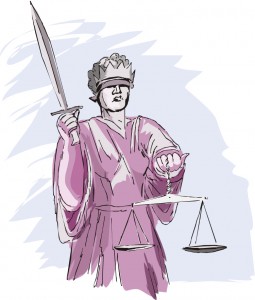
An unjust judge vs. the Just Judge of the universe

Luke 18:2, A judge. In this parable of the Persistent Widow and the Unjust Judge, Yeshua is using a Hebraic form of reasoning or argument called kol v’khomer where a point is made from a lesser weight to heavier weight. In other words, if premise A is correct, then how much more so is premise B correct.

Justice 19981147

In the Jewish religious thinking of the first century, this is one of the seven laws of biblical interpretation of Hillel the Great (ca. 32 b.c. to a.d. 7) who was one the greatest Jewish religious leaders of Yeshua’s day.

In this parable, Yeshua is making the point that if an ungodly, secular judge who cares little about the needs of a widow will grant her wishes because of her persistent pleas for justice against her enemies, how much more will Elohim hear and answer the prayers of his elect saints who have faith in him and cry out to him continually to avenge them of their enemies.

A day of judgment is coming when the scales of justice will be balanced in favor of the saints of the Most High Elohim, the Just Judge of the universe. Certainly Elohim presently attends to the needs of his servant and gives them victory over their enemies in many small ways. But many believers are still suffering greatly at the hands of the wicked who don’t fear Elohim. However, the day is coming when YHVH will move with a mighty hand and universally avenge his servants of all their enemies small and great. Until then, the righteous martyrs continue to cry out asking Elohim, “How long, O Lord, holy and true until you judge and avenge our blood on those who dwell on the earth?” (Rev 6:10). His answer to them is to wait just a little longer (verse 11), for the great day of YHVH’s wrath, the wrath of the Lamb, which is coming upon the wicked (verse 17) coming soon. Until then, YHVH promises to never leave nor forsake his servants (Heb 13:5), so be strong in him!


Why I wouldn’t make that homosexual “wedding” cake

We have all heard about the Christian cake makers who refuse to bake and decorate wedding cakes for homosexuals wanting to get “married.” There are also the wedding photographers who refuse to photograph a homosexual “wedding,” and the print shops who refuses to produce and print the wedding invitation for same. These business owners are either vilified or lauded, depending on which side of the homosexual rights issue you fall.

Wedding Cake.001

Many years ago, it wasn’t uncommon to see a sign posted in a retail business that said, “We reserve the right to refuse business to anyone.” Remember those days? After all, it seems reasonable that if you’re the owner of a business you can choose who you want and don’t want to do business with. Right? Wrong! Welcome to the brave new world of our 21st century post-Christian society! just trying refusing doing business with a homosexual who demands that you bake them a wedding cake. You’re likely to have the state penalize you with fines for “discrimination” and try to force you to bake that cake against your will. As a small business owner myself for nearly 30 years, I find this impossible to imagine. I started my business so that I could be the captain of my own ship without having to compromise my deeply held spiritual, biblical values. I consciously chose not to go into the corporate world because serving and obeying YHVH was more important to me than prostituting my values to the god of mammon. Now the state tells me that I have to do something that goes against my biblical beliefs or be punished. Can anyone say “religious persecution”?

Let me be perfectly clear where I draw the line. Continue reading →


Three threes: the feasts, man, the tabernacle & the plan of salvation

Exodus 23:14–19, Three times you shall keep a feast. Conventional Jewish wisdom teaches us that during the three pilgrimage festivals all the individuals of the nation are to appear out of all isolations personally in the presence of the one God of Israel in the festival circle (or chag) around the common sanctuary (where YHVH has chosen to place his name, Deut 16:2,11,15), thereby becoming conscious that each one is connected to all the other members of the nation, with YHVH Elohim, and with the Torah (The Pentateuch—Deuteronomy, p. 310, by S. R. Hirsch).

15317499

But there is much more than this if we add Yeshua the Messiah of Israel into the picture. Each of the three feasts point directly to him. Passover and the Feast of Unleavened Bread, the Feast of Weeks or Pentecost, and the Feast of Tabernacles all point to Yeshua, since the first three spring feasts point to Yeshua’s first coming, while the last fall feast points to his second coming. Each of these feasts represent milestones in the spiritual walk of the redeemed believer.

But it gets better.

There were three sections in the Tabernacle of Moses: the outer courtyard, the holy place and the holy of holies. These correspond with the three parts of man: body, soul and spirit (1 Thess 5:23). The feasts of Passover and Unleavened Bread are the first two feasts we celebrate in the spring and represent the first steps in a new believer’s spiritual walk. This corresponds with the outer courtyard and relates more to the spiritual cleansing of the outer parts or body of man. It is here that one begins their spiritual walk and relationship with Yeshua, who is the Word of Elohim.

The Feast of Weeks or Pentecost is the next step one takes in their spiritual walk. The holy place speaks of bring the soul (the mind, will and emotions) into submission to the will of YHVH as one advances in their spiritual walk and learns about the fruits and gifts of the Spirit of Elohim, who they are as redeemed Israelites, and about worship and praise.

Finally, the holy of holies corresponds to the Feast of Tabernacles and the Eighth Day and the spirit part of man. This part of the tabernacle speaks more of man’s ultimate spiritual relationship with Elohim. It is here that man relates to Elohim, who is a Spirit, on a spirit to Spirit level (John 4:24; 1 Cor 2:10–13). This points to man’s ultimate destiny as glorified beings in the New Jerusalem as adopted members into the family of Elohim (John 1:12; Rom 8:14–15, 23; 9:4; 2 Cor 6:18; Gal 4:5–6; Eph 1:5; 1 John 3:1; Rev 21:7).


On the anniversary of Roe V. Wade

Exodus 21:22, Hurt a woman with child. This passage is one of the strongest pro-life, anti-abortion verses in the Scriptures. Clearly, this passage teaches that life begins in the womb. What was the penalty for a man who was responsible for the death of an unborn child? (See verse 23.) Could any clearer statement be made about how the Creator feels about the sanctity of life? Here are some statistics about abortion:

19167572

  • 42 million abortions occur worldwide each year (that’s 115,000 per day).
  • In 2008, 1.21 million abortions occurred in the U.S.
  • From 1973 to 2008, 50 million legal abortions occurred in the U.S.
  • 22 percent of all U.S. pregnancies end in abortion.
  • In 2007, 84% of all abortions were performed on unmarried women.
  • At current rates, nearly one-third of American women will have an abortion. (Sources of information: abortionno.org/Resources/fastfacts.html; guttmacher.org/pubs/fb_induced_abortion.html; abort73.com/abortion_facts/us_abortion_statistics/ — this is now a dead link).

The murder of the innocent children is perhaps the greatest sin that a nation can commit. Abortion is a form of child sacrifice, which is something many ancient cultures practiced (the Aztecs, Incas, Phoenicians, pre-Islamic Arabs, and the biblical Canaanites). In the Bible, YHVH condemns the practice of heathens and apostate Israelites who made their children pass through the fire in worship of the demon-god Moloch (See Lev 18:21; 20:2–5; Deut 12:30–31; 18:10.) What judgment did YHVH place on the Jewish nation for sacrificing its children to Moloch? (See Jer 7:30–34; 32:35–36.)

Here are some current news articles on the subject:

I Am Overwhelmed by 55 Million Babies Killed Since Roe v. Wade Continue reading →