The Promise of Power from Above

John 14:16, Comforter.

The Spirit of Elohim Energizes our Spirit to Keep the Torah
At the end of his ministry, Yeshua promised his disciples to send them his Holy Spirit or Comforter after he had left earth (John 14:16). He declares that his Holy Spirit would dwell in them (John 14:17), would testify of him (John 15:26), would convict the world of sin (or Torahlessess, John 16:8), would guide them into all truth (i.e., Torah, see Ps 119:142,151), would tell them things to come (John 16:13), and would glorify the Son and speak to them on behalf of the Son (John 16:14).

Power of God 20672953

How, therefore, does the Spirit of Elohim interact with man? Man is a three-part being: body, soul and spirit (1 Thess 5:23). The body is the physical part of man, the soul is the personality or beingness of man (his mind, will and emotions), and his spirit is the part of man that points him God-ward, and that, once spiritually regenerated and enlightened by the Spirit of Elohim, connects us to Elohim. Man must come to the Father by way of his spirit (John 4:23–24). The Father reveals his spiritual mysteries to man by his Holy Spirit to the spiritually regenerated spirit in man (2 Cor 2:6–16).

There are numerous scriptures that attest to the fact that at the time of our spiritual rebirth (a.k.a. conversion, regeneration, redemption or salvation), YHVH activates our spirit with his Spirit, thus allowing us to enter into a spiritual relationship or communion with him. This is important to know, since man can’t properly obey Elohim out of his soul (the mind, the will and the emotions) alone without the leading of his spirit. Taken to the next step, Continue reading →


New Video: From A.D. 70 to 135 — How the Early Church Left Its Hebrew Roots

This video is a history lesson discussing the events that happened affecting the early church between A.D. 70 (when the Romans destroyed the Jerusalem temple) and A.D. 135. During this time, the early church largely cut itself off from its pro-Torah, Jewish/Hebrew roots. By the middle of the fourth century, the new Roman Catholic Church hardly resembled its apostolic original. This video helps you to understand why the modern church has beliefs that are very different from, and, at times, opposed theologically to the original apostolic church of the first century.

)


Blog Scripture Readings for 3/9 through 3/15/14

Aside

THIS WEEK’S SCRIPTURE READINGS FOR STUDY AND DISCUSSION:

Parashat Tzav — Leviticus 6:1 (6:8)* – 8:36
Haftarah — Deuteronomy 25:17–19; 1 Samuel 15:2–34**
Prophets —Isaiah 20:1 – 26:21
Writings — Proverbs 2:1 – 8:36
Testimony — John 14:1 – 18:40

Most of this week’s blog discussion points will be on these passages. If you have general comments or questions on the weekly Scripture readings not addressed in a blog post, here’s a place for you to post those. Just use the “leave a reply” link below.

The full “Read Through The Scriptures In A Year” schedule, broken down by each day, can be found on the right sidebar under “Helpful Links.” There are 4 sections of scripture to read each day. One each from the Torah, the Prophets, the Writings, and from the Testimony of Yeshua. Each week, the Torah and haftarah readings will follow the traditional one-year reading cycle.

* Verse numbers in parenthesis refer to the verse number in Christian Bibles, which can at times differ from verse numbers in Hebrew Bibles.

**A different Haftarah is read when it is a special sabbath in Jewish tradition. This Shabbat is traditionally known as Shabbat Zachor and Deuteronomy 25:17-19 is read.

Weekly Blog Scripture Readings for 3/9 through 3/15/14.


Unintentional Sin Vs. Willful Sin

Leviticus 4:1–33, Atonement for unintentional sin.

Listed in this chapter are the steps priests (verses 3–12), the people (verses 13–21) and the leaders (verses 22–26), or people of the land (verses 27–35) had to take to deal with sin. These four categories cover all people on earth: the priests, the Israelites, the leaders of Israel, and everyone else (all the Gentiles). Yeshua’s blood atonements is sufficient to cover all humans. The steps to make atonement for unintentional sin prophetically point to Yeshua’s death as a sin offering for man. They include offering a young bull on the altar (i.e., Yeshua’s death on the cross), the sinner laying his hands on the bull (i.e., confession of one’s sins and transferring those sins to Yeshua), sprinkling the blood of the sacrifice before the veil of the holy of holies (i.e., a picture of Yeshua’s blood being presented before the throne of Elohim on man’s behalf), sprinkling blood on the altar of incense (i.e., Yeshua interceding on the sinner’s behalf before the throne of Elohim, and the sinner himself worshipping YHVH and offering up prayers of repentance), the blood is then sprinkled on the ground at the base of the altar of sacrifice (i.e., the earth is cleansed from defilement because of man’s sin.

14522398

Leviticus 4:2, Sins unintentionally.

This chapter deals with the sin offering for unintentional or inadvertent sins that occur through carelessness. By contrast, there is no animal offering to atone for an intentional sin (The ArtScroll Tanach Series Vayikra Commentary, p. 72). Elsewhere, the Torah spells out the fate for those who sin presumptuously or intentionally. They were to be cut off from Israel, which is tantamount to a death sentence (Num 15:30). YHVH pronounced such a harsh sentence on the willful sinner because he had defiantly despised the word of YHVH—the Torah (Num 15:31). After this exhortation in Numbers, the Torah then gives an example of one who had sinned willfully. The penalty for this was death (Num 15:32–36). The Testimony of Yeshua discusses this type of sinful behavior as well in what has become known as the unpardonable sin (Heb 10:26 cp. 6:4–6).


Torah Explorers: A Free Torah-Study Guide for Everyone!

The Torah (the first 5 books of Scripture: Genesis, Exodus, Leviticus, Numbers and Deuteronomy) are the very words of YHVH Elohim as revealed to the children of Israel and written down by Moses. It forms the foundation for the rest of the Bible. In pre-apostolic times, the Jews divided the Torah into weekly portions called a parashiot (singular, parashah). There are 54 of these Torah portions read during a leap year, which has 13 months. During a 12-month year, the smaller Parshiot are doubled up so that there are 50 portions read.

torahexplorers

Typically the entire Torah is read in one year, ending at the biblical fall Feast of Tabernacles (in Hebrew, Sukkot). After Sukkot, the Torah cycle starts over again with Genesis 1.

Torah Explorers is perhaps the only study guide of its kind in the English language that’s available for free and that’s gospel oriented. It’s specifically written for pre-teens and teens, but is highly recommended for anyone (including) adults who want to explore the pro-Torah Hebrew-Jewish roots of the Christian faith.

Torah Explorers is also unique in that it was written by a pastor and Torah teacher who as a follower of Yeshua (Jesus) himself started walking in the Torah as a young child, and has continued to do so more than 50 years later.

The author of Torah Explorers developed this teaching tool for his own four children and those of the congregations he and his wife shepherd. We hope that Torah Explorers will help to ground all those who read and study it in the full counsel of Elohim’s Word (from Genesis to Revelation), and help them to establish a foundation for a righteous lifestyle, and point them to a life-giving and intimate relationship with Elohim through his Son, Yeshua the Messiah, by the power of the Holy Spirit.

Torah Explorers is not only an instructive commentary on the Torah, but it is also an interactive and thought-provoking study guide with questions and Scriptures to look up to find the answers. It is ideal tool for individuals and groups. We recommend that the readers keep a special notebook wherein they keep their Torah Explorers printouts along with their notes and answers to the questions.

Torah Explorers everyone how to study the Bible while at the same time washing them spiritually with the water of Elohim’s Word (Eph 5:26). It is our goal to help raise up the younger generation to be obedient to the Torah commandments of YHVH and to be followers of the Yeshua—the identifying characteristics of the end time saints (Rev 12:17; 14:12).

Find Torah Explorers  at Torah Explorers http://hoshanarabbah.org/parshiot.html.


Why Animal Sacrifices?

The Purpose of Sacrifice

The concept of animal sacrifices may be a hard for modern people to comprehend — especially for those who are squeamish when it comes to death and blood. This ancient ritual, rooted in the nomadic lifestyles of the inhabitants of the Middle East, carried more symbolic significance for a people whose daily existence was tied to the earth and dependent on domestic animals for their survival. It is out of this cultural background that the biblical narrative springs and with it the ritual symbols with which the ancient people described therein could relate. With these things in mind, the following is a list showing the main reasons for YHVH’s establishment of an animal sacrificial system as a means to help man to understand spiritual lessons far beyond the actual sacrifice itself.

  • The Levitical system foreshadowed and pointed to the Messiah’s ultimate sacrifice (Heb 9:11–12).
  • The tabernacle offerings were specifically designed to spiritually draw the offerer near to Elohim through the sacrifice of a prescribed animal (Ps 51:16–17; 50:12–15 cp. 1 Pet 2:21).

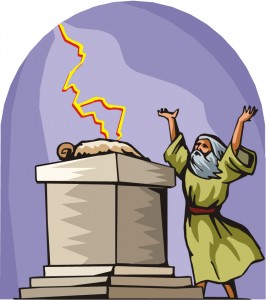
Sacrifice on Altar-lightening 20260002

  • Elohim commanded offerings to assist the offerer to better understand himself; his attitude, and his personal relationship with Elohim (e.g., Gen 3:21; 4:3–5; 8:20; 22:1–2 cp. 1 Cor 11:28).
  • Altars were erected by the patriarchs in order to honor Elohim through sacrifice after having had direct contact with him (Gen 12:6–8; 13:18; 26:24–25; 35:1; 35:2–4; Exod 17:13–16; cp. Exod 20:12).
  • Proper and regular sacrificial offerings kept the children of Israel in direct contact with the Elohim of the patriarchs (Exod 5:3; 10:25; cp. 1 Tim 2:5).
  • To make the offerer holy (set-apart) so that he would be allowed to approach and commune with the Set-Apart Elohim of Israel (Isa 43:15; 57:15; Lev 19:2 cp. 2 Cor 6:16–18).
  • Under certain circumstances, blood, as used in the Levitical system, could serve as Continue reading →
 

New Video: The Meaning of “Under the Law” Explained

Do you know what the biblical term “under the law” means? Most mainstream Christians think it means one thing, but, in reality, it means something else. Understanding the true meaning of this phrase will affect your spiritual walk and relationship with Yeshua (Jesus). When the Apostle Paul uses this term, is he taking a stand for or against the Torah-law of Moses? This video answers these questions.