YHVH looks at the heart, not the heart’s “house”

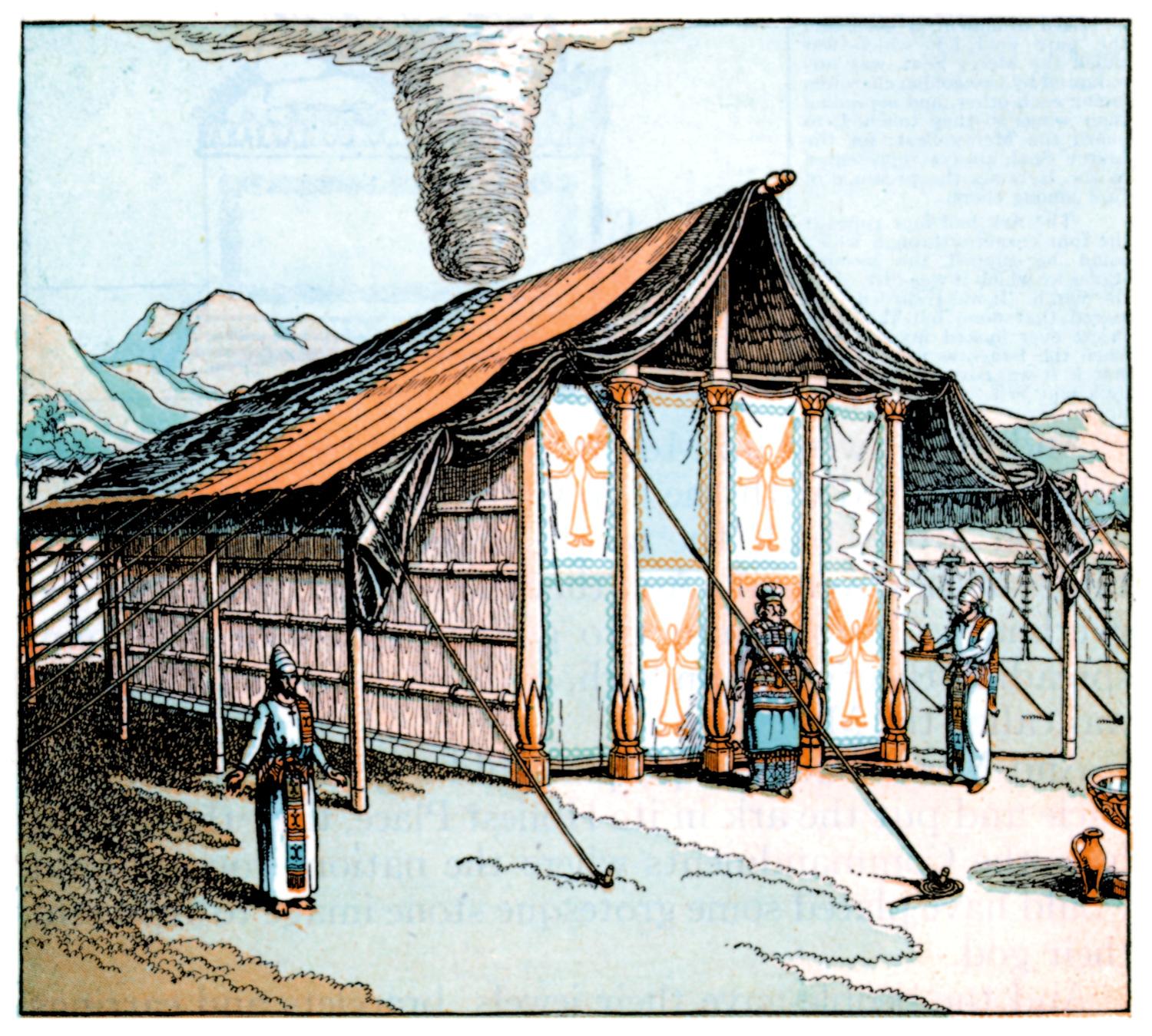
Exodus 38:21, This is the sum of the Tabernacle. Compared to the gold and silver used in the temples of Solomon and Herod, the amounts listed here in the construction of the Mishkan (Tabernacle) of Moses are insignificant.

Both temples fell into enemy hands and were looted and destroyed. Not so with the mishkan. Additionally, the mishkan surpassed both temples in sanctity showing that YHVH places his presence not where there is wealth (or power, prestige, knowledge, acclaim, accolades, credentials), but where there is set-apartness and righteousness.

What are your heart motives, priorities and orientation for serving YHVH—for wanting to be a spiritual temple or tabernacle for him to dwell in? Are you seeking to be set-apart and righteous out of a sincere and humble heart or out of a desire for power, prestige, wealth and acclaim in your life and using “sanctification” as an outward facade to look good to others? In 1 Corinthians 1:26–29 we read,

For you see your calling, brethren, how that not many wise men after the flesh, not many mighty, not many noble, are called, but Elohim has chosen the foolish things of the world to confound the wise; and Elohim has chosen the weak things of the world to confound the things which are mighty; and base things of the world, and things which are despised, has Elohim chosen, yes, and things which are not, to bring to nought things that are: that no flesh should glory in his presence.


The Tabernacle and the “Deification” or Theosis of Man

The Tabernacle of Moses from its front to back represents one’s progression in their spiritual journey starting with their initial salvation leading to the glorification of the physical body and eternal life in YHVH’s eternal spiritual kingdom. This view is from man’s perspective looking into the tabernacle through the front gate.

From YHVH’s view inside the holy of holies above the ark of the covenant in the glory cloud looking outward, the perspective is different. We’ll discus this in a moment.

In the outer court of the tabernacle, all the rituals and furnishings pointed to death, judgment, to washing or cleansing. These prophetically foreshadowed salvation through Yeshua’s atoning death on the cross, with Yeshua being the door to salvation, acceptance of his death on the cross for one’s sins followed by baptism for the remission of sins. In the set-apart (kadosh or holy) place inside the tabernacle, everything pointed to life, light, food, fragrant incense, the fruits and gifts of the Set-Apart Spirit—or life in a spiritual relationship Continue reading →


What value do you place on your love for Yeshua?

John 12:5, Three hundred denarii. To the natural mind, Judas’ objection to the use of this expensive spice (worth between $30,000 and $50,000 in today’s money) to anoint someone’s feet seems illogical and a total waste. By contrast, from our perspective, we can look backwards historically with perfect 20–20 hindsight and realize that for Yeshua, the Messiah and Savior of the world, he was worth every penny of the spikenard and much more. Yet, from the perspective of Yeshua’s followers, Yeshua’s true identity and mission still weren’t clear. This confusion wouldn’t clear up until after his resurrection and glorification (v. 16). So for some of them, Mary’s act of faith in anointing Yeshua’s feet with a year’s wages of spice seemed to be illogical folly.

This spice, most likely was originally intended for use on Lazarus’ body, whom Yeshua had just resurrected and so was no longer needed for that purpose, at least. It is likely that it was out of gratefulness for resurrecting her brother that Mary performed this act of love and devotion to Yeshua, not realizing that her actions were prophetic in that she was pre-anointing Yeshua’s body for his own burial ten days from that night (v. 7).

Now let us consider the following. We know that YHVH Elohim the Father gave us his greatest love gift by sending Yeshua, his Son, to this earth to live, die and resurrect for our redemption and ultimate glorification (John 3:16). How much do we love Yeshua, and what is the greatest gift we could ever give him, even if those around us thought we were crazy to do so? Have you given him all your heart? Does all that you own belong to him including your life? Would you give away all of your possessions in devotion to him if he asked it of you? Would you literally lay your life down for him as he did for you? How much do you love Yeshua?


Exodus 35:1–38:20 Parashah Vayakhel and Exodus 38:21–40:38 Parashat Pekudei

This is a gospel-oriented Torah study. Our goal is to connect the good news of Yeshua the Messiah (the gospel message) to its Hebraic, pro-Torah roots or foundations. The information given here is more than head knowledge. Understanding and wisdom (the right application of knowledge that is based on truth) is taught thus making biblical truth practical, relevant and applicable to your daily life. The truths of the Bible not only have the power to transform your life here and now for the better, but eventually to take you past the veil of death and into eternity.

This Torah study is subdivided in sections by topic in a magazine format thus making it easy to watch at several sittings.

May you be blessed as you watch this video.

For a free, printable adult and youth Torah study guide on this Torah portion (parashah), please go to http://www.hoshanarabbah.org/parshiot.html


Blog Scripture Reading Schedule for 3-19 Through 3-25-17

Aside

THIS WEEK’S SCRIPTURE READINGS FOR STUDY AND DISCUSSION:

Parashat Vayakhel-Pekudei — Exodus 35:1 – 40:38
Haftarah — 1 Kings 7:40-50 | Exodus 12:1-20; Ezekiel 45:16 – 46:18**
Prophets — Isaiah 3:1 – 10:34
Writings — Proverbs 11:1 – 17:28
Testimony — John 11:1 – 14:31

Our new Scripture Reading Schedule for 2016-2017 is available to download!

Most of this week’s blog discussion points will be on these passages. If you have general comments or questions on the weekly Scripture readings not addressed in a blog post, here’s a place for you to post those. Just use the “leave a reply” link below.

The full “Read Through The Scriptures In A Year” schedule, broken down by each day, can be found on the right sidebar under “Helpful Links.” There are 4 sections of scripture to read each day. One each from the Torah, the Prophets, the Writings, and from the Testimony of Yeshua. Each week, the Torah and haftarah readings will follow the traditional one-year reading cycle.

** A different Haftarah is read when it is a special sabbath in Jewish tradition. This week it is Shabbat HaChodesh on the traditional calendar. Otherwise, only 1 Kings 7:40-50 would be read.

Weekly Blog Scripture Readings for 3/19/17 through 3/25/17.


Parashat Ki Tisa Exodus 30:11-34:35 Outline & Study

Parashat Ki Tisa (when you take) Exodus 30:11-34:35 Outline & Study Sheet

Haftorah Reading

1 Kings 18:1–39

The Testimony of Yeshua

  • On the gifts of the Spirit: 1 Corinthians 12:1–31
  • On keeping the Sabbath: Hebrews 4:9
  • On the golden calf and idolatry: Acts 7:39–42; 17:29–31; 1 Corinthians 10:1–13
  • Come out wickedness; put on righteousness: 1 Corinthians 6:9–11; 2 Corinthians 6:14–7:1; Hebrews 10:22
  • On the Book of Life: Revelation 3:5; 17:8; 21:27; 22:19; Matthew 11:28
  • On seeing the Father: John 1:18
  • On the grace of Elohim: Titus 3:5
  • On YHVH’s Feasts: Acts 2:1; 20:16; 1 Corinthians 5:8; 16:8
  • On the greater glory of Yeshua, the Second Moses: Hebrews 3:1–6
  • On the letter versus the spirit; first glory versus the second and greater glory: 2 Corinthians 3:1–18; John 17:1–2
  • On the second coming: 2 Peter 3:3–4

Outline of This Week’s Parashah (Torah Portion)

— 30:11 The Census/The Sacred Half-Shekel

— 30:17 The Bronze Laver

— 30:22 The Sacred Anointing Oil: Its Contents and Uses

— 30:34 The Sacred Incense: Its Contents and Uses

— 31:6 Bezaleel and Oholiab Chosen to Be the Chief Artisans Over the Construction of the Tabernacle/Mishkan

— 31:12 The Sabbath: A Sign Between YHVH and His People, An Eternal Covenant

— 31:18 Moses Receives the Tablets

— 32:1 The Golden Calf Incident

— 32:7 YHVH’s Anger Against Israel for Their Idolatry

— 32:11 Moses’ Successful Prayer of Intercession

— 32:15 Moses Descends From Mount Sinai

— 32:19 Moses Smashes the Tablets, Grinds the Idol into Powder and Causes the Israelites to Drink It

— 32:30 Moses Intercedes to YHVH Again on Behalf of the People

— 33:1 Aftermath of the Golden Calf Incident

— 33:7 Moses Pitches the Tabernacle/Tent of Meeting Outside the Camp

— 33:12 Moses Pleads for YHVH’s Presence

— 33:19 Moses Sees the Glory of YHVH Through the Cleft of the Rock

— 34:1 The Second Set of Tablets

— 34:5 YHVH Reveals the Thirteen Attributes of His Mercy

— 34:8 Moses’ Request; YHVH Seals the Covenant With Israel and Forbids Israel to Make Covenants With the Pagans

— 34:17 Israel Is Forbidden from Making Idols and Is Commanded to Observe the Feast of Unleavened Bread and Shabbat, Feast of Weeks (Pentecost) and the Feast of Tabernacles (the Three Pilgrimage Festivals)

— 34:27 Renewal of the Covenant

— 34:33 The Radiance of Moses’ Face

Study Questions for This Week’s Midrash (Torah Discussion)

1— 30:11–16, Everyone was expected to contribute to the building of the mishkan (tabernacle). What can we learn from this passage about the Israelites’ spirit of giving? How are we about giving of our treasure to the work of YHVH?

2— 30:15 and 16, To make atonement for your souls. Some will read these verses and conclude that one can buy their redemption through charitable giving and therefore circumvent the need to place one’s faith in Yeshua’s atoning death on the cross. Does this passage suggest a theology where man can save himself from his sins by acts of charity? Let’s dig a little deeper to see what these verses are really teaching us.

In this passage, YHVH instructed the Israelites to pay an annual half-shekel temple tax. This money went, in part, toward, the service (verse 16) and constructing of the Tabernacle of Moses (e.g., Keil and Delitzsch Commentary on the OT, vol. 1, p. 459; Exod. 3— 38:21–31), and later toward the purchase of the animals the priests sacrificed (The Temple and Its Service, by Alfred Edersheim, p. 48). In this way, the people were participating vicariously in the act of sacrificing an innocent animal as an offering or atonement for their sins. Again, the Scriptures reveal that this sacrificial system merely Continue reading →

 

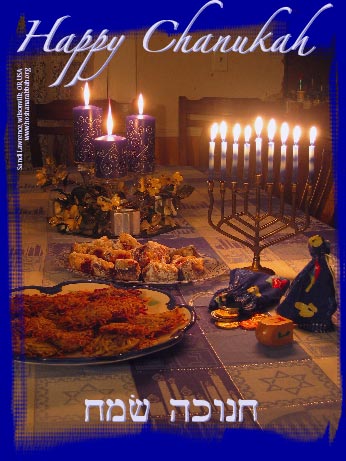
The Hidden Truth Behind Hanukkah and Yeshua’s Incarnation

John 10:22, The Feast of Dedication [or consecration].

To the casual observer, Hanukkah is a Jewish holiday that occurs around Christmas-time and has something to do with lighting a menorah-like candelabra, which somehow relates to some important event that occurred a long time ago in Jewish history. Some Bible teachers even claim that Hanukkah is pagan-based holiday that somehow honors the demonic sun god of antiquity. But as we shall see below, there is a hidden truth behind the Hanukkah holiday that the devil doesn’t want people to know about. In fact, by the end of this study, you will hopefully see that Hanukkah celebrates the truth of the Messiah’s incarnation better than Christmas ever did and without all the pagan trappings. You’ve probably never heard this before and wonder how this could be. Stay tuned.

Anyone who has barely scratched the surface of Christmas’ origins realizes that they are profane and unbiblical. Christmas is the Christianization of some vile pagan traditions based on celebrating the winter solstice in honor of the demonic sun god through lewd and drunken orgiastic satanic rituals. Though the tradition of the Christmas tree came later, it is rooted in pre-Christian sex worship rituals that come straight out of demonic sun god worship, and something the Bible in many places condemns and forbids the saints from practicing.

Hanukkah, on the other hand, doesn’t share Christmas’ pagan origins. Rather, this holiday links back directly to one of YHVH’s seven commanded biblical festivals. Though Hanukkah isn’t a commanded biblical holiday, and is of man’s creation, it still has prophetic implications that are worth noting. What’s more, it doesn’t carry the pagan baggage the Christian holidays like Christmas, Easter, Lent, All Saints Day (i.e. Halloween) and the others all do.

In our study of the origins of Hanukkah, let’s first prove that there is a link between the biblical fall festival of Sukkot or the Feast of Tabernacles (Lev 23:33–43) and Hanukkah. How is this? Interestingly, both Hanukkah and Sukkot along with the Eighth Day last for Continue reading →