Another BIG Lie from the Mainstream Church?

Acts 8:16, For as yet He had. In most of our modern English Bibles, this verse supports the notion that the Holy or  Set-Apart Spirit is masculine by using the third person singular of the verb in reference to the antecedent Holy Spirit, which is found in the preceding verse. Is this a correct translation?

First, the Greek word spirit pneuma is a neuter-gender noun. To be grammatically correct, therefore, our verse should read, “For as yet, It….” and not “He.” However, the Bible reveals that the Set-Apart Spirit is a Person, so it has to be either masculine or feminine. In our text, the English words “he had” are the one Greek word heyn which is the active, indicative, imperative, third person singular of the verb eymee meaning, in its infinitive state, “to be,” or in its imperfect tense, “was.” In this verse, the verb eymee in this form can mean either, “he was, she was, or it was” (Basics of Biblical Greek, p. 59, by William Mounce).

So how do we determine what the gender should be of the Set-Apart Spirit? In the Tanakh, the Hebrew word for spirit (as in Set-Apart Spirit) is ruach, which is in the feminine gender. Since the concept of the Set-Apart Spirit originates in the Hebrew language of the Tanakh, and since Elohim (the plural Hebrew noun indicating the plurality of the Godhead) reveals himself as both male and female (Gen 1:26–27), it is, therefore, illogical to refer to the Set-Apart Spirit in the masculine gender in Acts 8:16. Therefore, in Acts 8:16, referring to the Set-Apart Spirit as he is a blatant example of scribal gloss, and is an example of the translators bowing to the Catholic doctrine of the third person in the Godhead being male in gender even though the linguistics of this verse don’t support it, and something the Bible as a whole doesn’t support.

This now begs the following question: If the Set-Apart Spirit isn’t male, but is part of the Godhead, then what other gender is there for the Set-Apart Spirit to be?

 

Leviticus 9:1–11:47 Parashat Shemini

This is a gospel-oriented Torah study. Our goal is to connect the good news of Yeshua the Messiah (the gospel message) to its Hebraic, pro-Torah roots or foundations. The information given here is more than head knowledge. Understanding and wisdom (the right application of knowledge that is based on truth) is taught thus making biblical truth practical, relevant and applicable to your daily life. The truths of the Bible not only have the power to transform your life here and now for the better, but eventually to take you past the veil of death and into eternity.

This Torah study is subdivided in sections by topic in a magazine format thus making it easy to watch at several sittings.

May you be blessed as you watch this video.

For a free, printable adult and youth Torah study guide on this Torah portion (parashah), please go to http://www.hoshanarabbah.org/parshiot.html


Blog Scripture Readings for 4-16 Through 4-22

Aside

THIS WEEK’S SCRIPTURE READINGS FOR STUDY AND DISCUSSION:

Parashat Shemini — Leviticus 9:1 – 11:47
Haftarah — 2 Samuel 6:1 – 7:17
Prophets — Isaiah 38:1 – 45:25
Writings — Job 8:1 – 14:22
Testimony — Acts 8:26 – 12:25

Our new Scripture Reading Schedule for 2016-2017 is available to download!

Most of this week’s blog discussion points will be on these passages. If you have general comments or questions on the weekly Scripture readings not addressed in a blog post, here’s a place for you to post those. Just use the “leave a reply” link below.

The full “Read Through The Scriptures In A Year” schedule, broken down by each day, can be found on the right sidebar under “Helpful Links.” There are 4 sections of scripture to read each day. One each from the Torah, the Prophets, the Writings, and from the Testimony of Yeshua. Each week, the Torah and haftarah readings will follow the traditional one-year reading cycle.

Weekly Blog Scripture Readings for 4/16/17 through 4/22/17.


Chag HaMatzot (The Feast of Unleavened Bread): An Overview

Chag HaMatzot or the Feast of Unleavened Bread is the second annual festival on YHVH’s biblical calendar, and occurs on the fifteenth day of the month of the Abib, which is the day immediately following Passover (or Pesach, Lev 23:5–8). Because both of these feasts (Exod 34:25; Lev 23:2, 6) occur back-to-back, the Jews often refer to Passover and Unleavened Bread simply as Passover Week or some similar term that places the main emphasis on the Passover. But it must be noted that, though related, these two festivals are separate in meaning and purpose. Passover pictures Israel coming out of Egypt. Upon separating from Egypt, YHVH (the LORD) then commanded the Israelites to put all leavened food products out of their houses and to eat unleavened bread (flat bread) for seven days, hence the origins of the Feast of Unleavened Bread. Additionally, the first and seventh days of this week-long event are Sabbaths, and YHVH commanded his people to hold a set-apart convocation (or gathering) on these Sabbaths.

What, you may ask, is the purpose of putting leavening out of one’s home and eating unleavened bread products such as matzoh for one week? This seems like a curious request by YHVH of his people. Not surprisingly, the Creator of the universe has a reason for everything. The spiritual implications are enlightening and highly relevant to the disciples of Yeshua. In commanding his people to de-leaven their homes and lives, YHVH is teaching us an object lesson that applies to us as much today as to the Israelites of long ago.

Eating unleavened bread for seven days is a memorial, remembrance or reminder (Exod 13:6–9) of our coming out of our own spiritual Egypt. But how did unleavened bread enter into this picture? The Torah tells us that the Israelites left Egypt early in the morning as they were making their daily bread, and because they left in haste the bread was not able to rise (Exod 12:34). Therefore, they were forced, by circumstances, to leave their leavening — a biblical metaphor for sin — behind in Egypt. Similarly, believers in Yeshua are commanded to keep the Feast of Unleavened Bread (1 Cor 5:6–8), which helps to remind us that we should have left our old sinful ways behind us in the spiritual Egypt of this world when we surrendered our lives to Yeshua. We are pressing onward to the Promised Land of YHVH’s eternal kingdom.

Not only did YHVH command his set-apart people to leave Egypt (a biblical metaphor for this world and its godless ways), but he wanted his people to separate themselves from and leave behind in Egypt the rudiments of this world, or sin, which defiles them and separates them from a set-apart and sinless Elohim (God). Leaven is a picture of this, as we will see more clearly below.

The Feast of Unleavened Bread was the next step in YHVH’s plan of redemption for his people. Israel had just left Egypt and we know that Egypt is biblically a spiritual metaphor for the world and Satan. It may have been easy for the Israelites to leave Egypt, but after their exodus, the arduous process of getting the sin or spiritual leaven of Egypt out them began! The same is true when we leave the spiritual Egypt of this world and endeavor to follow obey Yeshua through our spiritual journey in the wilderness we call life. The old sin Continue reading →


Feast of Unleavened Bread — More Biblical Insights


Let us Celebrate the Feast of Unleavened Bread


Passover Seder at the Lawrence’s

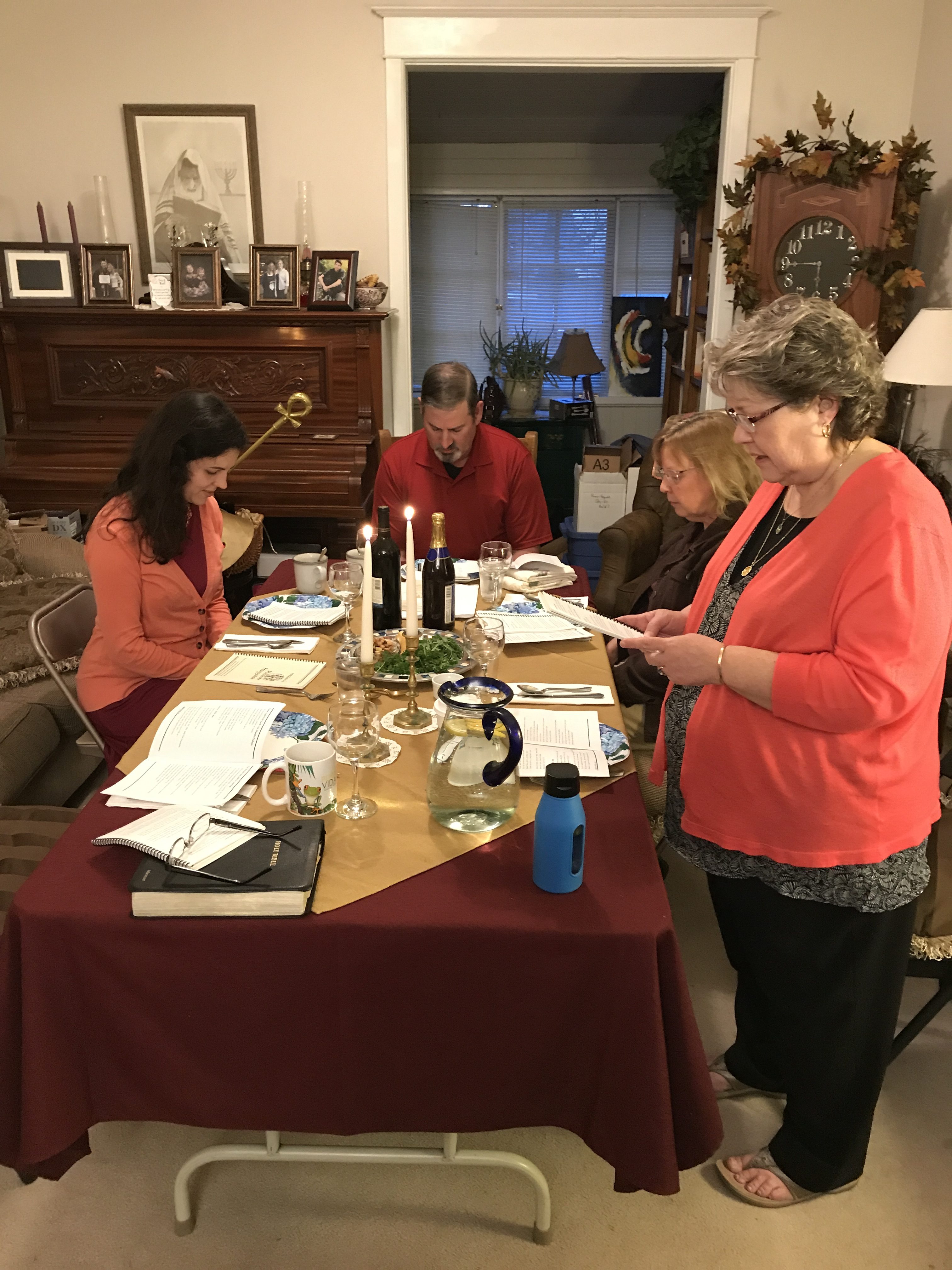
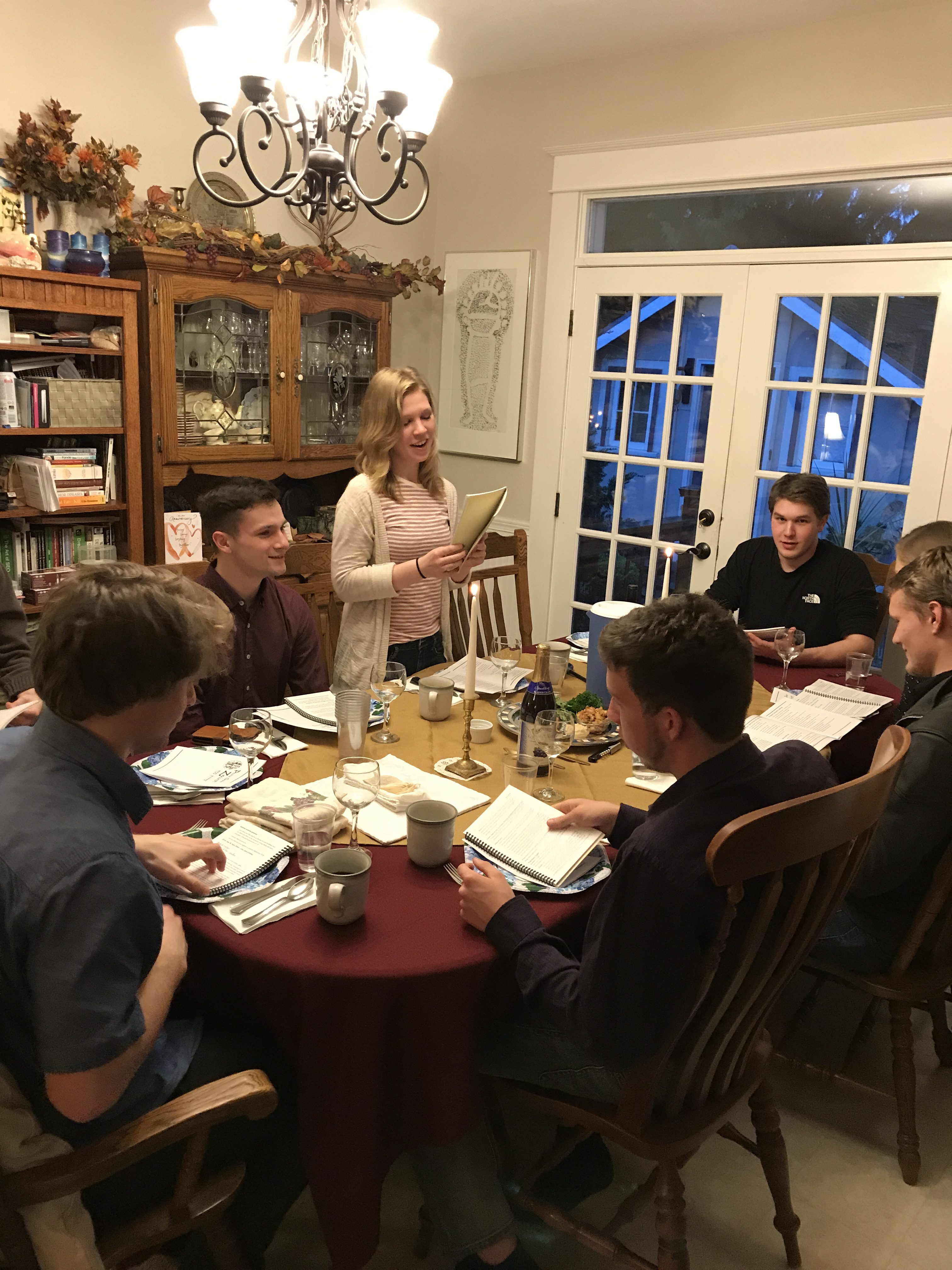
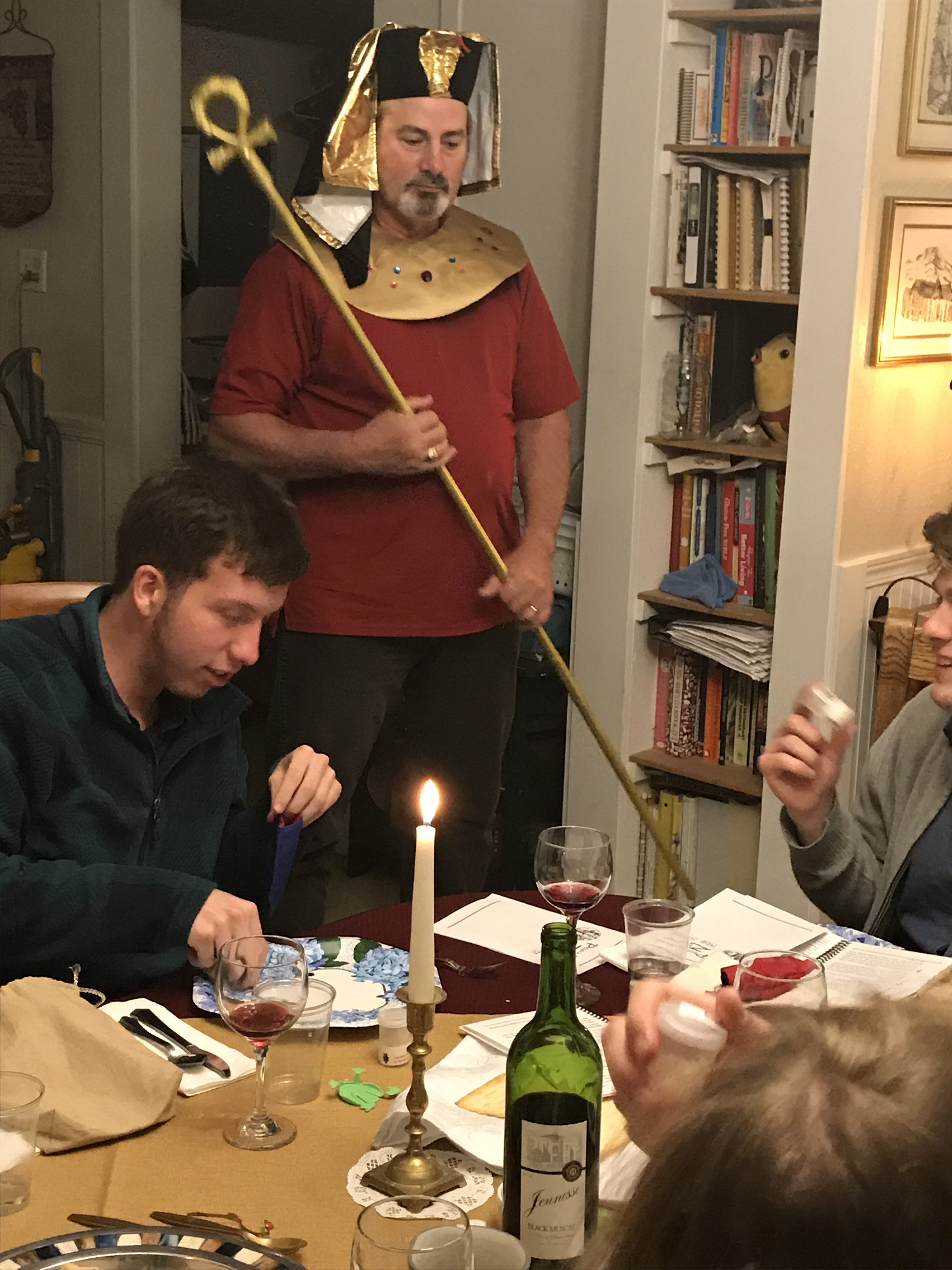
Here are photos from last night’s Passover seder at the Lawrence home. All four of our children were there along with their “significant  others”. We were also blessed to have several close family friends join us for the five-and-one-half-hour long event.