My Response to the Texas Church Massacre
Being Cast Into Outer Darkness Versus Being Cast Into the Fire
Matthew 22:13, Outer [or exterior] darkness. This is likely not a reference to destruction in the lake of fire, which is the fate of the wicked, but rather the place where those who will be least in the kingdom (Matt 5:19) will reside.
In this same parable, Yeshua alludes to the lake of fire in verse seven where he mentions the fate of the wicked who refused the invitation to the wedding of the king’s son. This refers to those who refuse to respond favorably to the gospel message.
Those who are invited guests to the son’s wedding, but who weren’t properly attired, are those saints who will be in the kingdom of Elohim, but who will not have attained the higher reward of being the bride of the king’s son (i.e. the bride of Yeshua). They will not be living in close proximity to Yeshua as his bride in the New Jerusalem, which is a place where there is no darkness or night, for Yeshua who is the Sun of Righteousness (Mal 4:2) and whose face shines like the suns (Rev 1:16) will be the light of the New Jerusalem (Rev 21:23; 22:5). Rather, the place of reward for those who weren’t properly attired in robes of righteousness (Matt 22:11) will be to live further away from the New Jerusalem somewhere on the New Earth. These immortalized saints appear to those who Yeshua refers to in Matt 5:19 as “the least in the kingdom.”
Moreover, light is a biblical metaphor referring to the knowledge of YHVH’s truth or being able to see spiritually, while darkness is an obvious and universal metaphor for ignorance or spiritual blindness. It is possible that these who will be least in the kingdom, though possessing eternal life, will be living in a state of not possessing as much divine revelation or spiritual light as a commensurate reward for their rejecting the fuller spiritual light while they were mortal humans. They have reaped for eternity what they sowed as physical humans. This is because they failed to properly prepare their robes of righteousness to be the bride of Yeshua as the lesson of the previous parable teaches us. The reward of these people who will be to be the least in the kingdom and to abide in a place on the new earth that is further away from the New Jerusalem that has less spiritual light shining on it.
Outer darkness being a lower position in the kingdom of Elohim as opposed to being cast into the lake of fire seems to be more consistent with Yeshua’s usages of this phrase elsewhere (e.g. Matt 8:12; 25:30). In the verbal imagery of Yeshua, being cast into outer darkness seems to be in direct contrast to being cast into a fiery furnace, which is a reference to the fate of the wicked. This fate is final and refers to eternal damnation in the lake of fire (Matt 13:42, 50 cp. 3:12; 25:41; Mark 9:43–49; Rev 19:20; 20:10, 14, 15; 21:8).
More Prophetic Allusions to Yeshua and the Ruach
Genesis 24:4, Take a wife for my son Isaac. Some Bible students see in Abraham’s sending Eliezer his servant an allegory of our Heavenly Father choosing a bride for Yeshua, his Son with the help of the Set-Apart Spirit or Ruach haKadosh.
The analogy goes like this: When speaking to Abraham, YHVH refers to Isaac as “your only son…whom you love” (Gen 22:2). In this statement, it’s hard to miss the similarity with the well-known John 3:16 passage where Yeshua refers to himself as the only begotten Son whom his Father in heaven loves. Isaac is an obvious prophetic picture of Yeshua in that Abraham sacrificed a ram in place of his only son whom he loved on the very spot where, one thousand years later, the Temple of Solomon would be built and where sacrifices were made to atone for men’s sin. This is the same spot later on where Yeshua himself was condemned to death and not far from there became the Lamb of Elohim who was sacrificed to atone for men’s sins.
In addition, the name Eliezer means “my El helps,” which many see as an allusion to the Set-Apart Spirit who helps or comforts us, and to which Yeshua refers to as the Comforter or Helper (e.g. John 14:16). It is the Set-Apart Spirit that is choosing and preparing a bride from among called and redeemed Israelites for Yeshua the Messiah, the Son of Elohim.
Video: Genesis 23:1–25:18 Chayei Sarah (A Gospel Oriented Torah Study)
This is a gospel-oriented Torah study. Our goal is to connect the good news of Yeshua the Messiah (the gospel message) to its Hebraic, pro-Torah roots or foundations. The information given here is more than head knowledge. Understanding and wisdom (the right application of knowledge that is based on truth) is taught thus making biblical truth practical, relevant and applicable to your daily life. The truths of the Bible not only have the power to transform your life here and now for the better, but eventually to take you past the veil of death and into eternity.
This Torah study is subdivided in sections by topic in a magazine format thus making it easy to watch at several sittings.
May you be blessed as you watch this video.
For a free, printable adult and youth Torah study guide on this Torah portion (parashah), please go to http://www.hoshanarabbah.org/parshiot.html
Blog Scripture Readings for 11-5 Through 11-11-17
Aside
THIS WEEK’S SCRIPTURE READINGS FOR STUDY AND DISCUSSION:
Parashat Chayei Sarah — Genesis 23:1 – 25:18
Haftarah — 1 Kings 1:1-31
Prophets — Judges 5:1 – 10:18
Writings — Psalms 34:1 – 39:13
Testimony — Matthew 21:23 – 24:51
Our annual Scripture Reading Schedule for 2017-2018 is available to download and print.
Most of this week’s blog discussion points will be on these passages. If you have general comments or questions on the weekly Scripture readings not addressed in a blog post, here’s a place for you to post those. Just use the “leave a reply” link below.
The full “Read Through The Scriptures In A Year” schedule, broken down by each day, can be found on the right sidebar under “Helpful Links.” There are 4 sections of scripture to read each day: one each from the Torah, the Prophets, the Writings, and from the Testimony of Yeshua. Each week, the Torah and haftarah readings will follow the traditional one-year reading cycle.
Weekly Blog Scripture Readings for 11/5/17 through 11/11/17.
The “Sacrifice” of Isaac at Mount Moriah.
Genesis 22:13, A ram caught in a thicket by his horns.
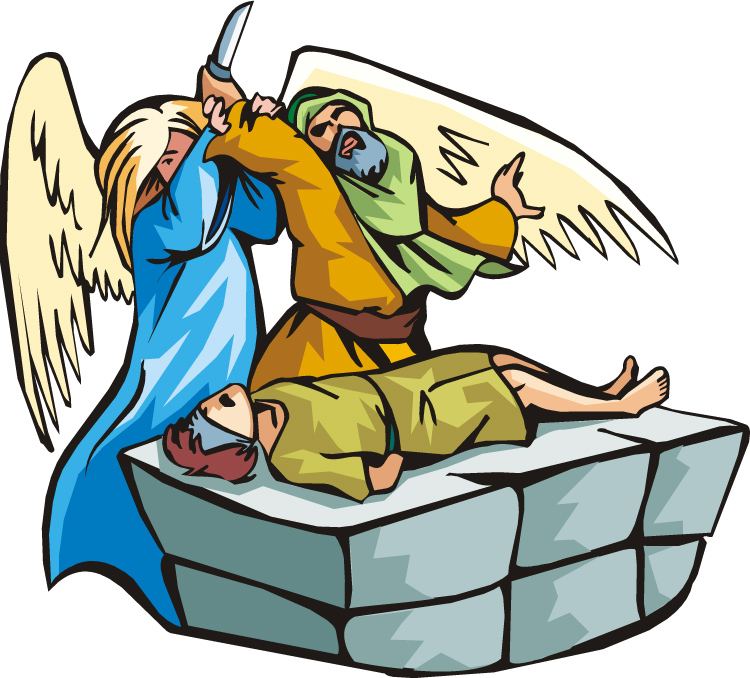
YHVH credited to Abraham’s spiritual account his willingness to sacrifice Isaac as if he had actually done so. In fact, there is an ancient rabbinical tradition that states Isaac actually died and was resurrected as the midrash comments on this passage: “As the knife reached his throat, Isaac’s soul flew away and left [e.g., he died]. But when a voice went forth from between the angels saying, ‘Do not stretch out your hand against the lad’ (Genesis 22:12), his soul returned to his body” (Pirkei DeRabbi Eliezer 31 as quoted in The ArtScroll Davis Edition Baal HaTurim Chumash Bamidbar, p. 1417) (bracketed comments are in the original).
The Jewish sages also note that Scripture states that both Abraham and Isaac ascended the mountain, but that it is recorded that only Abraham descended (22:19). Isaac’s absence from the Genesis narrative until many years latter (Gen 24:62) has given rise to much speculation on the part of the sages as to Isaac’s whereabouts in the interim (The ArtScroll Bereishis Vol. 1a, pp. 812–813).
Regardless of the rabbinic interpretations, does Scripture leave Isaac out of the narrative as if to highlight his absence, and to give the impression (albeit a prophetic allegorical one) that he was actually sacrificed? After all, what was the ram caught in the thorn bush thicket (wearing a crown of thorns) by its two horns all about? That ram was a substitute sacrifice picturing Yeshua the Messiah dying on the cross while wearing a crown of thorns. And who was it that commanded Abraham to lay down the knife and slaughter the ram instead? It was the Malak or Messenger of YHVH (verse 11–12) who was none other than a pre-incarnate appearance of YHVH-Yeshua some 1900 years before his appearance as the Messiah in human form on earth as the Lamb of Elohim slain from the foundation of the earth.
The Three Trumpets
The first and last trumpets relate to the two horns of the ram caught in the thicket on Mount Moriah. The ram represents Yeshua the Sacrificial Lamb. The thicket represents human sinfulness. Humanity is entangled in the thicket of sin from which it needs to be freed. Yeshua the Messiah is the Lamb (or ram) slain from the foundation of the world (Rev 13:8), who, while hanging on the cross, wore a crown of thorns. Is this not a picture of the “ram caught in the thicket” (Gen 22:13) of the man’s sins? After all, the Scriptures say that the sins of man were laid upon Yeshua (Isa 53:6). The crown of thorns is a picture of this. Furthermore, in Matthew 13, in Yeshua’s Parable of the Sower, we see that some of the seed was cast into the thorns, which Yeshua explained represents the cares of this world and the deceitfulness of riches that choke out the word of YHVH. These references to thorns and thicket are a picture of sin. The wages of sin is death.
In Genesis 22, Isaac was about to die, but the ram caught in the thicket that YHVH provided was a prophetic picture of Yeshua (a Hebrew word meaning “salvation”) that became a substitute sacrifice for Isaac. Isaac was set free and the ram was sacrificed instead. This ram was a prophetic picture of Yeshua’s death on the cross for man’s sins.
In Hebraic thought and prophetically-speaking, the left horn of the ram signifies mercy and grace. This is also a picture of the left (or weaker) hand of YHVH, which symbolizes grace, or the feminine side of Elohim. Furthermore, the left horn of the redemptive ram signifies the purpose of the first coming of Messiah Yeshua as the Suffering Savior, as one bringing mercy and grace, and who refused to quench a smoking flax or breaking a bruised reed as a meek and quiet lamb going to its slaughter (Matt 12:20; John 12:47; Isa 53:7).
The right horn of the ram caught in the thicket represents judgment picturing Elohim’s stronger right hand of power, might and judgment (Ps 89:10,13–14). Thus, this horn represents the second coming of Messiah, who is seated at the right hand of the Father (Acts 2:32–33), and who will come this time in power as King of kings to rule with a rod of iron and to judge the living and the dead, and to destroy all his enemies (Rev 17:14; 19:15).
That is why the first trumpet (representing the left horn of the ram) is sounded on Shavuot representing YHVH’s grace and mercy upon his people from Abraham until the Yeshua’s second coming—a time for his people to repent and return to him.
Genesis 22:4 says that Abraham saw the “place” (i.e. Mount Moriah) afar off “on the third day”. This is scriptural prophetic code for something significant. Mount Moriah was the place of Messiah’s crucifixion. Abraham saw—by faith—the place and work of Yeshua’s death afar off. “On the third day” signifies two things. First, a day in Scripture and in Jewish thought, in this instance, symbolizes 1000 years (2 Pet 3:8), and so it may represent the third one-thousand-year period from the time of Abraham (ca. 1872 B.C.). Messiah would come as the sacrificial Lamb in three days or in the third millennia from Abraham’s time. Yeshua was born and died in the first millennia A.D., or the third millennia from Abraham. Second, the phrase, “third day” can represent the time or millennia of Messiah’s second coming as well, as we shall see.
The Messenger of YHVH at the Binding of Isaac
In Genesis 22:11, 15–17 we read the following,
11 And the Messenger/Malak of YHVH called unto him out of heaven, and said, Abraham, Abraham: and he said, Here am I … 15 And the Messenger/Malak of YHVH called unto Abraham out of heaven the second time, 16 And said, By myself have I sworn, saith YHVH, for because thou hast done this thing, and hast not withheld thy son, thine only son: 17 That in blessing I will bless thee, and in multiplying I will multiply thy seed as the stars of the heaven.
In this passage, there is no mention of the Messenger of YHVH appearing to Abraham in some bodily form, only his voice calling from heaven. What we want to emphasize in this passage is that the Messenger of YHVH is equating himself with YHVH (verse 16). The biblical passages where the Malak of YHVH equates himself with YHVH while appearing in human form have perennially defied reasonable explanation by the Jewish sages.
Notwithstanding, the ancient Targum Jerusalem (the pre-Christian Aramaic translation of the Hebrew Scriptures) equates the Malak of YHVH with “the Word of Elohim” in verse eight implying that YHVH and the Word of YHVH are in some way different from each other:
And Abraham said, The Word of Elohim will prepare for me a lamb; and if not, then thou art the offering, my son! And they went both of them together with a contrite heart.
Some Jewish sages asserts that “the angel speaks in God’s name, in first person” while others maintain that it was “God Himself who opened the heavens and addressed Abraham’ (The ArtScroll Bereishis/Genesis Commentary, p. 808). If the latter is true, than the Malak of Elohim/YHVH here is none other than Elohim himself. And logically, if he is Elohim here, then he must be Elohim/YHVH in the other passages where he is mentioned. And if Elohim can appear in human form, speak to men and eat with them (as in Genesis 18) then the question must be asked: why can’t YHVH appear in human form as the Messiah; namely, Yeshua the Messiah? After all, in Proverbs 30:4 (a passage we will discuss at length later) we read,
Who hath ascended up into heaven, or descended? who hath gathered the wind in his fists? who hath bound the waters in a garment? who hath established all the ends of the earth? what is his name, and what is his son’s name, if thou canst tell? (KJV) (emphasis added)
Additionally, in Isaiah 53, a passage recognized by both Jewish and Christian scholars as referring to Messiah verse one states,
Who hath believed our report? and to whom is the arm of YHVH revealed?
Here, the Messiah is called “the Arm of YHVH.” Is the Malak of YHVH/Elohim this “Arm of YHVH” who does the earthly bidding of the One in heaven and who acts as the intermediary between Elohim and man? We believe so.
Genesis 22:15, YHVH called to Abraham. When Abraham was willing to deny himself and to follow YHVH no matter the cost even to the point of sacrificing of his son, it was only then that heaven opened up, Elohim revealed himself to Abraham and blessed him. It is when we’re willing to lose our lives for YHVH, deny ourself and pick up our cross and follow Yeshua that the life of the Spirit is revealed to us and the blessings of heaven open up before us. Abraham a man who had died to himself, realized that nothing he possessed was his, for he was wholly surrendered and obedient to YHVH’s will. Abraham was materially rich and had everything, yet he possessed nothing. At this point, the riches of heaven were opened up to him. For him, the real treasures were inward and eternal.