The Manifest Presence of Elohim Transforms a Person

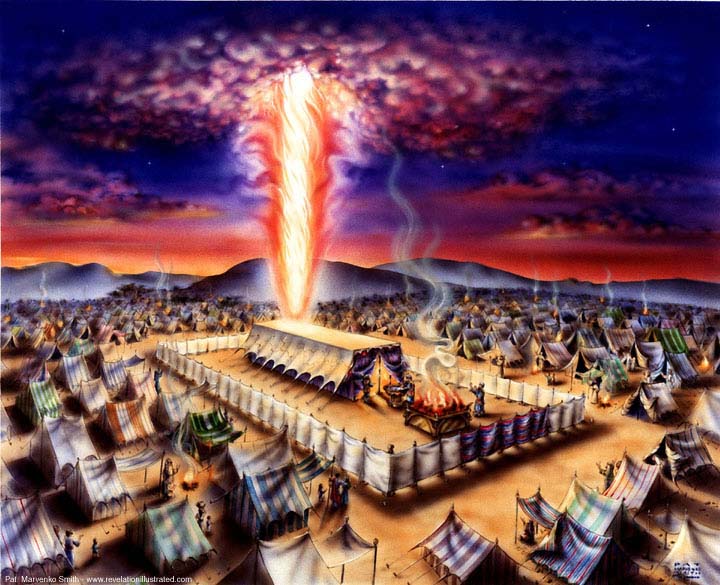
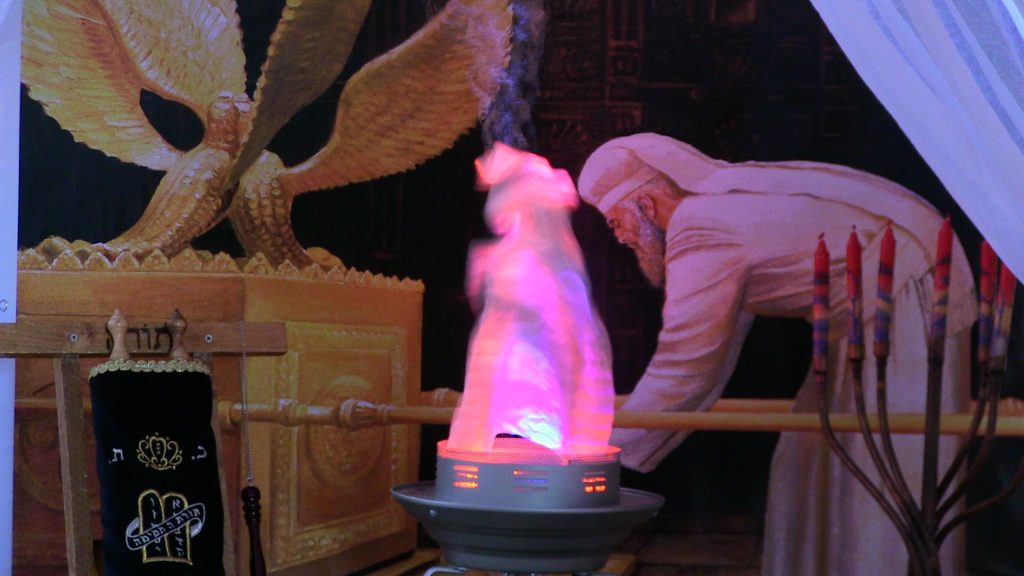
Exodus 25:22, There I will meet with you. Between the two cherubim was the glowing, anointed, manifest Presence of YHVH called the Shekinah. This pictures the glories of the New Jerusalem and life happily ever after for Yeshua and his spiritual bride.

The manifest Presence of Elohim is the last of seven “items” in the tabernacle and it is also the one ingredient that is missing in all the other religions of the world. Yes, many of the world’s false religions have their signs, wonders and supernatural experiences, but these are cheap demonic counterfeits that only imitate the real thing. In the end, despite all that they promise, they bring shame, confusion, guilt and eventual death and eternal separation from Elohim.

In the Tabernacle of Moses, the first six items were made with human hands. Six is the number of man. YHVH’s Presence cannot be constructed by the hand or mind of man. It just is, and it doesn’t come as a result of anyone conjuring it up. It comes as a result of repentance, holiness, obedience and humans seeking Elohim with all their hearts, while following the protocols he has laid out, which, when followed, lead to him. There is no other way.

The Presence of Elohim is what is missing in every other of the world’s religious systems. It was even missing in the Second Temple!

In YHVH Elohim’s Presence, a human is miraculously changed and transformed spiritually from the inside out.

There I will [Heb. ya’ad] meet with you…I will commune [Heb. d’bar]…I will give you. This entire verse is pregnant with spiritual meaning relating to the holy of holies, which was YHVH’s point of contact between heaven and earth. From this Continue reading →


“And now we will pass the offering plate…” Huh?!?

Exodus 25:2, That they may bring me an offering. Interestingly, this is the only place in the Scriptures where an offering was taken of YHVH’s people to support the work of the ministry. In one other place in the Bible, a collection was taken, but what was its purpose and who was it for? (See 1 Cor 16:1–3 and Acts 11:27–30.)

This is not to say that the saints should not give of their substance to help support their spiritual leaders. What did Paul teach about the saints supporting the work of the ministry—especially those who are spiritually feed them? (Read 1 Cor 9:1–18; 1 Tim 5:17–18; Gal 6:6–9.)

The main point we wish to make here is that the taking of offerings or the passing of the plate isn’t a biblical norm. People were expected to give, but of their own freewill and without pressure or coercion from their spiritual leaders.

What did Yeshua say about giving? (Note Acts 20:35; Luke 6:38.) What did Paul say to those who do not share their substance with (or sow sparingly to) those who teach them? (Look at 2 Cor 9:6.)

What should be our heart attitude when giving to the ministry of Elohim? (See 2 Cor 9:7.)

What are the blessings from Elohim that one can expect from giving cheerfully? (Read 2 Cor 9:8–11.)


The Tabernacle of Moses Explained—YHVH’s Plan of Salvation in Full Display

Over the years on this blog, I have shared numerous teachings on the Tabernacle of Moses. To find these teachings in this blog’s archives, simply type in “Tabernacle of Moses” in the search box at the top right hand corner of this blog’s front page and you’ll find a whole list of these teaching for your spiritual edification. Please enjoy!


Going to Hawaii

Early next month (March 2018), my bride and I will be celebrating our 27th anniversary in Hawaii for a few days. We’ll be in Oahu for almost three days and then a week in Maui where we will spend the Shabbat. Just letting you know in case there are any folks there who want to say hi. — Natan


Blog Scripture Readings for 2-11 Through 2-17-18

Aside

THIS WEEK’S SCRIPTURE READINGS FOR STUDY AND DISCUSSION:

Parashat Terumah — Exodus 25:1 – 27:19
Haftarah — 1 Kings 5:26 – 6:13
Prophets — 2 Kings 5:1 – 11:21
Writings — Psalms 132:1 – 141:10
Testimony — Luke 24:13-53; John 1:1 – 3:36

Our annual Scripture Reading Schedule for 2017-2018 is available to download and print.

Most of this week’s blog discussion points will be on these passages. If you have general comments or questions on the weekly Scripture readings not addressed in a blog post, here’s a place for you to post those. Just use the “leave a reply” link below.

The full “Read Through The Scriptures In A Year” schedule, broken down by each day, can be found on the right sidebar under “Helpful Links.” There are 4 sections of scripture to read each day: one each from the Torah, the Prophets, the Writings, and from the Testimony of Yeshua. Each week, the Torah and haftarah readings will follow the traditional one-year reading cycle.

Weekly Blog Scripture Readings for 2/11/18 through 2/17/18.


Top 10 Responses: Yehovah or Yahweh? by Keith Johnson


“Father forgive them…”—The Transformative Power of Forgiveness

Luke 23:34, Father, forgive them. Yeshua said this for his and our benefit, and not because it made any difference in the lives of those who crucified him. It was for his benefit, so that the sin of bitterness and unforgiveness wouldn’t take root in him. It is for our benefit, so that we’d have his example to follow when dealing with our enemies.

There is a deep and transformative truth in the power of forgiveness. When we forgive our offender (it doesn’t matter whether they know about it or not), it prepares the way for the relationship to be restored. The miracle and beauty of the forgiveness process is that now we get to help those who have  sinned against us in the healing of their own sin.

Like so many of Elohim’s truths and Yeshua’s practices, this is counter intuitive to the natural way man thinks.

When sinned against, man’s knee-jerk response is to hold on proudly to bitterness and offense in hopes the other person will recognize their error and humbly repent of their sin to us, the offended party. This is delusional thinking on the part of the one sinned against, since it seldom works this way. Because of human pride, both the sinner and the one sinned against—if each follows their own natural and self-defensive inclination—will usually dig in and fortifies the position of  their own self-rightness. The sinner is certain he is justified in his actions against the one he sinned against, while the offended party feels it is his right to walk in offense until the sinner admits his sin and repents. As such, each party remains frozen and polarized in his position and the break in the relationship is never resolved. Division and strife becomes the etched-in-stone norm.

This is all based on human pride, which heads the list of the seven deadly sins that YHVH hates the most and views as an abomination (Prov 6:16–19). The devil who is our adversary, is the accuser of the brethren, and the one who comes to kill, steal and destroy loves this.

It is not until one of the parties chooses to follow the instructions and example of Yeshua to become a blessed peacemaker and humbles himself that the healing process can occur.

On the cross, Yeshua initiated this process of relationship restoration in preparation for his role in heaven as our Great High Priest to act on our behalf  before his Father to reconcile sinful man through himself to Elohim.