Thankfully, YHVH will have the last word!

Think of all the evil schemes that wicked men and women from their high and powerful positions in politics, the military, finance, education, religion, the media and entertainment are perpetrating upon the human race.

Now consider the daily sewage and filth that calls itself the news headlines, but is usually not much more than mean-spirited and destructive gossip, libel, salaciousness, innuendo, hearsay, false accusations, invasion of privacy, perversion of morals, attacks on biblical values, the promotion and elevation of all that the Bible denounces as evil and corrupt, and the attack on and persecution of Bible believers and Elohim himself. Are you sickened and disgusted already? So am! I!

Now encourage yourself and wash your brain out with these words from Psalm chapter three.

A Psalm of David, when he fled from Absalom his son. LORD, how are they increased that trouble me! many are they that rise up against me.

Many there be which say of my soul, There is no help [Hebrew: Yeshua]  for him in God. Selah.

But thou, O LORD, art a shield for me; my glory, and the lifter up of mine head.

I cried unto the LORD with my voice, and he heard me out of his holy hill. Selah.

I laid me down and slept; I awaked; for the LORD sustained me.

I will not be afraid of ten thousands of people, that have set themselves against me round about.

Arise, O LORD; save me, O my God: for thou hast smitten all mine enemies upon the cheek bone; thou hast broken the teeth of the ungodly.

Salvation[Hebrew: Yeshua] belongeth unto the LORD: thy blessing is upon thy people. Selah.

Folks, our day is not only here, but it’s also coming! Don’t forget that one person standing with Elohim MAKE A MAJORITY. So stay strong in Him, and keep looking upward. As I like to say, the outlook is bleak, but the uplook is glorious.

Thankfully, when all is said and done, YHYVH Elohim will have the last word, not men!

A new day is coming. Get ready…


Shabbat Shalom Beloved Fellow Saints!

As I often do early on the Shabbat morning, I strolled around my garden clutching my cup of organic coffee admiring the flowers in my personal Garden of Delight (the Hebrew meaning of Eden). As I talk to Elohim, I thank him for the wondrous beauty of his creation and praise him for his majesty. Remember what Yeshua said about the riches and wealth in this world?

Consider the lilies of the field, how they grow; they toil not, neither do they spin: And yet I say unto you, That even Solomon in all his glory was not arrayed like one of these. (Matt 6:28–29)

Well, by Yeshua’s standards (and they are the true values to judge life by, NOT man’s artificially contrived ones based on pride and lust), I must be an exquisitely wealthy man: I currently have 16 species of flowers blooming in my garden!!! I praise Yah for this. My Eden brings me much joy, pleasure and delight. I carefully tend, protect and nourish my garden just like Elohim commissioned us to do at the beginning, and it blesses me back. Tending and keeping the garden was Elohim third Torah command to Adam and Eve (Gen 2:15).

And the Yehovah Elohim took the man, and put him into the garden of Eden to dress it and to keep it. (Gen 2:15)

Think about this for a moment. There’s something really deep, mystical and spiritual about gardening. For starters, it connects us to something beyond ourselves, which has a whole host of physical, emotional, mental and spiritual benefits.… But we’ll save that sermon for another time.

In the meantime, here are some photos I snapped this morning. (Remember the days of  film cameras where you had to wait days or weeks between the taking of and sharing photos with others?)

So turn your eyes away from the sewage dump called the news headlines, take a break and think about the majesty of our great Almighty Elohim and his splendiferous creation for a moment. Please enjoy as you feast your eyes on these.


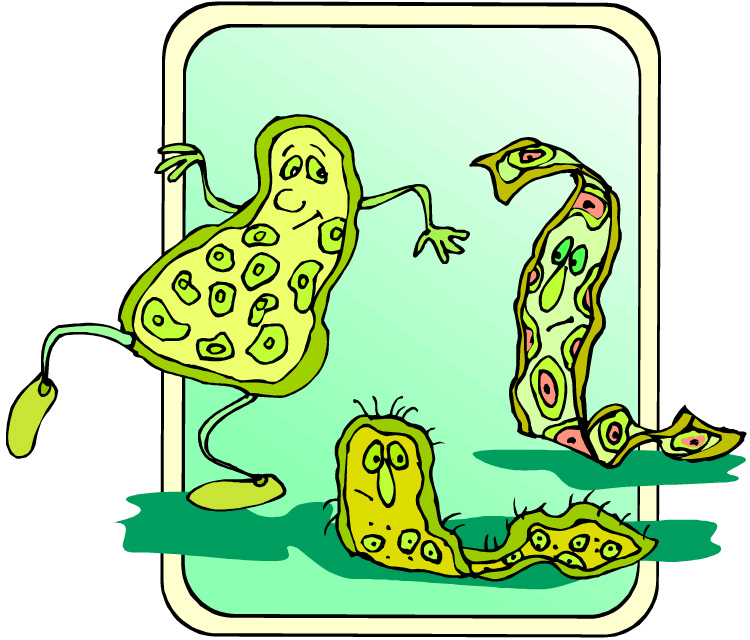
The Similarities Between Sin and Germs 

How Leviticus chapters 12, 13 and 14 relate to you

These several chapters are some of the most difficult ones in the Torah for us to wrap our brains around spiritually. What is the relevance of these arcane laws of ritual impurity and “leprosy” to modern people? With a little thought, we can see that there are some deep and relevant spiritual truths contained in these biblical passages!

As Matthew Henry points out in his classic gospel-oriented commentary on the Bible, after the laws concerning clean and unclean foods in Leviticus 11 come the laws concerning clean and unclean persons. As germs are contagions causing physical disease, so man is infected with the spiritual contagion of a sin nature that brings about spiritual disease ultimately leading to death. Henry explains that man imparts his depraved sin nature to his offspring at conception, which is why the woman needed to go through ritual cleansing after childbirth. Similarly, the Bible teaches us that the plague of leprosy (Heb. tsaraas referring to a generic skin disease) was a judgment by Elohim against the sins of rebellion, greed and misuse of the tongue (e.g. Miriam, Gehazi and King Uzziah).

The spread of and cure for spiritual diseases is similar to those of physical diseases, as we’ll discuss below. First, however, let’s compare and contrast how physical germs are similar to spiritual sin “germs.”

What are germs?

With the help of several modern health care professionals, we first need to learn about germs. 

“Our bodies are pretty amazing. Day after day, they work hard—digesting food, pumping blood and oxygen, sending signals from our brains and much more.

“But there is a group of tiny invaders that can make our bodies sick—they’re called germs.

“Some kids may think that germs are bugs or cooties or other gross stuff. Actually, germs Continue reading →


Leviticus 12–15: Dealing With Contagious Sin Pathogens in Oneself and in the Church

Overview of Parshiot Tazria-Metzora (Lev 12–13 and 14–15)

Often these two parshiot are combined in the yearly Torah reading cycle depending on how the biblical calendar falls for the year. Their combining is likely due to the fact that each is relatively short and deals with related subjects: namely, the ritual purity laws. 

As we shall see, the causes of ritual impurity involve sin issues. As a remedy to this problem, the Torah prescribes procedures that the afflicted person had to follow in order to be deemed cleansed and thus be readmitted into the camp of Israel after having been temporarily expelled. All the rituals prophetically pointed to Yeshua’s atoning death on the cross.

These two parshiot dealing with diseased and unclean persons immediately come after the laws concerning clean and unclean meats (Lev 11). What the Israelites ate as well as the state of their physical bodies was an important aspect of holiness in the eyes of YHVH.

From these two parshiot, we learn that an unclean person could only become clean through the atoning blood of a sacrificed animal or through ritual cleansing of water by which he was reconciled to Elohim and brought back into the camp of Israel. 

What can we learn from the juxtapositioning of these subjects (i.e. the laws pertaining to unclean meats and unclean people) in the Torah? Simply this. Man can easily become impure and defiled because of his innately depraved, crooked, and wicked heart that is at enmity with the laws of Elohim (Jer 17:9; Rom 8:7). 

Since the fall of Adam, man has been in a state of impurity from Elohim. Thus, sin separates him from the presence of Elohim and from his fellow Israelites. Only the sin- Continue reading →


Blog Scripture Readings for 4-15 Through 4-21-18

Aside

THIS WEEK’S SCRIPTURE READINGS FOR STUDY AND DISCUSSION:

Parashat Tazria-Metzora — Leviticus 12:1 – 15:33
Haftarah — 2 King 7:3-20
Prophets — Isaiah 51:1 – 59:21
Writings — Job 19:1 – 25:6
Testimony — Acts 15:22 – 19:41

Our annual Scripture Reading Schedule for 2017-2018 is available to download and print.

Most of this week’s blog discussion points will be on these passages. If you have general comments or questions on the weekly Scripture readings not addressed in a blog post, here’s a place for you to post those. Just use the “leave a reply” link below.

The full “Read Through The Scriptures In A Year” schedule, broken down by each day, can be found on the right sidebar under “Helpful Links.” There are 4 sections of scripture to read each day: one each from the Torah, the Prophets, the Writings, and from the Testimony of Yeshua. Each week, the Torah and haftarah readings will follow the traditional one-year reading cycle.

Weekly Blog Scripture Readings for 4/15/18 through 4/21/18. This week is the second week of seven complete weeks of the count of the omer.


Some Reflections on the Biblical Dietary Laws

Leviticus 11:1–47, The biblical dietary laws are about holiness. Let’s briefly discuss the subject of clean and unclean meats. The focal point of biblical dietary laws are holiness and separation. There are other issues here that need to be explored as well. How serious are you about obedience to YHVH’s commands, or is your belly your god? (See Phil 3:19; Rom 16:18.) Do your taste buds or the Word of YHVH rule your life? Remember, Torah covers all aspects of life: physical, spiritual, emotional, relational, civil, agricultural, political, jurisprudence, religious and economic. ­Torah is a very holistic handbook on life. Are you one who takes the (humanistic) pick-and-choose approach to Torah-obedience? “I’ll obey only the biblical laws that suit me.” Such an approach is akin to what the serpent told Adam and Eve when he said, “You can have it your way … YHVH didn’t really mean what he said when it comes to obedience.”

The biblical kosher laws involve many areas such as health issues, holiness (not defiling the body, the temple of YHVH’s Set-Apart Spirit), and separation issues—how we’re to act, live, eat, worship, think, dress and talk differently than the heathens around us. The word kosher derives from the Hebrew word kasher (Strong’s H3787) meaning “to be straight, right, acceptable” (see Est 8:5; Eccl 11:6; 10:10). YHVH has called his people out of this world and sanctified (set-apart) them to be “straight, right and acceptable” to him. Therefore, YHVH hasn’t give us the liberty to act, speak, dress, eat and live the way the heathens do. He has called us to a higher moral and spiritual standard. We can’t expect to be called the children of the Most High, and still live like the children of the world. We must choose whom we are going to serve (see Josh 24:15): YHVH or mammon and this world (Matt 6:24).

Leviticus 11:4, 47, Unclean. The word unclean is the Hebrew word tameh meaning “defiled, impure, polluted ethically, ritually or religiously” and the word clean is the Hebrew word tahor meaning “pure physically, ceremonially, morally, ethically.” In verse 43, YHVH says that in eating unclean meats one becomes abominable (or detestable, filthy). In Ezekiel 22:26, YHVH rebukes his people because, “Her priests have violated my Torah-law, and have profaned my set-apart (Heb. kadosh) things: they have put no difference between the set-apart and profane, polluted or common, neither have they shown difference between the unclean and the clean, and have hid their eyes from my sabbaths, and I am profaned among them.” In Leviticus 11:45, the Torah states, “For I am YHVH that brought you up out of the land of Egypt, to be your Elohim. You shall therefore be set apart, for I am set apart/holy.” 

In 2 Corinthians 6:16–17, we read:

And what agreement does the temple of Elohim have with idols? For you are the temple of the living Elohim; as Elohim has said, “I will dwell in them, and walk in them; and I will be their Elohim, and they shall be my people. Wherefore come out from among them, and be you separate,” says the Master, “and touch not the unclean thing; and I will receive you.” (emphasis added)

The issue of clean or pure and unclean, polluted or abominable meats is not simply a dietary or health consideration, but a spiritual issue with YHVH. Both Moses (Lev 19:2) and the apostolic writers had a clear sense of the fact that without holiness no one will see YHVH (Heb 12:14), and that holiness or being kadosh or set-apart from the ways, lifestyles, ideologies of this world (i.e. from spiritual Egypt) is an absolute requirement of YHVH for his people. Is it possible to spiritualize away the concept of set-apartness and still be true to the Word of Elohim? Can one be spiritually sanctified (set-apart) through the atoning work of Yeshua at the cross, but then have a polluted lifestyle? Can one profess a righteous lifestyle and be set-apart without walking out that lifestyle? Can one follow the spirit of the law and violate the letter and still be acceptable to YHVH? What did James say about faith without works (Jas 2:20)? What did Yeshua teach at the Sermon on the Mount (Matt 5–7) about uniting the letter and the spirit of the law and practicing both? (Specifically read Matt 5:21–48 for the answer.)

Leviticus 11:10, 20, 23, 41, 42, Abomination. Heb. sheqets (Strong’s H8263) meaning “a detestable thing or idol.” It can also mean “to make abominable” or “contaminate.” This word is also used in connection with idolatrous practices, either referring to the idols themselves as being abhorrent and detestable in Elohim’s sight, or to something associated with the idolatrous ritual (The TWOT, pp. 954–955; e.g. Jer 16:18; Ezek 5:11; 7:20; 2 Chron 15:8). Not only are the idols an abomination, but those who worship them become detestable as well (Hos 9:10). In fact, the word abomination in “abomination of desolation” as mentioned in Daniel 9:27 and 12:11 is the same Hebrew word. It is generally viewed that this prophecy was fulfilled when Antiochus Ephiphanes (a prophetic foreshadow of the Antichrist) set up an idol of Zeus in the Jerusalem temple (ibid.). It should be clear that when YHVH uses sheqets (or its cognates) in relationship to certain practices (e.g. eating unclean meats or idol worship) that he is attempting to impress upon his people the extreme gravity of the sins they are committing against him. 

Leviticus 11:44, Be holy [Heb. kadosh], for I am holy [kadosh]. (See also verse 45; Lev 19:2; 20:26; 1 Pet 1:16.) How do we as redeemed believers initially become kadosh or set-apart? This occurs only through the blood of Yeshua, the Lamb of Elohim at the time of our salvation. 

And from Yeshua Messiah, who is the faithful witness, and the first begotten of the dead, and the prince of the kings of the earth. Unto him that loved us, and washed us from our sins in his own blood. (Rev 1:5)

“Come now, and let us reason together,” says YHVH. “Though your sins be as scarlet, they shall be as white as snow; though they be red like crimson, they shall be as wool.” (Isa 1:18)

How does one stay set-apart or sanctified and stay in fellowship with a kadosh Elohim? This is accomplished by staying under the blood of Yeshua the Lamb and by confessing and forsaking sin (i.e. violation of the Torah-law of Elohim—1 John 3:4) on a regular basis:

If we say that we have fellowship with him, and walk in darkness [sin or Torahlessness], we lie, and do not the truth [i.e. Torah/YHVH’s instructions in righteousness], but if we walk in the light, as he is in the light, we have fellowship one with another, and the blood of Messiah Yeshua his Son cleanse us from all sin. If we say that we have no sin, we deceive ourselves, and the truth is not in us. If we confess our sins, he is faithful and just to forgive us our sins, and to cleanse us from all unrighteousness. (1 John 1:6–9)

 

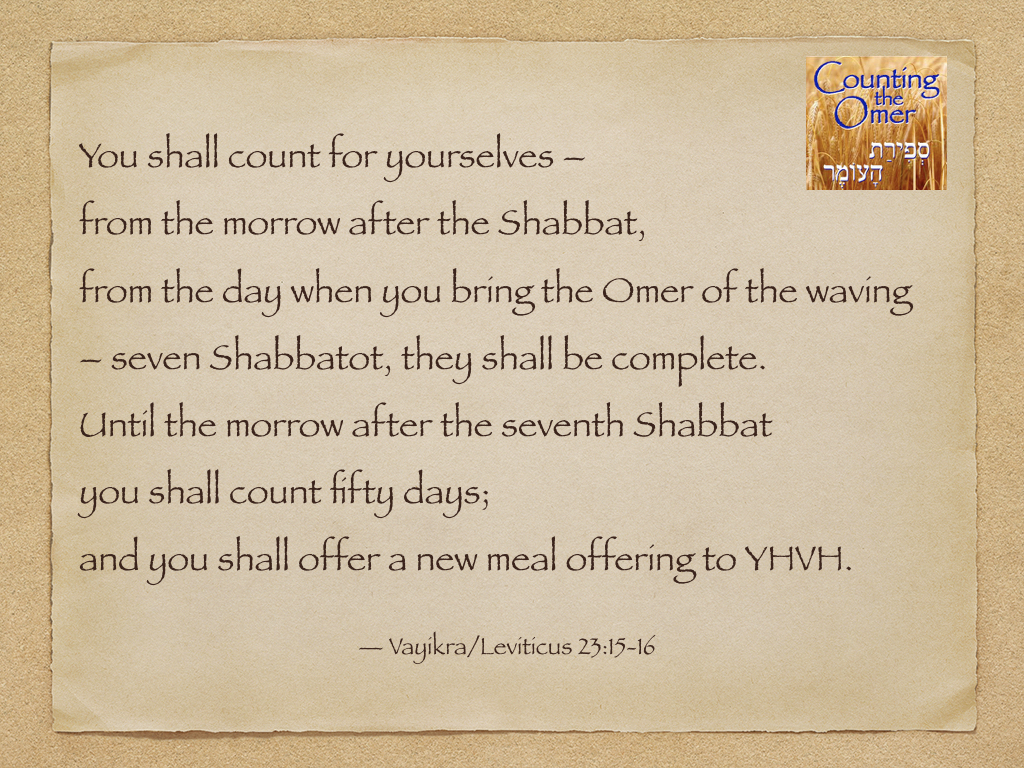
Counting the Omer—Week One

Today is the seventh day of the first week of seven weeks.

Today is the seventh day of the counting of 50 days from the day of the waving of the omer on the morrow after the Sabbath.

Today is Shabbat, the first Shabbat of seven Shabbatot.

Today completes the first week of seven weeks.