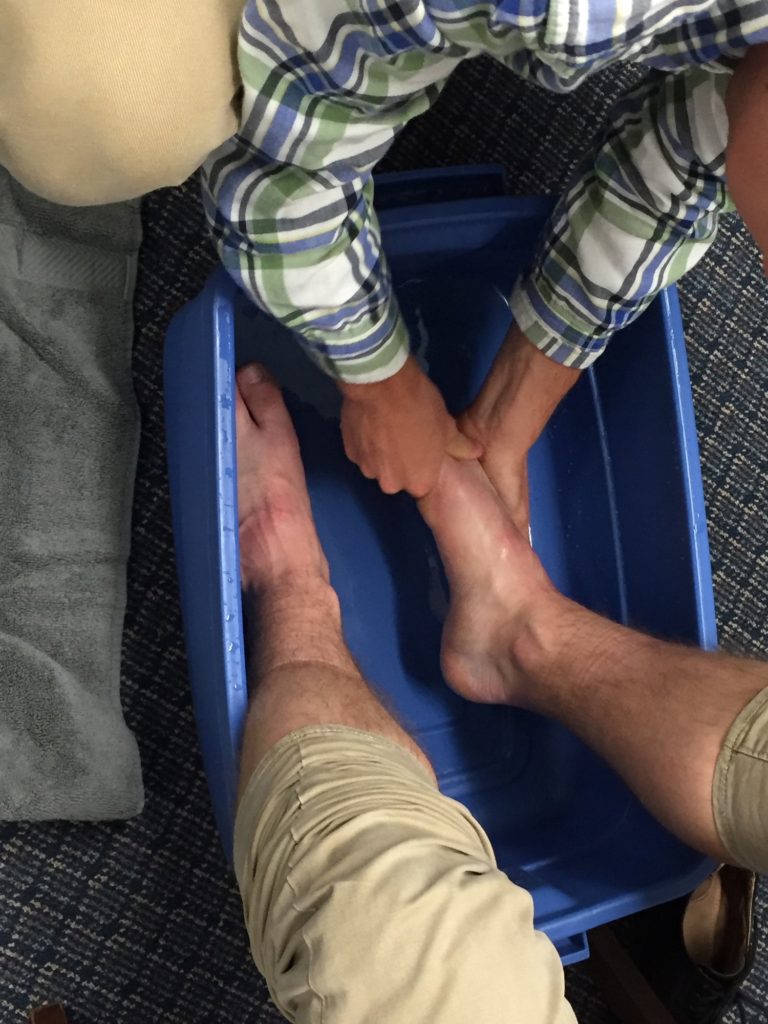
When was the last time YOU “washed” someone’s feet?

John 13:8, You will never wash. Peter rejected Yeshua’s washing his feet not because of human obstinateness, but because of his honor for Yeshua. Washing the feet of one’s guests was an act of hospitality on the part of a host and was usually performed by a servant, not the host. Peter considered it to be demeaning for the Master to be performing the task of a servant, yet this is exactly what Yeshua was attempting to demonstrate. As the Messiah, he came to lay down his life in loving service for his disciples and not to be served (Matt 20:28; John 10:15; 15:13). Yeshua then made the point that his disciples should following his example in serving one another (vv. 12–17). 

John 13:14–15, You also ought to wash. Yeshua is giving a simple and clear command here for the saints to wash one another’s feet. How many Christian churches who claim to be followers and imitators of Yeshua actually wash each others’ feet? If Christian leaders in most churches are teaching their people to obey this command, now many other of Yeshua’s other commandments are they not teaching and obeying?

John 13:35, By this all will know. Love was to be the identifying mark of a disciple of Yeshua. The Bible defines love in several ways. We love Yeshua by keeping his (Torah) commands (John 14:15; 1 John 5:1–3). Yeshua defines the Torah as loving Elohim with all of our heart, soul mind and strength and loving our neighbor as ourself (Mark 12:28–31). Paul says that all the laws of Elohim can be summed up in love (Rom 13:8–10). Yeshua said that the greatest expression of love is to lay one’s life down for another as Yeshua did for us (1 John 3:16; 4:11). Without love, all the good—even religious works—we may do YHVH counts as nothing (1 Cor 13).

It’s important to note that most disciples of Yeshua (including Christians) believe this principle, but, sadly, when it comes down to reality, many fail to live out the identifying principles of love. How easy it is to view our religious works as the main identifying marks of our relationship with Yeshua. We may pride ourselves in the fact that we keep the Sabbath or the biblical holidays, practice full water baptism, speak in tongues, believe in the baptism of the Holy Spirit, practice the gifts of the Spirit, identify ourselves with the teachings of notable religious leaders, are Torah-obedient, eat or don’t eat certain types of foods, or other external practices and identifying marks. In truth, Yeshua looks less at these than the heart condition of the disciple. Does one have a heart of love, and is he obeying his Master and his neighbor as himself out of love to the best of his ability according to the light of the truth he has been given? This is the most important issue.

It’s interesting to note what Yeshua didn’t say in this verse. He didn’t say that all men will know that you’re my disciples because you have the right Bible version, pronounce the name of Elohim (i.e. YHVH) using the correct ancient pronunciation, observe the biblical Sabbath and feasts, follow every jot and tittle of the Torah perfectly, or dress a certain way. Yet, sadly, these prescriptions and strictures often become those things by which people identify themselves, and that end up keeping people separated from each other into exclusivistic tribal clan-like groups who will have nothing to do with anyone outside their group. Acting in this manner is not the heart of Elohim! In reality, in we’re not careful, our obedience issues can become points of pride—something YHVH hates (Prov 6:6–19). 

Once again, Yeshua, in this succinct teaching, pulls the rug out from the religious hypocrites and the deceived who focus on the legalistic and religious externals of what the Bible teaches, but miss the heart and spirit that Yeshua indicates should be the spiritual force driving our obedience—what he calls the weightier matters of the Torah-law, which are justice, mercy and faith (Matt 23:23).


 

“Ye are gods…” (??)

In these days of uncertainty, geopolitical intrigue, economic uncertainties, mistrust, life-threatening diseases and plagues, faithlessness and hopelessness, and fear on every side, it’s time to look upwards to the Rock of our salvations and to WASH OUT YOUR BRAIN WITH THE FOLLOWING:

John 10:34, You are gods. Yeshua is here quoting Psalm 82:6 where the term elohim in Hebraic thought and as used biblically simply refers to all divine beings whether good (e.g. Elohim, his heavenly council and angels) to evil (e.g. Satan, evil spirits and demons). Elohim can also refer to human (righteous) judges, who are acting on behalf of Elohim on this earth making righteous judgment between humans (e.g. Exod 21:6; 22:8–9). But there’s more.

Yeshua gave this same authority to his apostles (or church leaders) to adjudicate between the saints and to make the same ecclesiastical decisions as did the Jewish Sanhedrin of old, and he promised that as Elohim’s agents on earth, he would honor their decisions (e.g. Matt 16:19; 18:18–20). 

Moreover, in this passage, Yeshua is clearly stating that the Jews in his audience were divine beings. What did he mean by this? The verse here doesn’t indicate that those in his audience were Jewish judges or members of the ruling elite. He was speaking generically to a group of lay people to whom the word of Elohim had been given (v. 35), which is why they were in Jerusalem at that time on the temple mount observing the Feast of Dedication or Hanukkah (John 10:22–23). In making this statement, Yeshua is most likely referring to the fact that spiritually enlightened and regenerated humans have the potential (i.e. at the resurrection) for becoming glorified sons of Elohim if they believe in him (John 1:12). 

Whatever Yeshua means, he is clearly stating that those humans (to whom the Word of Elohim was given, v. 35) possess some divine element, to one degree or another, that qualifies them to be included under the rubric of elohim. Whether he is thinking of the term elohim vis-à-vis humans in present or future prophetic terms is not clear from this passage. He simply states as a fact that “You are elohim” (if you have been given the word of Elohim).


The Priestly Robes, Yeshua and YOU

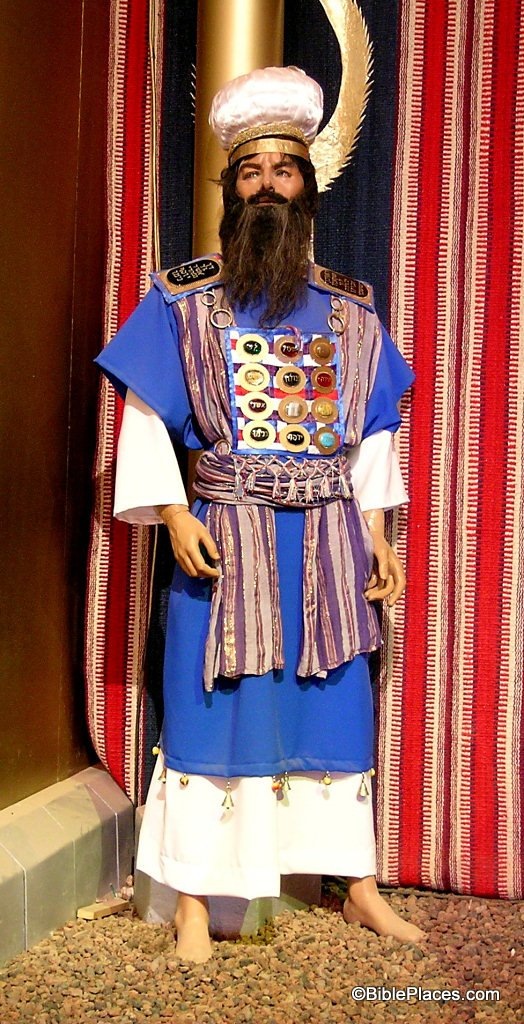
Exodus 39:1, The holy garments for Aaron. The vestments of the high priest (kohen hagadol) are symbolic of the robes of righteousness that saints should be wearing in preparation for the return of the Messiah.

  • Gold symbolizes purity of heart. Blue symbolizes heaven and spirituality.
  • White linen pictures robes of righteousness, purity or sinlessness.
  • Red represents blood—the blood of Yeshua that cleanses us from sin.
  • The high priest wore a belt that represented truth according to Paul (Eph 6:14).
  • The white linen pants represented sexual purity. The white turban represented purity of thought and humility (the opposite of conceit).

The high priest also wore a gold crown inscribed with the words, “Kadosh l’YHVH” meaning “Set-Apart to YHVH.”

The dangling pomegranates attached to the hem of his robe represented the fruits of the Spirit of Elohim, which should be manifesting in the life of the saint. The golden bells, also attached to the hem of his robe, jingled when the high priest walked. These symbolized the righteous walk of the saint: people should hear and see our good spiritual fruits. All of our actions speak loudly and clearly as to who we are and what we believe. Also, Yeshua taught that our words reveal the true condition of our heart (Luke 6:45). How, then, do people really view us? What are we like when we are alone—our thought life and our words—our secret life? Is there a discrepancy between our secret and public lives? If so why? How set apart and righteous are we…in reality?

If YHVH has called us to be his set-apart priesthood, then hadn’t we better get busy cleaning up our act and start acting like one?

Jewish tradition tells us that a rope was tied to the leg of the high priest in Second Temple times so that while ministering in the innermost sanctuary of the temple if he was impure and YHVH struck him dead (as happened to Nadab and Abihu, the sons of Aaron, when they offered up strange fire) the corpse could be dragged out by the rope. This teaches us that we should view being righteous and set apart seriously. Remember Hebrews 12:14 which instructs us to, “Follow peace with all men, and holiness, without which no man will see the Master.”

As YHVH commanded Moses. In chapter 39, please observe the fact that all the work of the tabernacle was done “as YHVH commanded Moses” (or phrases similar to this), and these statements are repeated ten times in this chapter. YHVH gave specific instructions concerning the construction of the tabernacle and expected these instructions to be followed to the letter. The tabernacle was the means by which the Israelites were to approach YHVH. Though the physical tabernacle is long gone, it still serves as a blueprint or pattern showing man the steps to reconciliation with his Creator. There is no other way to be reconciled to YHVH except through the steps of redemption outlined in the mishkan. Furthermore, YHVH never gave any human the prerogative to add or subtract from his instructions. Consider the implications of this with regards to our spiritual walk before our Heavenly Father. How important is it to follow all his instructions in righteousness? How often do we mitigate his instructions and reshape them to accommodate us? Isn’t this what the serpent persuaded Adam and Eve to do at the tree of knowledge, which is how sin entered the world?

Continue reading
 

The Deeper Message of the Tabernacle of Moses

The Tabernacle and the Deification or Theosis of Man

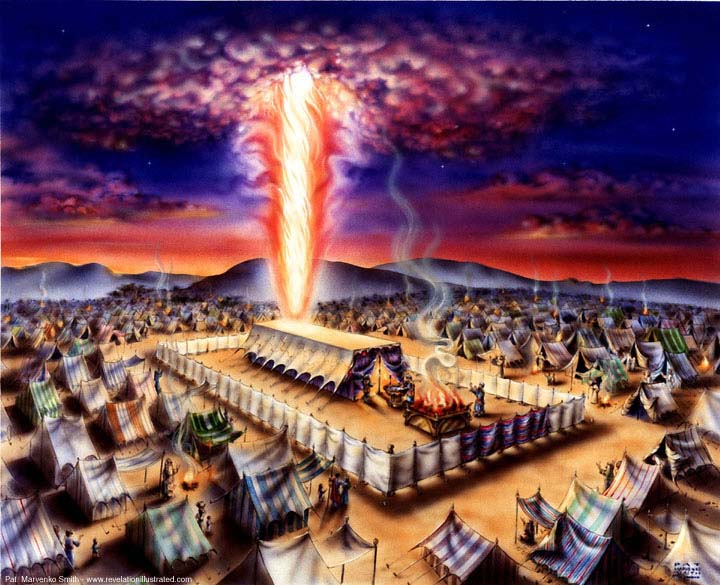
The Tabernacle of Moses from its front to back represents one’s progression in their spiritual journey starting with their initial salvation leading to the glorification of the physical body and eternal life in YHVH’s eternal spiritual kingdom. This view is from man’s perspective looking into the tabernacle through the front gate.

From YHVH’s view inside the holy of holies above the ark of the covenant in the glory cloud looking outward, the perspective is different. We’ll discus this in a moment.

In the outer court of the tabernacle, all the rituals and furnishings pointed to death, judgment, to washing or cleansing. These prophetically foreshadowed salvation through Yeshua’s atoning death on the cross, with Yeshua being the door to salvation, acceptance of his death on the cross for one’s sins followed by baptism for the remission of sins. In the set-apart (kadosh or holy) place inside the tabernacle, everything pointed to life, light, food, fragrant incense, the fruits and gifts of the Set-Apart Spirit—or life in a spiritual relationship with Elohim subsequent to one’s taking the beginning steps in the salvation process. The outer court speaks of basic salvation for the redeemed believer in Yeshua, while the holy place speaks of spiritual growth and maturity, of moving from spiritual babyhood and growing into spiritual adulthood or maturity. 

To understand this process of growing in spiritual maturity, it is necessary to comprehend the tripartite composition of man. Paul speaks of man being subdivided into three parts—body, soul and spirit (1 Thess 5:23). The tabernacle’s outer court seems to relate more to the physical or bodily realm of the person, while the holy place speaks more of the soul or intellectual, volitional and emotional aspects of man’s inner or psychological makeup. Finally, the holy of holies portrays man approaching YHVH through the realm of a person’s inner personal spirit. 

As one progresses into the tabernacle, it is as if YHVH is drawing a person into an ever deeper relational walk with him starting at the most basic level progressing upward until one is finally communing with YHVH on a Spirit-to-(human personal)-spirit level (in the most holy place). It is the Father’s desire that his children progressively grow until we are communing with him at the highest spiritual level (see John 4:23–24). 

Continue reading
 

More Info on How to Observe the Shabbat

It’s time to shake some people out of their spiritual complacency and to wake up the spiritually lukewarm!

WARNING!

This passage of Scripture gives us more information on how to observe the seventh day Sabbath or Shabbat. In this regard I have a serious question for some of you. How long will you hard-hearted, stiff-necked and rebellious people refuse to keep the seventh day Sabbath as the Creator of the universe himself gave us an example to do in Genesis chapter two, as he commanded all humans (not just the Jews) to do when he gave the ten commandments in Exodus chapter 20, which he commanded his people to do down through ages via his prophets, which Yeshua the Messiah and the apostles and early New Testament believers kept, and which the Bible prophesies will be kept during the millennial reign of King Yeshua the Messiah on this earth after his second coming? How long will you believe the lies that most of the Old Testament law and Jew-hating early Catholic church fathers pawned off on generations of Christians to this day that the Sabbath no longer matters, was done away with and nailed to the cross and that now Sunday has replaced the Sabbath? Almost all of Christendom believes this unbiblical lie. At one time they mainstream church believed that the earth was flat and persecuted and killed those who taught otherwise. Maybe the church is wrong about their view of a the seventh day Sabbath as well!

The Bible instructs us NOT to follow the masses to do evil, that is, to sin against Elohim by going against his Word or commands (Exod 23:2).

Finally, one last question: how long will you continue to follow the dictates of your carnal hearts as Paul so clearly states in Romans 8:6–8 and go against the clear commands of YHVH Elohim and not observe the seventh day Sabbath?

For to be carnally minded is death, but to be spiritually minded is life and peace. Because the carnal mind is enmity against Elohim; for it is not subject to the law of God, nor indeed can be. So then, those who are in the flesh cannot please God.

Furthermore:

“But on this one will I look: On him who is poor and of a contrite spirit, And who trembles at My word.” says YHVH Elohim (Isa 66:2)

[F]or not the hearers of the law are just in the sight of Elohim, but the doers of the law will be justified… (Rom 2:13, according to Paul)

“Not everyone who says to Me, ‘Lord, Lord,’ shall enter the kingdom of heaven, but he who does the will of My Father in heaven. Many will say to Me in that day, ‘Lord, Lord, have we not prophesied in Your name, cast out demons in Your name, and done many wonders in Your name?’ And then I will declare to them, ‘I never knew you; depart from Me, you who practice lawlessness/Torahlessness!'” (Matt 7:21–23, Yeshua speaking)

“Do not think that I came to destroy the Law or the Prophets. I did not come to destroy but to fulfill.  For assuredly, I say to you, till heaven and earth pass away, one jot or one tittle will by no means pass from the law till all is fulfilled. Whoever therefore breaks one of the least of these commandments, and teaches men so, shall be called least in the kingdom of heaven; but whoever does and teaches them, he shall be called great in the kingdom of heaven. For I say to you, that unless your righteousness exceeds the righteousness of the scribes and Pharisees, you will by no means enter the kingdom of heaven.” (Matt 5:17–20, Yeshua speaking)

(Note: At this point, I’m not feeling inclined to take any comments countering my position on the validity of the seventh day Sabbath. I know what the Bible says, and I don’t care what men have to say to the contrary, and, frankly, I’m not interested in arguing over this point. This is time-consuming old business for me and it’s time to move on. For those who are honest truth seekers and want to learn more about what Scripture has to say about the Sabbath as opposed to those people who merely care to uphold traditions of men by which the word of Elohim has been made of none effect (Mark 7:13), I have this to say: On this blog, I have posted numerous articles on the Sabbath. You can find them by typing in “Sabbath” or “Shabbat” on this blog’s search engine on the front page. Love and blessings to everyone — Natan)


Exodus 35:2, The seventh day … shall be … a set-apart day. In our journey through the Torah, the subject of the seventh day Sabbath keeps popping up. Why is this? This is because it’s obviously an important subject to YHVH. 

When YHVH said in Exodus 20:8 to “Remember the Sabbath day to keep it set-apart (Heb. kadosh),” he is reminding the Israelites of it so that they won’t forget it! He reminds us again in the verse above to keep the Sabbath set-apart. 

But there’s more. 

Continue reading
 

Surviving the Coronavirus/COVID-19 Plague

Both a physical and spiritual response is required to survive the current Coronavirus/COVID-19 plague that is sweeping the earth. I discuss both of these needed responses in the video below.

In the video, I also briefly discuss Psalm 91. In this post, I go into more detail on this vital biblical passage. This should encourage anyone who is experiencing fear and anxiety over the current viral epidemic.

In the video, I also discuss the physical precautions that I’m taking to protect myself from this lethal virus. Other than following government recommendations, I am also taking nutritional supplements to strengthen my immune system. (This is what I’m doing and I’m not recommending this for anyone else. Do your own research and check with your health care provider on what to do for you.) The supplement that I am taking include the following:

  • Four to six thousand mg of vitamin C (ascorbic acid) spread out through the day.
  • Several thousand mg of vitamin D per day.
  • Potassium iodide each day.
  • Glutathione each day.

Psalm 91:1 (and the rest of Psalm 91) Is the Biblical 9-1-1 to Call in Our Time of Trouble

Psalm 91:1, Secret. Heb. cether means “covering, shelter, hiding place, secrecy,” and is from the root word meaning “to hide, conceal.” When troubles comes our way like a tidal wave, the natural human reaction is either to stand and fight or to flee in fear. In psychology this is known as “the fight or flight response.” The Bible teaches us that there is both a time to fight and a time to flee (Eccl 3:1; Matt 24:16; 12:14 cp. Eph 6:14; Luke 19:13). Spiritual discernment and being led by the Spirit of Elohim will direct us what to do and when. Regardless, at all times we need to be “hiding” in the secret place or under the shadow of YHVH’s “wings” with regard to our spiritual relationship with our Almighty Father in heaven as this verse states. When we are in that place of covering and under the shadow of the wings of the Almighty, which alludes to his throne room, we will not be cowering in fear from our enemies, but we will find the courage, will and stamina to stand firm in faith, and, if necessary, to come out and to fight the enemy not in our own strength, but in Elohim’s strength as led and guided by his Spirit. 

Abide. This is the Hebrew word luwn meaning “to lodge, stop over, pass the night or abide.” A lodge is a place where one temporarily spends the night. When dark times come our way, we need to stop and spend the night or run to and abide in the throne room of the Almighty! This speaks of prayer, worship, praise and studying his Word.

Psalm 91:1, Cover. This Hebrew word literally means “to fence around or protect.” 

Psalm 91:1, 4, 16, Under the shadow of the Almighty…under his wings. (See notes at Ps 61:4.) According to the ancient Jewish sages, Moses composed this psalm for the tribe of Levi who, while ministering in the tabernacle, dwelt under the shadow of the wings of cherubim that stood over the ark of the covenant in the Tabernacle of Moses—an earthly representation of YHVH’s throne room in heaven. The sages go on to explain that the psalmist describes the devout man of faith lives with Elohim in his heart, and never leaves Elohim’s shadow. Such a man is a true biblical hero of faith to whom Elohim pledges (v. 16) to satisfy with long life and to show him his salvation or deliverance from evil (The ArtScroll Tanach Series Tehillim/Psalms Commentary on Ps 91). This psalm ends with the promise of the blessing of long life to those who love and serve YHVH, and beyond that, salvation, which is the Hebrew word Yeshua—the very name of the coming Messiah, who would offer his people deliverance from the ultimate enemy, namely sin and its death penalty. The result of this deliverance is the glorious divine gift of eternal life through faith in Yeshua the Messiah—the supreme gift and blessing of all! This psalm is literally a prophecy pointing to the Messiah.

Continue reading
 

Blog Scripture Readings for 3-15 Through 3-21-20

Aside

Parashat Vayakhel-Pekudei — Exodus 35:1 – 40:38
Haftarah — 1 Kings 7:51 – 8:21 | Exodus 12:1-20; Ezekiel 45:16 – 46:18**
Prophets — Isaiah 1:1 – 8:22
Writings — Proverbs 8:1 – 14:35
Testimony — John 10:1 – 13:16

Our new annual Scripture Reading Schedule for 2019-2020 with daily readings is available to download and print. If you are still working through 2018-2019’s Scripture Reading Schedule, the link will still be available on the right sidebar under “Helpful Links”. If you are using a mobile device or tablet, the link may be below, meaning you’ll need to scroll down instead.

Most of this week’s blog discussion points will be on these passages. If you have general comments or questions on the weekly Scripture readings not addressed in a blog post, here’s a place for you to post those. Just use the “leave a reply” link or the “share your thoughts” box below.

The full “Read Through The Scriptures In A Year” schedule, broken down by each day, can be found on the right sidebar under “Helpful Links.” There are 4 sections of scripture to read each day: one each from the Torah, the Prophets, the Writings, and from the Testimony of Yeshua. Each week, the Torah and haftarah readings will follow the traditional one-year reading cycle.

** A different Haftarah is read when it is a special sabbath in Jewish tradition. This week it is Shabbat HaChodesh on the traditional calendar with a special reading. Otherwise, 1 Kings 7:51–8:21 would be read.

Weekly Blog Scripture Readings for 3/15 through 3/21/2020.