The Baptism of the Holy Spirit— Activating Heaven’s Power in Your Life for Advancing YHVH’s Kingdom

Acts 1:5, Baptized with the Holy Spirit. 

We Need Spiritual Activation

To enter into a relationship with YHVH Elohim, our Creator and Father in heaven, and to become his sons and daughters, we must be spiritually activated.

Man is comprised of three parts: body, soul and spirit (1 Thess 5:23). Our soul (our mind, will and emotions) controls what we think, say and do.  The spirit part of man is what connects to the Spirit of YHVH Elohim. About the man’s spirit, the Scriptures talk say this:

But there is a spirit in man: and the inspiration of the Almighty giveth them understanding. (Job 32:8)

Who knoweth the spirit of man that goeth upward, and the spirit of the beast that goeth downward to the earth? (Eccl 3:21)

The burden of the word of YHVH for Israel, saith YHVH, which stretcheth forth the heavens, and layeth the foundation of the earth, and formeth the spirit of man within him. (Zech 12:1)

For what man knoweth the things of a man, save the spirit of man which is in him? even so the things of Elohim knoweth no man, but the Spirit of Elohim. (1 Cor 2:11)

Man can’t enter into a relationship with a YHVH who is a spirit through his soul (his mind, will and emotions). Elohim is a Spirit, and we must relate to  him through the Spirit.

But the natural man does not receive the things of the Spirit of God, for they are foolishness to him; nor can he know them, because they are spiritually discerned. (1 Cor 2:14) 

But the hour cometh, and now is, when the true worshippers shall worship the Father in spirit and in truth: for the Father seeketh such to worship him. Elohim is a Spirit: and they that worship him must worship him in spirit and in truth. (John 4:23–24)

For man to relate to Elohim, he must do so through his spirit. This means man’s spirit must be activated, which occurs at the time of his spiritual birth — when a man is “born again”  or born of the spirit (John 3:5) at the time of his spiritual conversion. When this occurs, a man receives in himself the Spirit of Elohim, which activates and controls the spirit in man, which in turn controls the soul (the mind,will and emotions), which in turn tells the body what to think, say and do.

When we are spiritually born again, our spirit man is activated by the Spirit of Elohim. 

The spirit of a man is the lamp of YHVH, Searching all the inner depths of his heart. (Prov 20:27) 

But there is a spirit in man, and the breath of the Almighty gives him understanding. (Job 32:8)

The Spirit Himself bears witness with our spirit that we are children of Elohim (Rom 8:16) 

That He would grant you, according to the riches of His glory, to be strengthened with might through His Spirit in the inner man, that Messiah may dwell in your hearts through faith (Eph 3:16–17)

Now we have received, not the spirit of the world, but the Spirit who is from Elohim, that we might know the things that have been freely given to us by Elohim. These things we also speak, not in words which man’s wisdom teaches but which the Holy Spirit teaches, comparing spiritual things with spiritual. But the natural man does not receive the things of the Spirit of Elohim, for they are foolishness to him; nor can he know them, because they are spiritually discerned. (1 Cor 2:12–14)

But you have an anointing from the Holy One, and you know all things. … But the anointing which you have received from Him abides in you, and you do not need that anyone teach you; but as the same anointing teaches you concerning all things, and is true, and is not a lie, and just as it has taught you, you will abide in Him. (1 John 2:20, 27)

And every spirit that does not confess that Yeshua the Messiah has come in the flesh is not of Elohim. And this is the spirit of the Antimessiah, which you have heard was coming, and is now already in the world. (1 John 4:3)

Born of the Spirit Versus Baptized in the Spirit 

What’s the difference between being born of the Spirit and being baptized in the Spirit? 

Continue reading

 

When Did Easter Replace Passover?

Matthew 28:1, When did the early Christians first celebrate a day commemorating the resurrection of Yeshua?

Although the resurrection of Yeshua the Messiah is a biblical and historical fact, it’s celebration (known as Easter), is neither commanded in the Scriptures, nor was it celebrated by the original disciples of Yeshua. It is purely an invention of the church, which eventually replaced Passover! Here are the facts:

In A History of Christianity (vol. 1), Kenneth Scott Latourette states that notice of Easter as a festival occurs in the middle of the second century, but that festivals commemorating the resurrection of Messiah were presumably observed by at least some Christians from much earlier times (p. 137). Church historian, Philip Schaff, also attributes the beginning of the Easter festival to the middle of the second century (History of the Christian Church, vol. 2, p. 207). He states that the Christian Passover naturally grew out of the Jewish Passover, as the Lord’s Day (Sunday) grew out of the Sabbath. “It is based on the view that Christ crucified and risen is the centre of faith. The Jewish Christians would very naturally from the beginning continue to celebrate the legal Passover, but in the light of its fulfillment by the sacrifice of Christ, and would dwell chiefly on the aspect of the crucifixion. The Gentile Christians, for whom the Jewish Passover had no meaning except through reflection on the cross, would chiefly celebrate the Lord’s resurrection as they did on every Sunday of the week.” He notes that the early Christians commemorated the entire period between the death and resurrection of Yeshua with vigils, fasting, special devotions, meetings culminating in a resurrection feast celebrating the whole work of redemption. The feast of the resurrection gradually became the most prominent aspect of the Christian Passover (Easter celebration), but the crucifixion continued to be celebrated on Good Friday” (ibid., pp. 207–208).

Christians universally kept the Passover on the biblical date of Abib (also known as Nisan) 14/15, irrespective of the day of the week until A.D. 135 according to leading Sabbath scholar Prof. Samuele Bacchiocchi quoting the fourth century Christian historian Ephiphanius (From Sabbath to Sunday, p. 81). “This conclusion,” continues Bacchiocchi, “is supported indirectly by the two earliest documents mentioning the Passover celebration, since both emphasize the commemoration of the death rather than the resurrection of Christ. The Ethiopic version of the apocryphal Epistle of the Apostles [or Didache] says, ‘and you therefore celebrate the remembrance of my death, i.e., the Passover’ (ch. 15). In the Coptic version the passage is basically the same, ‘And you remember my death. If now the Passover takes place …’ (chap. 15)’ (ibid., p. 82). 

The second document that attests to the early church’s emphasis on the death rather than the resurrection of Yeshua is the Sermon on the Passover, by Melito, Bishop of Sardis (died ca. A.D. 190). According to Bacchiocchi, Melito provides a most extensive theological interpretations of the meaning of the Passover for early Christians. “Though Melito makes a few passing references to the resurrection, it is clear from the context that these function as the epilogue of the passion drama of the Passover. The emphasis is indeed on the suffering and death of Jesus which constitute the recurring theme of the sermon and of the celebration” (ibid., p. 83).

“The resurrection,” Bacchiocchi admits, “however, did emerge in time as the dominant reason for the celebration not only of the annual Easter-Sunday, but also of the weekly Sunday. The two festivities, in fact,… came to be regarded as one basic feast commemorating at different times the same event of the resurrection.” Bacchiocchi concludes,

It would seem therefore that though the resurrection is frequently mentioned both in the New Testament and in the early patristic literature, no suggestion is given that primitive Christians commemorated the event by a weekly or yearly Sunday service. The very fact that Passover, which later become the annual commemoration of the resurrection held on Easter-Sunday, initially celebrated primarily Christ’s passion [death] and was observed on the fixed date of Nisan [Abib] 15 rather than on Sunday, makes it untenable to claim that Christ’s resurrection determined the origin of Sunday worship during the lifetime of the Apostles. (ibid. p. 84)


The glory of Elohim falls when sin is dealt with!

Leviticus Chapter Nine Insights

Leviticus 9:1, 9, 15, 18, Take for yourself…sons of Aaron…the people’s offering. Redemption (along with obedience to YHVH’s commands leading to righteousness and holiness) starts with the individual (Aaron the high priest)—especially the head or priest of the home (the husband or father) and then ripples out to the immediate family (“the sons of Aaron”) and then spreads to those around us (“the people”). 

Leviticus 9:2–4, YHVH will appear. It is impossible to appear before YHVH Elohim without the shedding of innocent blood for the atonement of man’s sins. Man is too sinful and unholy to be able to come before his perfect and holy Creator. The sooner human’s realize their sinfulness and unworthiness, and the need to deal with the sorry state their live is in, the sooner they will be able to fill their inner (some say the “God-shaped) void and the unmet need of having an intimate relationship with their Creator.

Leviticus 9:6, This is the thing. When atonement for sin is made, and a person comes to their Creator on that basis, YHVH and his glory will appear in one way or another in that person’s life.

Leviticus 9:6, 23, The glory [kobowd] of YHVH. Kobowd means “glory, honour, glorious, abundance, riches, splendour, dignity, reputation, reverence.” The root word of kobowd is the verb kabad or kabed meaning “to be heavy, be weighty, be grievous, be hard, be rich, be honourable, be glorious, be burdensome and be honoured.” According to The TWOT, the literal meaning of kabad/kabed is rarely used in Scripture; rather, its figurative meaning (e.g. to be heavy with sin) is more commonly used. As such, in Scripture it often refers to a weighty, impressive or prominent person in society who is worthy of honor and respect.

Continue reading
 

More Insights on the Feast of Unleavened Bread

The Feast of Unleavened Bread Is a Commemorative Ritual

Passover going into the first day of the Feast of Unleavened Bread is the birthday of the nation of Israel. In ancient times, universal Israel came together in Jerusalem to celebrate this event. Today, redeemed Israelites or the Israel of Elohim (Gal 6:16) come together to celebrate these divine appointment sacred convocations (1 Cor 5:6–8) cp. 11:17–29).

Abstaining from leavened bread for seven days is symbolic of Elohim’s people separating themselves from sin and entering into a holy or set-apart relationship with him. Without holiness, no one ever see Elohim (Heb 12:14). Set-apart from what? The world, the flesh and the devil (Rev 18:4; 2 Cor 6:14–18; John 17:11, 14; Jas 4:4)

Removing leavening from our  homes is a symbolic activity just like taking communion, being baptized for the remission of sins, or building a sukkah during the Feast of Tabernacles. As humans, we need symbolic commemorative occasions for several reasons. They give us a sense of history by helping us to understand the past, so that we can move forward into the future knowing who we are and where we’ve come from. They give us guidance so that we’ll learn from the lessons of history, both the good and bad ones. Our American culture is full of symbolic rituals and commemorative acts and markers (Christmas, Easter, birthdays, anniversaries, Independence Day, Memorial Day, Veterans Day, Thanksgiving Day, statues, historical markers, monuments, museums, heritage sites, etc.). Likewise, Biblical commemorative rituals help us in several ways.

  • They help us to both recall and commemorate past and future events. 
  • They help us to understand who we are by recalling where we’ve come from which in turn helps us to understand where we’re going.
  • They can be something physical that helps us to wrap our minds around difficult-to-understand spiritual principle.
  • They are something physical that help to point us toward a spiritual reality. They help to raise our hopes and our eyes above our mundane existence and strengthen our faith as we move toward the higher goal or reality to which the ritual or commemorative event points.
  • They help us to teach and to pass on to each new generation not only about our past history, but our future hope.

Leavening Is a Picture of Sin

The observance of the Feast of Unleavened Bread is a symbol of our commitment to turn towards righteousness and turn away from sin. How serious we are about removing physical leaven from our homes in compliance with YHVH’s commands is an indicator of how serious we are about removing sin from our lives. 

While leavening makes bread rise and is therefore a symbol for pride, leavening is also a symbol of decay. The rising of the dough is only possible by the natural process of fermentation or decay through fungal activity. In ancient times, a pinch of fermented or sour dough was placed into a batch of unleavened dough to make it sour and cause it to rise. Yeast is a living micro organism that is classified as a fungi. Fungi feed on both living and dead and decaying organic matter. Yeast turns food sour through the process of fermentation and this begins the process by which something dies. Yeast is an apt metaphor for the corrupting influences of sin, which invades our lives and turns our souls from sweet to sour leading to spiritual death. Were it not for the curse of death because of Adam and Eve’s sin, it’s quite possible that fungi would not exist.

Continue reading
 

Blog Scripture Readings for 4-12 Through 4-18-20

Aside

Parashat Shemini — Leviticus 9:1 – 11:47
Haftarah — 2 Samuel 6:1 – 7:17
Prophets — Isaiah 36:1 – 43:28
Writings — Job 5:1 – 11:20
Testimony — Acts 7:17 – 10:23

Our new annual Scripture Reading Schedule for 2019-2020 with daily readings is available to download and print. If you are still working through 2018-2019’s Scripture Reading Schedule, the link will still be available on the right sidebar under “Helpful Links”. If you are using a mobile device or tablet, the link may be below, meaning you’ll need to scroll down instead.

Most of this week’s blog discussion points will be on these passages. If you have general comments or questions on the weekly Scripture readings not addressed in a blog post, here’s a place for you to post those. Just use the “leave a reply” link or the “share your thoughts” box below.

The full “Read Through The Scriptures In A Year” schedule, broken down by each day, can be found on the right sidebar under “Helpful Links.” There are 4 sections of scripture to read each day: one each from the Torah, the Prophets, the Writings, and from the Testimony of Yeshua. Each week, the Torah and haftarah readings will follow the traditional one-year reading cycle.

Weekly Blog Scripture Readings for 4/12 through 4/18/2020.


The Feast of Unleavened Bread, the Wavesheaf Offering & the Resurrection of Yeshua

Chag HaMatzot (The Feast of Unleavened Bread): An Overview

Chag HaMatzot or the Feast of Unleavened Bread is the second annual festival on YHVH’s biblical calendar, and occurs on the fifteenth day of the month of the Abib, which is the day immediately following Passover (or Pesach, Lev 23:5–8). Because both of these feasts (Exod 34:25; Lev 23:2, 6) occur back-to-back, the Jews often refer to Passover and Unleavened Bread simply as Passover Week or some similar term that places the main emphasis on the Passover. But it must be noted that, though related, these two festivals are separate in meaning and purpose. Passover pictures Israel coming out of Egypt. Upon separating from Egypt, YHVH (the LORD) then commanded the Israelites to put all leavened food products out of their houses and to eat unleavened bread (flat bread) for seven days, hence the origins of the Feast of Unleavened Bread. Additionally, the first and seventh days of this week-long event are Sabbaths, and YHVH commanded his people to hold a set-apart convocation (or gathering) on these Sabbaths.

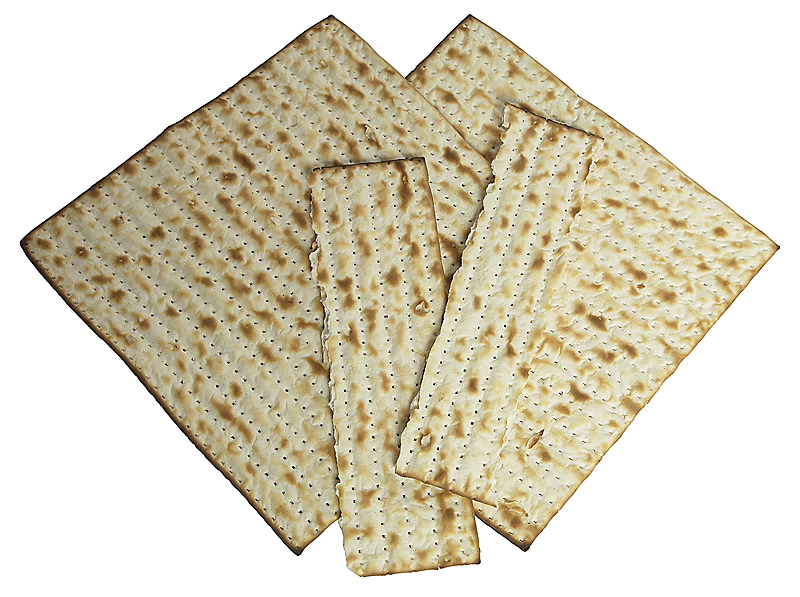
What, you may ask, is the purpose of putting leavening out of one’s home and eating unleavened bread products such as matzoh for one week? This seems like a curious request by YHVH of his people. Not surprisingly, the Creator of the universe has a reason for everything. The spiritual implications are enlightening and highly relevant to the disciples of Yeshua. In commanding his people to de-leaven their homes and lives, YHVH is teaching us an object lesson that applies to us as much today as to the Israelites of long ago.

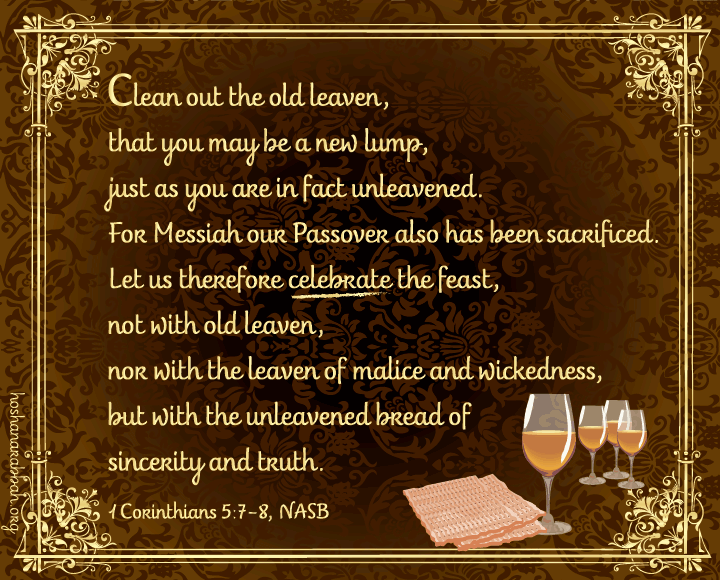
Eating unleavened bread for seven days is a memorial, remembrance or reminder (Exod 13:6–9) of our coming out of our own spiritual Egypt. But how did unleavened bread enter into this picture? The Torah tells us that the Israelites left Egypt early in the morning as they were making their daily bread, and because they left in haste the bread was not able to rise (Exod 12:34). Therefore, they were forced, by circumstances, to leave their leavening — a biblical metaphor for sin — behind in Egypt. Similarly, believers in Yeshua are commanded to keep the Feast of Unleavened Bread (1 Cor 5:6–8), which helps to remind us that we should have left our old sinful ways behind us in the spiritual Egypt of this world when we surrendered our lives to Yeshua. We are pressing onward to the Promised Land of YHVH’s eternal kingdom.

Not only did YHVH command his set-apart people to leave Egypt (a biblical metaphor for this world and its godless ways), but he wanted his people to separate themselves from and leave behind in Egypt the rudiments of this world, or sin, which defiles them and separates them from a set-apart and sinless Elohim (God). Leaven is a picture of this, as we will see more clearly below.

The Feast of Unleavened Bread was the next step in YHVH’s plan of redemption for his people. Israel had just left Egypt and we know that Egypt is biblically a spiritual metaphor for the world and Satan. It may have been easy for the Israelites to leave Egypt, but after their exodus, the arduous process of getting the sin or spiritual leaven of Egypt out them began! The same is true when we leave the spiritual Egypt of this world and endeavor to follow obey Yeshua through our spiritual journey in the wilderness we call life. The old sin habits die hard and often lie hidden in our lives waiting to be exposed and cast out from the recesses of our mind, will and emotions—or one’s spiritual houses. This is not an easy process, and is not unlike ridding our physical homes of leavening products, such as bread crumbs, which find their way into the nooks and crannies of our homes that the word of Elohim commands his people to do in order to properly keep the Feast of Unleavened Bread (Exod 12:14–15). Throughout Scripture, leavening usually represents sin, pride, hypocrisy, malice, bitterness and false religious doctrine (Pss 71:4; 73:21; Hos 7:4; Matt 16:6; Mark 8:15; Luke 12:1; 1 Cor 5:8–6; Gal 5:9).

The Feast of Unleavened Bread lasts seven days. The number seven in YHVH’s spiritual economy represents completion or perfection. YHVH has given man 7000 years on this earth to get rid of sin completely and totally in preparation for admission into his eternal kingdom as revealed in Revelation 21 and 22. For 6000 years, YHVH has left men on this earth to their own sinful devices. The seventh thousand-year time period, called the Messianic Age or Millennium (Rev 20:2, 3, 4, 6), will be different than the previous 6000 years, for during this time Yeshua will be ruling over the earth with a rod of iron as King of kings and Lord of lords (Rev 2:27; 12:5; 19:15; 17:14; 19:16), and Satan will be bound in the pit (Rev 20:2–3). All humans on earth will be taught the Torah-truth of YHVH Elohim without the evil influences of the devil and the world as we know it today. During the Messianic Age, the earth will be at peace and rest, and men will be taught to love YHVH with all their heart, mind and strength and to love their neighbor as themselves. This time of relative peace and rest is the seventh thousand-year time period of man’s tenure on this earth, which corresponds to the seventh day of the week—the Sabbath. It will be a Sabbath of rest and peace on this earth for 1000 years. The Days of Unleavened Bread picture this, for the first day is a Sabbath representing the first Sabbath when YHVH rested after creating a perfect, paradisiacal and sin-free world. The last day or seventh day of the Feast of Unleavened Bread is also a Sabbath, which corresponds prophetically to the Messianic Age.

Continue reading
 

Do you have full peace or a piece of peace?

Man’s peace versus…

Isaiah 26:3, Peace. Heb. shalom. This word is spelled in its undiminished form (i.e. shin, lamed, vav, mem sofit) here containing the Hebrew letter vav (as opposed to other places in the Hebrew Scriptures where shalom is spelled deffectively [i.e. shin, lamed, mem sofit] without the letter vav denoting an incomplete or human-originated peace). What can we learn from this interesting anomaly that is not visible in our English Bibles?

This verse is referring to that deep and inner soul-quenching peace of Elohim that passes all understanding that comes through a relationship with Yeshua the Messiah (Phil 4:7)—the fruit of the Spirit, as opposed to human or earthly, temporal peace. This peace comes because of our salvation through Yeshua, which is our spiritual bulwark and wall as stated in verse one. This is the same peace that Yeshua talked about when he said, “Peace I leave with you, My peace I give to you; not as the world gives do I give to you. Let not your heart be troubled, neither let it be afraid” (John 14:27).

If you don’t know this peace that calms the storms in your heart and mind, forgives sin, takes away all one’s shame and guilt and replaces it with love, joy, peace, hope and assurance of eternal life after you die, then now is the time to put your faith in Yeshua the Messiah, repent of your sins and love and obey him for the rest of your life. As the saying goes, know Yeshua, know peace; no Yeshua, no peace.

the peace that comes from heaven.