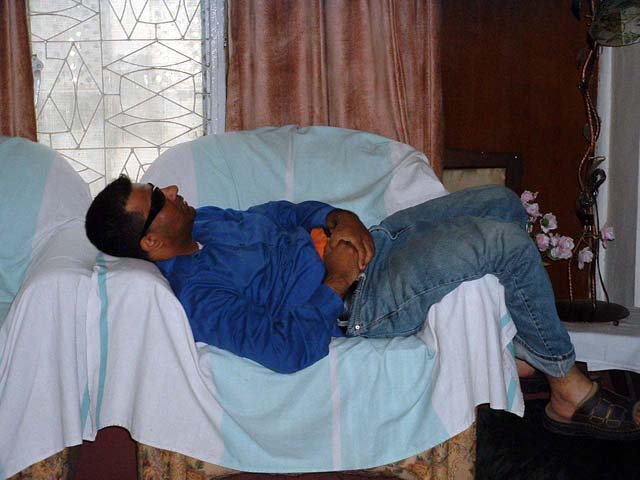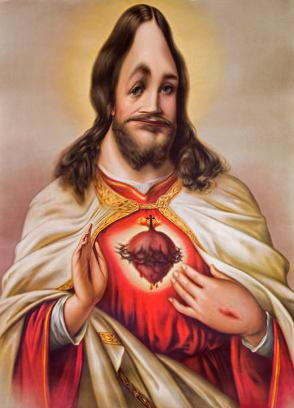
YOUR false Messianic expectations could cause YOU to deny Yeshua!

Is your view of the Messiah actually a cartoon character?

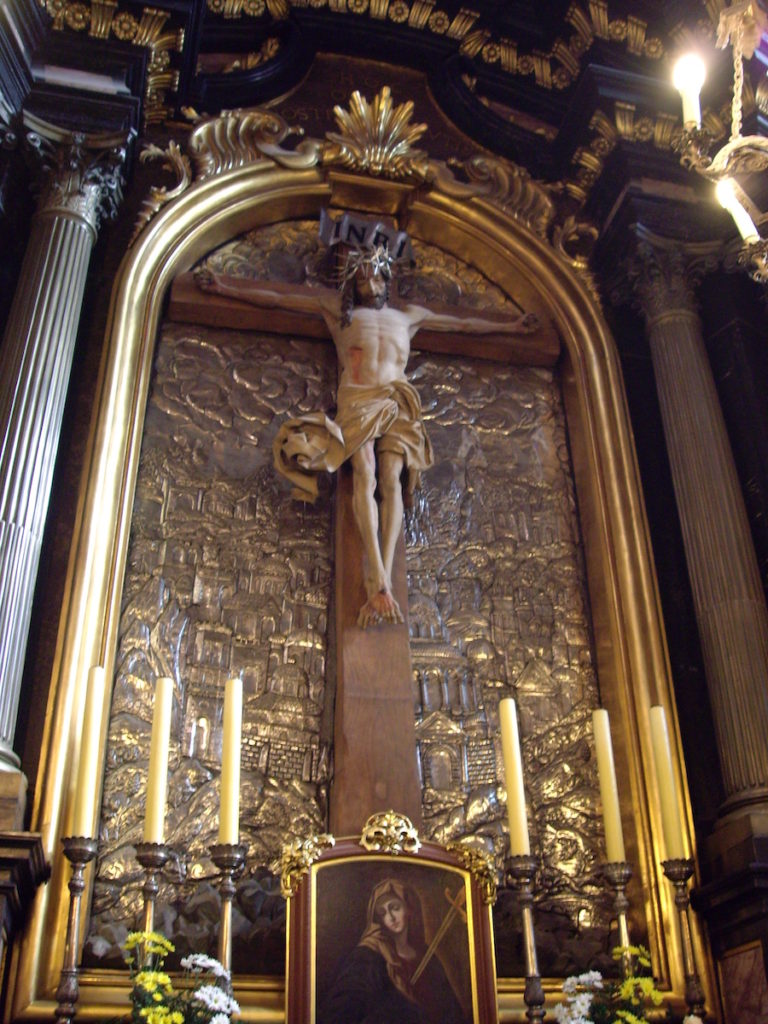
Luke 23:38, The King of the Jews. The placard that the Romans placed on the cross just above the head of Yeshua reflected the Jewish people’s prevailing politically correct view concerning their Messianic expectations. Their expectations of who they wanted the Messiah to be were not in accordance with heaven’s plan, which is why some denied him and others yelled, “Crucify him!”

The Tanakh (Old Testament) reveals that two Messiahs were to come: the Conquering King Messiah or Mashiach ben David and the Suffering Servant Messiah or Mashiach ben Yosef. Because the boot of Roman tyranny had been resting heavily on the neck of the Jewish people for some 150 years, the Jews were hoping for and, therefore, were placing their confidence in the Conquering King Messiah, who would, in their eyes, miraculously deliver them from Roman rule and oppression. This prevailing notion was even the mindset of Yeshua’s closest disciples. This is why when Yeshua predicted his death in Jerusalem at the hand of the Jews, Peter vehemently declared that this would not happen (Matt 16:21–23). Then when Yeshua failed to fulfill the people’s expectation of a Conquering King Messiah, this is when Judas betrayed his Master as a false messianic figure. This is probably why Peter denied Yeshua at the eleventh hour; because his deepest expectation of the Messiah’s mission as the Conquering King were not being met, and thus doubts about Yeshua’s Messianic claims rose to the surface in Peter’s mind at that critical hour and in confused discouragement he turned his back on the Messiah. This is why the Jewish people insisted that the Romans crucify Yeshua—he had failed to meet their expectations. 

The Roman placard that was nailed to the cross, therefore, was simply a Roman mockery of the Jewish people’s prevailing misguided messianic expectations. Their conquering king was being pitilessly crucified as Rome’s sovereignty over the Jewish people remained concretely intact.

Sadly, the Jews’ expectations were not lined up with heaven’s divine will. In reality, the Jews, and even to some degree, Yeshua’s disciples, had created a Messiah in their own image—a caricaturized or cartoon  Messiah that, to one degree or another, had become an idol in their minds replacing the true Messiah.
What are our hopes and expectations concerning Yeshua the Messiah? What cartoon view of the Messiah have we created in our minds? Were Yeshua to return today, would most Christians even recognize and accept him? The biblical reality of a first century, Torah-teaching and Torah-observant Jewish rabbi hardly fits with the stereotypical westernized, Greco-Roman caricature of the Christian Jesus. 

Moreover, when Yeshua, just before his return, sends his two witnesses to preach the gospel in Jerusalem (Rev 11:7–12), will people, including mainstream Christians, accept their message, likely a Hebraic one, if it does not line up exactly with traditional Greco-Roman Christian theology? How about when Yeshua shortly thereafter sends an angelic messenger to preach “the everlasting gospel” to those who dwell on the earth (Rev 14:6–7)? Will mainstream Christians accept this message—likely a Hebraic-centric one that will contain overtones of Torah in it? It is hard to say. Some will and some will probably not, since it may not line up with “the historic Christian faith,” as most Christians have been taught, which, to one degree or another, is ambivalent if not outright antagonistic toward YHVH’s Torah-law.

Whatever may be our views and expectations concerning the Messiah and his return, we would be wise to be certain that they are grounded in the full counsel of YHVH’s Word from Genesis to Revelation, which is intensely Hebraic in context. Moreover, it would also behoove us to hold in a loose grip our expectations on how we think end time events will roll out. If we are expecting one thing to happen and something else happens, we may find ourselves, at the very least confused and our faith shaken, or at the most, we may even deny Yeshua as Judas and Peter did. He who thinks that he stands, take heed lest he fall (1 Cor 10:12). 

To be sure, if one stays in a close, daily and intimate relationship with Yeshua the Hebraic Messiah, and follows the Lamb of Elohim wherever he leads day-by-day, one will have nothing to be concerned about.

Stay close to Yeshua!
 

The Parable of the Unjust Judge: The End Times Prophetic Implications

Luke 18:1–8, “And he spoke a parable unto them to this end, that men ought always to pray, and not to faint; saying, ‘There was in a city a judge, which feared not Elohim, neither regarded man. And there was a widow in that city and she came unto him, saying, “Avenge me of mine adversary.” And he would not for a while, but afterward he said within himself, “Though I fear not Elohim, nor regard man, yet because this widow troubles me, I will avenge her, lest by her continual coming she weary me.”’ And the Master said, ‘Hear what the unjust judge said. And shall not Elohim avenge his own elect, which cry day and night unto him, though he bears long with them? I tell you that he will avenge them speedily. Nevertheless when the Son of man comes, shall he find faith on the earth?’”

Though Yeshua’s people have been treated unjustly by this world’s political and justice systems, and though they have had to struggle for every shred of justice due them, the day is coming just prior to and at the return of Yeshua when the scales of justice will be balanced in the saints’ favor. This parable speaks to the time in the near future when the wicked will be punished, YHVH will avenge his own elect, and the righteous will be rewarded. Good will triumph over evil. 

This final balance of the scales of justice will occur in the time period between the last trumpet, which occurs on Yom Teruah (the Day of the Blowing of Trumpets) and Yom Kippur (the Day of Atonement) when the saints will receive their heavenly rewards (1 Cor 15:51–57; Rev 11:15–18) and the wicked will receive theirs (Rev 14:14–Rev 16:21).

What You Can Do

Yeshua admonishes us to pray always and do not faint in anticipation for the day of his return to come. It will be then that the righteous will reap the rewards of righteousness if they do not grow weary in the meantime for their well doing (Gal 6:9). 

What are the criteria that Yeshua the Just Judge will use to determine the levels of rewards his saints will receive at this coming? While salvation is a free gift not based on one’s works (Eph 2:8), there are levels of rewards in the Elohim’s kingdom, which will be based on one thing: works! Yeshua clearly teaches that each man will be rewarded according to his works (Matt 16:27 cp. 25:14–30). Whether one will be the least in Yeshua’s kingdom (the lowest level of rewards) are greatest (the highest level of rewards) will be determined by how faithful we were in following the Torah. Yeshua clearly states this in Matthew 5:19! On judgment day, the wicked will be rewarded according to their works (Rev 18:6; 20:12 cp. Matt 25:14–30) and the righteous according to theirs (Rev 20:12,13 cp. 19:8, NKJV, NIV or NAS).


Divine Healing and Sickness—When and Why?

Exodus 15:26, I will put none of the diseases.Some Bible teachers quote this verse to mean that a Christian is immune from all sickness and disease. Is this what this verse is really saying?

On the contrary, the Bible teaches us that sometimes YHVH puts judgments upon people to either (a) bring them to repentance, or (b) because they are so evil, reprobate and past redemption, to impose the death penalty upon them. 

Other times, people put judgments such as sickness upon them because of their own wrong choices. Such judgments are the consequences of their own actions; it is a function of the laws cause and effect. 

Sometimes sickness comes upon people because YHVH takes his hand of protection away from people and they are left open as victims of the consequences of their own wrong doings, of other people (trials and persecution) or of Satan (spiritual attack). 

Finally, according to the Scriptures and the laws of biology, every person will eventually die , for it is appointed for every one to die. Sometimes healthy people simply die quietly in their sleep. Most times, people die of sickness or disease as their body grows old, runs down and finally wears out.

What this verse is saying is that YHVH will not put diseases upon people as a judgment against sin if they obey his commandments. However, if they obey him, but have an unhealthy diet, live an unhealthy life, have a negative attitude, make foolish life decisions that open them up to suffering the negative consequence (or curses) brought on by their own foolish decisions, this is not YHVH putting the consequences of their action on them, but the people doing so to themselves.

I am YHVH that heals you. This is the first place in the Scriptures where YHVH promises to heal his people of sickness. Here is a list of other biblical verses containing similar promises: Deut 7:12 and 15; Pss 30:2–4; 34:18–19; 41:1;91 (entire chapter); 103 (entire chapter); Isa 40:28–31; 53:4–5; Jer 17:13–14; Mal 4:2; Mark 11:23–24; Luke 10:19; John 14:13; 15:7; 15:16; 16:23–24; Rom 8:31; 8:37; Phil 4:13; Jas 5:14–16; 1 Pet 2:24. Read these Scriptures when you are sick and believe YHVH’s promises for your divine healing.

Notice the stipulations that YHVH makes for his promise of healing to be fulfilled upon his people. His people must “diligently heed [Heb. shema meaning “to hear and to do”] the voice of YHVH by doing what is upright [Heb. yashar meaning “right, righteous, correct, straight] in his sight by obeying his Torah.

Is There a Connection Between Sin and Sickness?

What if any is the connection between the sins we commit and the sicknesses and diseases that come upon us? Much, as the Bible teaches.

Continue reading →
 

Blog Scripture Reading for 1/31 Through 2/6/21

Aside

Parashat Yitro — Exodus 18:1 – 20:23 (26)*
Haftarah — Isaiah 6:1 – 7:6; 9:5-6 (6-7)*
Prophets — 1 Kings 15:1 – 21:29
Writings — Psalms 119:33 – 124:8
Testimony — Luke 18:18 – 21:38

Our new annual Scripture Reading Schedule for 2020-2021 with daily readings that began on 10/11/20 is now available to download and print. The link to the previous 2019-2020’s Scripture Reading Schedule will still be available on the right sidebar under “Helpful Links” into next year. If you are using a mobile device or tablet, the link may be below, meaning you’ll need to scroll down instead.

Most of this week’s blog discussion points will be on these passages. If you have general comments or questions on the weekly Scripture readings not addressed in a blog post, here’s a place for you to post those. Just use the “leave a reply” link or the “share your thoughts” box below.

The full “Read Through The Scriptures In A Year” schedule, broken down by each day, can be found on the right sidebar under “Helpful Links.” There are 4 sections of scripture to read each day: one each from the Torah, the Prophets, the Writings, and from the Testimony of Yeshua. Each week, the Torah and haftarah readings will follow the traditional one-year reading cycle.

* Verse numbers in parenthesis refer to the verse number in Christian English Bibles when they differ from Hebrew Bibles or the Tanakh.

Weekly Blog Scripture Readings for 1/31 through 2/6/2021.


Prayer Request: Darlene Betsill’s Husband

Please pray for Darlene Betsill’s husband, Gary, 67, who just suffered a massive stroke. He is currently in a comma. The outcome is still uncertain.

Darlene has been a faithful reader, commenter and contributor to this blog and the Hoshana Rabbah ministry for many years.

Also pray for Darlene and their family.

While you are at it, please pray for my own mother, Emmylu, 84. She has been in a steady decline health-wise for several months and unless a major miracle occurs, it is unlikely that she will be with us much longer. My parents have been married for 62 years. Thankfully, both are redeemed believers.

Thank you. — Natan


Laodicean Church: Awaken! Will you pass the test and make the grade?

Life is a series of tests. We either pass or fail them. YHVH is the school teacher who determines whether we will pass or fail, not us. His Word is our text book that tells us how to pass. If we learn the lessons and put to practice the things we have learned, we will pass. If not, we will fail. 

The problem is that we’re not just in a regular school classroom where if we fail, it’s really not a big deal in the bigger scope of life. No. Our “classroom” is this life. Whether we pass or fail will determine not only whether we will obtain eternal life or eternal damnation, but if we pass, the grade we get will determine our level of rewards in YHVH’s eternal kingdom. As should be obvious, there are a couple of important things going on here: there is not only the issue of life after death, but if we pass the test of life and are granted eternal life, where will we be, what will we be doing and, most importantly, how close will we be to the Creator. Some people will be existing in close proximity to YHVH Elohim, while others will be living further away.

When YHVH calls us with his holy calling and we respond, we have a choice. The choice we make will determine whether we will be the least or the greatest in his kingdom (Matt 5:19). If we choose to obey him a little, we will be least in his kingdom. If we choose to obey him all the way, we will be the greatest in his kingdom. Our level of obedience to his commandments determines our level of rewards in his kingdom.

If we give him our all by loving Elohim with all our heart, soul and strength like virtuous Ruth did when she chose to forsake the world and follow Naomi and her Elohim, we can become the bride of Yeshua and live forever in his eternal kingdom. Ruth is a prophetic picture of Yeshua’s bride. The heart-attitude of the bride is: your people will be my people, your Elohim will be mine, and where you go, I will go (Ruth 1:16).

Yeshua refers to his bride in the book of Revelation. She is unreservedly faithful to him. Yeshua’s bride is comprised of those who are following the Lamb of Elohim wherever he goes. They don’t just follow him only when it is convenient, nor do they draw near to him with their mouths, but their hearts are far from him like so many other religious people (Isa 29:13; Matt 15:8)!

And I looked, and, lo, a Lamb stood on the mount Sion, and with him an hundred forty and four thousand, having his Father’s name written in their foreheads. And I heard a voice from heaven, as the voice of many waters, and as the voice of a great thunder: and I heard the voice of harpers harping with their harps: and they sung as it were a new song before the throne, and before the four beasts, and the elders: and no man could learn that song but the hundred and forty and four thousand, which were redeemed from the earth. These are they which were not defiled with women; for they are virgins. These are they which follow the Lamb whithersoever he goeth. These were redeemed from among men, being the firstfruits unto God and to the Lamb. And in their mouth was found no guile: for they are without fault before the throne of God. (Rev 14:1–5)

Continue reading →
 

Explaining the Correlation Between Faithfulness and Miraculous Faith

Luke 17:5–10, Increase our faith. As if often the case, Yeshua’s answer to the disciples’ request to increase their faith is a bit enigmatic. Let us explore the connection between faithfulness and miracles of faith.

In this passage of Scripture, Yeshua answers his disciples’ request by making the terse statement that a small amount of faith produces great, even miraculous, results, and then he launches into a discussion about faithful attendance to duty, and ends the discussion there. What do these seemingly discordant statements have to do with each other? The implication is that faith comes as a result of being faithful, that is, by being a faithful doer of the master’s will. 

Let us dig deeper and demystify the connection between faith and faithfulness. Consider this. What is the relationship between faith and faithfulness? When one is faithful to his master’s will and is faithfully executing his responsibilities, what happens? By immersing oneself in the will of his master with one’s whole heart, one will be totally in tune with the master. He will know the heart, mind and will of his master. He will know the desires of the master, how the master thinks and what the master wants him to do, and what the master wants him to do next. On this basis and from this spiritual launch pad, the servant can extend his faith and predict the will of the master—what the master wants him to do next, and then the servant can step out in faith and accomplish it, even if it requires a miracle to do so.

As an example of the connection between faith and faithfulness, let’s consider Yeshua’s command to his disciples to preach the gospel to all nations. Referred to as “The Great Commission,” Yeshua promised that certain miraculous signs and wonders would follow his disciples when they faithfully fulfill this command (Mark 16:15–18). One often hears Christians wondering why signs and wonder why they do see many miraculous signs and wonders happening today. Maybe it is because they are not being faithful to the Master’s command to preach the gospel to the whole world or at least to boldly sharing the gospel with those around them. The preaching of the gospel is just one example of miracles of faith following obedience.

An example of stepping out in faith from the launch pad of faithfulness based on fulfilling the Master’s will is Yeshua the Master’s will for his redeemed believers to expand the kingdom of heaven by sharing the gospel with others. Sharing the gospel with others goes hand-in-hand with the Master’s will to reverse the effects of the kingdom of darkness by healing the sick and casting demons out of oppressed people (Mark 16:15–18). In this manner, kingdom of heaven is expanded one life at a time as per the heart and will of Yeshua. The preacher of the gospel should understand this correlation between faithfulness and miraculous faith, which is why after sharing the gospel with others, one can expect to heal the sick and cast demons out of the oppressed. 

It is really that simple; it is a matter of cause and effect. Faithfulness leads to faith resulting in miracles.