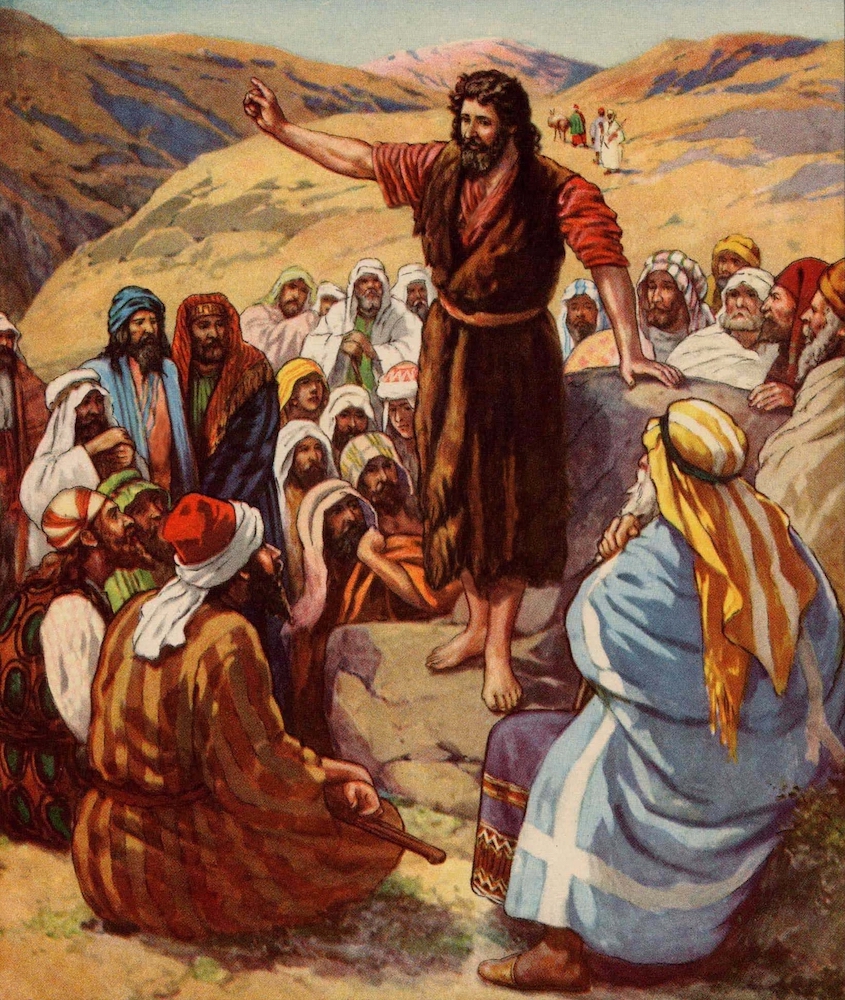
Perhaps you have heard the statement, “You are a spirit, and you have a soul that lives in a body.” Is this true, and if so, then what does it mean? Moreover, Paul the apostle in 1 Thessalonians 5:23 makes an interesting statement about the human makeup that appears to be more pagan Greek than biblical Hebraic in nature.
And the very God of peace sanctify you wholly; and I pray God your whole spirit and soul and body be preserved blameless unto the coming of our Lord Jesus Christ. (KJV, emphasis added)
What is your spirit? How is it different from your soul and your body? Sadly, there is much confusion in mainstream Christianity as to the difference between the soul and the spirit, the latter of which is not the same as the Holy or Set-Apart Spirit of Elohim which is part of the godhead. In fact, quite often, the terms soul and spirit are used interchangeably as if they were the same entity. As we shall see, the Bible does not present such a muddy view as to the nature of the spirit that is in each person. In fact, it has a lot to say about this subject.
Stay tuned. You are about to learn some things about yourself that you probably never knew!
In the quoted Bible verse above, each of the words body, soul and spirit are separated by the conjunction and. This same grammatical construction exists in the biblical Greek as well: “spirit and [Gr. kai] soul and [Gr. kai] body.” This shows Paul’s deliberateness at showing the separateness of these three components of a person’s makeup. In Paul’s mind, the soul and spirit of man were two separate entities. While the ancient Greek philosophers had a clear understanding of this, the Hebraic Bible writers seemed to have often conflated the idea of a person’s soul and spirit; that is to say, they didn’t clearly distinguish between the two. This doesn’t, however, mean that they didn’t understand the uniqueness of man’s spirit, as opposed to his soul, as we will soon see. What are we to make of this?
Thus, according to Paul, man is a tripartite being composed of a body, a soul and a spirit. In biblical Hebraic thought as presented in the Tanakh (Old Testament), the soul and spirit are virtually indistinguishable and the Hebrew words nephesh (soul) and ruach (spirit) are often used interchangeably. Paul, however, in his letter to the saints at Thessalonica, puts a finer point on the differences between the soul (or the mind, will and emotions of a person, or their unique personality) and their spirit by making a clear delineation between them. Moreover, as we shall learn, the spirit of man (or that divine spark in each person that) which each person receives most likely at conception (Zech 12:1), is subsequently and supernaturally energized by the Spirit of Elohim, when a person comes to faith in Yeshua the Messiah. It is one’s (personal) spirit that connects a person to Elohim, who is a Spirit (John 4:23–24; 1 Cor 2:10–14). Additionally, the separateness of man’s soul and spirit is specifically referred to in Hebrew 4:12 where we read,
For the word of Elohim is living and powerful, and sharper than any two-edged sword, piercing even to the division of soul and spirit, and of joints and marrow, and is a discerner of the thoughts and intents of the heart.
The fact that Paul mentions the spirit first in 1 Thessalonians 5:23 seems to suggest that YHVH created the spirit of man first, then his soul, and then placed both of them in a physical body.
Bible Scriptures That Speak of the Personal Spirit of Man
While the writers in the Tanakh may have made only an ostensible delineation between the soul and spirit of man, unlike the Greek philosophers or Paul and the writer of Hebrews did, there are several biblical passages in the Tanakh that clearly show that the ancient Hebrews understood that the spirit of man was different than his soul or mind, will and emotions. In fact, Job, the author of perhaps the oldest book in the Bible, as well as Moses, the one who codified the Torah in written form, and Solomon all understood this fact long before the Greek philosophers. Against this biblical contextual backdrop, and from the following Bible verses, we can see that Paul’s statement in 1 Thessalonians 5:23 no longer seems incongruent with the earlier Scriptures. Note the following:
The burden of the word of YHVH concerning Israel: Thus declares YHVH, who stretched out the heavens and founded the earth and formed the spirit of man within him. (Zech 12:1)
But it is the spirit in man, the breath of the Almighty, that makes him understand. (Job 32:8)
The spirit of man is the lamp of YHVH, searching all his innermost parts. (Prov 20:27)
And the dust returns to the earth as it was, and the spirit returns to Elohim who gave it. (Eccl 12:7)
And they fell on their faces and said, “O Elohim, the Elohim of the spirits of all flesh, shall one man sin, and will you be angry with all the congregation?” (Num 16:22)
The Spirit bears witness with our spirit that we are children of Elohim… (Rom 8:16)
But he who is joined to YHVH becomes one spirit with him. (1 Cor 6:17)
Elohim is spirit, and those who worship him must worship in spirit and truth.” (John 4:24)
Now may the Elohim of peace himself sanctify you completely, and may your whole spirit and soul and body be kept blameless at the coming of our Lord Yeshua the Messiah. (1 Thess 5:23)
For who knows a person’s thoughts except the spirit of that person, which is in him? So also no one comprehends the thoughts of Elohim except the Spirit of Elohim. (1 Cor 2:11)
For the word of Elohim is living and active, sharper than any two-edged sword, piercing to the division of soul and of spirit, of joints and of marrow, and discerning the thoughts and intentions of the heart. (Heb 4:12)
And the spirits of prophets are subject to prophets. (1 Cor 14:32)
Besides this, we have had earthly fathers who disciplined us and we respected them. Shall we not much more be subject to the Father of spirits and live? (Heb 12:9)
They went on stoning Stephen as he called on the Lord and said, “Lord Yeshua, receive my spirit!” (Acts 7:59)
Therefore we do not lose heart, but though our outer man is decaying, yet our inner man is being renewed day by day. (2 Cor 4:6)
For just as the body without the spirit is dead, so also faith without works is dead. (Jas 2:26)
YHVH be with your spirit. (2 Tim 4:22)
To the general assembly and church of the firstborn who are registered in heaven, to Elohim the Judge of all, to the spirits of just men made perfect. (Heb 12:23)
A Person’s Spirit Is Supercharged at the Time of the Their Spiritual Regeneration
Even though every human is born with a personal spirit that acts as a sort of spiritual compass to guide him in a basic understanding of what is right and wrong, (Rom 2:14–16), the Bible reveals that one’s spirit is activated in a major spiritual way only when they receive the Spirit of Elohim at the time of their initial salvation.
Even the Spirit of truth; whom the world cannot receive, because it seeth him not, neither knoweth him: but ye know him; for he dwelleth with you, and shall be in you. (John 14:17)
But there is a spirit in man: and the inspiration of the Almighty giveth them understanding. (Job 32:8)
The spirit of man is the candle of YHVH, searching all the inward parts of the belly. (Prov 20:27)
When his candle shined upon my head, and when by his light I walked through darkness. (Job 29:3)
The Spirit itself beareth witness with our spirit, that we are the children of Elohim. (Rom 8:16)
That he would grant you, according to the riches of his glory, to be strengthened with might by his Spirit in the inner man. (Eph 3:16)
But ye have an unction from the Holy One, and ye know all things.…But the anointing which ye have received of him abideth in you, and ye need not that any man teach you: but as the same anointing teacheth you of all things, and is truth, and is no lie, and even as it hath taught you, ye shall abide in him. (1 John 2:20, 27)
Hereby know ye the Spirit of Elohim: Every spirit that confesseth that Yeshua the Messiah is come in the flesh is of Elohim: And every spirit that confesseth not that Yeshua the Messiah is come in the flesh is not of Elohim: and this is that spirit of antichrist, whereof ye have heard that it should come; and even now already is it in the world. (1 John 4:2–3)
But Elohim hath revealed them unto us by his Spirit: for the Spirit searcheth all things, yea, the deep things of Elohim. For what man knoweth the things of a man, save the spirit of man which is in him? even so the things of Elohim knoweth no man, but the Spirit of Elohim. Now we have received, not the spirit of the world, but the spirit which is of Elohim; that we might know the things that are freely given to us of Elohim. Which things also we speak, not in the words which man’s wisdom teacheth, but which the Holy Ghost teacheth; comparing spiritual things with spiritual. But the natural man receiveth not the things of the Spirit of Elohim: for they are foolishness unto him: neither can he know them, because they are spiritually discerned. (1 Cor 2:10–14)
The Defilement and Purification of One’s Personal Spirit
In two passages in the Testimony of Yeshua, Paul discusses how one’s inner man or personal spirit must be renewed spiritually.
For which cause we faint not; but though our outward man perish, yet the inward man is renewed day by day. (2 Cor 4:16)
And be renewed in the spirit of your mind… (Eph 4:23)
What in us has to be renewed regularly or (literally renovated)? It is true that each of us was born in sin or was born sinful (Ps 51:5), and that our soul (i.e., our mind, will and emotions) is the part of us that actually sins (Ezek 18:4). So what has to be renewed or renovated if our soul was sinful from the beginning of our life?
Evidently YHVH created something sin-free in us that became defiled along the way and needs to be renewed. If it is not our soul, than what is it ? It must be our personal spirit, which is the candle of YHVH (Prov 20:27). Renewed in what? In the knowledge of Elohim due to its being tainted by the soul of man, which has been influenced and corrupted by the world, the flesh and the devil, and which needs to be made perfect, completed, finished or brought to the end goal of perfection.
But you have come to Mount Zion and to the city of the living Elohim, the heavenly Jerusalem, to an innumerable company of angels, to the general assembly and church of the firstborn who are registered in heaven, to Elohim the Judge of all, to the spirits of just men made perfect [Gr. made complete], to Yeshua the Mediator of the new covenant, and to the blood of sprinkling that speaks better things than that of Abel. (Heb 12:22–24, emphasis added)
The tainting of man’s personal spirit is indicated in 1 Thessalonians 5:23, where we read,
Now may the Elohim of peace Himself sanctify you completely; and may your whole spirit and soul and body be preserved blameless at the coming of our Lord Yeshua the Messiah. (emphasis added)
Man’s spirit must be “preserved blameless.” Preserved is the Greek word tereo meaning “to guard, to keep, one in the state in which he is, to observe, to reserve or to undergo something.” This means that one’s personal spirit can be tainted, defiled or dirtied. Moreover, Job 7:11 not only differentiates between the spirit and the soul, butspeaks about the “anguish [or distress, narrowness, tightness] of my spirit” and “the bitterness of my soul.”
Therefore I will not restrain my mouth; I will speak in the anguish of my spirit; I will complain in the bitterness of my soul.
Obviously, man’s personal spirit can be distressed, wounded, hurt, oppressed or constrained by the negative influences and the trials of life. Here Job tells us that we can have negative emotions in both our soul and our spirit. It is highly likely that anguish in our spirit could degenerate into bitterness in the soul. This suggests that both our soul and our spirit need cleansing, healing and forgiveness. The fact that man’s spirit can be adversely affected or negatively influenced, or even defiled by one’s sinful soul is further corroborated in 2 Cor 6:18–7:1,
And will be a Father unto you, and ye shall be my sons and daughters, saith the YHVH Almighty. Having therefore these promises, dearly beloved, let us cleanse [Gr. katharizo] ourselves from all filthiness [or defilement] of the flesh and spirit, perfecting holiness in the fear of Elohim. (emphasis added)
It is for these reasons that the spirit of man needs to be “renewed” (Col 3:10), “made perfect” (Heb 12:23), and “preserved blameless” (1 Thess 5:23).
Do not lie to one another, since you have put off the old man with his deeds, and have put on the new man who is renewed in knowledge according to the image of Him who created him… (Col 3:9–10)
But you have come to Mount Zion and to the city of the living God, the heavenly Jerusalem, to an innumerable company of angels, to the general assembly and church of the firstborn who are registered in heaven, to God the Judge of all, to the spirits of just men made perfect… (Heb 12:23)
Now may the Elohim of peace Himself sanctify you completely; and may your whole spirit and soul and body be preserved blameless at the coming of our Lord Yeshua the Messiah. (1 These 5:23)
Are the Human Conscience and the Personal Spirit Interconnected?
Perhaps you have heard the expression, “Let your conscience by your guide.” The implication is that deep inside of each person is an innate sense of what is morally right or wrong. Is there a connection between one’s conscience and one’s spirit and if so what is their relationship? Scripture has a few things to say about the conscience. It not only differentiates between the conscience and the mind, but also reveals that YHVH’s basic moral laws are written on the human conscience, which then informs the mind.
To the pure all things are pure, but to those who are defiled and unbelieving nothing is pure; but even their mind and conscience are defiled. (Tit 1:15)
Mind is the Greek word noos meaning “the intellect, that is, mind (divine or human; in thought, feeling, or will.” On the other hand, conscience is the Greek word suneidesis meaning “co-perception, that is, moral consciousness.” Evidently, the conscience is its own separate entity within a person’s makeup. Is it the same as one’s personal spirit, or at the least, interconnected with it?
Continue reading