Elohim’s Fiery Judgment Upon Nadab and Abihu—A Lesson for the End Time Saints

Leviticus 10:1–7, Nadab and Abihu…profane fire. 

Nadab and Abihu were executed by the fire of YHVH for not following his commandments. This disobedience was induced by the consumption of alcohol, which impaired their ability to follow YHVH’s protocols for the tabernacle service (Lev 10:9). What can we learn from this tragic story of the disobedience of YHVH’s servants who should have known better, and how will this story repeat itself at the end of this present age upon some of YHVH’s unfaithful servants? We will now discuss the prophetic implications of this story and how history will repeat itself shortly. 
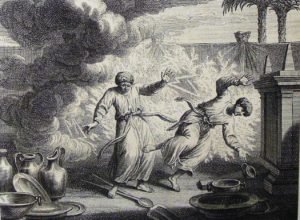
Nadab and Abihu were unfaithful to Elohim in that they neglected to take his commandments seriously. Perhaps they thought that his instructions in righteousness didn’t apply to them but to someone else, or that his laws were done away with, or that YHVH Elohim simply didn’t really mean what he said. Whatever the case, they became lukewarm and profaned the holy things of Elohim through their excessive use of alcohol and careless indifference to the Word of Elohim. Because they were in leadership as priests and sons of Aaron the high priest, their example of unrighteousness like a spiritual contagion could have infected the children of Israel and destroyed that new nation at its inception. Therefore, YHVH Elohim had to deal quickly and forcefully with the erring and rebellious sons of Aaron. In answer to their sin of not obeying YHVH’s laws, the holy fire of Elohim came out (presumably from the tabernacle—a picture of Elohim’s heavenly tabernacle and throne room) and killed Nadab and Abihu then and there. 

What are the lessons that we can learn from this horrific story, and what are the end time prophetic implications of it? 

We learn from the book of Revelation that at end of the Messianic Age (or Millennium) unrepentant sinners will be executed by the fire of YHVH in the lake of fire (Rev 20:15) because they have been made drunk by the false religious teachings of the whore system of religious spiritual Babylon and Satan (Rev 18:3–4). 

We are now living in an age where, thankfully, most of our sinful actions are not met with instant divine judgment (the case of Ananias and Sapphira in the Book of Acts would be a notable exception). Does knowing that YHVH will not instantly “zap” us with the proverbial lightning bolt from heaven when we sin cause us to become lax and even calloused toward sin in our lives? Do we truly walk in the fear of YHVH? Do we fear the consequences of sin even though the results may not be immediate? How loose is your spiritual walk? How many hidden sins that no one knows about do you have that you are failing to deal with? 

The path of righteousness is becoming narrower and ­narrower. Moreover, there are levels of rewards in Yeshua’s kingdom. Not everyone will be “the greatest in the kingdom of heaven.” Some will be the least, and many will not even be there at all (Matt 5:19 cp. 1 Pet 4:18). Remember that the tares that were mixed in with the wheat were culled out and burned (Matt 13:24–30). This is a picture of the true versus false converts coexisting in the spiritual body of Yeshua or the church to the very end!

It is time for the people of Elohim to wake up from their spiritual lethargic and drunken stupor, repent of their sin of taking a careless and even indifferent view of YHVH’s commandments.

“And to the angel of the church of the Laodiceans write, ‘These things says the Amen, the Faithful and True Witness, the Beginning of the creation of Elohim: I know your works, that you are neither cold nor hot. I could wish you were cold or hot. So then, because you are lukewarm, and neither cold nor hot, I will vomit you out of My mouth. Because you say, ‘I am rich, have become wealthy, and have need of nothing’—and do not know that you are wretched, miserable, poor, blind, and naked—I counsel you to buy from Me gold refined in the fire, that you may be rich; and white garments, that you may be clothed, that the shame of your nakedness may not be revealed; and anoint your eyes with eye salve, that you may see. As many as I love, I rebuke and chasten. Therefore be zealous and repent. Behold, I stand at the door and knock. If anyone hears My voice and opens the door, I will come in to him and dine with him, and he with Me. (Rev 3:14–20)

And I heard another voice from heaven saying, “Come out of her, my people, lest you share in her sins, and lest you receive of her plagues.” (Rev 18:4)

 

Divine Judgment on the Saints in the “Age/Dispensation of Grace”???

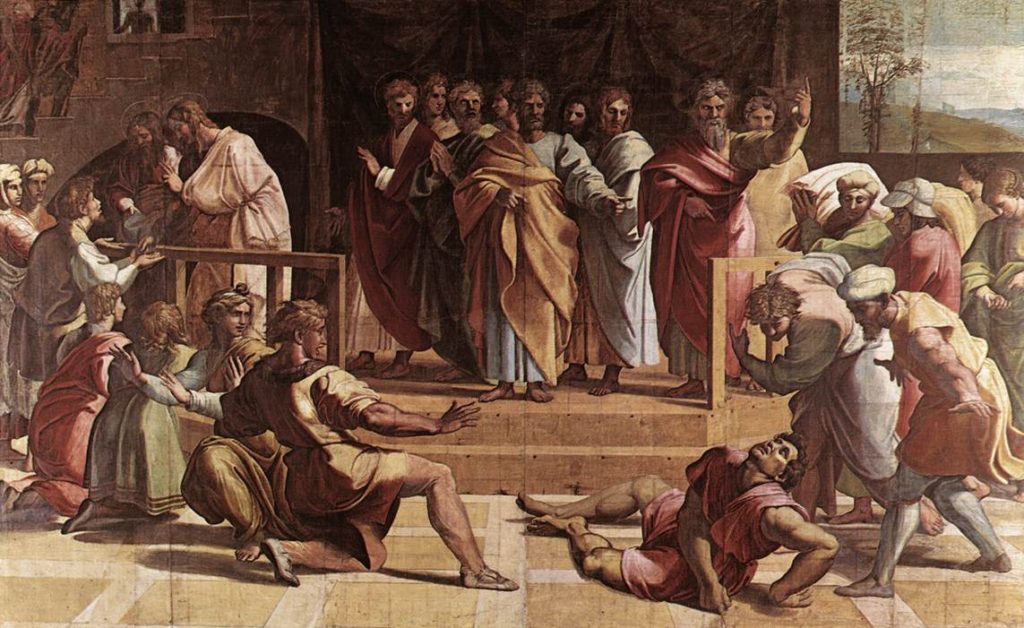
Acts 5:1–11, The deaths of Ananias and Sapphira. Why did Elohim kill them? It is because they committed the unpardonable sin in that they willfully and in a premeditated plot lied to the Elohim. There is no sacrifice or forgiveness for willful sin. YHVH was showing us that even in the age of the New Covenant, the so-called “age of grace,” Elohim’s grace doesn’t cover willful sin. Let us all fear YHVH Elohim and tremble before him all the time!

Some scholars suggest that YHVH killed them because they violated the Torah laws regarding the handling of devoted things, for which there was a death penalty (Lev 27:28–29). Perhaps so. Whatever the case, it’s interesting to note that YHVH struck Ananias and Sapphira dead after the cross in, what many Christians call, the dispensation of grace era when, in their minds, sin doesn’t carry the same severe penalty us under “old covenant,” law of Moses era. What we learn from this is that YHVH still views sin as sin, and the wages of sin is still death (Rom 6:23). This has never changed before or after the cross of Yeshua. Just because one isn’t struck dead immediately upon having sinned doesn’t mean one hasn’t incurred the death penalty. That death penalty is only waived when one repents of their sin and asks for YHVH’s forgiveness through faith in Yeshua whose death paid the death penalty price for our sins.

Likely, such divine judgments still occur in our day more frequently than we realize. It may not involve the death of the individual, but rather sickness, demonic attacks, financial setbacks and other adversities that occur to us. The problem is that because of human pride and spiritual deafness and blindness, most people fail to recognize the cause of their problems. We attribute them instead to random circumstances and time and chance instead of to YHVH’s hand of judgment against us because of our sin, which we fail to recognize and repent of. 

Paul addresses this issue in 1 Cor 11:27–32 with regard to those who eat of the communion elements in a careless or indifferent manner.

Therefore whoever eats this bread or drinks this cup of the Lord in an unworthy manner will be guilty of the body and blood of the Lord. But let a man examine himself, and so let him eat of the bread and drink of the cup. For he who eats and drinks in an unworthy manner eats and drinks judgment to himself, not discerning the Lord’s body. For this reason many are weak and sick among you, and many sleep. For if we would judge ourselves, we would not be judged. But when we are judged, we are chastened by the Lord, that we may not be condemned with the world.


Are we people of unclean lips…like Isaiah?

Isaiah 6:5, Man of unclean [Heb. tamay] lips.Profanity, cursing and swearing—foul and unclean words from the lips of ungodly people—surrounds and overwhelms us like a tidal wave of barnyard manure! Nowadays it’s the norm, not the exception—even for women. This can have an adverse influence on the saint too. 

Like barnacles attaching themselves to a ship or a whale, the bad habit of unclean words can attach themselves to the otherwise righteous saint. The downward, magnetic pull of Baalism is ever with us and is powerful. The upward pull toward Elohim and righteousness…well, that’s another thing—is not always so strong! 

Was this the case in Isaiah’s day as he found himself surrounded by apostate, backslid Israel? Did he struggle with profanity and impure words? Is this why he had to ask YHVH to cleanse his unclean [Heb. tamay] lips? 

Tamay means “polluted, impure or defiled both ethically and religiously.” We must cry out to YHVH to deliver us from the often involuntary habit of profanity and polluted words. By his Spirit, he can and will. 

But, again again, like barnacles on a ship’s hull, this habit often tries to reattach itself to our lips. From time to time, a ship has to have its hull scraped of these pesky and unclean crustaceans, or seek the cleansing waters of a fresh water port. Barnacles can’t survive in fresh water and fall off. Likewise, may the cleansing waters of YHVH’s Word wash our minds and mouths of foul, unclean words that leaven our souls and contaminate our spirit man. 

Here’s yet another example of the struggle against barnacles. Barnacle encrusted whales catapult themselves out of the water not merely to show off, but to knock the barnacles off of them through the slapping action of the water against their bodies. Similarly, sometimes we have to take determined action and cry out to Elohim for his strength to break the curse of the bad habits of unclean words coming from our lips. 

This is part of the deleavening process that we will spend a lifetime engaged in! May YHVH give us help and strength to overcome this tidal wave of evil!


Has a coal from Elohim’s altar touched your life?

Isaiah 6:4–7, Coal …from the altar. Which altar in the temple did this coal come from and what did it represent spiritually and prophetically? What deeper truth was YHVH trying to teach Isaiah here? There were two altars in the Tabernacle of Moses: the altar where animals were sacrifice—a symbolic and prophetic picture of Yeshua’s atoning death on the cross, and the incense altar in the holy place. 

The Hebrew word for altar here is mizbeach and can refer to both the altar of sacrifice in the tabernacle’s outer courtyard, and to the altar of incense in the holy place just in front of the veil leading into the holy of holies picturing the throne room of Elohim. If the coal came from the altar of sacrifice, it pictures cleansing from sin by Yeshua’s death on the cross. If the coal came from altar of incense, this coal still came from the altar of sacrifice, which still points to Yeshua’s atoning death. It just adds to the picture the further truth that not only can we not come before our Almighty Father in heaven except through the atoning sacrifice of Messiah, but we must do so with a heart of prayer, praise and worship, since that is what the altar of incense scripturally represents (Rev 5:8; 8:3). 

Through this one event as recorded in Isaiah 6:4–7, we have illustrated a beautiful and encouraging spiritual truth. It is this: Even though Isaiah was a righteous and saintly man, he still fell short of being accepted at the throne of Elohim. Man’s best righteousness is still as filthy rags as Isaiah would write later on (Isa 64:6). But through Yeshua’s atoning work at the cross, and through our acknowledgement of our spiritual lack and through humility, confession of sin coupled with praise and worship, we can still be cleansed by Yeshua’s blood, and made acceptable by the imputed righteousness of Yeshua, which cloth in the robes of his righteousness. HalleluYah!


Divine Judgment Upon a Backslid Nation

Isaiah 3:1–5, 12, YHVH…takes away…children…insolent…women rule over them. When YHVH’s judgment comes on a sinful nation, godly leadership and his protection is removed from that nation leaving a moral and spiritual vacuum. When the fear of Elohim is gone, so goes wisdom. With the absence of the wise, foolish people rise up and take over a nation. 

Into this godless vacuum will move ungodly, silly and rebellious youth and feminized male leaders and masculinized female leaders—spiritual Ahabs and Jezebels! Children who are insolent against their parents and elders are proof of the spiritual declension of a nation and YHVH’s hand being taken off that nation and his resulting judgment against it are the result. Isaiah clearly lays out this process in this passage. The cause and effect results were as true then with ancient Judah as they are today with modern America.

Since my youth (growing up in the 1960s and 70s), I have seen children go from acting respectfully to their parents and adults in general (“Yes sir,” “No Sir,” “Mr.” and Mrs.”) to total foul-mouthed disrespect and mocking scorn for older people. Correction and discipline of these rebellious brats has gone out the window, been tossed in the trash can of political correctness. When was the last time you saw a paddle in the school principal’s office? It was the norm in my day. Now such a school leader would be fired and convicted of “child abuse.” Moreover, gender roles, in many cases, have been reversed. The term “house husband” now has common currency. Many women have become masculine and many men have become feminized. As an example of this, names that have been traditionally reserved for the male gender or now popular for girls along with woman smoking cigars, sporting tatoos, men wearing hair buns, earrings, painting their toenails, and the list goes on. Now there’s even gender identity confusion and “gender reassignment” operations. Is it any wonder? 

This process has been horrendously sad and deeply painful for those of us in the older generation to watch, but it is merely symptomatic of a nation that has turned its back on Elohim. We know what things used to be like when families still went to church, there was prayer in schools, patriotism was taught in our institutions of education, mothers raised their children at home, divorce was rare, godly masculinity was a virtue and the fear of Elohim and adherence to biblical values still, to one degree or another, was the norm societally. 

This is much more than looking back and waxing eloquent for the good old days. It’s about mourning for a nation that has lost its moral and spiritual compass and has gone from a God-fearing nation to one that loathes to keep Elohim in its collective, societal conscious, and is too blind by its own pride and self-absorption to recognize that two plus two still equals four.

May YHVH Elohim help us to be children of his light in these times of gross darkness. Do not become weary in well-doing!


A Hand from Heaven…Extended to YOU!

Leviticus 3:2, Without blemish. Heb. tamiym meaning “complete, whole, entire, sound, healthful, wholesome, unimpaired, innocent, having integrity.” Of this word, The TWOT states, [Tamiym r]efers to animals which are without blemish; also translates as such related adjectives as full, whole, upright, perfect. It represents the divine standard for man’s attainment.” Tamiyn occurs in the Tanakh 91 times, and the KJV translates it in a variety of ways: without blemish, perfect, upright, without spot, uprightly, whole, sincerely, complete, full. What can we learn form this and how does it apply to us?

First, here are some examples of how tamiym is used in the Tanakh:

  • Noah was a just, perfect or upright (tamiym) man (Gen 6:9).
  • YHVH admonished Abraham to walk perfectly or blamelessly (tamiym) before him (Gen 17:1).
  • The Passover lamb was to be without blemish (tamiym, Exod 12:5) as were all the other animals offered to YHVH as sacrifices (e.g. Exod 29:1; Lev 1:3, 10; 3:1, 6, 9; 4:3, 23, 28, etc.).
  • YHVH instructed the Israelites to be blameless (tamiym) before him by not being like the wicked, abominable and idolatrous nations around them (Deut 18:13).
  • Elohim is perfect (tamiym, Deut 32:4).
  • The people of Elohim are to fear him and to serve him in sincerity (tamiym) and truth and to put away the gods of Egypt (this world) and to serve Elohim (Josh 24:14).
  • David was blameless or upright (tamiym) before Elohim (2 Sam 22:24). Even thought David committed adultery, murder and egregiously disobeyed in some other areas, Elohim viewed him as tamiym because of he had repented of and turned away from his sins.
  • When a person is upright or blameless (tamiym) before Elohim, Elohim will be blameless (tamam meaning “to be complete, be sound, be unimpaired, be upright or to deal in integrity, to act uprightly) in response to that person (2 Sam 24:26).
  • The ways of Elohim are perfect (tamiym, 2 Sam 22:31).
  • Elohim makes the ways of the saint perfect (tamiym,2 Sam 22:33).
  • Those who walk uprightly (tamiym) will be allowed to dwell in the presence of Elohim (Ps 15:2).
  • The Torah-law of YHVH is perfect (tamiym, Ps 19:7).
  • YHVH blesses or withholds no good thing from the upright (tamiym, Ps 84:11 cp. Ps 119:1; Prov 2:21; 28:10, 18).
  • The righteous are to walk perfectly or blamelessly (tamiym) before Elohim (Ps 101:2, 6; 119:80; Prov 11:5).
  • YHVH delights in the blameless (tamiym) person (Prov 11:20).
  • The wicked abhor those who speak uprightly (tamiym, Amos 5:10).

From the scriptural usages of tamiym it is evident that this not only describes the sterling character of Almighty himself, but is the high bar, gold standard for how the saints of the saints of the Most High are to be and to act as well. To have a relationship with our Father and Creator in heaven, we must endeavor to become like him—to meet him on his terms and on the transcendent plateau on which he exists. Yes, Scripture is clear that Elohim reaches his hand down from heaven to lift lost humans from the pit of their sinful existence, but it is only to lift them up. All day long he is continually extending his hand of mercy and grace to those humans who will reach out to him in humility and want to  brought up to his place of perfection and wholeness. Scripture is also clear that there is no other way to bridge the vast and cavernous gap that exists between humans and their Creator except through Yeshua the Messiah who is the way to our Father in heaven, and who is the ladder that all must climb to meet our Maker in heaven on his terms (John 14:6; 1:51). YHVH Elohim is reaching out to some of you right now through these words that you are currently reading. What are you going to do about it?


More Discussion on Sin, Its Consequences and Yeshua’s Atoning Death on the Cross

Continue reading